




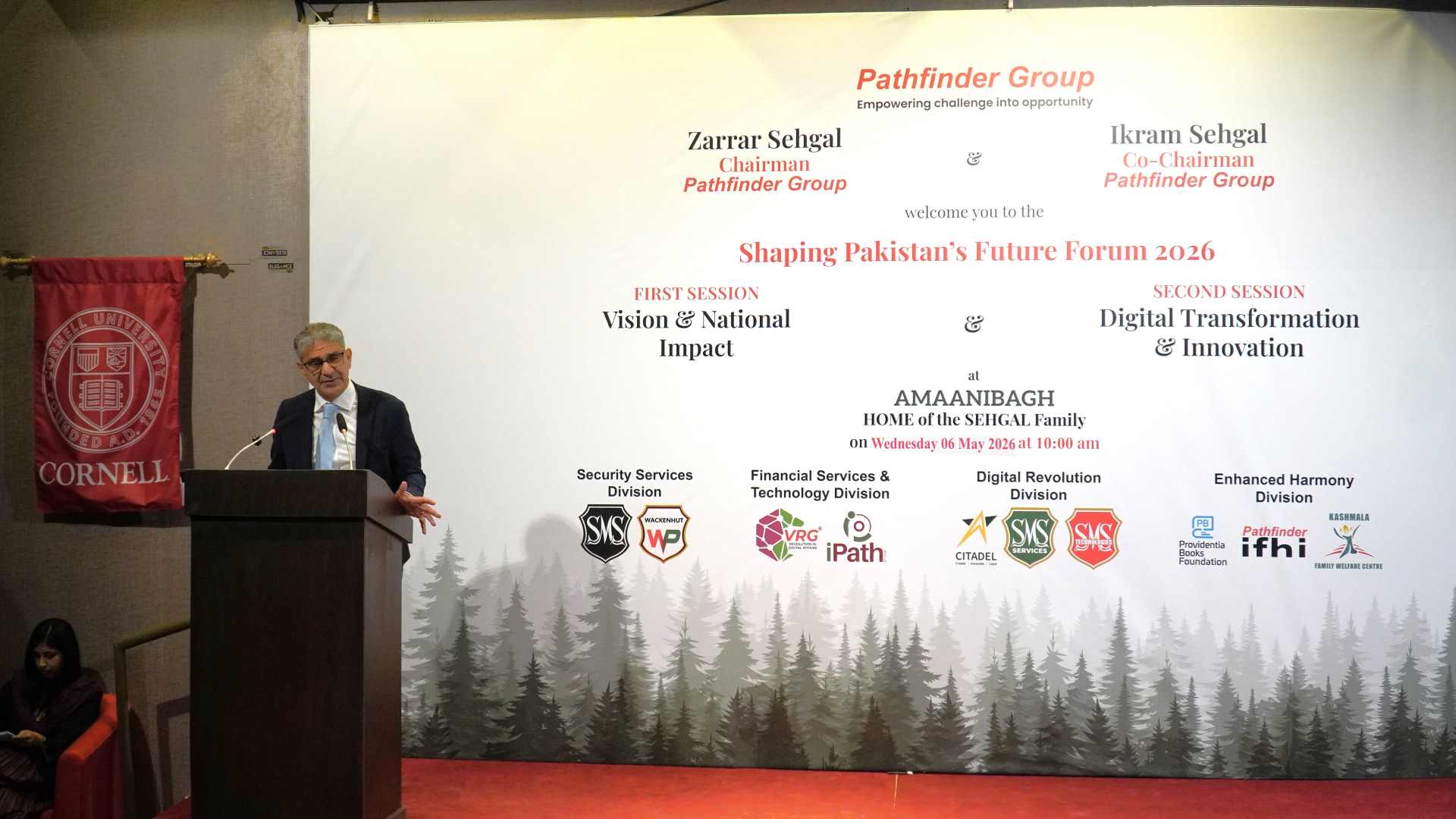
First Session: Shaping Pakistan’s Future Forum 2026
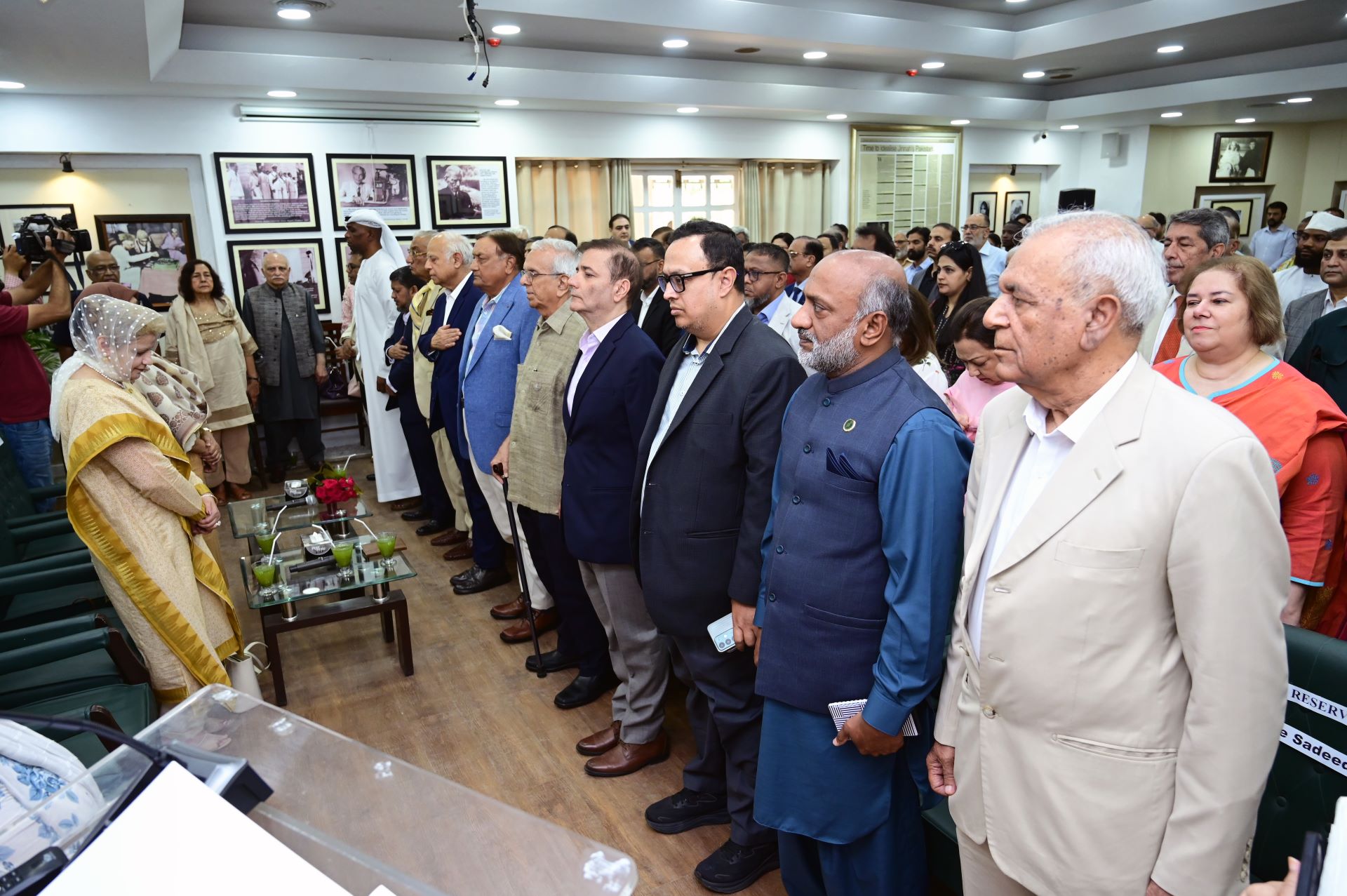
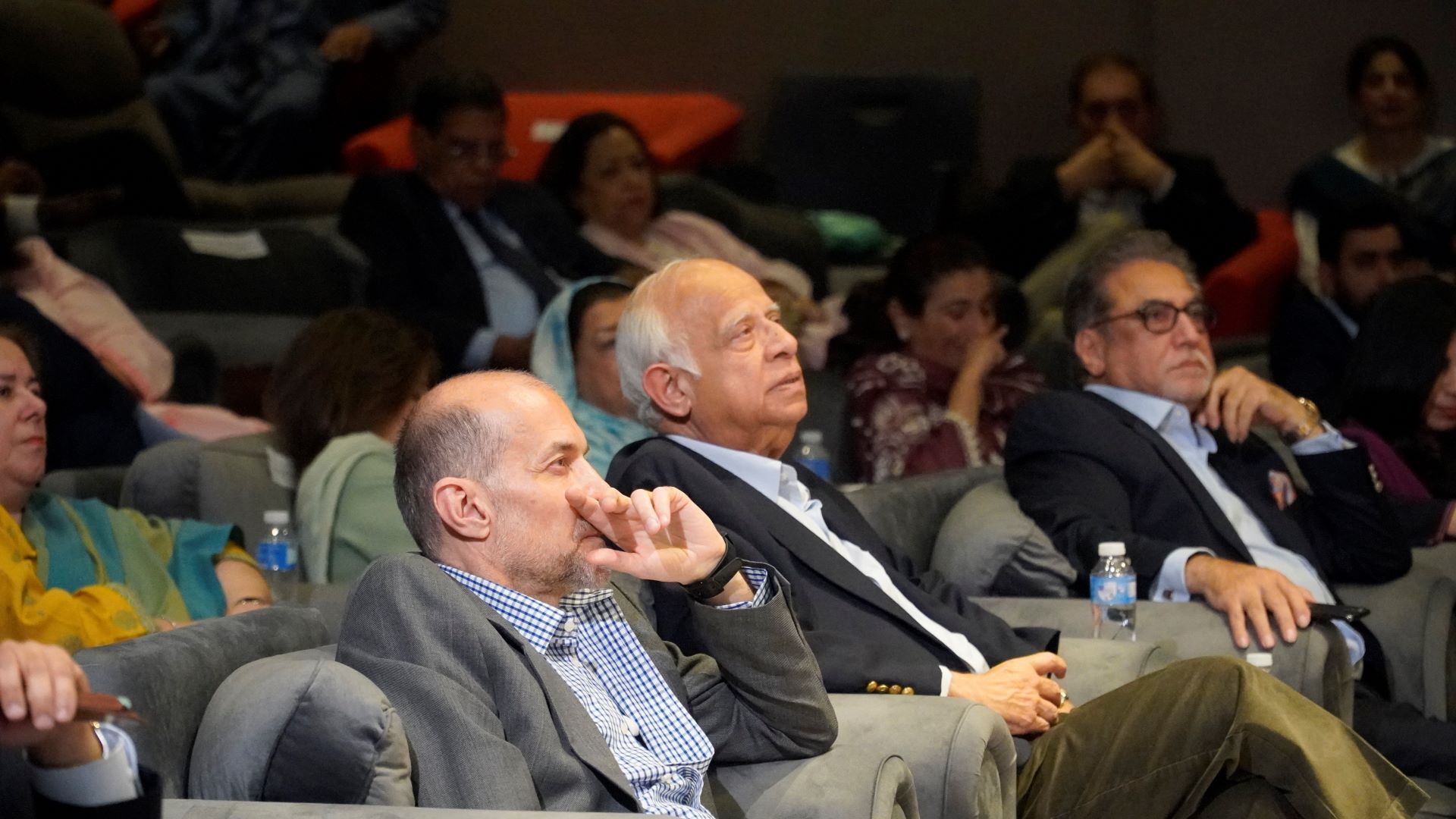
The Pathfinder Group hosted the “Shaping Pakistan’s Future Forum 2026” on May 6, 2026, at AMAANIBAGH Angoori, Islamabad, bringing together diplomats, policymakers, business leaders, innovators, entrepreneurs, and technology experts to discuss Pakistan’s future through innovation, digital transformation, entrepreneurship, financial technology, and national development initiatives. Organized under the leadership of Co-Chairman Pathfinder Group, Ikram Sehgal, the forum featured insightful discussions, Pathfinder Group’s different divisions’ presentations, and collaborative dialogues focused on empowering Pakistan’s youth, strengthening international cooperation, and promoting inclusive socio-economic growth.
Sehrish Mustafa (Moderator):
Today, we come together not just for presentations but for a meaningful dialogue about the future of our nation, where vision meets action and ideas transform into impact. As we look at the turmoil unfolding in the Middle East, where conflict has disrupted global supply chains, displaced millions, and highlighted the fragility of economies dependent on geopolitics rather than innovation, it becomes painfully clear that Pakistan cannot afford to be a bystander. We must harness our young, hungry entrepreneurs to build self-reliance, economic and digital sovereignty, and a vision rooted not in reaction but in foresight. Start-ups are the bridge between today’s hardship and tomorrow’s prosperity. Their impact, when aligned with a national vision, can transform the very fabric of our nation.
To start with, I would like to invite Iqbal Butt to the stage. He is the Chief Executive Officer of SMS Technologies and a highly experienced telecom and IT professional. He brings over 26 years of expertise in managing large-scale telecom and IT operations. He has worked with leading international organisations and delivered impactful projects. His experience reflects strong leadership and practical knowledge in the field. Please welcome Iqbal Butt to share his views with us.
Iqbal Butt, CEO, SMS Technologies:
Assalam-o-Alaikum, everyone. Today, I would like to share a success story, a story of vision, passion, and commitment, supported by a highly experienced telecom team. The strength of this team lies in the extensive expertise its members bring from international OEMs such as Nokia and major telecom groups, including MTN, STC, and Mobily.
I began my career in telecom and IT 28 years ago and have since worked with organisations such as Ericsson, Jazz, and several international companies outside Pakistan. Drawing upon this experience and the expertise of our team, we established SMS Technologies last year with the goal of creating a meaningful impact in Pakistan’s telecom sector.
When we started operations as a telecom service provider in Pakistan, we were entrusted with one of the most challenging projects by our customer. Within just four to five days, we assembled our team and began delivering services in the field of First-level Maintenance (FLM).
The region assigned to us by our partner was one of the toughest operational areas in Pakistan: Sukkur. Those familiar with Sukkur know about the Kaccha area, where movement often becomes extremely difficult after 6:00 pm. Despite these challenges, we began operations there, implemented our systems and processes, and successfully launched our FLM services. Within just four months, we achieved the number one ranking among telecom partners and gained significant recognition for our performance. Following that success, we expanded our footprint into telecom auditing. Our success in auditing was driven by the strength and experience of our team. We have telecom specialists across all key functions, including a Chief Commercial Officer with 25 years of industry experience and a Chief Technology Officer with 27 years of experience working with global OEMs and telecom partners.
Starting from “feet on the ground” operations in Sukkur, we steadily expanded our audit execution capabilities and once again reached the number one position within four months. At the time, we were managing more than 400 telecom tower sites for the OEM. One of the major challenges we faced was that nearly 20 per cent of tenant owners were involved in theft-related activities. To improve performance and raise our KPIs and SLAs from 92 per cent to 99 per cent, we had to develop innovative operational solutions.
As a result, we created a security solution specifically designed to support our FLM teams in monitoring site visits and performance KPIs. This was the first system of its kind developed and deployed in Pakistan’s telecom market. The system operates directly at tower sites without requiring fibre connectivity or power cables. It is fully integrated with AI-enabled technology and is capable of receiving alarms, pictures, and videos related to operational performance. This information is then transmitted directly to the customer’s system in real time.
Through these innovations, we transformed the way field operations were managed and significantly improved customer confidence and perception. What began as basic field maintenance operations evolved into a smart AI-driven innovation platform, enabling us to improve our KPIs from 92 % to 99 %. That is why today we are consistently able to deliver 99 percent KPIs while many others in the market still struggle to achieve similar performance levels. As Pakistan now moves toward the launch and expansion of 5G technology, we are proud to be among the pioneers in this field. We are actively supporting and guiding our customers on how to build the competencies required for successful 5G enablement in Pakistan. Beyond the installation of OEM technologies, we bring extensive hands-on experience in 5G implementation. We support our customers in areas such as fiberization, 5G backhaul solutions, and radio microwave technologies for 5G infrastructure. We possess the capability and expertise needed to add value and create stronger synergies across telecom tower networks.
Finally, I would like to speak about something very close to my heart. Just as people speak about mines and minerals, I firmly believe that
the true “gold mine” of Pakistan lies in its young talent.
I consider myself one of the strongest ambassadors for Pakistani youth. In my previous assignment, when I was leading the Middle East and Africa region for AXON, we established a centre in Pakistan and recruited graduates from some of the country’s top universities. By delivering technology operations from Pakistan to 14 countries across the Middle East and Africa, we closed our 2024 business year with $92 million in revenue and $25 million in profit. As I mentioned earlier, Pakistan’s real gold mine is its young talent, talent that, in my opinion, surpasses that of many other nations. I am especially thankful to Ikram Sehgal for supporting us in this mission. I hope that through greater collaboration, we can continue expanding this portfolio into many other sectors and opportunities as well. Thank you very much.
Sehrish Mustafa (Moderator):
Continuing with the theme of innovation, we are pleased to have with us Shakeel Ahmed. He is a seasoned technology leader with over 30 years of experience in the IT industry. He specialises in digital transformation, enterprise solutions, and emerging technologies. His work focuses on improving system efficiency and long-term organisational growth. Please welcome Shakeel Ahmed for his presentation.
Shakeel Ahmed, CEO DRD & SMS Services:
Assalam-o-Alaikum and a very good morning, everyone. First of all, let me introduce the Digital Revolution Division (DRD) of the Pathfinder Group. DRD consists of three entities:
SMS Technologies,
SMS Services, and
CITADEL.
Every entity is working in its specialized areas. SMS Services is driving digital transformation through intelligent infrastructure and secure solutions. Our vision is to build futuristic applications based on smart and secure technology; these should be the backbone of every successful enterprise. SMS Services is working in several domains, but my discussion today will be focused on security. I will show you how SMS Services is not just securing businesses, but also transforming security into intelligence.
Before I start, let me ask a simple question: How many of you really believe that you know what is happening right now with your assets, with your facilities, with your people, and with your operations?
The honest answer is nobody knows, and this is where the risk begins. What we have developed is an IoT and AI-driven safety, security, and theft protection platform empowering industries with intelligent and real-time protection. Before I go into detail, let me share some facts with you. Organisations around the globe are investing millions in security, either by hiring security guards, installing CCTV cameras, establishing control rooms, and then hiring a workforce to watch the CCTV feeds. But still, thefts are rising, incidents are increasing, and losses are accelerating. This is because of limited visibility and manual operations. Organisations around the globe are losing approximately $200 billion-plus every year just because of theft and security incidents. Let me share the shocking part: 70% of these incidents are preventable. That means we are not losing just because the incidents are unstoppable. We are losing because we are working in a reactive mode, and reaction is already a failure.
We have built an intelligent IoT and AI-based solution that is not just a system, but a complete nervous system of any organisation. It connects sensors, cameras, devices, people, and operations to a central platform and then converts the collected raw data into real-time intelligence.
Now, just imagine: with this system, before a theft happens, the system sends you an alert; before any safety violation, the system intervenes and takes the necessary action. This is a shift from monitoring to a thinking system. At the heart of everything, the system has three powerful capabilities: it predicts, it detects, and it responds. Let me simplify it. A traditional security system says something has happened; investigate it. Our system says something is about to happen, so prevent it. This is the difference between loss and control. Now, let us bring this to life, because this is not a single platform solution; it is a universal intelligence layer.
What we have built can be used by any industry, including manufacturing and logistics. The solution provides them with monitoring of their machine health and prevents accidents before they happen. For warehousing and logistics companies, it keeps track of every asset, every vehicle, and every route to stop leakages and optimise operations. For retail, the system provides fraud detection in real-time. For the energy and utility sectors, the system provides remote monitoring of critical assets, and for the financial sector, the system ensures compliance and provides intrusion protection.
Let me share a case study of Wackenhut Pakistan. Wackenhut Pakistan is the leading and largest cash-in-transit service provider in the country and is a Pathfinder Group company. They operate more than 500 armored vehicles to transfer cash and other valuables between institutions and corporations. Before the adoption of this system, their operations were handled manually, so they had limited visibility. With the adoption of this system, every vehicle became an intelligent asset and every route became optimised. Every risk became predictable, and fuel consumption became visible. This was a shift from a tracking system to intelligent fleet operations.
Now comes the interesting part: the deployment. The deployment of this system does not require any business disruption. You can have it in any model, on the cloud, on-premise, or in a hybrid mode. The approach is very simple: we discover, we deploy, we onboard, and we go live. No complexities, just results.
Now, let me share something very powerful. We have engineered this platform by integrating safety, security, vigilance, and AI all onto one platform. We call it “Safety, Security, and Intelligence in a Box.” You just plug the device into your network, and your whole network becomes intelligent. You start getting feeds and sensor data, you can start communicating with every device, and everything is visible on the dashboards. Ladies and gentlemen, at SMS Services, we are not just securing and protecting your assets. We are protecting business continuity, reputation, and future growth because, in today’s world, organisations that predict risk control the future. The question is: will you react, or will you lead? Thank you, everyone, for your attention.
Sehrish Mustafa (Moderator):
We now turn towards the social dimension of development with Brigadier (Retd) Mujahid Alam. He is an educationist, philanthropist, and a former military officer. Currently, he serves as the CEO of the Providentia Books Foundation, promoting education and literacy. His work is dedicated to empowering communities and supporting future generations. Please join me in welcoming Brigadier Mujahid Alam to the stage.
Brigadier (Retd) Mujahid Alam, CEO Providentia Books Foundation:
Bismillah-ir-Rahman-nir-Rahim. At certain moments in history, we are reminded that the true measure of a life is not found in wealth accumulated or titles earned, but in the quiet legacy of goodness we leave behind. Every once in a while, a leader emerges whose vision goes far beyond boardrooms and balance sheets, a leader whose heart beats for people, for dignity, and for humanity itself. Today, as we speak about the CSR journey of the Pathfinder Group, we are recognising the compassion and moral courage of one man, Ikram Sehgal, the Co-Chairman of Pathfinder Group. His vision has not only shaped organisations; it has touched lives, opened doors, and given hope where hope was fading. His leadership reminds us that true greatness is not measured in profit or power, but in the quiet miracles we create for others. Of all the initiatives and endeavors undertaken by Ikram Sehgal over the last many years and decades, I think these CSR initiatives of Pathfinder Group are among the most important and gratifying because of their direct impact and benefits toward nation-building.
The Enhanced Harmony Division (EHD) of the Pathfinder Group is a purposeful embodiment of the humanitarian vision of Ikram Sehgal and the Sehgal family. The division serves as a structured platform to uplift those who are underprivileged, underserved, and overlooked. EHD brings together three transformative initiatives, each addressing a different aspect of societal well-being. The vision of the EHD and the CSR initiatives is very clearly defined: to create an empowered, harmonious, and educated society where every individual, regardless of background, has the opportunity to thrive with dignity and purpose. Our mission is to serve humanity by expanding access to education, fostering interfaith understanding, and delivering holistic welfare services, ensuring that the most vulnerable communities receive the support and opportunities they deserve.
Providentia Books Foundation:
It was established by young Amani Sehgal, the eldest granddaughter of Ikram Sehgal, who is now studying at Cornell University in New York. Providentia Books Foundation has expanded its outreach in recent months and weeks, and our operations are now active in Karachi, Nawabshah, Sukkur, Lahore, Sialkot, Gujranwala, Faisalabad, Multan, Islamabad, Rawalpindi, Wah Cantt, Jhelum, Murree, Peshawar, and Abbottabad. Our achievements include donating over 71,000 books, in fact, it is closer to 80,000 now to more than 100 underserved schools, libraries, and orphanages. We have also provided essential learning infrastructure, including school furniture and uniforms. We have partnered and signed MoUs with over 90 schools, organisations, universities, and individuals, and helped establish 80 “library corners.” We have also conducted more than 60 interactive sessions with students.
Pathfinder Interfaith Harmony Initiative (PIFHI):
This was inspired by young Elena Sehgal, also a granddaughter of Ikram Sehgal, studying in New York, which is where she started her work. This initiative builds on the Pathfinder Group’s 30-plus years of legacy of protecting more than 100 churches and is dedicated to fostering mutual respect and peaceful coexistence across all faiths in Pakistan. Our core objectives include facilitating interfaith dialogue, which is essential in our society, empowering youth through education, and launching joint community projects in health, disaster relief, and literacy. We have established a diverse advisory council of 23 members distinguished in different religions, including Christians of all denominations, Hindus, Sikhs, Parsis, Jews, and Muslims. The team has conducted introductory and interactive sessions at various universities, organisations, high schools, colleges, military and cadet colleges, and also at the Foreign Service Academy.
We believe that it is the younger generation which has to carry the torch forward and make sure that we create a very harmonious society. We have provided medical aid to flood victims in Peshawar and donated libraries to Christian community schools, while also donating books and other resources to people in marginalised areas. Looking to the future, we are going to expand our partnerships with local leaders, empowering women and youth as peace ambassadors and using data-driven insights to build a society rooted in shared humanity.
Kashmala Family Welfare Center:
The Kashmala Family Welfare Centre is the flagship Pathfinder Group initiative in Pabbi, Khyber Pakhtunkhwa, providing a haven for healthcare and economic empowerment and serving over 20,000 beneficiaries.
The center provides:
- free check-ups,
- medicines,
- 24/7 emergency ambulance support.
- dedicated dental and ultrasound units for maternal and general diagnostics.
The center provides: - hands-on courses in sewing, crochet, and beautician skills, enabling women to start home-based businesses or salons to generate income.
- A unique basket-making program allows women to earn from home, with a portion of the proceeds funding the center’s free pharmacy.
Additionally, the center includes a Madrasah for religious and spiritual education and a women’s shop offering essentials at subsidised, instalment-based rates. Looking to the future, we plan to introduce small loan programs, a women’s gym, and kitchen gardening training. Two additional centers are also being established, one in Bhakkar in South Punjab and the other in Abbottabad.
Elena Care:
Elena Care is a comprehensive employee welfare setup. It provides comprehensive health insurance for families via Adamjee Life Insurance up to eight lakhs. There is 24/7 clinical care available at all the offices and centers with company doctors and free medication. We provide market-leading salaries, provident fund, EOBI, and market-based annual increments. Subsidised housing is provided, along with quality meals and free pick-and-drop transport services. We also offer in-house training and education scholarships for employees’ children at Jajja Cadet College near Chakwal.
At present, we have about 45 sons and daughters of employees who are studying in schools there. Many girls and boys have done their matriculation and then their FSc through this support. One of them even went to Harvard University, while others have been very successful in their lives. Regarding welfare for deceased employees, there is coverage for burial and ambulance expenses, an offer of employment to the eldest child, and a structured widow’s pension of full salary for six months. There is also special duty compensation, an additional 300,000 rupees, for lives lost in hostile action.
Furthermore, we provide extended pension support: full salary for two years, followed by half salary until the eldest child turns 18. My dear students from different universities, I would like to talk to you at this stage of your lives before I conclude. You hold an extraordinary power: the power to give your time, your talent, your energy, and your heart to something larger than yourselves. Pathfinder Group’s initiatives are built on a simple belief: that young people can change the direction of a community and even the destiny of a nation. Providentia Books needs your passion to light the spark of learning in children who only need a helping hand. Interfaith Harmony Initiative needs your voices, your empathy, and your courage to build bridges in a society that deeply needs understanding and unity. I invite you to join us as volunteers. Participate and bring your ideas, your idealism, and your humanity. Please remember, the future will be shaped by those who step forward, not by those who stand aside. Your contribution may seem small, but to someone out there, it could mean the world. We will welcome you with open arms. Let us build something meaningful together.
These projects are not just CSR activities; they are reflections of a leader’s soul. Mr Sehgal’s leadership is a reminder that real greatness comes from lifting others quietly, consistently, and with love. To these young students, I would just like to remind you of the last two verses of the famous poem Invictus by William Ernest Henley, written in 1875:
“I am the master of my fate,
I am the captain of my soul.”
You are the masters of your fate and the captains of your souls. Please step forward, come volunteer, and help us. I thank you for your patience.
Sehrish Mustafa (Moderator):
Moving forward, we now have with us a dynamic leader in the field of digital transformation, Salman Ali. He has extensive experience in digital banking, financial technologies, and strategic growth. He has played a key role in developing modern payment systems and promoting financial inclusion. Please welcome the Chief Executive Officer of VRG, Muhammad Salman Ali.
Muhammad Salman Ali, CEO VRG:
Assalam-o-Alaikum, everyone. This is Salman Ali. I am the CEO of a company called Virtual Remittance Gateway (VRG), which is a subsidiary of Pathfinder Group.
Let me set the tone here: I am not talking about AI, no IoT, no deep tech, and no cryptos. I am talking about the enablement of people through financial services and what we have done in Pakistan. VRG is the only company in Pakistan that has two licenses. One is the PSO/PSP, which enables domestic payment transactions at the domestic payment gateway. But the unique part is the second license, which is TPS (Third Party Service Provider). We are the only one in Pakistan who has that license. By virtue of this, I am the aggregator and the interoperable services provider of all the telecoms in Pakistan. When I say all the telecoms, it means 200 million telecom users are the users of my switch. This is big; nobody else has it in Pakistan. But what we have done up until now is very important.
Pakistan had set a target that by 2020, 50% of the adult population should be banked
However, in 2015, we had actually reached a level of only 8%. So, the State Bank of Pakistan, the Pakistan Telecommunication Authority (PTA), the World Bank, the Ministry of Finance, and VRG sat together and designed a platform for the enablement of people to get financial services remotely, without going to a bank branch in Pakistan.
Let me tell you one stat: out of 200 million users, only 52% are using smartphones. 48%, which is a big number, are using feature phones. These stats are from the PTA website, not from my side. So, what about those people who have a feature phone and want to perform digital financial transactions? They cannot. We have designed a platform that works on USSD technology.
USSD is like a “scratching code,” for example, dialling *123#. The government of Pakistan and the authorities worked with VRG to create a platform that has been introduced to the world. It has been verified and recognised by the World Bank, UNDP, the World Economic Forum (WEF), and the Digital Cooperation Organisation (DCO) as a “many-to-many” model.
Any telecom SIM operator is integrated on this platform. This means every one of you is a user; you can dial the code *2262#. This code has been assigned to a financial inclusion and women empowerment scheme called the Asaan Mobile Account (AMA) scheme.
This scheme is for the enablement of people living in remote areas with feature phones who want to have a bank account. They want to acquire financial services, not only for transferring money or bill payments, but also for acquiring real-time, instant credits. By using this service, any of you sitting here right now, without producing any documents or illustrations, just need to enter your CNIC number and your issuance date, and your account will be opened right away. That is a fully legitimate account with a limit of 100,000 rupees per month. We have introduced this platform with basic services: balance inquiry, mini-statements, fund transfers, bill payments, account closures, and, recently, credits. It is very simple, with no fancy things.
In Pakistan, right now, 92% of branchless banking transactions consist of these specific types. All the numbers I am quoting are State Bank numbers. What will be the impact? In the last four years, we have acquired nearly 14 million accounts, which has never been done in any part of the world, and it keeps on growing. The target set forth for VRG by the State Bank and PTA is to have 20 million accounts by December 2026. It is a tough task, but it is possible. Regarding the impact in Pakistan, the average number of women’s accounts is 18%. By using this platform, we have 36% women’s accounts. This has never been done in any other part of the world. The good part is the data. Right now, I can tell you about a woman sitting in FATA at her home, what sort of transactions she is making, and what amount. We have the data and the analytics available, and we are giving this to the State Bank and PTA. The National Financial Inclusion Strategy for 2024–2028 is having a significant impact through these numbers. Policy insights matter as well. Let us talk about some good use cases here. Right now, in the Army, smartphones are not allowed. People who are currently in the Coast Guard or in the mountains don’t have smartphones; they have feature phones. We are transferring their salaries on the 26th and 27th of the month through our platform to their Asaan Mobile Accounts. They receive it, dial *2262#, press “1,” and they have their balance. They see they have received their salary, and by using that same 800-rupee feature phone, they transfer the money to their loved ones. This is just one-use case. The impact and use cases are many; it is only about how we utilise this platform. For example, let us look at the biggest sector in Pakistan. Pakistan is an agricultural country, and 20% of our GDP comes from farming. Agri-inclusion is one of the biggest topics right now. The State Bank of Pakistan, the PTA, and particularly the Ministry of Finance are all working on the automation of the agriculture sector. It is very good that they are providing loans and services like seeds, pesticides, and advisory services. But how about the farmer who only has a feature phone?
So far, we have enabled more than 500,000 farmers in Pakistan who are associated with the Zarai Taraqiati Bank Limited (ZTBL). They use the AMA platform by dialling *2262# to access the menu and see the money in their account. But the beauty is that we have an additional service for them: credit. They can request a loan, and within one hour, that loan is credited directly into their account. They don’t need to go to a branch to fill out forms or deal with hassles because they are verified customers.
All their Know Your Customer (KYC), Anti-Money Laundering (AML), and credit scoring are done automatically through our platform. I personally believe this is one of the biggest use cases we have. The National Financial Inclusion Strategy, being drafted by the State Bank, covers nearly 40% for the automation and digitisation of farmers and agriculture. This is a mega platform.
Let me share some news: in my next presentation in a few months, I will be adding another slide. We are directly connecting with one of the State Bank’s biggest platforms, “Zarkhezi,“ where all banks are being onboarded. They have a portal providing services to farmers, not just money, but also seeds and pesticides. We are enabling them through our platform so they can make requests, since most of these people do not have internet or a smartphone.
The next point is really exciting. You have heard a lot on television and in newspapers that the government is very much in favour of the digitisation of Small and Medium Enterprises (SMEs). There is a push for QR codes, scan and pay. Most banks are launching a service called RAAST Person-to-Merchant (P2M). Let me give you a statistic: there are 5.5 million SMEs in Pakistan, which contribute to 40% of the GDP, and we are still not able to track their data. Consequently, taxation, transparency, and the movement of funds are all missing. We have played our part. We are not placing our own QR codes; I am only a service provider. We support all banks that have their QR codes placed with these SMEs.
A person who has a feature phone can go to a merchant and say, “I want bread and eggs,” but they want to pay digitally. How? The feature phone cannot scan a QR code. However, below the QR code, there is an 8-digit code that shows the merchant ID. We are using that: dial *2262#, go to merchant payments, and insert that number. The system will say, “This is the Salman Kiryana Store.” You enter “500 rupees pay,” and the payment is done.
Both accounts settle on a real-time basis through RAAST. We launched this recently with HBL, and the results are awesome. Look at the numbers: over 8,000 transactions, but the average transaction size is around 19,000 rupees. This is real digitisation and enablement for the people who actually need financial services. The real masses are not in the metropolitan capitals; let’s go to Bhakkar or Pabbi, which are Tier-3 cities, and talk about digitisation there. This digitisation is actually making an impact on people’s lives. The next project is extraordinarily exciting. It involved thinking beyond boundaries; everyone knows bank branch timings are 9:00 AM to 5:00 PM. How many branches do we have in Pakistan overall? Around 18,000. How many ATMs? Around 16,000. If a person wants to do basic banking, such as cash-in or cash-out, after 5:00 PM, what medium is available? None. Shops close after 8:00 or 10:00 PM. They may have a huge amount of money with them, and the risk of carrying that cash. What is the solution? In Pakistan, we have nearly 700,000 agents of branchless banks, and if you talk about unique agents, there are nearly 350,000. We wrote a concept paper to the State Bank and offered our solution and a license to make every single agent a “Universal Agent.”
The challenge was that an EasyPaisa agent only catered to EasyPaisa account holders, and JazzCash only catered to JazzCash. There was a monopoly. We became a monopoly breaker, just as we did with USSD. As we speak, over 127,000 EasyPaisa agents are open and integrated on our platform. Users from three banks, HBL Konnect, Bank Alfalah, and a microfinance bank, can now go and perform cash-in and cash-out transactions at any location in Pakistan where an Easy Paisa agent exists.
Let’s talk about the use case and the impact. Right now, we have 22,000 FoodPanda riders in Pakistan who are account holders of HBL. Every night from 11:00 PM to 1:00 AM, I see a lot of cash-ins, 35,000 to 42,000 rupees by each individual. In the morning, around 11:00 AM, they take the cash out. This service is making a real impact. Recently, we were contacted by InDrive. You guys must be using that; they operate in 70 countries and 983 cities. It is a very big company. InDrive has become a partner with us at the World Economic Forum, and we are now working with them to enable their drivers to access cash-in and cash-out services. At night, these drivers often have a significant amount of cash. Regardless of where their bank account is, whether it is HBL, Meezan Bank, or any other, they can go to an EasyPaisa agent, deposit the money, scan their thumb, and that’s it. This is a major use case we are working on that can change the dynamics for the masses. First, you enable them with a service, and second, you enable the ecosystem where they can perform these cash-in and cash-out transactions. Now, I will move to the final point.
This next project is exciting and has not been launched yet; it is going to be launched in the next two weeks. This is something new for everyone. Please don’t confuse this with fuel prices; fuel rationing, through what is called the National Fuel Power System, is totally different. It is about managing a crisis and managing the supply you have to ensure traceability, knowing how much oil you have and how it is being spent. Hardly a month ago, the Government of Pakistan contacted us about introducing this platform. We have an aggregated platform that knows, for example, if a person has multiple cars registered in their name or their family’s name. If someone is spending too much fuel, the government can limit their quota. For instance, a criterion might be set where a quota of 50 liters is given for a month. To acquire this, you would dial VRG’s code, *9771#, to get registered. The system will show which cars are registered on your CNIC. Based on this, you can choose to redeem, say, 20 liters. The system generates a voucher number for you. You then go to a petrol pump where the attendant has the app and USSD access; they will dial *9772#, enter your voucher number, and once the system authorises it, they give you the 20 liters. We are working with the government on this through a partner, not directly, because we have never worked with the government. This is a service that can only be provided by VRG because we hold the necessary license and have already created successful impact stories in Pakistan. The government selected us for this; we didn’t even apply. I received a call from the digital authorities saying they needed these services. It is an exciting project that provides excellent traceability. If someone is not declaring their taxes properly, for example, this data can be cross-referenced. In terms of impact, 20 million vehicles are being onboarded on this platform, and 22,000 petrol pumps are already onboarded and trained. We are just waiting for the official announcement from the Prime Minister. Think about that data and how it can be used to uplift people and provide more financial services to the masses.
I need to stop here, but one last thing: everything I have told you, this dynamic platform and this product was built by Pakistanis at our company, iPath. The average age of the developers, product owners, QA specialists, and project managers at iPath is 26. Working with the youth and this new generation is truly extraordinary. We have to spend a lot of time making them disciplined, but apart from that, they are exceptionally good. Thank you very much, guys.
Sehrish Mustafa (Moderator):
It is my pleasure to introduce you to Air Commodore (Retd) Khalid Banuri, Principal Advisor at Pathfinder CITADEL, who will share his views on today’s session on vision and national impact. Himself a man of vision, he has a highly diverse experience of over four decades in public service, fighter jet aviation, training and education, outreach, and leadership. His expertise lies in senior-level management, policy analysis, research, and publishing. He has contributed extensively to national policymaking in several areas. In recognition of his outstanding contributions, the Government of Pakistan has honoured him with two prestigious awards, a Civil Award of Sitara-i-Imtiaz for excellence in policy analysis and a Sitara-i-Imtiaz Military for his dedicated services to the Pakistan Air Force. Please welcome Air Commodore (Retd) Khalid Banuri.
Air Commodore (Retd.) Khalid Banuri, Principal Advisor CITADEL:
The future is not something that we enter. It is something that we build. And today in this room, we are not only participants in a seminar, but we are architects of what comes next. Your Excellency Tarik Ali Khan, High Commissioner of Canada to Pakistan, distinguished guests, leaders, innovators, future makers, ladies and gentlemen, good morning. My responsibility is to provide some of the philosophical takeaways from this session after the elaborate presentations by my able colleagues.
Let me therefore not begin with a greeting but with a thought. Across the world, nations are asking the same urgent question. How do we build a shape of the future that is resilient, inclusive, and bold enough to meet the unknown? From Silicon Valley to Shenzhen to Davos, from emerging economies to global powerhouses, one truth stands out: the countries that win the future are not the ones with the most resources; they are the ones with the clearest vision and the courage to act on it. Take Canada, for example. It has five leading visions with national impact, the exact title of this session. For example, the Pearson vision regarding peacekeeping and international diplomacy. Let me focus on innovation and research. Science, technology, and innovation, with its vision of strengthening research institutions to improve economic prosperity, productivity, and competitiveness. Its national impact review suggests that while facing challenges in business R&D, Canada maintains strong research outputs in ICT and clinical medicine, with growing R&D personnel and patenting activity.
Look at Switzerland, too. Its vision centers around a stability-first, innovation-driven, and neutral approach. It has topped the global innovation index for over a decade, spends 3% of its GDP on R&D, and has the highest number of patents per capita. And that brings me to Pakistan. Pakistan today stands at a defining moment. A moment where demographics, technology, and opportunity are converging. A moment where challenges are real, but so is the potential. We are not a country waiting for change. We are a country ready to create it. But let’s be honest. Vision alone is never enough. Vision without execution is just aspiration. Execution without vision is just motion. But together they become a transformation. And this is why today’s session, “Vision and National Impact”, is so critical. Because national impact does not happen by accident. It happens when visions are translated into systems, into institutions, and into innovation, and most importantly, into people. National impact is not measured by what we plan; it is measured by what we change. No nation, ladies and gentlemen, builds its future in isolation. The most successful models around the world share a common foundation: a strong partnership between the public sector and a visionary private sector, where Governments create the framework.
Let me mention a few in the case of Pakistan. Digital Pakistan Vision, Pakistan’s Vision, National AI Policy, Sehat Sahulat Programme, which is the Health Vision, Green Vision 2.0, and Special Investment Facilitation Council. But let’s not forget, it is the private sector that accelerates momentum, drives innovation, and scales solutions. And this is where organizations like the Pathfinder Group of Companies play a vital and pivotal role. Pathfinder Group represents something powerful.
A belief that business is not just about profit. It is about purpose. Across its divisions, we see a microcosm of what Pakistan’s future could look like. You’ve heard these, and you’ve seen these faces on this roster. In the Financial Services and Technologies Division (VRG and iPath) of the Pathfinder Group, we see the foundations of a modern, inclusive financial ecosystem. In the Security & Management Services and Digital Revolution Division, we see the infrastructure of trust and resilience. In SMS Technologies, we see the engine of digital enablement. And in the Enhanced Harmony Division, we see something even deeper. The understanding that no nation rises unless its people rise together. And let me say this very clearly: A country does not move forward when a few succeed; it moves forward when the opportunity becomes universal. And this brings me to something especially close to this conversation.
CITADEL, the Center for Innovation, Technological Advancement, Digital Entrepreneurs, and Leadership, is not just an initiative. It is an idea. It is an idea that Pakistan’s future will not be imported; it will be invented, built, and led from within.
The innovation is no longer optional. It is the currency of relevance in the modern world. But innovation is not just about technology. It is about mindsets. It is about asking better questions, challenging old assumptions, and empowering a new generation to lead with confidence. Let me share a simple and powerful thought. The future belongs to nations that invest in three things: Ideas, people, and platforms. Ideas that challenge the status quo, people who are equipped to execute them, and platforms that allow them to scale. And when these three come together, you don’t create progress, you create momentum. Pakistan has one of the youngest populations in the world. It is not just a statistic but a strategic advantage, only if we act on it. A young population, a young generation without opportunity becomes a challenge. But with the right vision, it can become a superpower.
So, the real question, ladies and gentlemen, in my view, is not what is Pakistan’s future. The real question is, what future are we willing to build together? A future where innovation drives growth, where inclusion defines progress, and where the leadership is not positional, but transformational. You see an example here. As we conclude this session and hear from the leaders who represented these revisions, I encourage all of you to pick those, not only the idea that they presented, but the alignment they created. Because the future is not built by isolated efforts, it is built when the vision connects across sectors, across industries, and across mindsets. Let me leave you with this.
The next decade will not be defined by those who predict the future, but by those who dare to shape it. And shaping the future requires three things, the so-called three Cs: clarity, collaboration, and courage. Pakistan has the talent, it has the energy, and it also has the potential. Now it is time to match it precisely with execution. The future is calling; it is not asking us to wait. The future is urging us to lead. Thank you. Let the games begin.
Sehrish Mustafa (Moderator):
Thank you, sir, for sharing such profound insights. Now, ladies and gentlemen, as we approach the conclusion of this session, it is my honor to invite our esteemed chief guest, His Excellency, High Commissioner of Canada to Pakistan, Tarik Ali Khan. His Excellency is a seasoned diplomat. He focuses on strengthening bilateral relations through trade, development, education, and cultural exchange. His tenure includes promoting collaboration in energy, agriculture, and critical minerals, and supporting initiatives like polio eradication and humanitarian aid. His Excellency aims to enhance people-to-people exchange ties and expand economic engagement, reflecting Canada’s commitment to advancing its partnership with Pakistan.
H.E. Tarik Ali Khan, High Commissioner of Canada to Pakistan:
Assalam-o-Alaikum. I hope you are all doing well. It is wonderful to see you here in this hall. This is my first time visiting this beautiful part of Murree, and I hope the inspiring surroundings are encouraging great ideas and a strong vision for the future that you are here to discuss today.
I would like to thank Ikram Sehgal for bringing us together, for inviting me to speak to the Pathfinder Group, and to everyone else who has joined this discussion today. I thought I would share a few ideas and reflections about Canada that have been prominent in my mind since I began my tenure here as High Commissioner to Pakistan in October. First, I believe we have an incredible opportunity to build a much stronger relationship between Canada and Pakistan, based on stronger trade and investment ties, as well as deeper people-to-people connections. Many of you here in this room, I am sure, have some connection to Canada, whether through family, friends, children studying there, or perhaps through visiting the country yourselves.
The Pakistani community in Canada is now well established. It is a diaspora of over 300,000 Canadians of Pakistani origin, including five federal MPs and one federal cabinet minister of Pakistani origin. This community is an important part of Pakistan’s presence in Canada, and I can confidently say that Canada has benefited greatly from the many highly skilled and talented migrants who come from Pakistan and build their futures there. At the same time, I believe there is a real opportunity through this well-established community, to have a broader conversation about building a more mature and mutually beneficial economic partnership between our two countries. This is something I spend a great deal of time thinking and speaking about wherever I go.
Let me say a little about Canada itself. I will not go deeply into our geography or location, but I will say that we are a country blessed with vast natural resources. When you think about sectors such as agriculture, inclusive agriculture, and sustainable mining, these are areas where Canada has significant expertise. We are a global mining giant. The Toronto Stock Exchange is the world’s leading destination for mining investment. We have state-of-the-art companies capable of developing mining sectors from exploration to operations, including the supply chains that support mining activities.
Canada also has world-class standards in sustainable and inclusive mining, especially in managing relationships with communities affected by mining operations. We focus on ensuring that local communities benefit, and that mining companies meet the highest standards of social responsibility and maintain their social licence to operate in remote areas.
We have considerable experience in this area through our work with Indigenous communities in Canada, and our mining companies apply these practices internationally as well. Clean and conventional energy are also major strengths for Canada. We are a global leader in hydropower, solar energy, and, of course, nuclear energy, which already has a history here in Pakistan. Expanding our engagement in these sectors internationally is something we are eager to continue.
Canada is also a world leader in Artificial Intelligence. It is encouraging to hear references today to AI and Pakistan’s future in cutting-edge technologies. We also have free trade agreements with every other G7 country. The United States is, of course, our largest neighbour and trading partner, which makes Canada an important gateway to North America. We have a free trade agreement with both the United States and Mexico. Although it is up for renegotiation this year, we are working diligently to ensure it continues and delivers the best outcomes for Canadians. I would leave you with this thought: investing in Canada, trading with Canada, or entering into joint ventures with Canadian partners also provides access to the wider North American market.
We are responding to the rapidly changing world around us, and I know Pakistanis are very aware of the uncertainty we all face today, uncertainty in global politics and in the global economy. Our Prime Minister spoke about this recently at Davos and explained how Canada is responding to these changes with speed and ambition. We are not turning away from these challenges; we are moving forward to confront them directly.
Given our proximity and deep trade ties with the United States, we have no choice but to focus on what we can control: strengthening our economy at home and diversifying our partnerships abroad. Diversification means reducing excessive dependence on one trading relationship and building stronger partnerships in other regions, particularly in Asia.
Within the Asia-Pacific region, Canada has traditionally focused heavily on East Asia, but I continue to make the case to my government that there is also tremendous opportunity here in Pakistan. I ask for your help in making that case. Pakistan has potential in critical minerals, agriculture, agri-food, clean energy, and innovation, all sectors that are strategically important for Canada today.
Domestically, we have announced 21 nation-building initiatives in energy, trade, critical minerals, transport, and data infrastructure, representing more than $125 billion in new investment.
Internationally, we have secured over 20 economic and security partnerships across five continents in less than a year. We are engaging with major economies such as China and Brazil while deepening ties with the European Union, the Nordic countries, and Australia.
On that note, I would also like to mention that Prime Minister Mark Carney has recently announced the first-ever Canada Investment Summit, which will take place in Toronto this September. The world’s leading investors, CEOs, entrepreneurs, and business leaders will gather in one place, focused on one thing: opportunity in Canada. If any of you are interested, I encourage you to connect with our Senior Trade Commissioner, Mr Daniel Arsenault, who is here with us today. He and his team are ready to assist you in expanding your commercial partnerships with Canada.
If I may step back for a moment, I would say that Canada and Pakistan already enjoy a relationship built on very solid foundations. We have no major bilateral irritants, and the runway for stronger cooperation is already there. Canada was among the first countries to recognize Pakistan after its independence. Over the decades, our countries have stood together in peacekeeping missions around the world. Canada has also invested in major energy projects here, including KANUPP-1 and the Warsak Dam, as well as in rural development initiatives, particularly in Gilgit-Baltistan and in healthcare through Aga Khan Health Services.
Canada has also stood by Pakistan during difficult times, providing humanitarian assistance in response to natural disasters. We are acutely aware of the climate-related challenges Pakistan faces, including droughts and seasonal flooding, and we remain ready to support efforts aimed at mitigation, preparedness, and response.
In recent years, annual bilateral trade between Canada and Pakistan has reached approximately $1 billion. In my view, that figure remains far below its true potential. This year, for example, we saw a breakthrough in Canadian agricultural exports to Pakistan with the reopening of the canola market. Canola seed, a major crop grown in Canada’s prairie provinces, is now once again being exported to Pakistan after nearly a three-year hiatus. It is used to produce healthy cooking oil as well as high-quality animal feed, and importers here in Pakistan were extremely pleased to see those exports resume. To me, this demonstrates the untapped potential of our agricultural partnership. Canada’s prairie provinces produce many of the crops Pakistan consumes.
We are also one of the world’s largest producers of pulses, including chickpeas and lentils, which are regularly consumed here in Pakistan. Beyond exports, Canada also offers agricultural technologies that can help Pakistan strengthen its own agricultural productivity and export capacity. Whether through animal genetics to improve meat and dairy production, climate-resilient farming methods, or technologies that reduce waste and improve efficiency, Canada has extensive expertise and world-class research institutions working in these areas every day.
On the clean energy side, Canada’s energy mix is already heavily based on clean sources. We export hydropower to the United States, we are developing small modular nuclear reactors for localized energy production, and we continue to invest in wind and solar energy. I particularly enjoy discussing solar energy because everywhere you look in Pakistan, you see solar panels installed on rooftops. It is remarkable what Pakistani households have accomplished by taking initiative and investing in solutions that make them more resilient. Even better, those solutions are environmentally sustainable. Canada also has advanced solar technologies capable of supporting industrial-scale power generation and cleaner manufacturing operations. In some mining operations, for example, we integrate solar energy directly into mining activities. These are all areas Pakistan may wish to consider as it plans for the future. We are all experiencing the impact of rising fuel prices, and the lesson is clear: we cannot remain dependent on fossil fuels indefinitely. We need sustainable, domestically generated energy sources, and clean energy offers that pathway forward. Here in Pakistan, Canadian company JCM Power operates a wind energy project in the Jhimpir corridor in Sindh. It is an excellent example of renewable energy cooperation, combining wind and solar generation while working with companies such as Karachi Electric.
People often tell me that Pakistan already has sufficient power generation capacity, and my response is simple: that may be true for today, but the future will require even greater capacity, and it will require energy that is affordable, sustainable, and supported by efficient transmission and distribution systems. The future is green, and we must keep our focus on that reality. The Canada-Pakistan relationship, however, is ultimately about people. Recently, I had the opportunity to travel on PIA for the first time in many years, flying directly from Pakistan to Toronto. As I looked around the cabin, I reflected on the importance of that direct connection. PIA currently operates Pakistan’s only direct route to North America, and that Toronto flight is truly vital to our relationship.
I know people often criticize PIA, but we remain optimistic that privatization will help create a stronger, higher-performing national carrier that can better project Pakistan’s image abroad, much like Turkish Airlines or Ethiopian Airlines have done for their respective countries.
Over 300,000 Canadians of Pakistani origin are leaders in business, science, government, academia, and research. They live across Canada from coast to coast. Many are what I call “back-and-forthers”, people equally comfortable in Toronto and Karachi, or Calgary and Sialkot. They travel frequently between both countries, maintain strong ties in each society, and often have children studying in cutting-edge fields such as finance and technology. These individuals are also ambassadors of the Canada-Pakistan relationship. If we create the right opportunities and networks, they can become the pioneers who drive our partnership forward.
Every year, Canadian universities welcome more than 5,000 Pakistani students. Many will eventually settle in Canada and become Canadian citizens, contributing to our society through skilled migration.
Others will return to Pakistan as proud alumni, bringing with them Canadian education, experience, and professional networks. I meet these alumni everywhere, graduates of McGill, the University of Toronto, Calgary, and many other institutions. Pakistani students have developed a strong reputation in Canadian universities for being highly capable and high-achieving, and that is something truly worth celebrating and building upon.
I firmly believe the next chapter of Canada-Pakistan relations will not be written by governments alone, although governments certainly have an important role to play. On our side, we are seeing encouraging progress in government-to-government communication. Prime Minister Mark Carney recently spoke with Prime Minister Shehbaz Sharif, and Deputy Prime Minister Ishaq Dar remains in regular contact with our Foreign Minister. Those conversations are taking place not only on regional issues, but also on how we can strengthen economic cooperation between our countries. This is an important moment, particularly when it comes to investment. One issue I would especially like to highlight is the ongoing negotiation of a Canada-Pakistan Foreign Investment Promotion and Protection Agreement (FIPA), known here as a Bilateral Investment Treaty (BIT). We have already completed one round of negotiations and hope to move into another round next month. This agreement is extremely important because Canadian investors need confidence that their investments in Pakistan will be protected within a predictable and stable business environment. Investors need assurance that regulations will not suddenly change to their disadvantage and that mechanisms such as third-party arbitration will be available when necessary.
Likewise, Pakistani investors in Canada would benefit from the same protections. We hope this agreement can be concluded as soon as possible, and if you engage with policymakers, I encourage you to support its completion. Agreements like this form the foundation of stronger trade and investment partnerships and can eventually pave the way for broader free trade agreements in the future. A predictable and stable investment climate, clear rules, and fair treatment for investors on both sides, these are the foundations of every successful modern economic partnership. Canada is committed to building that foundation with Pakistan, and we hope your government will work with us to bring this agreement to completion.
Let me conclude by saying this: the Canada-Pakistan story is a positive one, and it is still being written. It is written every day by the people who travel between our countries, by entrepreneurs, students, researchers, and by those committed to collaboration, trade, and investment. You can all be part of that story, and I invite you to join us. Thank you very much.
Sehrish Mustafa (Moderator):
Thank you, Excellency, for reflecting on Canada’s commitment to advancing its partnership with Pakistan.
The Pathfinder Group is significantly investing in improving the education of deserving children. Under its corporate social responsibility (CSR), a memorandum of understanding (MoU) signing ceremony will be held hereafter at the end of this session.
Now, I would like to call upon stage the leader himself, who has consistently turned vision into momentum and strategy into impact. He’s a renowned Pakistani defence analyst and security expert, a retired officer of the Pakistan Army. He has been instrumental in supporting and mentoring entrepreneurs to reach the global stage. Please welcome, Co-Chairman of the Pathfinder Group, Ikram Sehgal.
Ikram Sehgal, Co-Chairman, Pathfinder Group:
His Excellency Tarik Ali Khan, Daniel Arsenault, His Excellency Georg Steiner, ladies and gentlemen, and many other distinguished guests, thank you for being here. I believe that making the effort to come here, away from the hustle and bustle of Islamabad, is an achievement in itself, and I thank you from the bottom of my heart for taking the time to listen to our people and discuss what can be done.
I will begin by focusing on Canada. My initial experience with Canada was not particularly encouraging. About two or three years ago, my sister-in-law applied for a visa and received a multiple-entry visa. She then asked me, “Why don’t you apply?” I told her that around 35 years ago, one of my closest friends moved to Canada and established a branch of the National Bank of Pakistan there. Sadly, he passed away many years ago, but he always used to tell me, “Come to Canada. It is a land of great opportunity.” Somehow, though, I never made the trip. When I eventually applied for a visa, I was told, “No, you cannot get a visa because you are among the people least likely to return.” So, that is life.
But thanks to Daniel here, circumstances have changed, as has the world order itself. For decades, both Canada and Pakistan looked primarily toward the United States. His Excellency spoke about Canada’s historic ties with the United States, and we in Pakistan have also traditionally focused in that direction. However, both our countries now see opportunities elsewhere in the world. Canada is looking outward, and Pakistan is one of the places where new opportunities exist. Likewise, we in Pakistan are also beginning to realize that focusing exclusively on the United States may not always be the best option, and that Canada offers tremendous potential as a partner. So once again, thanks to Daniel. Early next month, we are taking an exploratory delegation to Canada. Even at this early stage, we already see opportunities in many sectors, opportunities where Pakistan can contribute to Canada, and Canada can contribute to Pakistan. You have already heard about some of the initiatives we hope to pursue together, not only for our own countries but also for other developing nations.
We are living through a time of enormous global transformation. The entire world order is changing before our eyes. In many ways, the first major shift happened in July 1971, when Dr Henry Kissinger reportedly “fell sick” and disappeared to Nathiagali, while in reality he was secretly in China negotiating the opening of relations between China and the United States.
Now, once again, we are witnessing another major transformation in global politics. Great conflicts are reshaping the international landscape, and once again, Islamabad, by some quirk of fate, finds itself connected to a changing world order. That creates opportunities, and as a company, we see those opportunities very clearly.
The real question is this: once you make money, what do you do with it? How do you invest it back into your people? As a family, we decided long ago that yes, we would build successful businesses, because that is what the commercial sector is meant to do. But we also decided that we would give back to society.
Some of the initiatives you see here today are examples of that commitment. I am very happy to see Bishop Nadeem here today. Many people do not know that I studied in a convent school for five years. Because of that experience, when the first attack took place on a church in Murree around 25 years ago, we decided, as a security company to protect churches free of charge.
For the past 25 years we have guarded churches on Sundays without charging anything. At one point, we were guarding 135 churches. Today, that number is around 35, but we continue this service free of cost. What is most important is that when we approached our guards and told them they could claim overtime for this duty, they refused. They said, “It is our duty to protect our minorities, and we will not take money for it.” I should also mention that people attending church services would often bring picnic baskets for the guards, so it became a very positive environment. Even today, you will still see Wackenhut’s red armored vehicles outside certain churches continuing to provide protection.
Similarly, another initiative we are proud of is the Asaan Mobile Account (AMA). When we looked at Pakistan’s financial landscape, we realized that nearly 80% of the adult population did not have bank accounts. Under the World Bank’s Financial Inclusion and Women Empowerment initiatives, our team, whose average age was only 26, developed a platform that is truly unique. In fact, the World Economic Forum informed us that it is the only platform in the world operating directly between banks and telecom companies. We did not even realize at first that we were the only ones doing this globally.
Today, Asaan Mobile Account has already reached 14 million accounts, and we see enormous opportunities ahead. We hope to expand this platform into other developing countries as well. Through the Digital Cooperation Organization (DCO) in Saudi Arabia, we are already engaging with other countries interested in adopting similar solutions.
But the real question remains: where do we go from here? Everything around us represents opportunity. I deal closely with the people of Pakistan, and I am proud to say that we operate the country’s largest security services company, SMS. Incidentally, we have been guarding the American Embassy for the last 40 years, contract after contract, decade after decade. We were never the lowest bidder, but I believe we were consistently chosen because of quality. Through Wackenhut and our security operations we built a successful business. But then we asked ourselves: how do we reinvest those earnings into society? That led us into financial services, technology, and more importantly, into our Enhanced Harmony initiatives.
You have seen projects like CITADEL, and I am especially pleased to welcome the students from the University of Peshawar and the University of Swabi. Thank you for being here today. We need to come together, as the High Commissioner rightly said. We need to open our minds, talk to one another, exchange ideas, and cooperate in using the talent and potential we already possess. I sincerely believe there is no greater talent in the world than Pakistani youth. No greater talent. The challenge is that much of this talent remains undereducated and underserved. Our goal is to empower this generation, and that is why initiatives like CITADEL are so important to us.
Today is also historic for another reason. I would like to thank Mian Imran Masood, Chairman of the Pakistan Education Council and former Education Minister of Punjab, Pakistan. He approached us and asked, “What can we do together?” He explained that thousands of schools needed better security arrangements. I told him that I did not simply want to provide security services to schools. Some schools could not even afford those services. So, he asked about our CSR initiatives.
As a result, today we are signing a Memorandum of Understanding under which we will train the security guards of all schools under the Pakistan Education Council free of cost. We will provide this training at no charge so that these guards are better prepared to deal with modern security and terrorism-related challenges.
This is what I mean when I say that meaningful things can be done if people work together. His Excellency, it was truly a pleasure listening to you speak about the future of Canada-Pakistan relations. And I must say that Daniel deserves considerable credit for making many of these conversations possible. He is constantly encouraging me, and frankly, he probably helped me get my visa as well. So yes, we are going to Canada with an open mind, exploring possibilities. We already have several ideas and projects in discussion, some involving people sitting in this very room, though I will not disclose confidential details today.
I would also like to mention “J.” We have one of their technical experts here today. “J.” has already become an international brand in Canada, and we are exploring collaborations with them in areas such as IoT and services. Similarly, Dr Aqeel is here, and we are also discussing initiatives in the medical sector. The idea is to combine business initiatives with CSR activities so that commercial success and social responsibility go hand in hand.
When I left the army, I knew absolutely nothing about business. In fact, I used to joke that I thought an LC was a girl’s name, until someone explained it meant “Letter of Credit.” Someone advised me, “Unless you get your boots dirty in Jodia Bazaar, you will never learn business.” So, I went there, met tea traders and businessmen, and began learning from the ground up. The other day, a friend from the finance world introduced me to a gentleman whose grandparents had once worked in Jodia Bazaar. I later discovered that this gentleman was a chartered accountant who had worked with Price Waterhouse in Dublin before returning to Pakistan to launch a tea brand called Jehan Tea. Ladies and gentlemen, after this session, you will have the opportunity to try Jehan Tea yourselves. It is excellent tea, and we now even provide it to our guards and troops. They enjoy it greatly. We suggested a slogan for the brand: “Chai hai to Jehan hai.” And then we took it one step further: “Jehan hai to hamara Pakistan hai.”
Thank you all once again for being here. We have gathered today to discuss practical ideas and real opportunities. I would also like to take this opportunity, since both my good friend, the Ambassador of Switzerland, and the High Commissioner of Canada are present here today, to urge you to speak to your governments about the possibility of developing a greenfield port in Pasni, a port that is not constrained by the Strait of Hormuz or Bab al-Mandab.
It is potentially the only deep-sea port on mainland Asia with such strategic access. Imagine the possibilities if such a project were developed. Imagine what it could mean for projects like Reko Diq and regional trade. We have already seen proposals from Switzerland, including BOT railway projects connecting Gwadar to Chaman. These ideas exist, but they need to be developed further and translated into reality.
So once again, thank you for being here, for arriving early, and for taking part in this discussion. I am especially grateful to the students who travelled all the way from Peshawar, Swabi, and other places to join us today. Thank you very much.