
Diagnosis of Pakistan’s Energy Paradox
Expanding on the May 2026 diagnostic, this ten‑part series probes Pakistan’s energy fragility through structural and technical lenses. Part I examines tariff spirals from fixed contracts and suppressed demand, and argues for a volume‑based correction. Subsequent parts address grid modernization, decentralized solar, hydro storage, electrified transport, and thermal fleet rationalization, woven together with a comprehensive demand‑stimulation framework into a phased sovereignty strategy.
Special Series: Reclaiming Energy Sovereignty – Part I
Abstract
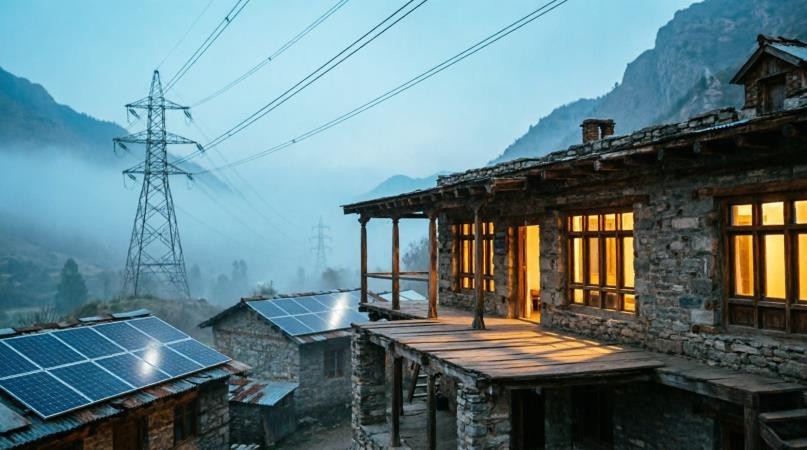
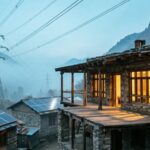
High in the hills of Nathiagali, mist threads through the pines and a stream runs silver beside a small family-run inn. The rooms are ready. The linen is crisp. The cook waits in the kitchen, and the caretaker polishes the veranda railing for the third time this morning. But the guests do not come. Not today. Not this week. Perhaps not this month.
And yet, the inn cannot close. The bills arrive on the first of every month – electricity, gas, the salaries of the staff whose only fault is their loyalty. The owner, trapped by duty and hope, pays them all from savings that are not replenishing. The emptier the inn, the heavier the burden on every empty room. The more it costs, the harder it becomes to lower the rates and attract the guests who might save it. A place built for warmth and laughter becomes a silent, tightening knot of obligation. This is not a parable about a hill station hotel.
It is the precise architecture of Pakistan’s energy crisis. Pakistan owns a fleet of power plants and a network of gas contracts it must pay for whether the energy is used or not. The capacity payments fall due every month. The infrastructure is built, the fuel ordered, the financial commitments locked. But industrial demand is suppressed, grid sales are shrinking, and the fixed costs are spread over fewer and fewer units, pushing tariffs higher still. A self-reinforcing trap has closed, and the instinctive remedies – subsidies, renegotiations, borrowing – have only oiled the gears.
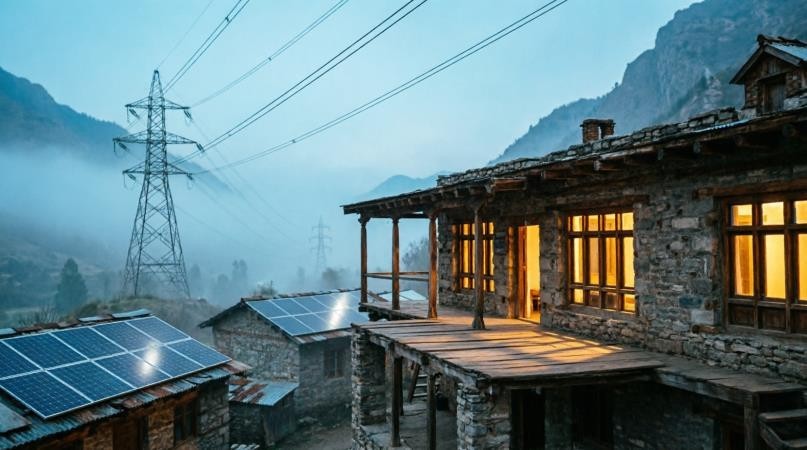
And then, across the rooftops of Faisalabad, Lahore, and Karachi, a silent revolution began. Solar panels, cheap and uncoordinated, bloomed under the sun. It should have been the moment electricity became affordable. Instead, it has made the grid more expensive for those who remain connected, deepening the very trap it was meant to spring.
This paper is the first in a series that argues for a clean break. It diagnoses the structural illness, not the symptoms. It proposes a counter-intuitive therapy: stop trying to cut costs, and start using what has already been paid for. And it insists that the difference between a Pakistan that bends to external shock and one that stands sovereign is not luck – it is design.
The window to escape the innkeeper’s fate is open, but not for long.
The Capacity Trap
The numbers tell a stark story. A large share of Pakistan’s power costs is fixed – locked into long-term contracts that require payment whether electricity is consumed or not. In FY2025 alone, capacity payments exceeded Rs. 2 trillion, consuming over half of total power‑sector costs. These payments do not fall when demand falls. They do not disappear when plants sit idle. They are owed regardless.
The result is a circular debt that has swollen to Rs. 1.889 trillion as of February 2026 – a burden that grows precisely because the electricity it finances sits underutilized.
And the gas sector mirrors this tragedy. Its own circular debt has reached Rs. 3.283 trillion, driven largely by unaccounted-for gas losses and late payment surcharges that have compounded to Rs. 1.45 trillion. The same structural flaw recurs: fixed obligations, suppressed demand, and a system that pays for what it loses before the customer ever sees it.
In theory, take-or-pay contracts ensured investment. In practice, they created a paradox. When demand is low, the fixed cost is spread over fewer units. The per-unit tariff rises. Higher tariffs then suppress demand further. Industry slows, consumers conserve, captive generation re-emerges, and the grid sells even less electricity. The cost per unit climbs again.
A self-reinforcing loop: This is the electricity trap. For years, policy has tried to attack the problem from the cost side: renegotiate contracts, delay payments, add surcharges and borrow to plug gaps. Each intervention buys time; none resolves the structure. Because the core issue remains untouched.
Pakistan is not short of electricity. It is short of demand.
The Solar Paradox
There is a second, subtler dimension to the trap, and it arrives wearing the disguise of a saviour. Rooftop solar has swept across Pakistan with astonishing speed. Independent estimates suggest between 27 and 33 gigawatts of distributed capacity now sit on homes, factories, and commercial buildings – enough to supply roughly one-fifth of the nation’s electricity consumption without a single watt appearing in official grid statistics.
For those who own the panels, the maths is beautiful. Bills collapse, diesel generators fall silent, and the sun becomes the cheapest employee on the payroll. At the national level, this citizen-led transition is already delivering strategic relief: every megawatt-hour generated on a rooftop is a megawatt-hour that does not require imported fuel. According to a March 2026 study by Renewables First and the Centre for Research on Energy and Clean Air, increased solar adoption reduced Pakistan’s oil and gas import bill by around 40 percent between 2022 and 2024, generating savings exceeding $12 billion by early 2026 – a transformative sum for a country chronically constrained by foreign exchange shortages.
But for the grid’s financial architecture, these silent rooftops present a brutal paradox. Every megawatt-hour of solar self-consumption is a megawatt-hour not sold by the grid. Yet the fixed capacity payments – owed to power plants whether they run or not – remain completely unchanged. The same multitrillion-rupee obligation is now divided among fewer grid customers, raising the per-unit tariff for everyone who cannot afford solar.
A 2024 study by Arzachel, “The Distributed Divide,” quantified what this looks like in practice: the rapid, under-regulated expansion of rooftop solar added approximately Rs. 2 per kilowatt-hour to grid tariffs for non-solar consumers in FY2023-24 alone, imposing an additional burden of roughly Rs. 200 billion on households least able to afford it. As more affluent consumers exit or reduce their reliance on the grid, the fixed costs of the power sector are redistributed among a shrinking base – creating, in effect, a two-tier energy system: autonomy and resilience for the few, rising costs and vulnerability for the many.
This is not an indictment of solar. It is an indictment of a system whose contracts were designed for a world in which the consumer had no alternative. Solar is not the disease; it is the stress test that has exposed the disease. And it is simultaneously the lifeline for the era after the take-or-pay contracts expire – a point we will return to shortly. The solution to this paradox lies not in discouraging distributed generation, but in evolving the system that surrounds it: deploying storage that aligns Solar’s midday abundance with evening demand, modernizing the grid to carry power where it is needed, and designing tariff structures that reflect genuine system value rather than inherited contractual rigidities. Parts II, III and IV of this series will detail those mechanisms.
For now, the diagnosis stands. The panels that protect those who own them are quietly increasing the burden on those who do not – not because solar is harmful, but because the architecture of the grid has yet to catch up to the revolution on the rooftops.
The Gas Trap
If the electricity crisis is a story of paying for power that is never used, the gas crisis is a story of paying for fuel that leaks away before it reaches a paying customer. The numbers are staggering: of the Rs. 3.283 trillion in gas circular debt, Rs. 1.45 trillion is late payment surcharges that have compounded over years – interest on a debt that never should have existed.
The mechanism is called Unaccounted-for Gas, or UFG. Pakistan’s two gas utilities have long reported blended UFG losses averaging well into double digits, with the losses for Sui Southern Gas Company historically among the highest in the world. Even after recent operational improvements, the combined annual financial loss from UFG is estimated at roughly Rs. 60 billion. A 2025 study published in Science and Technology for Energy Transition found the global average for unaccounted-for gas was 1.7% in 2021, with the best-performing networks reaching as low as 0.01%. Pakistan was recorded at 11.7% – nearly seven times the global average and among the highest rates in the world.
The trap works the same way as electricity: high physical losses force higher per-unit tariffs to recover the cost of the lost gas. Higher tariffs encourage theft and discourage legal consumption. Theft and suppressed demand increase UFG further. The cycle tightens.
What makes the gas trap particularly insidious is that it has been shielded from accountability by a simple misalignment of incentives. Gas utilities have historically been evaluated on collections – how much they bill and recover – rather than on losses. A utility can collect 95 percent of billed amounts while losing 12 percent of the input gas and still be deemed a success.
The pathway out is conceptually straightforward but politically demanding: shift the performance metric from collections to delivered gas per unit of input; deploy low-cost telemetry at pressure-reduction stations to detect and isolate leaks; introduce district-level metering and public ranking; and, in the medium term, replace the most degraded pipeline segments. These operational interventions require no new LNG contracts, no inter-provincial accords – only the enforcement authority of the regulator and the willingness to name failing feeders publicly.
The strategic significance of tackling UFG now is amplified by the investment horizon. The Iran-Pakistan pipeline and Thar coal gasification – both essential medium-term supply-side solutions – will take three to five years to begin delivering meaningful volumes. Unless UFG is attacked with performance-management intensity in the interim, the gas circular debt will continue compounding at a rate that swallows the fiscal benefit of those projects before they even come online.
The Misdiagnosis
The instinctive reaction to high tariffs is to reduce them through subsidies or renegotiations. Both have limits.
Subsidies shift the burden to the fiscal side. The taxpayer pays instead of the consumer. The circular debt reappears in another form.
Renegotiations help at the margins – they may shave costs, extend tenors, smooth cash flows. But they do not eliminate the fundamental reality a large, fixed cost base that must be paid. Trying to solve a structural volume problem with price adjustments is like trying to empty a reservoir with a cup. The system does not need less electricity. It needs more electricity to be used. This is the counterintuitive insight that changes everything.
The Volume Solution
If the fixed cost is already committed, the fastest way to reduce the cost per unit is not to cut the numerator; it is to increase the denominator. Sell more electricity.
Spread the same capacity payments over a larger number of units, and the per-unit burden falls. What appears expensive becomes competitive. What suppresses demand begins to attract it.
This is not theoretical. It is arithmetic. Double consumption, and the fixed cost per unit halves. Increase demand by fifty percent, and the burden drops sharply. The effect is immediate; it does not require waiting for new plants, new contracts, or long renegotiations. It requires utilization.
The tragedy of the current system is not that Pakistan overbuilt capacity. It is that it underuses what it has already paid for. The opportunity is hidden in plain sight.
The Credibility Gap
Pakistan’s problem is not the absence of policy ideas. It is the absence of continuity. Investors do not fear high tariffs as much as they fear unpredictable ones. A slightly expensive but stable environment is often preferable to a cheaper but volatile one. Capital commits when it can see the rules of the game over its investment horizon. This is where past efforts have faltered. Incentives are announced, then revised.
Packages are introduced, then withdrawn. Tariffs are reduced, then adjusted upward under fiscal pressure. The signal becomes noise.
Closing this credibility gap is not about making promises louder. It is about making them harder to reverse. Constitutional protections for time-bound economic commitments, legislative frameworks that define tariffs and eligibility over a decade, and contractual lock-ins with large consumers can create a layered shield against short-term reversals. The institutional architecture to deliver this – an empowered, politically survivable National Energy Transition Authority – is the subject of Part II.
The investor needs to know: the rules may evolve, but they will not be rewritten mid-game. That distinction is everything.
The Window of Opportunity
A strategic detail often overlooked offers a rare source of hope: Pakistan’s most burdensome contracts are being unwound at pace. In October 2024, five of the oldest independent power producers – Hubco, Rousch, Lalpir, Atlas, and Saba – accepted early termination, saving an estimated Rs. 411 billion. By January 2025, the government had revised agreements with 14 thermal plants, unlocking a further Rs. 1.4 trillion in projected savings over their remaining terms, and settled with 8 bagasse-based units for an additional Rs. 238 billion. The cumulative effect of these three tranches alone exceeds Rs. 2 trillion.
Beyond settled agreements, 18 more IPPs are negotiating a fundamental shift from “take-or-pay” to “take-and-pay” – a model in which the state pays only for electricity actually dispatched, not for idle capacity. This conversion, if completed, could reduce annual outflows by Rs. 70-100 billion. In parallel, the government has placed publicsector generation companies (GENCOs) under active consideration for similar restructuring.
The numbers are large, but the logic is simple: contract by contract, the fixed-cost base that has strangled the grid is being surgically dismantled. The government has declared that an aggregate saving of Rs. 3.6 trillion from the renegotiation of over 35 IPP contracts, signaling political ownership of the reform trajectory.
Simultaneously, new domestic hydropower is arriving. Dasu will add 2,160 megawatts by 2028, and Diamer-Basha another 4,500 megawatts by 2028- 29.
Eleven more IPPs will reach their natural expiry by 2030. These need not be replaced.
For the first time in decades, the clock is ticking in Pakistan’s favour. But it is a window, not a permanent door. Unless demand is stimulated, grid bottlenecks cleared, and storage deployed before the expiries, the fiscal room created by these renegotiations will be swallowed by financial leakage elsewhere. The next three to five years are the pivot. The renegotiation momentum confirms that the trap is not immutable. But only a coordinated volume strategy can ensure the hard-won savings translate into lasting affordability.
A Different Ending
Let us return to the inn in the hills.
The sun still threads through the pines, and the stream still runs beside the veranda. But now the rooms are full, the tourists are enjoying the serene setting. The cook is overworked and cheerful; the caretaker has stopped polishing and started greeting. The bills still arrive, but they are paid with revenue, not savings. The emptiness is gone, and with it, the slow suffocation of fixed cost.
How did the innkeeper escape the trap? Not by cutting the cook’s salary or begging the bank for another extension. He simply found a way to fill the rooms that were already there. The same kitchen, the same veranda, the same linen – but now with guests inside, the economics flipped from burden to viability. Instead of waiting each month to pay the bills from dwindling savings, the innkeeper decided to spend the same amount on building incentives for the tourists.
Not a dead expenditure but an investment that had a reasonably short payback period and an excellent return on investment.
Not a dead expenditure but an investment that had a reasonably short payback period and an excellent return on investment.
It is whether it can afford not to use them.
And – critically – whether it can create the conditions that turn idle capacity into active, paying demand.
The inn does not need to remain empty. The tourists can be brought to the hills. The possibility of doing so is not only real; it is high, because the factors that suppressed demand for so long – uncompetitive tariffs, unreliable supply, policy whiplash – are precisely the factors that a credible, volume-based strategy can reverse.
The path to filling the rooms is neither mysterious nor technically out of reach. It requires clearing the bottlenecks that keep power from moving freely, designing tariff structures that invite industry back onto the grid, and building the infrastructure that turns imported-fuel consumers into domestic-electricity customers.
These are engineering and governance challenges, not acts of faith. And each one is addressed, in concrete detail by the subsequent parts of this series.
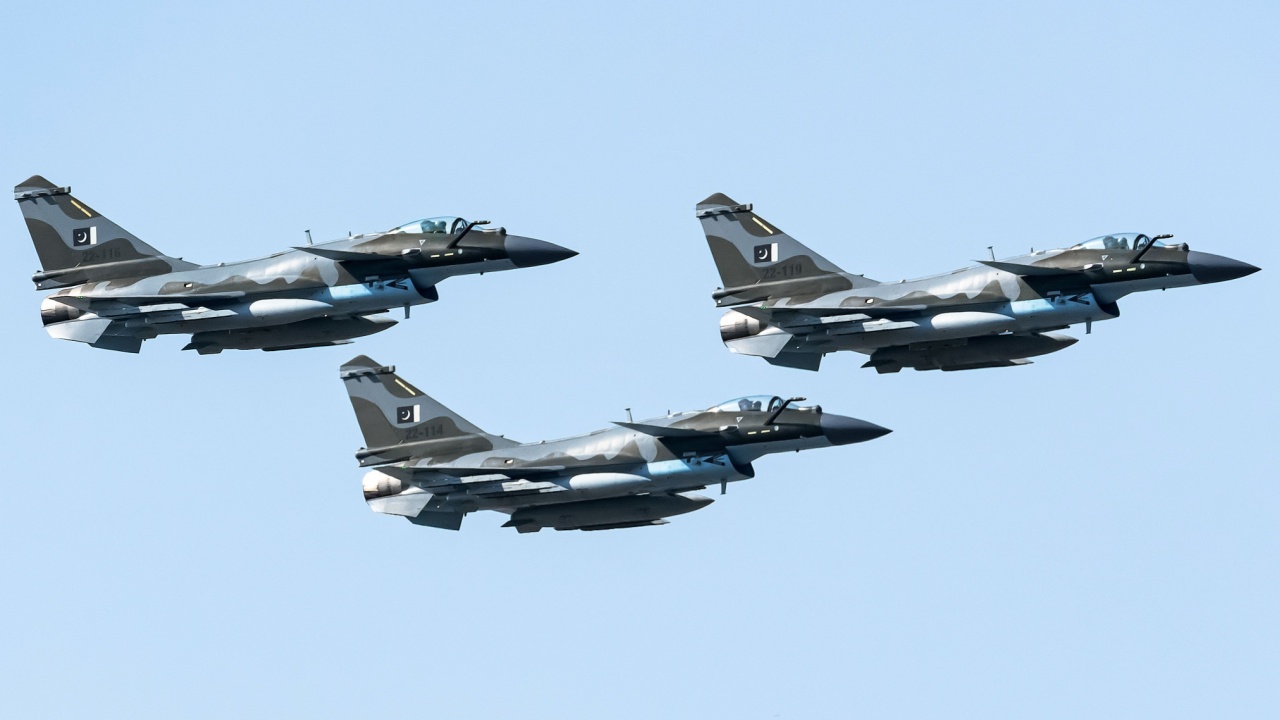
Part II, Grid Modernization, removes the blockages in the arteries of the system. Part III, Transport Electrification, turns the nation’s largest petroleum consumers into the grid’s most reliable new buyers. Parts IV through X – from floating solar and pumped hydro to gas sector reform, carbon markets, defence exports, and the NETA Charter – build the full architecture, layer by layer, until the trap is dismantled, the inn is solvent, and Pakistan’s energy sovereignty is no longer a hope but a hardened fact.
The final roadmap (Part IX) and synthesis (Part X) will present a phased implementation timeline that respects the narrow window of opportunity this paper has defined.
Between vulnerability and sovereignty lies a set of decisions – not about building more capacity, but about using what already exists. Not about shortterm relief, but about structural correction. The window is open. The inn can still be filled.
The question is whether policy will arrive before the last guest gives up and walks away
Annexure A: Roadmap of the Series
| Part | Title | Focus |
| I | The Vicious Cycle | Diagnosis of Energy (electricity and gas) crises |
| II | Grid Modernisation | 500kV HVDC backbone, losses, financing |
| III | Transport Electrification | ICE phase-out, charging hubs, battery swap, inclusive access |
| IV | Floating Solar, PHES & WEFE Nexus | Hydro-solar hybrids, pumped storage, water-energy-food integration |
| V | Gas Sector Reform & IP Pipeline | Circular debt settlement, UFG reduction, Iran pipeline, Thar coal gasification |
| VI | Carbon Markets | Norway agreement, credit registration, revenue potential |
| VII | Defence Exports & Security Provider | FX pipeline, Gulf security market, energy financing integration |
| VIII | The NETA Charter | Governance solution, empowered, merit-based authority |
| IX | Implementation Roadmap | Phased milestones, financing dashboard, risk matrix |
| X | Conclusion | Synthesis and call to action |
References
Electricity Circular Debt
1. Power Planning & Monitoring Company. (2026, February 28). Circular debt stock data. (As cited in Business Recorder)
Gas Circular Debt & UFG Losses
2. Ministry of Petroleum. (2026, February 21). Briefing to National Assembly Standing Committee on Petroleum (Gas sector circular debt reaches Rs 3.283 trillion)
3. Hureau, G., Lecarpentier, A., Serbutoviez, S., et al. (2025). Global methane emissions from natural gas transmission and distribution networks. Science and Technology for Energy Transition, 80, 28. https://doi.org/10.2516/stet/2025007
Distributed Solar Capacity
4. Renewables First / TransitionZero. (2026, January). Pakistan’s installed PV capacity estimated at 27–33 GW. As cited in TimeWave Weekly Report on Electricity Industry, January 20–26, 2026. Available at: http://en.tw-iot.cn/news02/12-116.html
Solar Cost-Shifting & Import Savings
5. Arzachel. (2024, November). The Distributed Divide – How Solar Expansion Affects Non-Adopting Consumers and Utility Economics. As reported in Profit by Pakistan Today, November 23, 2024. Available at: https://profit.pakistantoday.com.pk/2024/11/23/solar-expansion-raises-power-tariffs-for-non-solar-users-costing-rs200bn-in-fy24-report/
6. Renewables First & Centre for Research on Energy and Clean Air. (2026, March). Pakistan’s solar boom shielding country from Hormuz disruptions. As reported in Dawn, March 17, 2026. Available at: https://www.dawn.com/news/1982984
IPP Renegotiations & Contract Expiries
7. Associated Press of Pakistan. (2024, October 10). Five IPPs contracts terminated to save Rs 411 billion, provide Rs 60 billion relief to consumers: PM. Available at: https://www.app.com.pk/national/five-ipps-contracts-terminated-to-save-rs411b-provide-rs60-b-relief-to-consumers-pm/
8. Pakistan Observer. (2025, January 15). Cabinet approves 14 revised IPP agreements. Available at: https://pakobserver.net/cabinet-approves-14-revised-ipp-agreements/
9. Business Recorder. (2024, October 14). Govt stops payments to 18 IPPs ahead of negotiations? Available at: https://epaper.brecorder.com/2024/10/14/1-page/1011117-news.html
10. Radio Pakistan. (2024, December 10). Cabinet approves settlement agreements with 8 IPPs run on bagasse. Available at: https://www.radio.gov.pk/10-12-2024/cabinet-approves-settlement-agreements-with-8-ipps-run-on-bagasse
Grid Transmission & Distribution Losses
11. National Electric Power Regulatory Authority. (2026). DISCO Performance Evaluation Report (T&D losses recorded at 17.55% during FY25). Available at: https://profit.pakistantoday.com.pk/2026/01/16/nepra-releases-2025-state-of-industry-and-2024-25-annual-reports-for-federal-review/
Dasu & Diamer-Basha Hydropower Projects
12. Water and Power Development Authority. (2025). Dasu Hydropower Project Stage I completion timeline. Official WAPDA project documentation.
Transport Electrification (Two- & Three-Wheeler Data)
13. Leghari, A. (2025, January 29). Motorcycles, rickshaws consume 40% of Pakistan’s petrol, costing $6bn annually. As reported in Profit by Pakistan Today. Available at: https://profit.pakistantoday.com.pk/2025/01/29/motorcycles-rickshaws-consume-40-of-pakistans-petrol-costing-6bn-annually-leghari/
LNG Cargo Cancellations
14. The Nation. (2025, December 6). Pakistan to cancel 45 LNG cargoes in 2026–27. Available at: https://www.nation.com.pk/06-Dec-2025/pakistan-cancel-45-lng-cargoes-2026-27
Aggregate IPP Savings
15. PTV. (2025, July 31). PM Shehbaz Sharif commends Awais Leghari for power sector reforms, saving Rs 3.6 trillion. Available at: https://ptv.com.pk/mobileView/ptvWorldMobile/newsdetail/10049