

An Emerging Messiah of the Peace in the Middle East & West Asia
The ongoing situation in the Middle East is indicating a very serious deadlock due to the war between United States, Iran & Israel. The deadlock was mainly due to the Iran’s nuclear program, the Iranian regime and its capability to block the Strait of Hormuz which is an economic lifeline for many countries in the world including China, Europe and many regional countries. It was evident that Iran will not surrender easily in this was and will continue to fight back. This war was a direct consequence of US and Israel’s ambitions to change the regime in Iran with help from the Iranian people. The spark the resulted in the war was the (supposed) collapse of nuclear negotiations and a brutal crackdown by the Iranian regime on domestic protesters in early 2026. For the regime change, the local population supported an uprising against the Iranian regime that resulted in an internal civil war like situation and quite a large number of people were killed while clashing with IRGC and military forces.
The direct conflict between the United States and Iran which escalated significantly in early 2026 with Operation Epic Fury when the U.S. and Israel launched nearly 900 strikes in a single day. The opening strikes killed Iran’s Supreme Leader, Ali Khamenei, and other senior officials. Iran responded with massive missile and drone attacks targeting U.S. military bases and embassies across the Middle East, including in Saudi Arabia, Qatar, and the UAE. A conditional two-week ceasefire was agreed upon starting April 7, 2026 on the request from Prime Minister of Pakistan Mohammad Shehbaz Sharif who tweeted on 7 April 2026, resulting in President Donald Trump’s acceptance and announcement of the ceasefire.
This request on Twitter from Shehbaz Sharif thus paved the way for Pakistan to host the first round of peace talks between United States and Iran. The subject of these talks was mainly Iran’s nuclear program and opening of the Strait of Hormuz for all types of traffic, which Iran closed for naval traffic. These talks were named as Islamabad Talks 1.0 and began on April 11–12, 2026, a historic, high-level diplomatic summit between the United States and Iran, hosted by Pakistan to negotiate an end to the 2026 Iran War. While the initial 21-hour session ended without a final peace agreement, it marked the first direct, face-to-face engagement between top officials from both nations since 1979.
The question of how Pakistan was accepted mutually from all stake holders as a peace mediator, consists of many factual events which include:
1. Mediation history
2. Results of the Pakistan-India war 2025
3. Moral assistance for Iran during Iran-Israel war 2025, and
4. Defence agreement between Pakistan and Saudi Arabia.
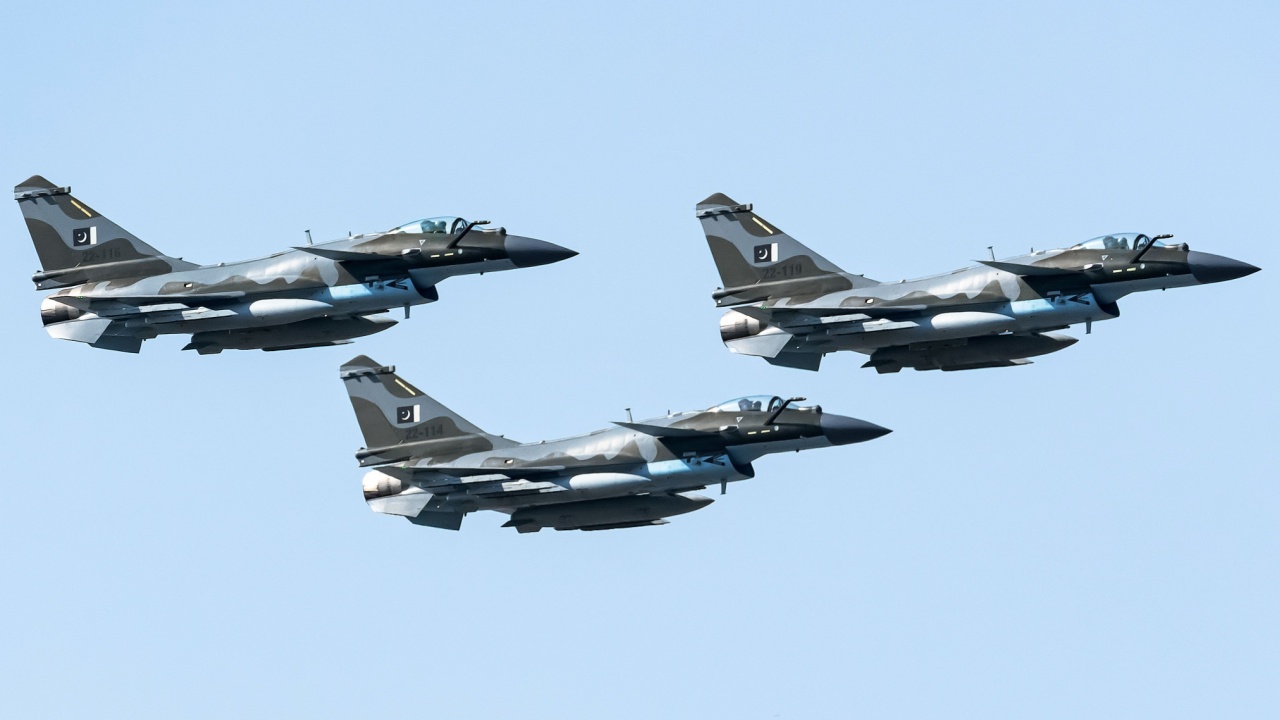
Pakistan’s mediation history between the United States and China is anchored by its pivotal role in the 1971 rapprochement, a watershed moment in Cold War geopolitics. Leveraging its unique position of trust with both nations, Pakistan facilitated the secret communication that eventually ended decades of diplomatic isolation between Washington and Beijing. Moreover, Pakistan was also active during the US peace deal with Afghan Taliban, known as the Doha agreement. It is worth mentioning that the credibility Pakistan earned as a military power was due to its decisive victory against India during Operation Bunyan al Masoos. Pakistan demonstrated to be a powerful country alongside China and its close brotherly allies with Türkiye, Azerbaijan, and Bangladesh. The Arab allies realized this new Pakistani reality resulting in deeper strategic and economic ties with Pakistan. This 96-hour war clearly demonstrated Pakistan’s victory over India. A very fine combination of air expertise and cutting-edge technology made Pakistan Air Force stand out as one of the most powerful air forces in the entire world.
Pakistan secured a strong position in the new world order after the 96-hour war with India and global and regional drawing boards were modified/updated/altered. As a rule of thumb in this power-driven world, only Power speaks by itself, so Pakistan has demonstrated its worth, capacity and resolve. This was all possible due to exercising the golden words Unity, Faith, Discipline as well as Resilience which the entire Pakistani nation exhibited fully backing up its Armed Forces. This was not just a war of narratives, this was a war of international law-abiding nations that believe in the UN Charter against a rogue Indian nation that thinks it can do whatever and wherever it can. India made a big miscalculation with the end result being India’s international worth crashed down to its lowest ever point. Pakistan Armed Forces have invented an ART of War by indigenously developing a new “Smart Interface” of the most sophisticated Domains/Spectrums of modern warfare. Let this be remembered as an Exclusive and Singular Honour achieved by the Islamic Republic of Pakistan.
The Iran-Israel War of 2025, also known as the Twelve-Day War, began on June 13, 2025, when Israel launched Operation Rising Lion. This direct conflict was sparked by a combination of long-standing tensions and immediate strategic developments.
During the twelve-day war, Iran expressed significant gratitude to Pakistan for its diplomatic solidarity and public support that in turn resulted in greater credibility for Pakistan amongst the Iranian people and also in Iranian government rank and files.
The President of the United States Donald Trump’s relationship with the Pakistan Prime Minister Shehbaz Sharif and Chief of Defence Forces Field Marshal Syed Asim Munir developed rapidly when Pakistan won the war against India in 2025, they also supported Trump’s claims of preventing a “nuclear war” between India and Pakistan in May 2025.
Trump frequently credits his “decisive diplomatic intervention” for averting a conflict that could have killed 30 to 50 million people.
Unlike India, which maintains that the ceasefire was a bilateral military agreement without third-party mediation, Pakistan has publicly embraced and validated Trump’s version of events. Pakistan’s Army Chief, Field Marshal Asim Munir played a critical role in this shift, recently attending a high-profile White House lunch. Trump has praised both Munir and PM Sharif as “fantastic people” with “very strong leadership. Thus, Pakistan emerged as a common acceptable mediator for Iran and United States.
On September 17, 2025, Pakistan and Saudi Arabia signed the Strategic Mutual Defence Agreement (SMDA) in Riyadh. This landmark pact formalizes decades of security cooperation and introduces a collective defence clause stating that any aggression against one country is considered an aggression against both. This mutual defence agreement came at a time when the first Iran-Israel war 2025 had just concluded and the regional countries, especially Saudi Arabia felt a great deal of insecurity even with the US defence protection.
Following the outbreak of regional conflict involving the US, Israel, and Iran, Pakistan made its first visible military move under the pact by deploying fighter jets and support aircraft to King Abdulaziz Air Base in Saudi Arabia. Reports also indicate the deployment of approximately 13,000 troops to enhance joint readiness.
In February 2026, Prime Minister Narendra Modi and Prime Minister Benjamin Netanyahu met in Jerusalem to elevate their bilateral ties to a “Special Strategic Partnership for Peace, Innovation, and Prosperity”. While the meeting focused heavily on defence, technology, and a “Hexagon” alliance against radicalism, it coincided with a dramatic escalation of hostilities between Pakistan and Afghanistan. Tensions between Islamabad and the Taliban regime erupted into what Pakistani officials described as “open war” shortly after the Modi-Netanyahu summit.
It was reported that Netanyahu and Modi had openly supported the Taliban against Pakistan in their meeting and it was believed that Taliban would keep Pakistan’s western frontiers ‘hot’ to pave ground for an Indian Invasion.
Following the suicide attacks in Islamabad and Bajaur, Pakistan launched selective air strikes against militant camps (TTP and ISIS-K) in eastern Afghanistan on February 22. On February 26, the Taliban launched a large-scale offensive against Pakistani border posts, prompting Pakistan to retaliate by bombing targets in Kabul, Kandahar, and Paktika. Faced with the bombing campaign by Pakistan’s air force and ground troops, Taliban requested for a ceasefire that was followed by a negotiations session under Chinese mediation.
After the 28 February 2026 US-Israel invasion of the Islamic Republic of Iran, Pakistan adopted a voluntary geo-political role to embark upon a diplomatic track to broker an immediate cease fire followed by a sustainable lasting peace agreement that was universally acceptable to affected parties.
Pakistan did not waste any time and took the task applying its globally recognized neutral/ moderate foreign policy. Pakistan hosted talks with Türkiye, Egypt, and Saudi Arabia focused on an immediate cease fire and was able to get both the warring parties to coin out their Terms of References. When both sides came out with their demands that were discussed in Islamabad between very high-powered US- Iran delegations in the presence of the mediator and a few invisible observers. Though the talks have ended without any result, they did open a path for further deliberations.
Pakistan’s Prime Minister Shahbaz Sharif and CDF Field Martial Asif Muneer then redoubled their state and military diplomacy to bring the USA, Iran and other concerned to a sustainable agreement for peace.
As of April 17, 2026, Pakistan’s pivotal role in de-escalating the Iran-US-Israel conflict by acting as a key intermediary and facilitating backchannel diplomacy led to a fragile, temporary ceasefire. Leveraging its unique position, Islamabad provided a trusted communication channel, helping to avert a broader regional war.
The Past 48 Days
Pakistani Foreign Minister Ishaq Dar said Islamabad would host U.S.- Iran talks in the coming days, though neither Washington nor Tehran have immediately confirmed this. Initially Iran responded with hard war posturing; Parliament speaker Mohammad Baqer Qalibaf warned that if American troops entered Iran, they would be “set on fire”. Iran accused U.S. peace messages as cover for possible ground action. It was feared that the war’s next phase might ignite an air and naval conflict or a bloody ground war as the U.S. military build-up kept increasing and kept giving escalation signals.
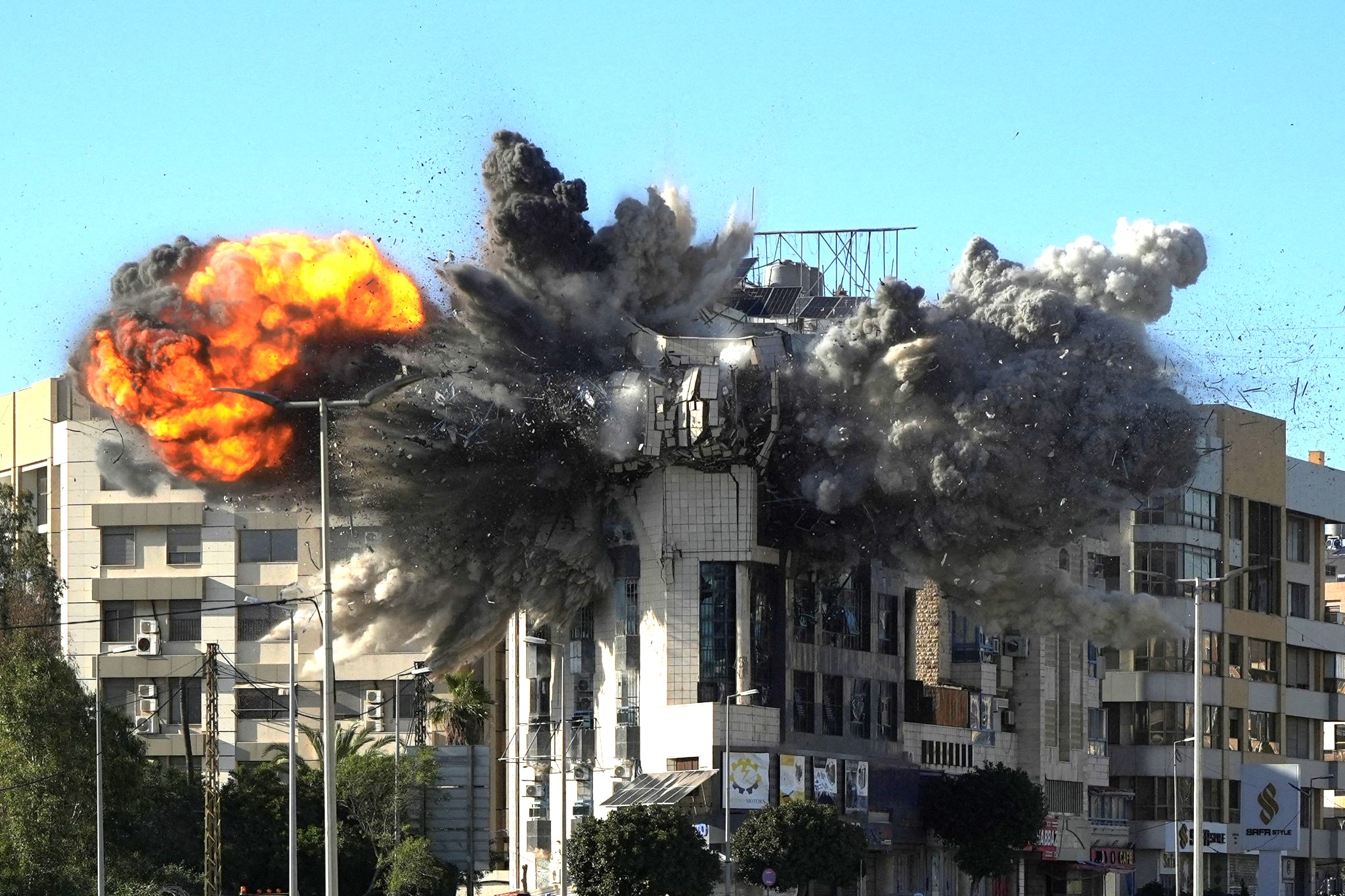
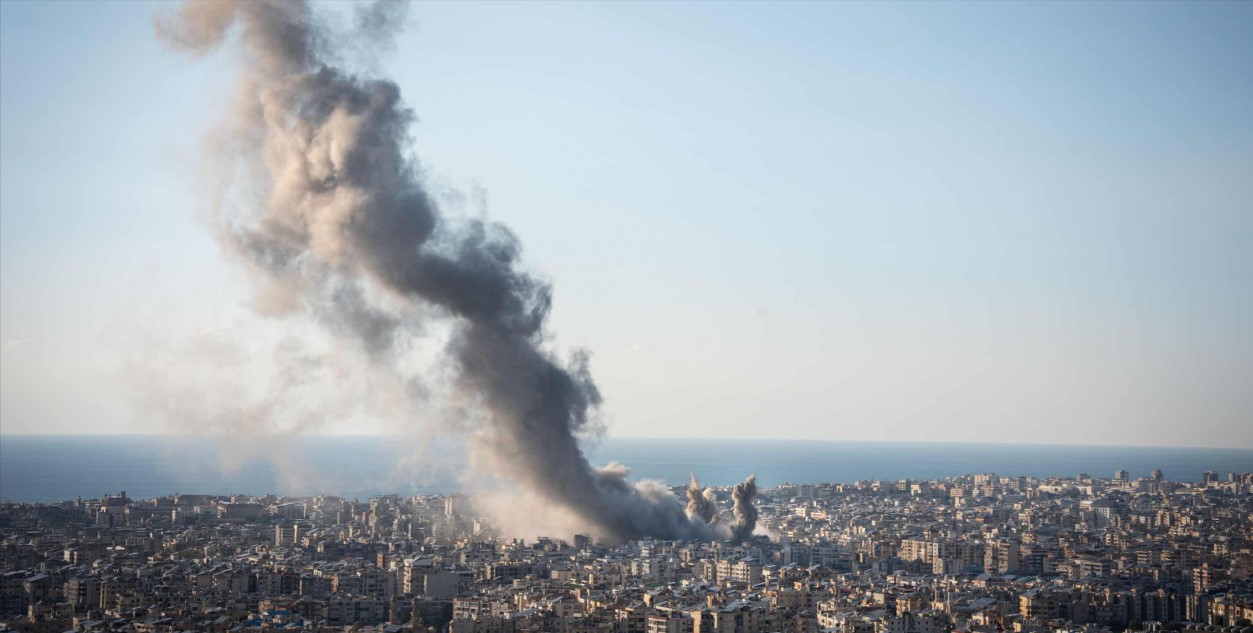
2,500 U.S. Marines also arrived in the region. Two Marine contingents arrived in the theatre giving concerns about plans for possible ground operations, including possible deployment of troops from 82nd Airborne Division who were deployed around Iran. Iran’s energy ministry reported power cuts in Tehran and Alborz after attacks on electricity facilities – that mattered because it shows the air campaign continuing to degrade daily-life systems inside Iran, even when the stated military focus remains missile and defence infrastructure. Israel widened the northern front at the same time and carried out bombing runs on civilian targets.
Additionally, Benjamin Netanyahu ordered the military to further expand operations in southern Lebanon, building on Israel’s push toward the Litani River buffer zone. The move signals that Hezbollah containment is being treated as part of the same war theatre, not as a separate side conflict.
Meantime, economic pressure remained severe and continued to shape diplomacy. Hormuz carried about a fifth of global oil and LNG before Iran effectively halted flows, Brent crude increased by 4.2% to $112.57 a barrel; Gulf stock markets mostly fell. The American Petroleum Institute said reopening Hormuz was “the only real solution” to control energy and consumer prices. Iran also allowed 20 additional Pakistani-flagged ships through the Strait to ease the demand in Pakistan. This 12-hour stretch hardened the war’s direction. The main change was not a spectacular new strike package or a formal ground invasion. It was the tightening overlap between military preparation, coercive diplomacy, and lateral regional expansion.
After a 48-day conflict, Pakistan intervened to prevent further escalation with officials leveraging direct, secure channels with both parties. Pakistan proposed a two-phased, 45-day framework, which was reduced to a two-week truce starting ~April 8.
Negotiations were held on April 10–12 included teams led by the US and Iran, aiming for a permanent resolution. Despite initial progress, the talks failed to produce a lasting agreement on key issues regarding the Strait of Hormuz and Iran’s nuclear program. Following the breakdown of talks, President Trump imposed a naval blockade on Iran on April 13, 2026. The ceasefire application to Hezbollah operations in Lebanon remained unclear, with reports of repeated attacks and aggressions by Israel.
Pakistan’s Achievements
Pakistan, specifically its military leadership, enabled the ceasefire by positioning itself as a credible intermediary, coordinating talks from Rawalpindi between Washington and Tehran.
Pakistan enabled the ceasefire by activating backchannel diplomacy to bridge the gap that was increasing between Iran and the US.
Islamabad successfully exchanged messages, including a 15-point proposal, between the U.S. and Iran. Leveraging its 1,000 km border with Iran and its strategic relationship with the U.S. and regional partners like Saudi Arabia, Pakistan offered a unique communication channel. Pakistan’s early, calculated condemnation of U.S.-Israeli strikes helped win trust with Iran, balancing its relationships to act as an effective peacemaker.
The Pakistani leadership has been actively engaged in ensuring the peace process, including potential peace talks in Islamabad.
The round of talks in Islamabad will hopefully end the escalations between Iran and the United States in which there is a clear danger, according to many analysts, of eruption of WWIII resulting in catastrophic human tragedy.
Thus, by employing aggressive diplomacy, Pakistan has emerged as a Messiah of Peace, not in the Middle East and West Asia but for the entire world.
Pakistan will definitely have the greater role in the security architecture of the Middle East & west Asia along with its brotherly partners Türkiye, Saudi Arabia, Qatar and Egypt.
NOTE:
The writer is grateful to Col Maqbool Malik (Retired) who contributed to this article.