
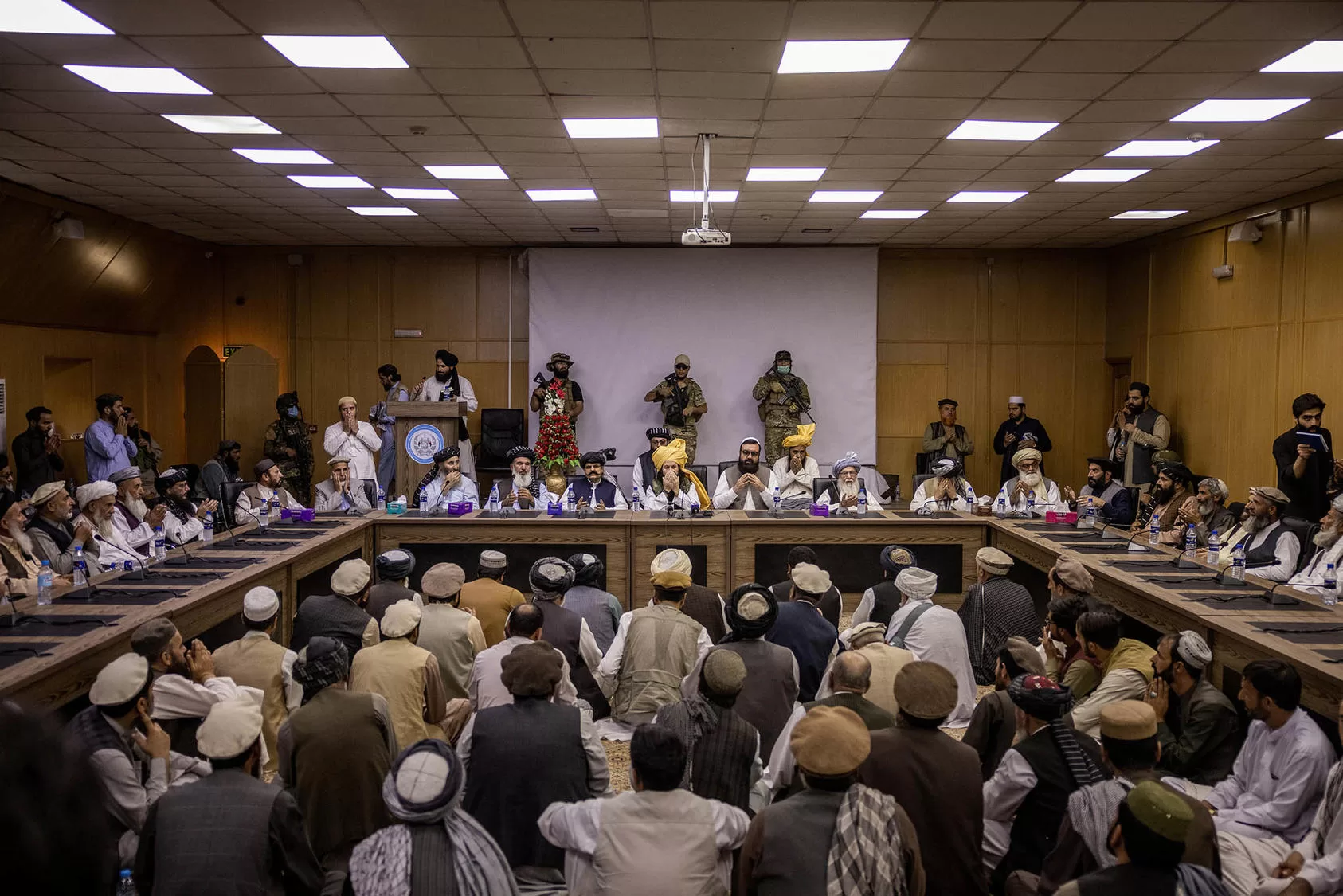
Afghanistan has been a war zone since the time of its inception. It is called the “Graveyard of Empires” given the fact that several foreign powers have been unable to achieve military victory in the modern period. Contemporarily, Afghanistan is under Taliban rule after the US withdrawal from Afghanistan. Taliban are known to have suppressed the freedom of expression, women’s rights, and rights of multiple ethnicities living under their control. The Afghan community is multiethnic and an amalgam of 14 nationally recognized ethno linguistic groups such as Pashtuns, Uzbeks, Tajiks, Hazara, Aimaq, Turkmen, Baloch, Pashai, Kurds, Nuristani and Qizilbash.
As of January 2024, Afghanistan has a population of 42 million. Pashtuns are the greatest in number comprising 42%, Tajiks are the second largest with 27%, Hazaras 9%, Uzbeks 9%, Aimaq 4%, Turkmen 3%, Baluch 2% and 4% of the population falls into an unrecognized ‘other’ class. The term Afghan is synonymous with Pashtun who are the largest ethnicity in Afghanistan and have the greatest influence. Other ethnic groups are deprived of their basic rights and are forced to settle elsewhere in the Asian region.
The ethnic groups are divided into four different zones in the state. Three of these zones are provinces and one is a city named Herat, Kabul, Kandahar and Mazar-i-Sharif respectively. The Taliban government faced vigorous backlash from these areas in 1996- 2001 after strict implementation of Islamic Sharia and laws.

The non-Pashtun communities protested in the western, northern and central areas of Afghanistan as they feared that the Taliban government would galvanize the Pashtun hegemony in the state. This was halted by American intervention in 2001 but after the US withdrawal, the Taliban government came up with an overwhelming Pashtun majority but it is facing challenges in urban settings and regions of non-Pashtuns.
These marginalized groups promote anti-Taliban sentiments and create insecurity for the regime. After the Afghan-US peace talks, Taliban escalated attacks against civilians, journalists and opponents of the regime with frequent raids, arrests, and invasions carried out to curb the threats to the regime.
Tajiks are the second largest identity after Pashtuns. They lineage traces back to the Tajiks living in Central Asian Tajikistan. Tajik elites have representation in the political spheres and most of them are connected to the Jamat-e-Islami party. They were also involved in toppling the previous Taliban government with the support of the Soviet Union in 1978, they were thus called traitors and were attacked heavily afterward. The Tajiks lived in Kabul and the northeastern region of Badashkshan but are currently scattered in the northeast and west of Afghanistan. Their number has decreased during the Taliban regime as both opponents have combatted to gain control over the territory. Tajik farms in Kabul were fired and they were compelled to evacuate or rally to another territory.
The Tajiks living in Panjshir province were also targeted and arrested, however these atrocities led to the formation of resistance groups. Ahmed Shah Massoud from Panjshir was a prominent resistance leader once, he was a powerful and influential insurgent and was titled “Lion of Panjshir.” Sandy Galls in his book referred to him as “Afghan Napoleon.” He fought against the Soviet Union forces, the Taliban and Al-Qaeda alliances. He was assassinated on 9 September 2001 as he had warned the West earlier about attacks from Afghanistan.
Persecutions and extrajudicial killings are commonplace. In September 2011 a Taliban militant assassinated former Afghan president Burhanuddin Rabbani, an ethnic Tajik. The grievances of the Tajik community revolve around representation in government and politics as they desire to control the Tajik-majority zones, having a greater claim in the central government, overcoming discrimination, and getting more economic benefits and opportunities. The government responds to the threats posed by these ethnic groups with the use of utmost force and power. Similar actions were taken against the Hazaras and other ethnicities.

Hazaras inhabit the central region of Afghanistan also named Hazarajat. They are traced back to Turkic-Mongol heritage, some claim them to be indigenous to the central area of Afghanistan. They belong to the Shi’a sect and face utter discrimination due to their religious beliefs. In the regime of Amir Abdul Rahman, Hazaras faced severe social, political and economic suppression. They were declared “infidels” based on their religious belief being Shia’a Muslims living in a Sunni state. Amir Abdul Rahman waged a “Holy War” or “Jihad” against the Hazaras to solidify his power within the state and win public opinion. The soldiers raped Hazara women, men were imprisoned and their weapons confiscated.
According to a rough estimate, 65% of the Hazara community was massacred in the ‘holy war.’ Hazaras migrated to Iran and India, and the ones left behind were arrested and kept as slaves. Taliban governor, Mullah Niazi demanded that Hazaras should either convert to the Sunni sect or leave the state and if they do not do so they will be killed. In 2001, casualties were reported in the Bamiyan province, and the statues known as “Buddha of Bamiyan” were also destroyed. The Taliban ordered to destroy the statues as they were considered idols, but the Hazara community claimed that the real motivation behind this was to destroy their historical linkage to central Afghanistan. The report published by the United Nations High Commissioner for Refugees (UNHCR) in August 2018 stated that the Taliban, anti-government entities and ISIS murdered thousands of Hazaras.
To conclude, minority ethnicities are subject to violence, insecurity, exclusion, destabilization, injustice, discrimination, detention, beatings, massacre and forced conversion and evictions. Taliban are politically motivated by the idea of “Pashtunization” of Afghanistan to bolster their regime and are trying to demolish anti-Taliban sentiments and opposing ethnicities. The Taliban regime has spawned serious security concerns and an identity crisis in the state. The state of ‘exception’ and ‘risk’ has created an emergency. It is about time that the insecurity faced by communities calls for international attention and action to stop the elimination of indigenous identities of Afghanistan.