
Part VII
Note: To be read in conjunction with Global Order 1 to 6.
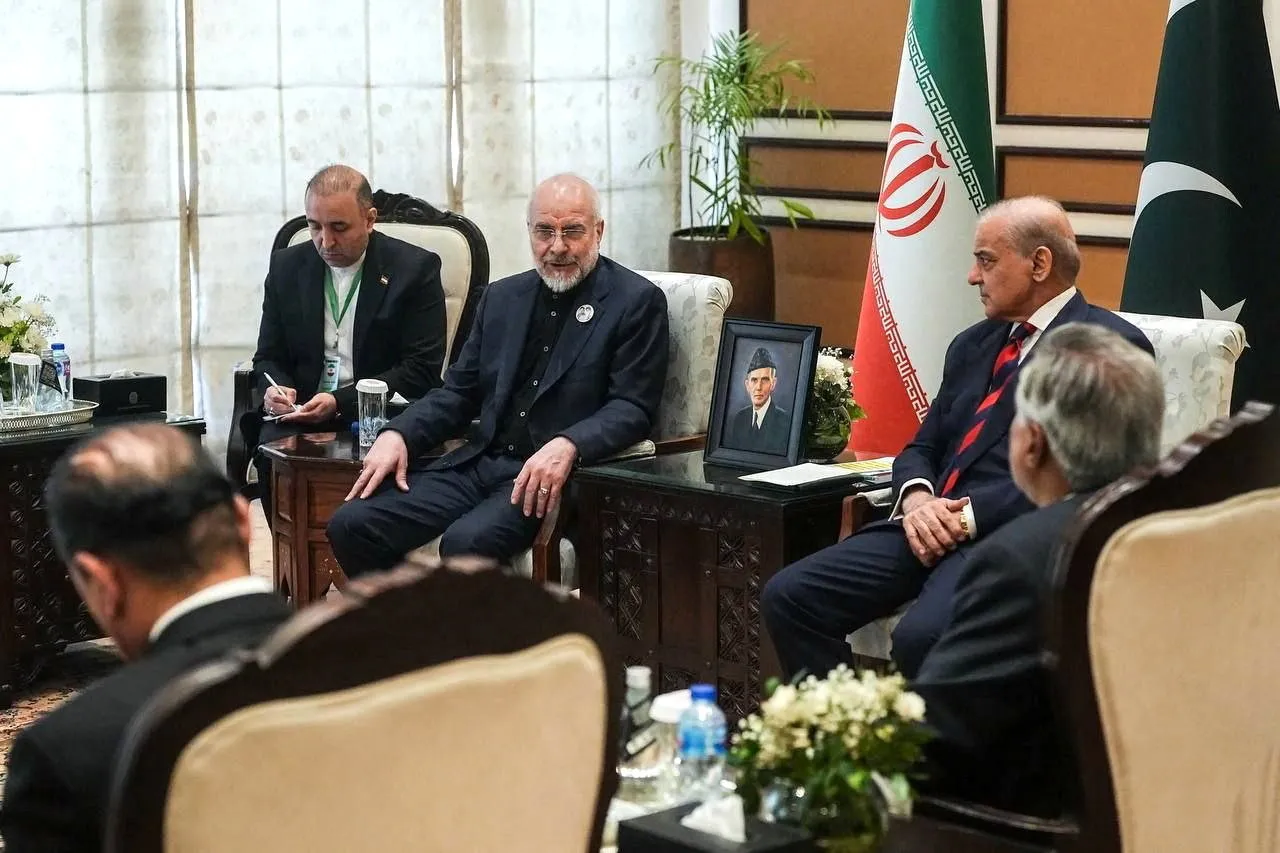
They came, they talked, and agreed to disagree. Islamabad was abuzz with diplomatic activity as US and Iranian delegations arrived on 10th April 2026 for high-level talks conducted on the 11th.
The US delegation was led by Vice President JD Vance, accompanied by Jared Kushner—whose public reputation rests on being President Trump’s son-in-law—and Scott Witkoff, a real-estate agent, turned US Special Envoy for the Middle East. The US team, however, was not empowered to take binding decisions and remained in constant communication with President Trump and Prime Minister Netanyahu for consultations – who apparently jointly scuttled any possibility of an agreement.
The Iranian delegation, a 70-member strong team, was led by Speaker of Parliament Mohammad Bagher Ghalibaf, accompanied by Foreign Minister Abbas Araghchi and several senior officials. Collectively, the Iranian delegation outclassed the Americans in experience, conduct, education, and institutional depth—almost all being PhD holders.
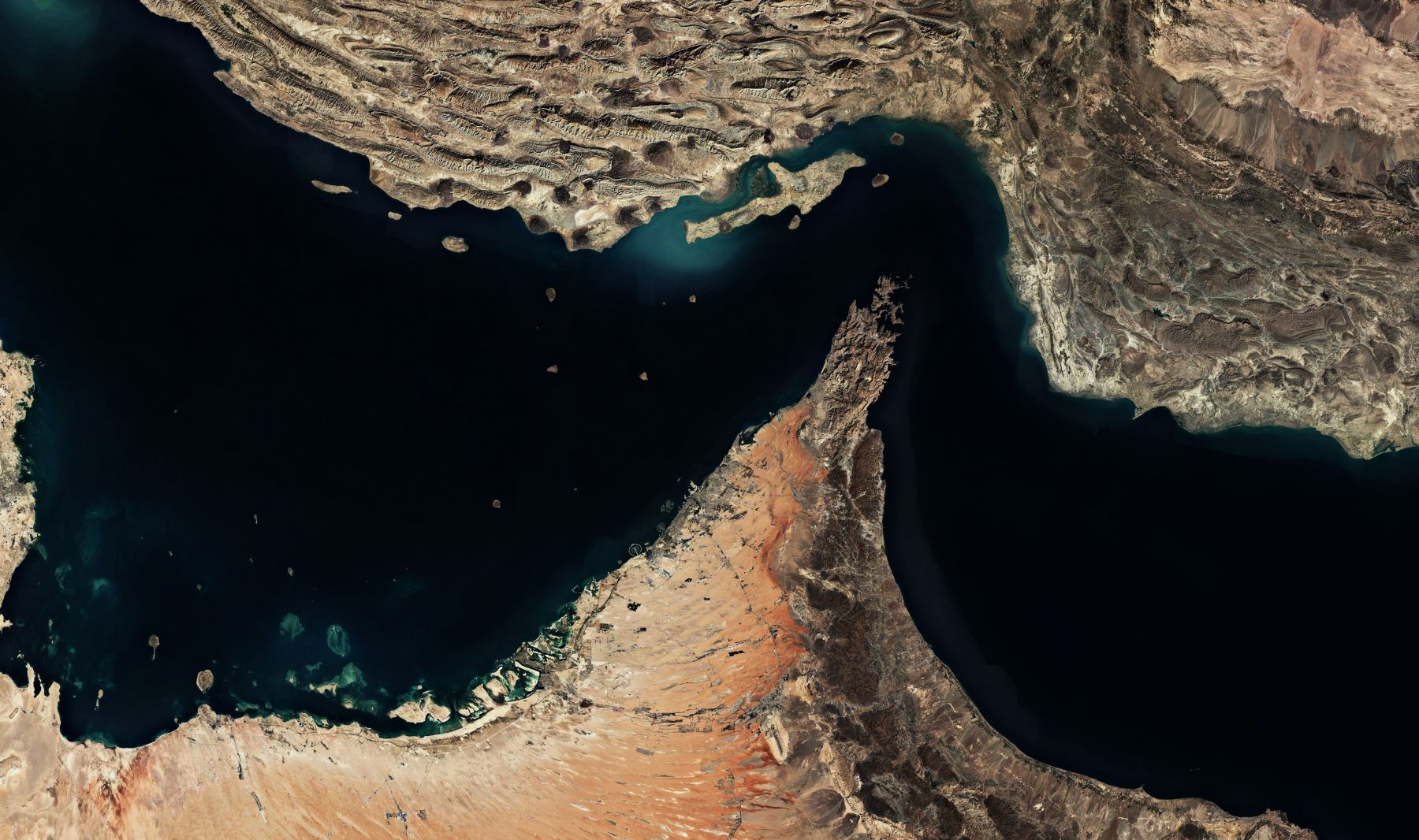
Israel was conspicuous by its absence, simultaneously engaged in bombing operations in Lebanon. While negotiations were ongoing, US attention appeared divided with efforts underway to insert two destroyers into the Strait of Hormuz, reportedly intended to symbolically “open” the waterway. The attempt was aborted after Iran issued a credible ultimatum. Israel was simultaneously restrained from escalating its Lebanon strikes following Iranian preconditions tied to the talks.
The talks lasted between 15 hours for some delegations and up to 21 hours for JD Vance personally. As anticipated by most analysts, no substantive breakthrough emerged. Delegations returned on 12 April 2026 having achieved no tangible outcome, though leaving the door open for future engagement if necessary.
Following the talks, Lebanon was bombed again. Turkey and Israel exchanged sharp public insults, effectively drawing Turkey into the expanding diplomatic confrontation. Meanwhile, the US announced a blockade of the Strait of Hormuz, declaring that Iran would not be allowed to sell oil selectively. All vessels entering or leaving the Strait were to be boarded at will by US forces. This pause in hostilities was used to reposition naval assets, effectively preparing for blockade enforcement—an act which constitutes war under international law, even if executed during a ceasefire.
The US narrative that its warships had “opened the Strait” is contradicted by the subsequent blockade posture, suggesting a fall-back strategy after failure to secure maritime control. Further contradictions arise when comparing earlier US inability to sustain a blockade around Colombia—reportedly challenged by a Russian oil vessel—with the current expectation that a similar or more complex blockade in Hormuz would succeed against escorted Chinese shipping seems far-fetched. Such a blockade is likely to be contested rapidly, exposing the US to strategic embarrassment. Additionally, earlier US relaxation of sanctions on Russia and Iran—due to global petrochemical supply chain disruptions—appears inconsistent with renewed attempts to disrupt global oil flows.
Compounding this instability, Bab-el-Mandeb is now open to interdiction by the Houthis, effectively severing East–West maritime connectivity, with major implications for oil, finance, banking, and communication systems. Saudi Arabia has reportedly requested the US to lift the blockade since it is impacting on the economy of the Gulf States. In fact, the Gulf States had to first suffer the brunt of Iranian retaliation in this conflict and now, their major source of economy activity is being seriously impacted upon – a double whammy thanks to the Unites States. However, the US blockade deployment is interpreted by some as a Trumpian strategic bluff—akin to symbolic geopolitical gestures such as renaming the Gulf of Mexico as the “Gulf of Trump.”
Nevertheless, US naval assets are now in position – locked and loaded. This creates vulnerabilities, as each deployed platform becomes a potential target. Any loss would constitute severe reputational damage and loss of prestige for the United States. Trump’s public assertion that the US could “sell oil to the world” gives the impression of an approach driven more by transactional logic than strategic or legal doctrine. A shop- keepers approach. However, a blockade of international waters disrupting global commerce, in any case, is widely regarded as piracy and a violation of international law.
Concurrent with the talks, an unexpected visit by the Saudi Finance Minister to Islamabad was announced. Reports suggest a $5 billion budgetary support package for Pakistan was the message that he carried. Prime Minister Shehbaz Sharif is expected to travel to Saudi Arabia shortly to finalize arrangements.
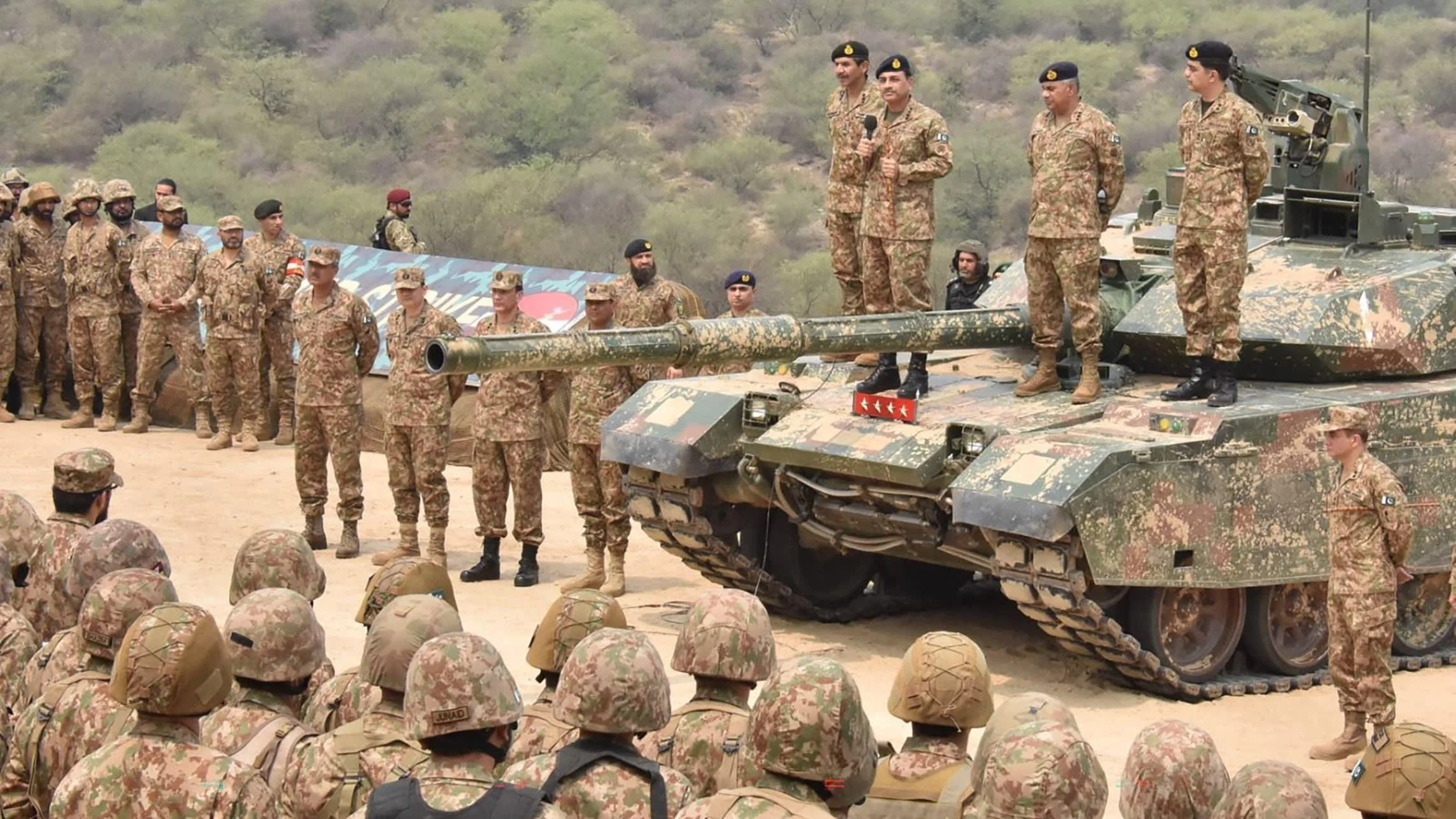
Simultaneously, during the 11 April talks, a Pakistani air battle-group—comprising fighters, refuellers, and AWACS assets—was deployed to King Abdulaziz Air Base in Saudi Arabia’s Eastern Province. The $5 billion financial support is interpreted as partially compensating for previously withdrawn UAE funds that were later repaid but also tied to the ‘defence agreement’ between Pakistan and Saudi Arabia. The rationale and timing of the Pakistani deployment remain undisclosed .One interpretation links it to the September 2025 Pakistan–Saudi security agreement, reportedly based on NATO Article 5 principles (“an attack on one is an attack on both”), though never ratified by Pakistan’s parliament or senate. The agreement remains a draft framework rather than an enforceable pact, and its operational meaning is unclear. The key question remains: why is the battle group deployed now? Three scenarios are advanced:
Scenario 1: Enforced Security Agreement / Paid Military Visibility
Under this view, the agreement has been operationalized and Pakistan is being compensated for services rendered—effectively monetized military visibility, as reported by outlets such as Drop Site and the Financial Times. However, this raises critical questions:
- Against which threat has it been activated?
- Why now?
- If no imminent threat exists, then what is its purpose?
Given that no Iranian invasion threat to Saudi Arabia exists, nor any justification for Pakistan to participate in offensive operations against Iran is likely, this scenario appears far-fetched.
Scenario 2: Regional Deterrence against India and Gulf Instability
India is reportedly increasing military concentration near Pakistan, accompanied by rising hostile rhetoric. Additional variables include:
- UAE–Israel alignment pressures on Pakistan as well as showing a growing belligerence towards Saudi Arabia.
- Potential tacit support for India by UAE and Israel against Pakistan.
- Possibility of a surprise Indian strike against Pakistan.
- Saudi pipeline diversification toward the Red Sea under Houthi threat that needs surveillance and protection.
- Gulf security uncertainty involving multiple actors – the current fluid situation warrants a readily available response.
Under this scenario, Pakistan’s forward deployment acts as deterrence and strategic dispersal of forces. It secures freedom of maneuver and liberty of action in the event the Indians mounting a surprise attack against Pakistan. It may also serve as a temporary posture to retain operational flexibility against India or other regional contingencies under the present and prevailing circumstances.
Scenario 3: Post-Qatar Attack Strategic Realignment and Gulf Security Reset. This scenario is considered the most plausible:
Following Israel’s reported attack on Qatar in September 2025, the US failed to respond decisively or provide credible protection. This exposed the fragility of US security guarantees to Gulf States. Despite massive Gulf investment in US bases and defence systems since the 1980s, these installations now appear increasingly irrelevant or even counterproductive:
- US bases no longer deter regional threats.
- They attract Iranian retaliation.
- Host states risk involuntary entanglement in conflicts not of their choosing.
- The original Soviet-era justification for US presence no longer exists.
- Iran’s reported destruction of 13 US bases in the Gulf and subsequent US withdrawal is cited as a turning point.
In this context, Saudi Arabia may be reconsidering the entire security architecture and exploring alternatives. It also presents the Gulf an opportunity to divest themselves of an overwhelmingly US presence leading to an aggressive imposition within the region. As such, Pakistan’s deployment may represent the first step in a broader regional security framework that is probably looking at potentially involving:
- Turkey.
- Iran.
- Possibly Egypt
- With support from China and Russia.
If such a regional paradigm is realized, this would fundamentally transform the Middle Eastern security order further shrinking US global reach and influence. It is here that the demise of the petro-dollar may be witnessed and the growing influence of the SCO and BRICS.
The ceasefire is formally expected to last 8–9 more days, but kinetic escalation may resume at any moment on account of the very fragile peace for now. In the meanwhile, President Trump is described as politically weakened, with approval ratings reportedly falling to 36%. He is desperately searching for some method to establish his moral authority. It has become increasingly difficult for him and it appears frustration could drive him to irrational decisions. The public allegations against him include:
- Cognitive decline concerns.
- Controversial public statements, including religious comparisons.
- Internal Republican Party dissent.
- Congressional discussion of invoking the 25th Amendment.
- Possible impeachment pressures linked to Epstein-related disclosures.
Israel is assessed to have overreached strategically and unreasonably pursued this war even if it were to be at the cost of the last American standing. US domestic opinion is increasingly critical of perceived influence networks directing and shaping US policies which include:
- AIPAC lobbying.
- Media influence.
- Financial sector leverage.
This shift reduces Israel’s future long-term ability to shape US policy as it has currently under the Trump administration. As a result, Israel may accelerate military operations in Lebanon and Iran before political constraints intensify and Trump has to leave office. In response, Iran is expected to launch a massive missile retaliation if directly attacked. Potential outcomes include:
- Severe Israeli military degradation.
- Regional territorial reversals (Lebanon and Syria).
- War crimes trials for Israeli leadership.
- Worst-case: structural collapse of the Israeli state and a one-state outcome under Palestinian political majority control.
Along with the distance developing between the US government and the public, US isolation is also accelerating concurrently through multiple developments:
- Tensions with Spain, including sanctions and diplomatic rupture.
- Spain opening an embassy in Iran.
- Canada reducing defence dependence on the US (Mark Carney statement).
- UK refusal to participate in Hormuz operations.
- Electoral defeat of Hungary’s Viktor Orban despite US and Israeli backing. These developments collectively indicate systemic erosion of US global influence.
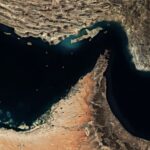
Iran is projected to emerge as a major regional power, having demonstrated resilience and strategic endurance. Control of the Strait of Hormuz is likely to remain a long-term Iranian asset. The legal argument advanced includes:
- 12 nautical mile territorial waters principle.
- Strait width is approximately 21 km.
- Shared maritime geometry with Oman reducing effective limits thus making it part of Oman- Iran territory.
The broader argument challenges selective enforcement of international law, citing:
- Gaza conflict and genocide allegations.
- UN resolutions ignored regarding occupied territories.
- Bombing of civilian infrastructure, including girls’ schools in Iran.
- Assassinations of state leaders.
- Absence of UN authorization for wars of aggression.
This confirms that international law is applied selectively, undermining legitimacy. Conclusion: Implications for Pakistan.
Pakistan faces both risk and opportunity. Strategic priorities include:
- Accelerating Gwadar development.
- Fast-tracking CPEC completion.
- Normalizing relations with Afghanistan and expanding connectivity to Central Asia.
- Initiating Iranian pipeline energy imports as well as developing transit trade through land routes. Prioritizing internal stability in KP and Balochistan.
Recommendations:
- Shift from kinetic to political resolution models. The military must remain in support and not the lead.
- Enfranchise populations into governance systems allowing ownership in social space, territory and events.
- Establish institutional autonomy within the justice system and the law enforcement.
- Prevent grievance accumulation that enables external exploitation. This is only possible through making people relevant to their own affairs.
- Without political inclusion of the people, territorial control becomes fragile and externally vulnerable.
- Develop new long-term economic master plan that is protected by the Constitution and can outlive the life of respective governments. The plan to be audited and tested for proof-of – concept by a number of qualified internal and external teams.
- Develop the Thar coal area into an industrial zone and fast track fertilizer, syn-gas and polypropylene manufacturing.