


“He plays a game with which I am unfamiliar” (Bobby Jones the golfer talking about Jack Nicklaus)
Asymmetric warfare is the war form that has been relevant to all the previous generations of warfare but has found its apotheosis in the era of fourth generation of warfare (4GW). A quick recap of the different generations of warfare is apposite to understand the relevance of asymmetric warfare in an era where the technology has ushered in a post RMA age of AI driven warfare which is confounding the war pundits as well as the peaceniks.
First generation of warfare was when the armies fought in line and column employing rigid as well as flexible battle formations like the Greek Phalanx and the Roman Manipular. After mid nineteenth century the increased range and accuracy of the new weapon systems like rifled muskets, breech loaders, machine guns, artillery and the industrial age’s mass mobilization capability, led to second generation warfare relying on massed effects of weaponry. The third generation of warfare was a result in advancements in technology, after the First World War, that resulted in mobile warfare leveraging platforms like tanks, mobile as well as airborne artillery (Stuka bombers) and vastly improved communication means.
The advancements in war technologies and munitions reached their apogee in the shape of nuclear weaponry which according to war scholars like Martin Van Creveld and Bernard Brodie had rendered the warfighting between two nuclear adversaries infructuous, due to the mutually assured destructive potential of the “massive retaliation’ doctrines.
The efforts to carve space for nuclear warfighting by Robert McNamara, General Maxwell Taylor, and General Lyman Lemnitzer, also elicited a rebuke by the scholars like Creveld, who stated that nuclear warfighting is mutual annihilation arguing in his book,
“The Transformation of War,” that every attempt at formulating a nuclear warfighting doctrine “had choked on its own absurdities.”
Fourth generation warfare was a response by non state actors against the tyranny of the state-owned means of waging war because of the astounding advancements in the communication means and the lethality of weapon systems, capable of being used by individuals operating surreptitiously in small groups.
Fourth generation warriors employ asymmetric tactics using weaponry, terrorism, media and the diplomacy to win both the temporal as well as the epistemic space against organized armies and the state apparatuses. According to Colonel Thomas X Hammes, USMC, in an asymmetric conflict a weak adversary employs superior political, military and economic means against a stronger opponent, convincing it that the goals of war would be too costly compared to the benefits, leading to a diminution of the will to fight.
It is very interesting to observe many asymmetric conflicts panning out right in front of one’s eyes, rendering the prodigious reach and lethality of the modern war technologies irrelevant. The current Israel-US Iran war is a manifestation of the asymmetric warfare which has pitted a most modern and nuclear armed global power and its ally i.e Israel against a heavily sanctioned and militarily weak adversary. In order to relate the notion of asymmetric warfare to the current Israel-US-Iran war a little explanation of the asymmetric warfare is apposite. The term “Asymmetric Warfare” was first used by Andrew Mack in his 1975 article, “Why Big Nations Lose Small Wars: The Politics of Asymmetric Conflict.” The spirit of the asymmetric warfare however dates back to antiquity in the ideas of Sun Tzu and in modern times to the precepts and practice of Mao Zedong.
Steven Metz a prominent US defines asymmetric warfare as acting, organizing and thinking differently from opponents to maximize relative strengths, exploit opponents’ weaknesses to gain greater freedom of action. According to a CSIS report by Jason Moll, in an asymmetric conflict a weaker combatant uses non conventional weapons and strategy to gain a fighting advantage over a stronger combatant. A few historical examples include a Spartan attack on the coalition of Athens, Argos and Corinth in 394 B.C., Pyrrhus’ attack on Italy in 275 B.C, the Germanic tribes’ invasion of the Roman territories in 3 A.D in ancient times and the conflicts like Chinese civil war, Vietnam war, Soviet-Afghan war and the Russo-Chechen wars in modern times.
The first clear mention of the term asymmetric warfare appeared in the joint warfare publication of the US armed forces in 1995 with the Congressional National Defence Panel outlining the concept clearly as a means to identify how future enemies would confront the US armed forces’ weaknesses in a future conflict. The detractors of the asymmetric war notion like the venerable American professor Colin Gray however cautioned that the concept should not be elevated to the status of a fashionable idea since all previous wars had always featured asymmetry either in tactics or strategy employed by one or both of the adversaries.
A very interesting analogy to the asymmetric contest is the famous “Rumble in the Jungle” boxing bout between the heavy weight boxing legend Muhammad Ali and George Foreman at Congo in 1974. A 4-1 underdog Muhammad Ali, employed famous “rope a dope” tactics to force a much stronger and fitter George Foreman to unleash his punches on Ali who was defending himself, using ropes of the ring to absorb the rock like punches of Foreman. As Ali chided Foreman punch after punch, “Is that all you have got George?” and “George you are not hurting me,” Foreman spent his power like an enraged bull. As a result, after the eighth round Foreman could hardly raise his hands to defend himself due to exhaustion. It was a classic display of asymmetric contest.
The countries like USA that depend on their technological ascendancy and reliance on non contact warfare are getting increasingly vulnerable to the asymmetrical warfare. The US armed forces have undergone several rounds of transformations like the post WWII expansion and the most recent post Iraq and Afghanistan drawdown especially in infantry component. The rapid advancements in AI, robotics, drone warfare, mobility, air and missile weaponry have led to deactivation of 12 Infantry Brigade Combat Teams and reduction of active armed forces strength from 570000 in 2010 to 490000 in 2017. Now this transformation, ostensibly to create a leaner, agile, and technologically enabled lethal force might hold true for high intensity battles against a proper army but would be a disadvantage against an adversary employing guerilla or asymmetric tactics.
The American weakness in deploying boots on the ground and fighting a guerilla force employing hit and run tactics is their Achille’s heel at the operational level. The dependence on networks of computer and AI systems of sensors, and command & control nodes is also a vulnerability that could be exploited by the adversaries that choose to fight a low intensity and low technology warfare. The Iranians are employing asymmetric tactics despite the overwhelming technological superiority of USA and Israel. At a strategic level the Iranians are targeting the US centre of gravity i.e their will to fight a protracted conflict and to tolerate the concomitant human casualties.
In the past several determined non state actors have defended their territory successfully against superior armies employing asymmetric tactics. The Spanish guerillas very successfully fought against Napoleon’s forces in the Peninsular War (1808-14) while the Russian partisans tied up one third of the 260 German divisions during the German invasion of Russia in WWII. Similarly, the US forces handed strategic victory to the likes of Farah Aideed in Somalia even after attaining costly tactical successes. The Russians too learnt the limits of their power in the first Chechen War (1994-96) which resulted in the Russo-Chechen peace deal of 1997. The analysis of other asymmetric conflicts also yields some interesting facts.
Professor T.V. Paul writes in his book, “Asymmetric Conflicts: War Initiation by Weaker Powers,” that the propensity of weaker powers to attack stronger powers is a consequence of the belief of the weaker powers in their power to exploit the weakness of the stronger foes during a specific window of opportunity in which the international support and access to weaponry is guaranteed to them. Pakistan’s Operation Gibraltar in 1965, the Japanese Pearl harbour attack, and Argentina’s attack on Falklands islands fall in this category according to the author.
An interesting conclusion in the same research relates to the present Israel-US-Iran war in which the author states that, “in order to arrive at an agreement a weaker challenger state may have to give more concessions or employ coercive tactics such as war”. The present Iranian stance vis-a-vis peace talks offer of USA falls in above category. The asymmetric conflict outcomes are very effectively described by Ivan Arreguin Toft in his book i.e “How the Weak Win Wars” through the Strategic Interaction Theory of Conflict Outcome. According to this theory the strong and weak actors in a conflict situation employ either a direct (conventional) strategy or indirect (unconventional/asymmetric) strategy according to their preference.
According to several hypotheses of strategic interaction theory the likelihood of success is more for stronger powers when both powers use conventional strategies whereas the likelihood of victory for the weaker powers is more when the stronger powers use direct strategy and the weaker powers employ indirect or the asymmetric strategy. Interestingly according to hypothesis 3 of this theory when the stronger power attacks using indirect strategy and the weaker power defends itself using direct or conventional strategy the stronger power would lose. The theory therefore is strongly loaded against the win probability of the stronger power if it uses the similar strategy as being used by the small power. The dice therefore is strongly loaded against the stronger powers in asymmetric conflicts. According to an analysis of all wars between 1800 to 1998 in the same study, the weak actors were victorious in 30% of the wars and since the use of asymmetric warfare is continually on the rise the weak actors are winning more wars in this era. According to Alvin and Heidi Toffler’s characterisation of warfare as agrarian, industrial and information age warfare, the focus of modern warfare and the systems enabling it is on infostructure. Modern warfare bears the characteristics of the current age i.e information dominance, speed of communication, autonomous weapon systems, precision weaponry and focused logistics.
One of the biggest weaknesses, however, of the modern information age warfare is the disproportionate focus on information domination of the fighting networks at the expense of domination of the human mind. This ubiquitous disparity on modern battlefield might give an edge to a stronger power in dominating the infostructure but not the human mind and its will to suffer casualties with equanimity in pursuit of its beliefs. The above is proving to be the biggest lesson of all asymmetric conflicts of the present era including the present Israel-USA-Iran war.
While USA and Israel are using military hardware’s information driven networks the Iranians are using political, economic, social and the military networks to convince the rival political decision makers and their electorate of the untenability of their strategic goals by highlighting their high cost. The same asymmetry of will between the two antagonists resulted in US failure in Vietnam when the domestic political cost of the heavy casualties compelled the US to withdraw from South Vietnam.
The strength of asymmetric warfare lies in its human centred goals because of which the outcomes favour the underdog regardless of the military success or defeat. The examples of conflicts like Malaysia, Oman, El Salvador and Iraq can be given where even after the loss the guerillas or the asymmetric warriors succeeded in ushering in a new political order.
In a beautiful exposition of the power of the human networks by Ori Brafman and Rod Beckstrom in their book i.e “The Starfish and the Spider” they relate the modern information based armies with spiders characterised by hierarchal decision making, centralized command structure, and slow dissemination of information compared to the violent non state actors (VNSAs) who operate as starfish in a non-hierarchical and decentralised manner united through a common belief in their cause. In case of decapitation strikes against the central leadership the decentralized cells can take action on their own, very much like the severed limbs of starfish that can regenerate on their own.
The asymmetric warriors therefore operate in distributed networks united together by a very strong belief in their cause using patience and perseverance while continually seeking to exploit the vulnerabilities of the adversary through unconventional tactics. Terrorism, cognitive warfare through media, subversion of the target country’s population, subversion of alliances and exploitation of legal loopholes in the rival political systems are all tools in the repertoire of the asymmetric warriors. Another enabling factor as per US Air War College study by Franklin Miles is the willingness of certain global powers to arm and support the VNSAs as well as the rogue regimes in order to settle scores with their global competitors. North Vietnamese leader Ho Chi Minh famously remarked about Americans that
“They will kill many of us and we will kill a few of them, and they will tire first.”
The asymmetric warriors win in a contest when they refuse to lose despite the heavy odds. A great military leader like Napoleon was also peeved at the perseverance of the doughty Spanish guerillas who continually drained the strength of the French army finally leading to the French withdrawal from Spain. He disparagingly referred to the Spanish resistance as “Spanish Ulcer”. There are echoes of the same sentiment in the statements of the some of the US decision makers about Iranian asymmetric resistance that might degenerate into a veritable ulcer if the peace overtures are spurned by the weaker actor. In the present US-Israel conflicts out of the five hypotheses of the Strategic Interaction Theory most support the Iranian ascendancy due to two factors. The first is the asymmetry of the will between the two belligerents and the second is the use of strategies to achieve the political objective of the war. While Iran is an ideologically driven state which has kept the population in control through an ideological indoctrination as well as the coercive state apparatus, the USA is a democracy that is sensitive to public opinion which is casualty shy. In the calculus of will Iran beats the USA hands down as it fights for its survival whereas the USA fights for objectives that do not impinge upon its national survival.
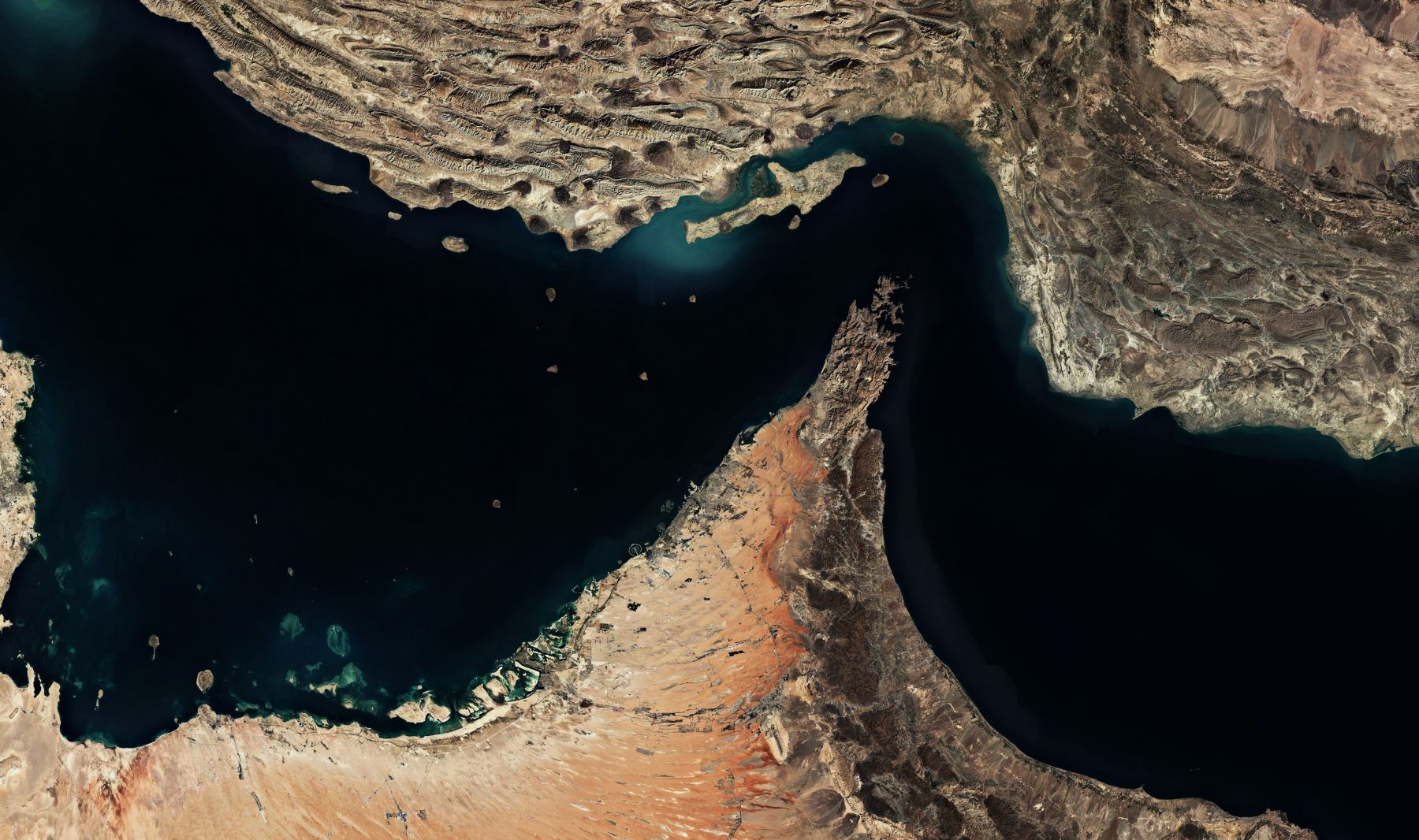
Other than the asymmetry of will the Iranians are employing warfighting strategies that rely on gradualism, low-cost weaponry, and horizontal escalation to increase the cost of war for the entire region. The air, naval and missile mismatch is being addressed by Iran through clever tactics of dispersal of assets, selective swarm strikes and the control of Straits of Hormuz. Clearly the air and missile warfare has not done the trick for Israelis or the Americans and the next escalatory step might be the boots on ground. The 31 Marine Expeditionary Force along with the USS Tripoli from Japan and the elements of 82nd Airborne Division are poised to get deployed in the war arena, a deployment that according to Professor Robert Pape of University of Chicago plays into the escalation trap set by Iran.
It is a fact that the war against Iran cannot be conclusively won with ground troops who could occupy territory, seize enriched uranium and depose the present regime in Iran. It is also a fact that the US armed forces at present are short of the desired infantry component to fight a ground war against a dogged asymmetric adversary such as Iranian Revolutionary Guards Corps (IRGC) or its Army. Besides the above the traditional US allies like NATO and other Asian allies have refused to provide any troops for the war which according to them was neither just nor necessary. Even if the USA is forced into the next stage of escalation trap i.e ground troops’ deployment, the undertaking is fraught with the risks of costly casualties, a fact that might not redound to the political advantage of the US leadership in an election year.
Since a protracted asymmetric war with or without boots on ground is less likely to force a quick positive outcome for US leadership, the fears of hypothesis 5 of Strategic Interaction Theory of Arreguin-Toft i.e use of barbarism by a stronger adversary become stronger. The apogee of barbarism is a nuclear option and the incentives for that option would keep getting stronger for the belligerents as the next rung of escalation trap arrives after failure of boots on ground.
The above doomsday scenario leaves the diplomatic options that offer a win-win formulation for all actors in the conflict matrix. For President Trump the success would be an Iranian renunciation of the uranium enrichment option accompanied by verifiable guarantees of cooperation, scaling down of the missile program and the repudiation of support for the regional proxies. The cost that the Iranians would extract should be acceptable to Americans which despite the bitterness of war is expected to reflect the traditional Iranian pragmatism. Lifting of economic sanctions, a guarantee of no future attack, and reintegration of Iran in the formal global trade and financial system might be the price Americans are asked in the interest of the peace.
It is a fact that the Americans did not prepare and organize their armed forces for a prolonged and enervating asymmetric conflict against a country whose geography and population facilitate the asymmetric warriors. That leaves another actor i.e. Israel in the conflict equation whose interests are not served best by a stalemate or an honourable exit for either Iran or the USA. A forever war apparently serves the Netanyahu regime well which is fearful of an outcome which invests it with a weak reputation while navigating the choppy waters of electoral politics. Cool and detached reasoning based upon empirically grounded theories of asymmetric warfare need to point the way for the policy makers, instead of the prophecy driven ideological fervour and religious evangelism of war mongers.
The world is on the cusp of a calamitous denouement of a conflict which was neither planned nor anticipated by the Americans. The US Army despite its technological preponderance is not prepared for a ground war with an adversary with a clear edge in the asymmetry of will. USA has been corralled into this conflict by an ally whose interest in a protracted conflict clashes with the US interest of a quick outcome. The prognosis of asymmetric war against Iran is against a US victory because of its failure to anticipate the limits of air and missile power and an inability to discern the power of the ideology that pervades the Iranian nationalism.
Perhaps the biggest pushback against the war will come through the US public opinion which is expected to rail against the imperial hubris and demand an end of a war which was never in the US interest in the first place.
The literature on asymmetric warfare and the history point towards a strategic and operational quagmire in Iran and the solution out of it is a realization of the historically proven limits on the power of both conventional as well as the asymmetric warriors in the conflict equation.