


Dear Readers,
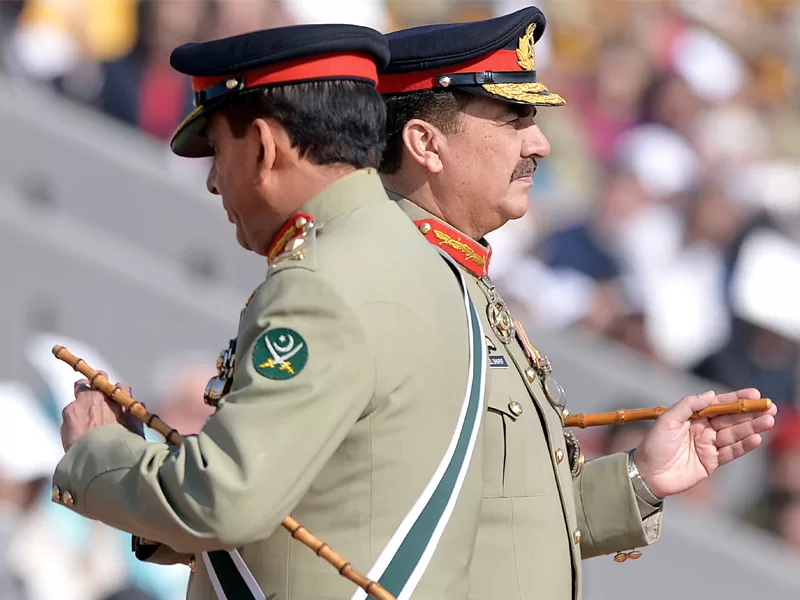
In a nation with a long history of military coups where some previous Chiefs of the Army have not been content with ending their careers as a decorated General, the announcement by Gen Ashfaq Parvez Kayani that he will stand retired at the end of his term on November 29 comes as a breath of fresh air. A very positive announcement has thus put to rest all unnecessary rumours that were circulating about an extension. In 2010 Gen Kayani was given an unprecedented three-year extension by the then Prime Minister Yousaf Raza Gillani but while announcing his retirement he said ‘that institutions and traditions are stronger than individuals and must take precedence. He then reposed the military’s full support to democracy – signifying that he is one of the few Army Generals who understand how vital democracy is for the nation. This is also illustrated by the fact that he resisted severe pressure to intervene during the tenure of the previous government, the first civilian government in the history of Pakistan that went on to complete its term and hand over power to another elected Administration.
While Gen Kayani’s decision has been widely hailed by the nation, PM Sharif is also likely to breathe a sigh of relief after this proclamation. Meanwhile, names of top Generals who might succeed Gen Kayani are being discussed in the political circles and in the corridors of power. Prime Minister Nawaz Sharif also discussed with President Mamnoon Hussain candidates for the new army chief and chairman Joint Chiefs of Staff Committee (CJCSC) who, it is expected, will be appointed soon by the president on the advice of the prime minister. The wide attention generated by the appointment of the next army chief may not be surprising considering the past difficulties faced by civilian governments in appointing persons to this coveted past. While that is still a few weeks away, Gen Kayani has earned respect for himself for what he has done. For the benefit of readers I am reproducing my article “CHANGING THE GUARD”.
The careers of our senior military hierarchy, a confidential prerogative of Maitory Secretary’s (MS) Branch of GHQ, is being openly (and irresponsibly) discussed in the electronic media, thanks to the indecisiveness of the present regime in generally making critical and important appointments. Not good for the country,let alone the Armed Forces!
The Army’s bad image when Kayani took over as COAS not only had dampening effect on the morale of the rank and file, commensurately it also adversely impacted on the discipline and professionalism our khakis are renowned for. Several dozen task forces were tasked with evaluating the shortcomings and deficiencies across the entire spectrum of the operational and administrative functions of the Army. Kayani then set about implementing the remedial measures at a measured pace given that the Army was soon engaged in intense fighting in Swat and FATA, no plaudits are enough for this concurrent virtuoso performance.
The Army having suffered a decade of indifference and neglect with respect to professional requirement, Kayani set in motion schemes and projects to ameliorate the welfare of soldiers across the board, initiatives like housing for soldiers acted as a force-multiplier for the morale and efficiency of the rank and file. The Army was fighting counter-insurgency (Cl) operations since 2003 without Cl training, every unit destined for the war zone now went through the requisite e training. Before actually entering the area of conflict, they also went through field orientation. The Army schools of instruction were revamped, starting from the Pakistan Military Academy (PMA) to the National Defence University (NDU) they were upgraded to cope with the requirements of the new kind of warfare, successfully breaking out of the straitjacket of obsolete World War 2 practices. On Kayani’s active encouragement the NDU went outside its faculty for advice and converted the two courses at the NDU, the Army War Course and the National Security Course, having over 40% overlapping syllabi, into one single superbly effective course.
The very best of Kayani’s initiatives were the promotions on merit, and merit alone, in the senior Army hierarchy. Some officers who should have been promoted were overlooked, however not one single officer was promoted to the rank of Maj Gen or Lt Gen who did not deserve promotion. Today all the serving two and three stars are professionally competent, there is healthy competition to be elevated to the next rank and appointment on merit. Some of Musharraf’s promotions (over a 10 years period) were good men but as soldiers many did not deserve to go beyond the rank of Lt Col, a few did not deserve to wear the
uniform, let alone given two and three stars rank. This disfigured the professionalism (and the respect) of the Army. hierarchy, Kayani sent them quietly out to pasture. Possibly because he himself lacked combat experience, Musharraf was also averse to those who had since they were more likely to question his motives. Given the turnover of personnel in Swat and FATA operations, Kayani gave combat performance maximum weightage for promotion. Those found deficient in leadership in combat conditions failed to get promoted. Very few of the senior officers today have missed combat service because of exigencies of service (like in Musharraf’s own case, for no fault of theirs). Such quality in the upper reaches of the military hierarchy is a tremendous asset for any Army in the world.
By the nature of his appointment, the COAS Pakistan Army inherently has the task of operating on multiple fronts, quite a few not connected with the profession of soldiering, viz (1) dealing with a corrupt civilian govt without being provoked and (2) ensuring that national security concerns of the nation was not compromised. Many do not know about his great initiatives of bringing the youth of Balochistan into the Pakistan fold, Balochistan’s integration thereof will remain Kayani’s lasting legacy. Similarly his resolve to recover every single body buried alive at Gayari is really commendable. Consider in contrast Comd 10 Corps Lt Gen Mahmood declining to claim his troops lying dead across the LOC in Kargil as belonging to his Corps! During Kayani’s first three year COAS tenure, Zardari did not feel confident enough to go all out indulging in blatant nepotism and corruption, with the Army fully engaged in Cl operations and the Supreme Court (SC) not really doing much about the NRO or the Swiss case, Zardari and his cronies within PPP and allied parties went into full gear, this put pressure on Kayani from within the Army to do something about this abomination. The perception was that the blood of our soldiers in FATA and Swat was being spilt to help Zardari line his pockets.

Kayani kept his soldiers’ frustrations and impatience in check, the price the army had to pay to keep democracy alive and well in Pakistan, “as i complete my tenure the will of the people has taken root and a constitutional order is in place. The Armed Forces of Pakistan fully support and want to strengthen this democratic order. Pakistan Army has made its contribution towards this deserved end with complete clarity of mind and a comprehensive understanding of the trajectory Pakistan needs to take” unquote. Even without physical intervention Kayani could have done more by rendering quiet but “targetted” advice. Kayani himself set precedents a number of times to show intervention was not necessary: When quiet counsel foils, a solid public posture is enough. While one agrees that sacrifice had to be made for the sake of democracy, the ceremonial guard of honour for Zardari (the Supreme Commander who never visited his troops in the field) on his exit as President was obnoxious and should have been avoided, symbolically it gave the Army’s stamp of approval to Zardari’s corrupt tenure as President.
The COAS appointment sums up Pakistan’s dilemma, the junior post being preferred to a senior because that is where the power lies. Kayani should have had the confidence to let go of the COAS chair after the first term. As the Chairman JCSC he would have made the JCSC truly effective, an integrated higher defence command is a must for modern warfare. Only two changes are required, the Chairman JCSC must preside over the Promotion Board for officers of two and three stars rank and all their postings. GHQ must be the HQ for the Chairman JCSC, the Army component being known as Army HQ, which GHQ presently functionally is. No conspiracies should be seen in Kayani’s assuming temporary charge of Chairman JCSC, he simply happens to be the senior-most officer of the Armed Forces presently.
When no longer in unifor,Kayoni will soon discover who his real friends and fans ore, some controversies. about his tenure will certainly surface but that is still in the future! To quote MacArthur speaking to the US Congress on his retirement, “old soldiers never die, they simply fade away.” Good soldier Kayani will hang up his uniform seven weeks hence, having in his own words “served this great notion and the privilege of commanding the finest Army of the world for six years to the best of my abilities and with the sincerest of my intentions”.