


These days, the entire nation is confronted with a serious quandary about engaging the Taliban in reconciliatory negotiations. Military history is full of examples highlighting the complexity of negotiations between the militant outfits and the governments. It has always been analogous to one step forward and two backwards.
While making mockery of the so-called beefed up security in the provincial capital, the saboteurs are finding no difficulty in playing their bloody game at the time and place of their choosing. Massive three terrorist attacks in Peshawar, during the last week of September, left 150 innocent people dead and over 250 others seriously wounded. A deadly attack on a Church in Peshawar attracted global attention. Attack in Upper Dir resulting in the martyrdom of Major General Sanaullah and his team was another gruesome action by the elements wishing to disrupt the peace process. These incidents have swayed the public sentiment away from unconditional negotiations with the Taliban. Now the popular mood is that a stern punitive action should precede any negotiations.
Certainly there is a need to make distinction between hardened criminals and genuine Taliban. In addition, there are groups using the rubric of Taliban but are working on their foreign pay masters’ agenda to disrupt the process of negotiations. However, these events should not obscure the ultimate objective that final results of the current turmoil would only emerge through negotiations.
During the recent All Parties Conference (APC), DG ISI had informed the political leaders that “there are groups within the Tehreek-e-Taliban Pakistan (TTP) who are in favour of talks but then there are others that enjoy the backing of certain hostile agencies who may never agree,” he had warned. Time has come for the TTP to come clean on those dubious entities which are operating under its brand name and carrying out disruptive actions which are prejudicial to the conduct of meaningful parleys.
With the Afghanistan conflict apparently moving towards a close, it is logical that Pakistan should engage in dialogue with select groups of Pakistani Taliban under a well structured framework. Pakistan is already facilitating such processes amongst America, Afghan Taliban and the Afghanistan government. Release of the senior Taliban leader Abdul Ghani Baradar indicates that a lot of mileage has been covered towards an intra-Afghan political reconciliation. As of now Pakistan has released 37 Taliban leaders since November 2012 to expedite a negotiated settlement before the departure of foreign forces from Afghanistan. Now as the time was ripe for engaging Pakistani Taliban in meaningful and constructive talks, the spoilers are on the rampage.
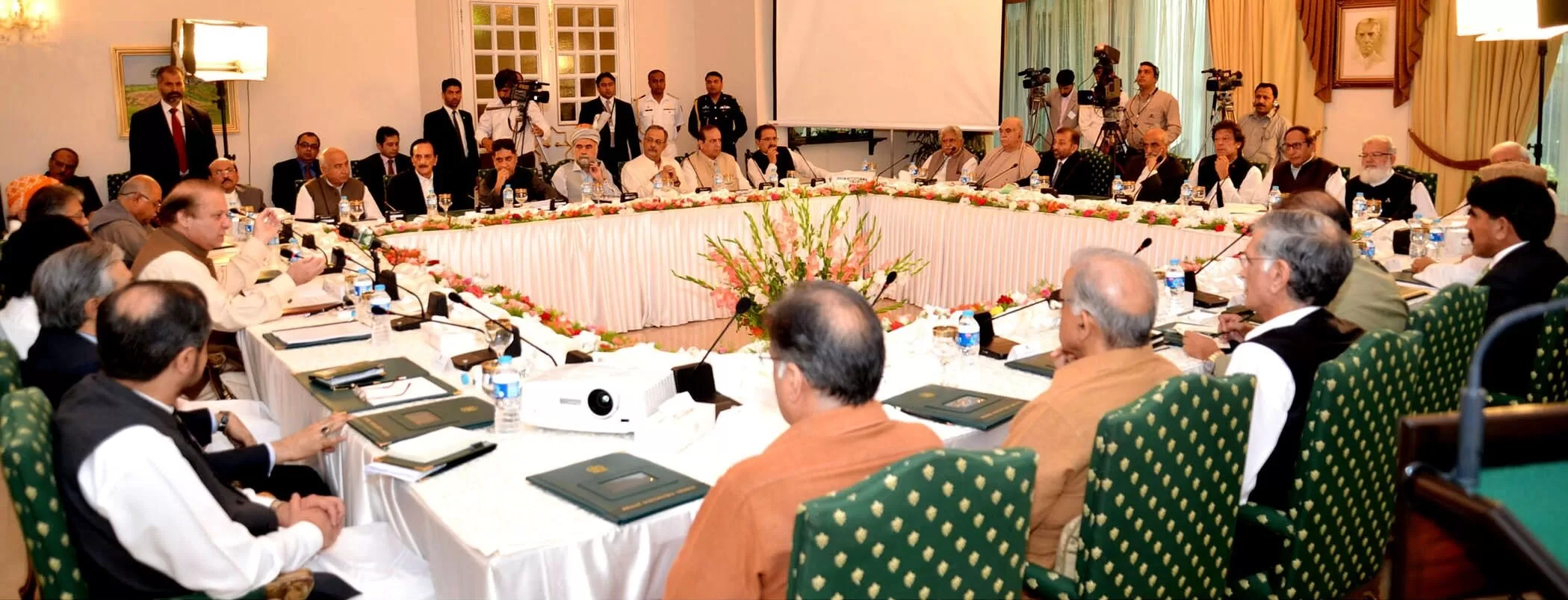
Recent APC held for working out a national consensus based strategy for dealing with the Taliban was a watershed; it was different from similar earlier conferences. Firstly, it was attended by all the invitees. Secondly, it was supported by the public mandate regarding the strategy to deal with the Taliban and the US drone attacks. Since protracted application of military power has not been able to resolve the issue of militancy, the public sentiment has swung towards a negotiated settlement. Moreover, people had voted for the political parties which articulated an anti-drone policy. Thirdly, the APC decided to give free hand to the sitting government on three issues—economy, energy and terrorism. The APC has reposed full confidence in the efforts of the Prime Minister and authorized the federal government to initiate dialogue with Taliban and take all the necessary steps as it may deem fit including development of an appropriate mechanism and identification of interlocutors. With this, peoples’ expectations from the government have skyrocketed.
In a paradigm shift in the country’s security strategy, the top civil-military leadership has unanimously decided to hold peace talks with all militant groups, keeping the TTP on top priority. A spokesman for the Pakistani Taliban, Shahidullah Shahid, promptly welcomed the move. He said that Taliban would be willing to enter into ‘meaningful dialogue’ after the government announces its policy on how to proceed. “We welcome the unanimous resolution passed by the APC and will be positive in our response. We consider it is a good omen…Unanimous stance of all the stakeholders in the APC Statement is a positive sign but the government will have to take more sincere steps…The government will also have to convince the army and to decide a road-map for the talks,” he added. He further said that the decisions to be taken should not be only on a piece of paper but should be implemented.
Past efforts to control terrorist and extremist elements have not yielded the desired results. It’s not the first time that government has tried to open such talks. However, this time the approach is qualitatively different. This time Taliban are being referred to as “stakeholders.” The government plans to start the talks just as soon as intermediaries complete the necessary “groundwork”. It is encouraging that the Taliban Shura (the decision making body) has promptly convened its session to nominate its team. The TTP would announce its team once the government has finalised its interlocutors. The central leadership of the TTP has claimed that the Prime Minister Nawaz Sharif had sent a letter to the TTP about a possible peace dialogue and the TTP has replied to it; the contents of both the letters are yet to be known.

In an unprecedented move, the country’s military institutions have thrown their weight behind the government’s bid to initiate the dialogue with the TTP and for bringing the drone issue to a close. In a detailed briefing at the APC, General Kayani stated that the military and the government were ‘on the same page’ on the issue of reaching out to the militants and the army will follow whatever decision the government takes. However, he cautioned that the authorities need to tread carefully as there are elements within the umbrella organisation that may never reconcile.
National leadership also boldly addressed the sticky issue of American drone strikes. It described them as detrimental to the country’s efforts to eliminate terrorism and recommended that the government should consider taking up the issue to the United Nations. Terming the drone attacks an ‘illegal and immoral’ act, the APC communiqué said: “We declare that we shall ourselves determine the means and mode of fighting this war in our national interest and shall not be guided by the United States of America or any other country in this regard.” General Kayani said that there was no secret understanding with the US on the CIA-led drone campaign. He said it was up to the government to take appropriate action to persuade the US to halt such strikes. Earlier Peshawar high court had declared the drone attacks as illegal, immoral and against the international law. The court had directed the government to take effective measures to protect the people and compensate the victims for loss of life and property.
Prime Minister himself kick-started the anti-drone campaign process by mentioning it in his address to the 68th UNGA session. He said, “The war against terrorism must be waged within the framework of international law. The use of armed drones in the border areas of Pakistan is a continued violation of our territorial integrity. It results in casualties of innocent civilians and is detrimental to our resolve and efforts to eliminate extremism and terrorism from Pakistan. I have urged the United States to cease these strikes, so that we could avert further casualties and suffering”. Hopefully, this unambiguous official stance on drone attacks would help creating a conducive environment for the envisaged negotiations.
The APC called for a result-oriented and peaceful dialogue process to eliminate extremism from the country. Political leaders admitted that the situation has continued to deteriorate over the last several years and past efforts to control terrorist and extremist elements have not yielded the desired results.
Broader contour of the strategy incorporates a carrot-and-stick approach, whereby action would be taken against the groups which refuse to be part of the peace process. It has been agreed to seek the cooperation of religious-political parties to facilitate talks with various Taliban groups. Here a caution is due, these parties have their own rivalries and agendas, therefore dealing through them should confine to accomplishing initial contacts, and from then on the government should exercise control over the process.
Historically, dialogue with the militants of the kind has always been a complicated process, beset with stumbling blocks. String pullers of the militants who extend them support and protection during the militancy phase may not have stakes in negotiations, they may like to continue militancy until their ultimate agenda is fulfilled. Therefore, both the government and the TTP need to make deliberate efforts to steer clear of detractors. While we struggle to build a durable national consensus on the issue of engaging militants, there is a need for a simultaneous campaign to roll back the foreign influence that has crept into almost all segments of the society. Without this, everyday shall throw-up obstructive events to undermine the talks with the militant organizations.