



“No Complications” Greenfield Port
With Courtesy and thanks to “The Nation”
Opening Narrative
The April 2026 disruption of the Strait of Hormuz (and the implied threat to the Bab-el-Mandeb Strait) has opened a rare 5–10 year window for Pakistan to strive for a permanent share of regional transshipment.
Pakistani ports have already responded: Karachi handled a year’s worth of transshipment containers in a single month, Port Qasim recorded a 2,302% surge, and Gwadar berthed its first dedicated transshipment vessel. Yet without a coordinated strategy, this crisis‑driven diversion will fade once regional routes normalize.
Gulf-based ports operate within the geographically constrained and increasingly congested waters of the Persian Gulf, the Pakistan coast benefits from direct deep-sea access. Consequently, there is a growing demand for alternative logistics nodes on mainland Asia that can provide, viz (1) Storage capacity to buffer supply shocks (2) Diversified routing options to reduce chokepoint dependence and (3) Integrated logistics systems linking maritime and inland trade corridors. This provides a crucial operational advantage by reducing exposure to chokepoint vulnerabilities, maritime bottlenecks, and regional tensions that can disrupt shipping within enclosed waters. In a security environment where maritime disruptions may become more frequent, such open-ocean accessibility translates into greater reliability, scalability, and crisis resilience. As a transshipment and redistribution hub, it is capable of servicing multiple regional trade areas more efficiently than ports confined within narrower geographic systems. While traditional hubs such as Dubai, Singapore and Rotterdam remain critical, the global economic system is undergoing a structural transition of shifting trade routes, energy insecurity and intensifying geopolitical competition. The emergence of new supply chain vulnerabilities has created demand for strategically located and energy-secure logistics hubs. The recent US Israeli – Iran war where the maritime chokepoints such as the Strait of Hormuz closed for some time and Bab-el-Mandeb Strait was threatened to be closed underscores the vital necessity for deep sea access on the Asian mainland because they have emerged as critical vulnerabilities in global energy and trade systems. A significant portion of the world’s oil and liquefied natural gas (LNG) flows through these narrow passages, making them susceptible to geopolitical tensions, blockades, or disruptions, exposing the fragility of highly concentrated and efficiency-centric systems. As a result, there is a clear shift from efficiency to resilience with States and multinational corporations increasingly prioritizing redundancy, diversification, and security of supply over purely cost-based optimization.
This transition is particularly visible in the energy domain, where uninterrupted access to oil and gas has become a strategic imperative rather than merely an economic consideration.
By combining the elements of the Gulf Port’s trade efficiency and by Djibouti’s monetization of its strategic geographical location, exploiting the China–Pakistan Economic Corridor (CPEC), the North–South Corridor and the Asia-Pan Africa Corridor, a greenfield port, would be a tremendous force-multiplier for geo-economics. Pasni can develop into a hybrid platform integrating energy storage, industrial expansion, and maritime logistics. A carefully sequenced development strategy, rooted in local inclusion and national security imperatives, can transform the proposed port into a cornerstone not only for Pakistan, but the region’s geo-economics future.
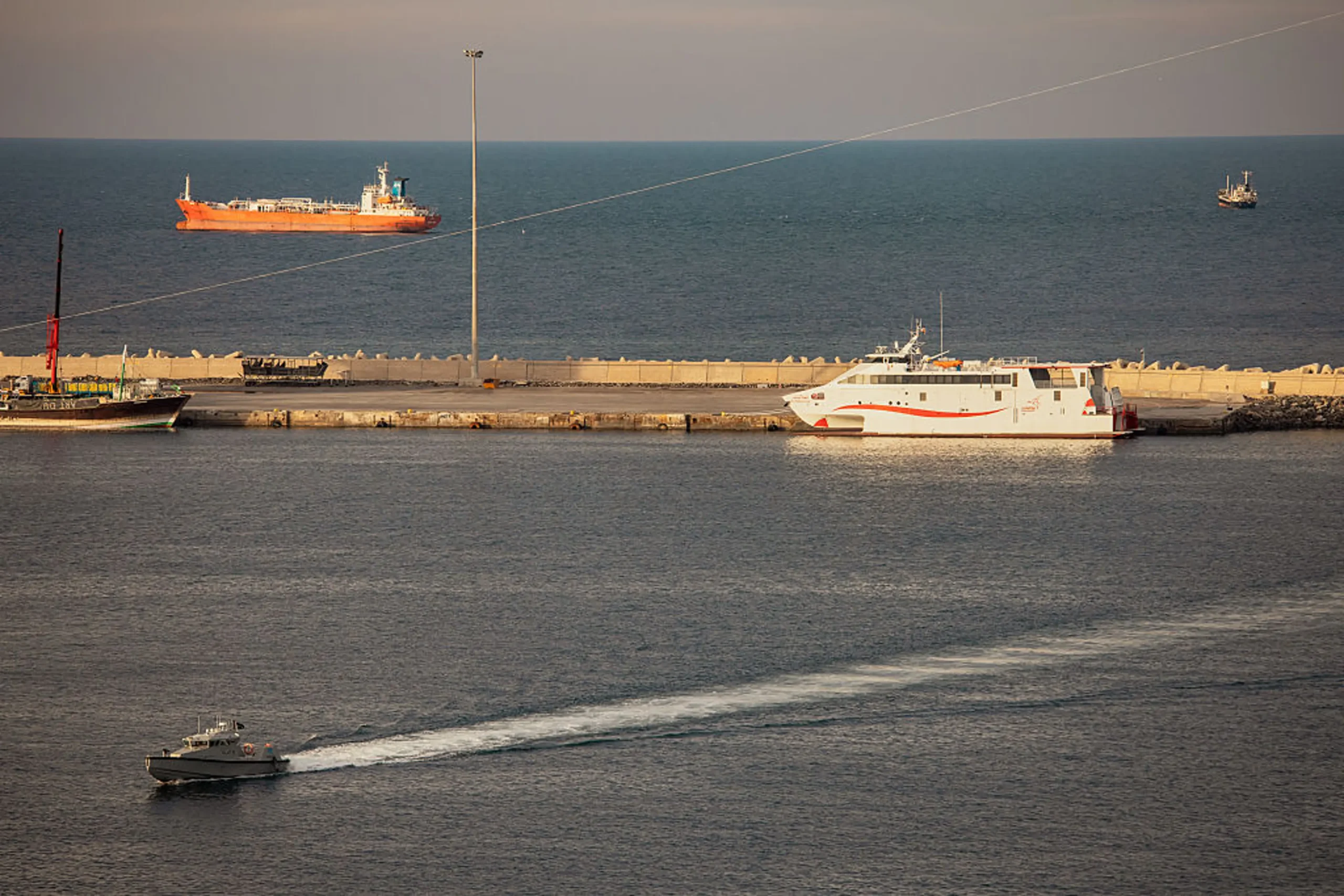
Located on Pakistan’s southwestern Mekran coast near Gwadar, Pasni that occupies a geographically advantageous position and is a natural junction along maritime routes connecting the Middle East, South Asia, East Africa and the wider Indo-Pacific region, it represents a strategically significant yet underdeveloped maritime node with the potential to evolve into a next-generation global trade, energy, and logistics hub.
Dubai and Djibouti Models
To fully understand Pasni’s potential and strategic value requires a detailed comparison with already established (and establishing) models: Dubai, Djibouti, the China–Pakistan Economic Corridor (CPEC), the potential of the North – South Corridor and the possible Asia-Pan Africa Corridor with their distinct pathway of geo-economic development offer valuable lessons for structuring Pasni’s evolution.Moreover, with Roll-on-Roll-off facilities it provides a ferry to the Oman Coast for connecting Saudi Arabia to Africa (Asia-Pan Africa Corridor). Pasni can extend its reach deep into Western China, Central Asia and Afghanistan—regions that remain under-served by direct maritime access. This combination of location, access and integrationprovides Pasni with a long-term competitive edge, positioning it not only as an alternative but as a next-generation successor to traditional Gulf-based hub models.
Gulf Port (potentially Dubai) models are characterized by, viz (1) High efficiency in trade facilitation and re-export systems (2) Global branding and investor confidence and (3) Diversification into finance, real estate, and tourism. This represents one of the most successful examples of trade-led urban and economic transformation in the modern era. Its rise is anchored in, viz (1) Strategic geographic positioning between Asia, Europe, and Africa (2) Development of world-class port infrastructure (Jebel Ali Port) (3) Establishment of free economic zones with liberal investment policies (4) Strong regulatory efficiency and investor-friendly governance and (5) Integration of maritime, aviation, finance, and tourism sectors.
Future trade hubs are no longer defined solely by port capacity or re-export capabilities. Instead, they are expected to function as multi-dimensional platforms integrating maritime trade and transshipment, energy storage, processing, and redistribution, industrial production and strategic positioning within regional and global corridors. As a greenfield location with proximity to major energy routes and linkage potential through CPEC, Pasni is uniquely positioned to align with these emerging global trends. It can be designed from inception as a resilient hub, addressing the structural limitations of older, efficiency-focused models and responding to the evolving demands of the global trade and energy system. Such structural limitations include (1) High operational and real estate costs (2) Limited land availability for further industrial expansion (3) Increasing reliance on service-sector growth rather than industrial production and (4) Exposure to geopolitical risks within the Persian Gulf. We can learn from the Gulf Ports strengths—particularly regulatory efficiency, free-zone policies, and investor facilitation—while avoiding late-stage constraints by ensuring availability of land, industrial focus, and cost competitiveness from the outset.
The Djibouti Model provides a unique model of geo-strategic monetization based on its location near a critical maritime chokepoint. Its development is driven by Strategic Geography and Multi-Power Presence into (1) Proximity to one of the busiest global shipping lanes (2) Hosting of multiple foreign military bases (United States, China, France, Japan, among others) (3) Revenue generation through leasing, logistics, and port services and (4) Strategic neutrality enabling coexistence of competing global powers. Key features of the Djibouti model include: (1) Multi-alignment foreign policy (2) Dependence on external rents rather than domestic industrialization and (3) Strong emphasis on logistics and military infrastructure. Limitations of this model are (1)Limited industrial and economic diversification (2) High dependence on foreign presence for revenue and (3) Vulnerability to external geopolitical shifts. Strategic insight includes regulated access to international stakeholders and expanding beyond a rent-based economy by integrating industrial, energy and commercial sectors.
Expanding Outreach
Each of the aforementioned models offers distinct strengths, viz (1) Gulf Ports: Trade efficiency, regulatory excellence, and global connectivity (2) Djibouti: Strategic geography utilization and multi-power coexistence (3) CPEC: Infrastructure-led connectivity and regional integration (4) North –South Corridor access to Central Asia and Eurasia and (5) Asia-Pan Africa Corridor connecting mainland Africa to Asia. Combining these strengths into a unified framework by (1) Adopting Dubai’s investor-friendly policies and trade systems (2) Incorporating Djibouti’s regulated multi-power access model and (3) Leveraging CPEC’s connectivity and infrastructure backbone. Unlike existing models, Pasni can integrate these elements from inception, creating a next-generation hybrid hub that combines economic, industrial, energy, and strategic dimensions within a single coordinated system. Pasni’s value lies in the cumulative effect of overlapping advantages of a future global buffer node giving energy advantage (1) Large-scale crude oil storage (strategic reserves and commercial tank farms) (2) LNG import, regasification, and re-export terminals and (3) Petrochemical and refining clusters co-located with port infrastructure.
Dual Track Response
In March 2026, Karachi Port alone handled roughly 11,000 transshipment containers – a volume equivalent to the port’s total transshipment activity for the entire preceding year. Port Qasim recorded a 2,302% surge in transshipment containers, while Gwadar successfully berthed its first dedicated transshipment vessel, signaling growing international confidence in Pakistan’s maritime infrastructure. The war-risk premium for deliveries inside the Persian Gulf is now four times higher than for Pakistani ports, and air‑space disruptions have also revived Karachi’s historic role as a regional aviation transit point.
Crisis has opened a 5‑to‑10‑year window for Pakistan to capture a permanent share of regional transshipment. Immediate action should focus on Karachi, Port Qasim and Gwadar, while a parallel 20‑to‑25‑year Master Plan develops Pasni as a constitutionally protected, neutral, and inclusive trade hub. Drawing on successful models from Hong Kong, Shenzhen and Jebel Ali, the paper outlines a legal framework that secures investor confidence, a human‑resource strategy that leverages overseas Pakistani manpower, and an ownership-incentive mechanism that gives local Baloch communities a genuine stake in the zone’s prosperity.
This blueprint proposes a dual‑track response:
Track One – Optimize immediate capacity at Karachi, Port Qasim, and Gwadar through sustained fee incentives, customs streamlining, and a post‑crisis market retention playbook that shifts from emergency rerouting to efficiency‑driven capture.
Track Two – Develop Pasni as a constitutionally anchored, neutral trade hub over 20–25 years, learning from Hong Kong’s legal predictability and Dubai’s investment agility, but adapted to Pakistan’s framework. The Pasni model rests on four operational pillars: (1) Legal certainty – A 30‑year non‑revocable guarantee under a federal special act (not a constitutional amendment) with international arbitration. (2) Inclusive local ownership – A Baloch Community Investment Trust (BCIT) using a 1‑in‑10‑out equity leverage model and a 10‑year residency requirement. (3) Fiscal discipline – A Pasni Development Sovereign Fund (PDSF) for non‑debt subsidy financing and a unified Pasni Port & Trade Authority (PPTA) and (4) Security & sustainability – Community‑integrated security and IFC‑aligned environmental safeguards.
Pasni can become a bi-directional gateway, not merely a coastal port. Modern trade efficiency increasingly depends on speed, flexibility, and multimodal integration. In this context, Ro-Ro (Roll-on/Roll-off) systems offer a critical advantage, viz (1) Direct loading/unloading of trucks, trailers, and vehicles (2) Reduced cargo handling time (3) Lower logistics costs and (4) Seamless integration with road networks enables rapid cargo mobility across the Arabian Sea, supports time-sensitive trade (perishables, industrial goods), enhances military and strategic mobility (dual-use capability) and reduces dependency on traditional containerized transshipment delays.
Complementary Positioning
Established regional hubs such as Dubai, Salalah, and Gwadar already dominate maritime logistics and energy flows. Pasni will thus face market competition and a hub redundancy risk such as initial difficulty in attracting shipping lines and investors, the risk of underutilization if cargo diversion is insufficient and competitive pricing pressure from mature ports. Dealing with these challenges must include (1) Focusing on niche positioning as an energy-buffer and redundancy hub rather than direct competitor port (2) Offer aggressive early-stage incentives (reduced tariffs, long-term leasing advantages) (3) Integrate Pasni into broader regional corridor agreements to guarantee baseline traffic and (4) Develop specialization in energy storage, petrochemicals, and industrial relocation rather than generic container trade.
Pasni should be presented not as competition to Gulf ports but as a complementary junction for oil storage and redistribution – offsetting rising supertanker costs into the Persian Gulf while providing supply chain insurance.
Learning from Global Models: A Hybrid Approach
| Model | Strengths to Adopt | Limitations to Avoid |
| Dubai/Jebel Ali | Trade efficiency, regulatory excellence, investor-friendly governance, global branding | High operational costs, limited land availability, over-reliance on service sector |
| Djibouti | Strategic geography monetization, multi-power coexistence, regulated access to international stakeholders | Limited industrial diversification, high dependence on external rents, vulnerability to geopolitical shifts |
| CPEC | Infrastructure-led connectivity, regional integration, corridor development | Need for balanced multi-country investment to avoid perception of single-country dominance |
| Shenzhen SEZ | Phased development, manufacturing focus, cost competitiveness | Requires strong environmental safeguards from inception |
Pasni’s hybrid advantage combines Dubai’s investor facilitation, Djibouti’s strategic positioning, CPEC’s connectivity backbone, and Shenzhen’s industrial focus – creating a next‑generation resilience‑oriented hub.
Human Resource Reservoir
The Human Resources Advantage is that a trained workforce from Pakistan itself gives Pakistan’s broader demographic dividend, particularly a young and trainable labor force to add to the already trained manpower that will come home to Pakistan from abroad. Pakistan’s 4.5–5 million diaspora in the Gulf Cooperation Council (GCC) represents one of the largest skilled and semi-skilled labor exports in the Global South. For decades, this workforce has fuelled Gulf infrastructure, logistics, and service sectors while sending home critical remittances.
However, post-2026 geopolitical and economic realignments—including accelerated automation, tightened nationalization policies, and restricted visa regimes—have contracted traditional employment avenues.
This creates a strategic surplus of experienced Pakistani professionals, technicians, and tradespeople seeking redeployment.
With structured planning, this can be converted into a strategic asset:
(1) Establishment of technical training institutes and maritime academies (2) Vocational skill development aligned with port, logistics, and industrial needs and (3) Employment absorption for regional populations reducing socio-economic disparities. Their strategic value includes (1) Sustaining long-term industrial productivity (2) Reduces dependence on imported skilled labor and (3) Strengthens local ownership and socio-economic stability.
The following table summarizes the estimated distribution of Pakistani workers across GCC states, categorized by skill level. Data reflects pre-2026 baselines adjusted for post-conflict economic contraction and automation trends:
| Pakistani Diaspora in GCC Countries (in millions) | |||||
| GCC Country | Pakistani Workforce | (Semi) Skilled (Technical, Supervisory) | Unskilled (Construction, Labor, Domestic) | Key Sectors | Post-2026 Outlook |
| Saudi Arabia | 2.60 | 1.40 | 1.20 | Construction, healthcare, engineering, retail, logistics | High (Saudization + automation reducing low-skill demand) |
| UAE | 1.50 | 0.90 | 0.60 | Logistics, finance, IT, hospitality, construction | Medium-High (Shift toward knowledge economy & AI-driven operations) |
| Oman | 0.40 | 0.22 | 0.18 | Fisheries, construction, public works, services | Medium (Government-led restructuring, reduced expat hiring) |
| Qatar | 0.35 | 0.20 | 0.15 | Infrastructure, hospitality, aviation, facility management | Medium (Post-World Cup slowdown, automation in logistics) |
| Kuwait | 0.25 | 0.13 | 0.12 | Retail, domestic services, construction, healthcare | Low-Medium (Strict quota reductions, limited new visas) |
| Bahrain | 0.10 | 0.06 | 0.04 | IT, banking, retail, light manufacturing | Medium (Diversification away from low-skill expat labor) |
| Total | 5.20 | 2.91 | 2.29 | — | — |
Post-2026 economic restrictions are accelerating the return of skilled and semi-skilled workers,
creating a strategic window to channel this talent into Pasni’s phased development.
A Master Plan
Pasni Port’s 20–25 year master plan should present a once-in-a-generation opportunity to convert this external labor dependency into a domestic human capital engine. A phased, locally anchored HR strategy must prioritize Baloch recruitment, leverages returning diaspora expertise, and aligns with global free trade zone (FTZ) best practices. By mandating 100% local hiring for unskilled roles, establishing first-preference pathways for skilled Baloch workers, and channeling foreign exchange (FEx) investments through a structured levy framework, Pasni will transform from a remittance-dependent periphery into a self-sustaining, skills-driven industrial hub.
Large-scale infrastructure projects in emerging economies often suffer from governance, institutional capacity and execution risk: (1) Weak coordination between federal, provincial, and local authorities (2) Bureaucratic delays and regulatory overlap and (3) Inconsistent policy continuity over political cycles. Mitigation includes (1) Establishing a dedicated autonomous Pasni Development Authority (PDA) with regulatory and operational independence (2) Introduce long-term legal and policy frameworks insulated from short-term political shifts (3) Implement digital governance systems for transparency and project tracking and (4) Ensure international-standard project management frameworks are embedded from inception. Urban-industrial transformation on a large-scale may create socioeconomic displacement and local integration risk: (1) Land ownership disputes (2) Cultural and demographic tension and (3) Unequal distribution of economic benefits. Mitigation includes (1) Implement structured land compensation and resettlement frameworks (2) Guarantee local employment quotas in construction and operations phases (3) Provide education, technical training, and skill development programs for indigenous populations and (4) Ensure that development follows an inclusive “local-first integration model” rather than external displacement.
Before port operations commence, Pasni must develop foundational infrastructure to house and support 50,000–70,000 workers, engineers, supervisors, and service personnel. This includes residential clusters, power/water grids, healthcare facilities, banking/retail centers, schools, transport networks offices and company headquarters. Workforce breakdown by function: Port & Civil Construction (20k–25k), Utilities & Infrastructure (8k–10k), Urban Services & Amenities (12k–15k), Logistics & Port Preparation (6k–8k), and Management/Technical Oversight (4k–5k).
To ensure immediate economic injection and social license, Pasni’s labor deployment will follow a strict tiered integration model: (1) Unskilled Labor (60%): 100% reserved for local Baloch residents. Recruitment will prioritize fishing communities transitioning to port-adjacent livelihoods. (2) Semi-Skilled & Skilled Labor (30%): First preference to locally trained Baloch technicians. Where local capacity is insufficient, recruitment extends to southern Punjab and Sindh, followed by returning diaspora workers displaced by GCC restrictions. (3) Highly Specialized & Supervisory Roles (10%): Filled by mainland professionals and returning GCC-based diaspora with 5+ years of technical/managerial experience. These roles will carry contractual knowledge-transfer obligations. This phased localization ensures Pasni’s economic footprint benefits Balochistan from day one, while strategically repatriating Gulf-honed expertise.
To finance infrastructure construction and human capital development without straining federal fiscal space, Pasni mostchannel foreign exchange (FEx) inflows through a dedicated Pasni Infrastructure & Human Capital Fund (PIHCF). Principal and profit repatriation will be fully tax-exempt under FTZ provisions. A structured 4% levy will apply to all FEx inflows: (1) 2% Administrative Charge: Allocated to the Pasni Port & Trade Authority (PPTA) for visa processing, compliance, project management, and workforce onboarding. (2) 2% Sovereign Fund Levy: Capitalized into the Pasni Development Sovereign Fund (PDSF) to finance local equity subsidies, skills levies, and community reinvestment. This ensures foreign capital remains highly attractive (96% net deployment) while automatically funding administrative capacity and sovereign wealth creation. Quarterly independent audits and a public dashboard will track levy allocation and HR localization metrics.
Phase-wise Development
Pasni’s HR strategy operates across three coordinated phases: (1) Phase 1 (Years 1–3): Immediate Recruitment & Knowledge Transfer. Diaspora recruitment will be structured around fast-track returnee visas (48-hour processing, family relocation allowances, GCC pension portability), contractual 3:1 mentor-to-trainee ratios with 15% of annual bonuses tied to certified skill transfers, and mixed-expat/local residential clusters to prevent social fragmentation. (2) Phase 2 (Years 3–7): Local Training Infrastructure. Establishment of the Pasni Maritime Academy (port operations, logistics), Pasni Technical Institute (welding, heavy machinery, electrical trades), Pasni IT & Data Centre (automation, cybersecurity), and Balochistan Mining Training Centre. Partnerships with TEVTA and Gwadar’s Pak-China Technical Institute will accelerate curriculum alignment. (3) Phase 3 (Years 7–15): Leadership Succession & Full Localization. Target: 80%+ local Baloch workforce in mid-level technical/managerial roles. The PPTA will launch a Pasni Leadership Fellowship with NUST, LUMS, and Balochistan University. By Year 12, 60% of department heads will be Baloch nationals, rising to 75% by Year 18. Diaspora personnel will transition to strategic advisory roles, with contract renewals tied to documented succession outcomes.
“Implementation Roadmap” must be spread into Phases with Phase I: Foundation (0–5 Years) (1) Land allocation and housing schemes for local population (2) Establishment of governance authority (3) Initial infrastructure (roads, utilities, port expansion) (4) Launch of vocational and training institutes (5) Legal designation of Pasni Special Economic Zone and (6) Initial housing and industrial zoning. Phase II: Expansion (5–10 Years) (1) Development of energy storage and industrial zones (2) Activation of free economic zone policies (3) Attraction of foreign direct investment (FDI) (4) Expansion of logistics and maritime operations (5) Attraction of foreign direct investment and (6) Establishment of SEZs and logistics parks.
Phase III: Integration (10–20 Years) (1) Full integration into regional and global trade networks (2) Development of advanced industrial clusters (3) Transition into a self-sustaining economic ecosystem (4) Positioning as a regional energy and logistics hub (5) Financial district development and (5) Smart city infrastructure. Phase IV (20–30 Years): Global Maturity includes (1) Emergence as global logistics and energy hub (2) Development of energy trading platforms (3) Strategic redundancy hub for global supply chains and (4) Integration with CPEC and regional trade systems. The bottom line is that many phases can overlap or done simultaneously, literally a “Revelation in Logistics Affairs” (RLA) on the pattern of China’s “Revelation in Military Affairs” (RMA).
Baloch Community Investment Trust (BCIT)
The Baloch Community Investment Trust (BCIT) is a legally structured, community-governed equity vehicle designed to ensure long-term local participation in Pasni’s economic success. BCIT will be fully capitalized (100%) through the strategic sale of Federal and Balochistan provincial government land within the Pasni development zone to qualified FTZ investors. This land-to-equity conversion ensures the trust is self-funding, eliminating sovereign budget exposure while directly converting public assets into community wealth. To prevent elite capture and guarantee broad-based economic inclusion, BCIT will deploy its capital through a tiered, socioeconomic ownership framework.
Eighty percent (80%) of the trust’s equity pool will be reserved for lower-middle-class and economically vulnerable Baloch residents. This cohort will access the foundational “1-in/10-out” leverage model, where a 1% personal investment unlocks up to 10% equity in FTZ entities. For households unable to meet even the 1% entry threshold, BCIT will provide upfront, interest-free micro-loans, with repayment structured exclusively as a minor deduction from future dividend distributions, ensuring zero financial exclusion. The middle-class segment will operate under a “5-in/10-out” co-investment model, requiring greater personal capital contribution while still benefiting from structured leverage. Upper-income groups, traditional Sardars, and established business families will participate on a full-payment basis, acquiring equity without subsidy. This graduated architecture ensures that wealth generation is deliberately weighted toward economic inclusion rather than rent-seeking, while maintaining market discipline for higher-capital investors. Eligibility across all tiers requires a minimum 10-year continuous residency in Balochistan.
Crucially, this stake functions as an economic hedge and livelihood guarantee, not an operational control mechanism. BCIT will hold two non-executive observer seats on the PPTA Board, with formal consultative review rights on labor standards and ESG compliance—ensuring meaningful community input without granting operational veto power. Trust will receive 1.5% of annual FTZ net profits, legally ring-fenced for reinvestment in local workforce upskilling, housing, and healthcare. A Skills-to-Equity Conversion Pathway will allow trained employees with 3+ years of service to convert performance bonuses into BCIT units (capped at 2% per individual). To safeguard long-term community wealth, all BCIT-held equity will be subject to a 5-year vesting schedule and statutory anti-dilution protections, shielding local stakeholders from foreign acquisition or market volatility and ensuring the stake functions as a durable livelihood and stability mechanism rather than a speculative asset.
Decades of global FTZ experience require contractual knowledge transfer in all BOT agreements, fund continuous upskilling via a 0.5–1% payroll skills levy, establish independent wage transparency, and link BCIT equity to employee participation. We must not impose rigid localization quotas without training pipelines, replicate sponsor-based (Kafala) control mechanisms, isolate expat and local workforces, or neglect leadership/mental health support. Pasni explicitly prohibits sponsor-based control, passport retention, or unilateral contract termination. LabFor relations will be governed by standardized FTZ employment contracts aligned with ILO conventions. BCIT will audit compliance quarterly, with violations triggering automatic FTZ license reviews. Economic participation, not labor control, remains the cornerstone of local inclusion.
By synchronizing the strategic redeployment of Gulf-honed diaspora expertise with a disciplined local-first hiring mandate, Pasni will catalyze a fundamental economic transition: from a remittance-dependent periphery to a sovereign, skills-driven industrial ecosystem. This dual-track human capital strategy ensures that immediate infrastructure delivery does not come at the expense of long-term Baloch empowerment. Instead, every phase of development—from foundational construction to advanced port operations—is deliberately structured to transfer knowledge, build institutional capacity, and accelerate domestic workforce localization.
Crucially, the integration of tiered local ownership through the Baloch Community Investment Trust (BCIT) transforms economic participation into a durable social license. By anchoring wealth generation in transparent, dividend-backed equity pathways—prioritizing lower-income households while maintaining market discipline for higher-capital investors—Pasni directly addresses the historical grievances that have long fueled regional instability. When communities hold a measurable stake in the zone’s profitability, they become its most vigilant stakeholders and strongest defenders, naturally aligning local livelihoods with operational security and long-term project viability.
If executed with institutional discipline, transparent governance, and unwavering commitment to inclusive growth, Pasni’s success will be measured not only in throughput or foreign direct investment, but in the creation of a resilient, self-sustaining Baloch middle class.
Multi-Dimensional Strategic Platform
Collectively, all these aforementioned dimensions position Pasni not as a conventional port project, but as a multi-dimensional strategic platform. Its comparative advantage lies not in replicating existing hubs, but in evolving a structurally different model—one based on energy buffering, industrial integration, cost efficiency, and strategic redundancy. The policy objective should be to develop Pasni as a globally competitive, geo-strategic free city by integrating: (1) Local population empowerment (2) Strategic infrastructure development (3) Energy and industrial capacity and (4) International trade and investment ecosystems. The objective is to position Pasni as a next-generation maritime hub that combines economic viability with long-term regional stability. Strategic Pillars are within a community-centered development approach, ensuring that the indigenous population becomes a direct beneficiary.
Lessons from Gwadar highlight that infrastructure-led growth without local integration risks long-term instability. Policy measures include (1) Allocation of land rights or long-term residential entitlements (2) Provision of free/subsidized housing (3) Mandatory local employment quotas in all public and private sector projects (4) Priority access to education, healthcare, and social services and (5) Controlled housing policy (e.g., 10–15 years mandatory occupancy) to prevent speculative displacement. A sustainable city requires a skilled local workforce aligned with economic needs for Human Capital Development. Policy measures include (1) Establishment of technical, vocational and maritime training institutes (2) Industry-linked skill certification programs (3) Partnerships with international institutions for capacity building and (4) Incentives for private sector participation in training programs. Workforce development models in Gulf Ports (including Dubai) demonstrate the importance of aligning human capital with economic expansion. Institutional credibility and social harmony are essential to prevent ethnic tensions and ensure long-term stability. Policy measures must include inclusive governance and social stability (1) Representation of local communities in governance and planning authorities (2) Transparent revenue-sharing mechanisms (3) Legal protection of cultural identity and land ownership and (4) Establishment of independent dispute-resolution bodies. The rapid yet stable development of Shenzhen underscores the role of predictable and inclusive governance. Security architecture must balance robust protection with community acceptance. Policy measures must give (1) Protection of critical infrastructure and trade routes (2) Integrated civil military coordination framework (3) Community-sensitive policing and engagement strategies and (4) Secure environment for investors and workforce.
The broader coastal region of Balochistan has historically experienced security volatility, including insurgent activity and separatist sentiment. This has increased significantly as Baloch insurgents have been funded and trained by India and now have material and logistics support from the illegal Mullah Regime in Afghanistan disrupting internal security and promoting insurgency (1) Disruption of infrastructure development phases (2) Threats to labor force and engineering projects and (3) Perception risk affecting foreign investor confidence. Mitigation efforts include (1) Establishing a dedicated maritime-industrial security command structure (2) Integrating local communities through employment guarantees and ownership stakes in development (3) Prioritizing socio-economic inclusion to reduce alienation and (4) Deploying layered security architecture combining coastal surveillance, naval presence, and land-based rapid response systems.
Large-scale port, petrochemical, and industrial development may create environmental and coastal ecosystem risk: (1) Coastal erosion and marine habitat disruption (2) Oil spill and industrial pollution risks and (3) Long-term ecological imbalance affecting fisheries and livelihoods. Mitigation includes (1) Enforce strict Environmental Impact Assessment (EIA) regimes before project approval (2) Develop green port infrastructure with emission controls and waste treatment systems (3) Establish marine conservation buffer zones and (4) Introduce continuous environmental monitoring using satellite and sensor-based systems.
Strategic Implication
The development of Pasni carries implications that extend far beyond port infrastructure or regional trade facilitation. The strategic implications for Pakistan include from being peripheral coastline to geo-economic power.
If executed within a coherent long-term strategy, Pasni has the potential to fundamentally alter Pakistan’s positioning from a transit-oriented state to a geo-economic node with systemic influence in regional maritime and energy flows.
Its strategic implications span national security, economic restructuring, diplomatic leverage, and internal cohesion. Historically, Pakistan’s economic geography has been shaped by its role as a transit bridge between Central Asia, South Asia, and the Middle East. However, transit economies often remain vulnerable to external shocks and limited value capture.
Strategic Implications includes Diplomatic Leverage and Geo-Economic Negotiation Power. Pasni enhances Pakistan’s ability to operate as a geo-economic intermediary between competing regional blocs, viz (1) Increased relevance in Indo-Pacific and Eurasian connectivity frameworks (2) Strengthened negotiating position in trade and investment agreements and (3) Greater ability to attract diversified foreign investment without strategic overdependence. This transforms Pakistan’s diplomatic posture from reactive engagement to infrastructure-backed strategic bargaining. Large-scale strategic infrastructure projects can either reinforce internal disparities or serve as instruments of national integration, depending on governance design. Strategic implication gives internal cohesion, Pasni can act as a stabilizing socio-economic force in Balochistan and adjacent regions, viz (1) Job creation reduces socio-economic grievances (2) Infrastructure investment strengthens state presence in peripheral zones and (3) Education and skills development integrate local populations into national economic systems.
Consolidated Risk Register
Risk will be from Gulf States which will see Pasni as major competition. One can be sure that their fear and apprehension will be stoked by India which will see Pasni as one port in the region where there will be no Indian access and inordinate influence i.e. unless they give us equal access to Indian ports.
It is therefore important that right from the outset we present Pasni as complementary to Gulf ports rather than competition, as a junction for their oil storage to offset of dramatically increasing the costs of supertankers that go into the Persian Gulf to offtake oil.
| Risk Category | Likelihood | Impact | Mitigation Strategy | Owner |
| Political regime change | Medium | High | 30-year sunset clause + cross-party resolution + Supreme Court advisory opinion | Federal Cabinet |
| Fiscal shortfall in PDSF | Low-Medium | High | Statutory reserve rule + independent fiscal council + quarterly public audits | PPTA Finance Committee |
| Community opposition | Medium | High | BCIT governance seat + ESIA co-design + grievance mechanism | Balochistan Govt + PPTA |
| Security incident | Low | Critical | Layered security architecture + community-linked policing + MIGA insurance | PPTA Security Unit |
| Climate (sea‑level rise, cyclones) | Medium (over 25‑year horizon) | High | Elevated infrastructure, mangrove restoration, climate contingency fund, parametric insurance | PPTA Engineering & Environment Unit |
| Community opposition | Medium | High | BCIT equity participation + Skills-to-Equity pathway + transparent profit-sharing → aligns local livelihoods with port stability | Balochistan Govt |
| Gulf States competition concerns | Medium-High | Medium | Position Pasni as complementary energy buffer node, not direct competitor; emphasize cost savings for Gulf oil exporters via reduced supertanker costs; engage in early diplomatic outreach to UAE, Saudi Arabia, Oman | Ministry of Foreign Affairs + PPTA |
| Indian opposition & regional tensions | Medium | Medium | Emphasize Pasni’s commercial (not military) character; offer transparent access to Indian shipping lines on commercial terms; integrate into broader regional trade frameworks including Central Asian landlocked states | Ministry of Foreign Affairs |
| Market underutilization | Medium | High | Focus on niche positioning as energy-buffer and redundancy hub; offer aggressive early-stage incentives (reduced tariffs, long-term leasing advantages); integrate into broader regional corridor agreements to guarantee baseline traffic | PPTA Commercial Division |
| Socioeconomic displacement | Medium | High | Implement structured land compensation and resettlement frameworks; guarantee local employment quotas (60% unskilled, 30% semi-skilled from Balochistan); provide education and technical training programs for indigenous populations | Balochistan Government + PPTA HR |
| Governance capacity gaps | Medium-High | High | Establish dedicated autonomous PPTA with regulatory independence; implement digital governance systems for transparency; ensure international-standard project management frameworks from inception; recruit diaspora expertise for senior technical roles | Federal Cabinet + PPTA Board |
Conclusion
In strategic terms, Pasni represents more than infrastructure development; it represents a recalibration of Pakistan’s national economic logic and geopolitical identity. Its successful implementation would mark a transition toward a more resilient, diversified, and strategically embedded state structure—where geography is not merely a constraint, but an actively leveraged national asset. Pasni has the potential to emerge as a next-generation hub, complementing and eventually competing with the Gulf Ports.Pasni represents a rare convergence of geography, timing, and opportunity. While the Gulf Ports symbolized by Dubai symbolizes the success of late 20th-century globalization based on trade liberalization, Pasni represents the potential for a next-generation hybrid hub model integrating trade, energy, and strategic logistics. By combining elements of a Port like Dubai’s commercial ecosystem and Djibouti’s strategic geography utilization, and CPEC’s infrastructure-driven connectivity, Pasni can evolve into a globally significant node in future maritime and energy networks. The transformation will require sustained political commitment, institutional innovation, and phased investment; however, the long-term strategic and economic returns could be transformative not only for Pakistan but for regional and global trade systems.
Acknowlegement
Co-Chairman of PATHFINDER GROUP, Ikram Sehgal is the author of “Escape from Oblivion” and “Blood over Different Shades of Green” as well as the 15 Volume Collection of his articles over last 40 years. Having delivered the first ever lecture on “National Security Strategy” in the NDU (than NDC) Islamabad in 2002, he is currently working on Vol 16, the “National Security Strategy of Pakistan”, which is due to be published in July 2026. The author acknowledges with gratitude the research and input by Air Commodore (Retd) Shakil R. Sheikh and Col (Retd) Chaudhry Muhammad Sabahuddin without whose tremendous help this important study would not have been so well researched.
Bibliography
- Saudi Vision 2030, Government of Saudi Arabia, “Vision 2030,” 2016 (updated), outlining diversification into logistics, industry, and non-oil trade sectors.
- Gulf Cooperation Council Statistical Centre, GCC Trade Statistics, 2022–2024, highlighting expansion of intra-regional and external trade connectivity.
- International Monetary Fund, Regional Economic Outlook: Middle East and Central Asia, 2023–2024, discussing Gulf economic diversification and external trade linkages.
- African Development Bank, African Economic Outlook, 2023, identifying East Africa as a high-growth, import-driven region.
- United Nations Conference on Trade and Development, Review of Maritime Transport, 2023, detailing Africa’s increasing dependence on maritime trade and energy imports.
- World Bank, Africa’s Pulse, 2023–2024, outlining infrastructure demand and trade expansion across East and Horn of Africa.
- Government of Pakistan, China–Pakistan Economic Corridor (CPEC) Long-Term Plan (2017–2030), defining Pakistan’s role as a connectivity hub linking inland Asia to maritime routes.
- Asian Development Bank, Central Asia Regional Economic Cooperation (CAREC) Corridor Performance Measurement Report, 2022–2024, supporting North–South corridor integration logic.
- China National Development and Reform Commission, Belt and Road Initiative (BRI) corridor framework documents, emphasizing Eurasian connectivity via Pakistan.
- International Maritime Organization, publications on Roll-on/Roll-off (Ro-Ro) shipping systems and multimodal logistics efficiency.
- Organization for Economic Co-operation and Development, Transport Corridors and Global Value Chains, 2021–2023, explaining the strategic importance of multimodal logistics and corridor integration.
- World Shipping Council, reports on comparative efficiency of Ro-Ro vs containerized shipping systems in short-sea and regional trade.
- Associated Press of Pakistan. (2026, February 13). Gwadar airport, free zone to boost Balochistan trade access, Senate told.
- Corpbiz. (2026, April 7). Business setup in Jebel Ali Free Zone | 100% foreign ownership. https://www.corpbiz.io
- Dunya News. (2026, March 31). Govt eyes boosting transshipment activity amid Mideast tensions.
- Gulf News. (2025, May 6). Dubai’s Jebel Ali Free Zone turns 40: Jafza marks $30 billion in FDI, creates 1 million jobs. Gulf News.
- Mashriq TV. (2023, June 4). Gwadar unleashed: Tax-free zone status declared, igniting economic boom.
- Mettis Global. (2026, March 30). Gwadar rides the tide of global trade.
- Minute Mirror. (2026, February 13). Pasni port: Pakistan’s strategic counterbalance in the geopolitical landscape.
- PakBanker. (2026, March 30). Karachi ports face unprecedented container surge as global shipping lines reroute to Pakistan.
- Profit by Pakistan Today. (2026, April 3). Gwadar sees transshipment surge as Strait of Hormuz disruptions shift cargo routes.
- Southern Finance. (2025, April 13). Hong Kong free port status.
- The Express Tribune. (2025, August 10). Govt presses China on Gwadar plan.
- The Express Tribune. (2026, March 30). Port Qasim cargo rises 8.2% despite fewer ships.
- The Kashmir Glory. (2025, October 4). Pakistan approaches US with plan to construct port on Arabian Sea: Report.
- The Nation. (2026, April 15). Pakistan must move quickly to capitalize on emerging opportunities in Balochistan: QCCI.
- Wikipedia contributors. (n.d.). Makran Coastal Highway. In Wikipedia. Retrieved April 18, 2026, from https://en.wikipedia.org/wiki/Makran_Coastal_History
28. Zijing Forum. (2025, October 9). Song Xiaozhuang: Legal factors for Hong Kong’s economic expansion.