



The Strategic Link between the Strait of Hormuz and the US Dollar
General
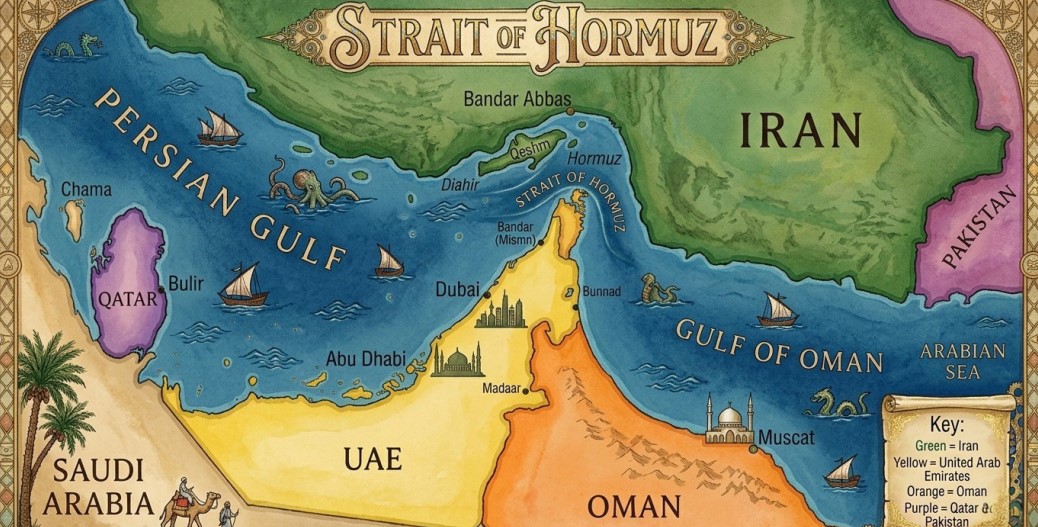
The Strait of Hormuz is crucial because it acts as a gateway for global energy supply, making it one of the most sensitive and strategically important water ways in the world; one of the most important checkpoints globally that has economic, strategic and geopolitical significance. Around 20 – 25 % of the world’s oil trade passes through this narrow water channel. Major oil producers like Saudi Arabia, Iran, Iraq, Kuwait and UAE rely on it to export oil.
It is controlled geographically by Iran (north) and Oman (south). About 33 Kms wide, the Strait is made vulnerable to blockades, conflicts or accidents because it connects the Persian Gulf with the Gulf of Oman and ultimately the Arabian Sea.
The Strait is a key waterway, particularly for the transit of oil and natural gas and other commodities, including Helium, fertilizers and other industrial products to world markets. Additionally, 20% of global liquefied natural gas (LNG) trade passes through this narrow waterway. Its role as a critical conduit for oil and natural gas resources to reach global markets establishes its importance to global economy.
Iran’s extensive Persian Gulf coast and its military capabilities have long given her the potential ability to project power throughout the region, including over energy trade. A prolonged disruption of Middle East oil trade would create oil market conditions for which there is no historical precedent. Exactly how high and for how long prices might be elevated is uncertain and would be determined by the amount of time needed to normalize Middle East oil trade.
Change of Strategy
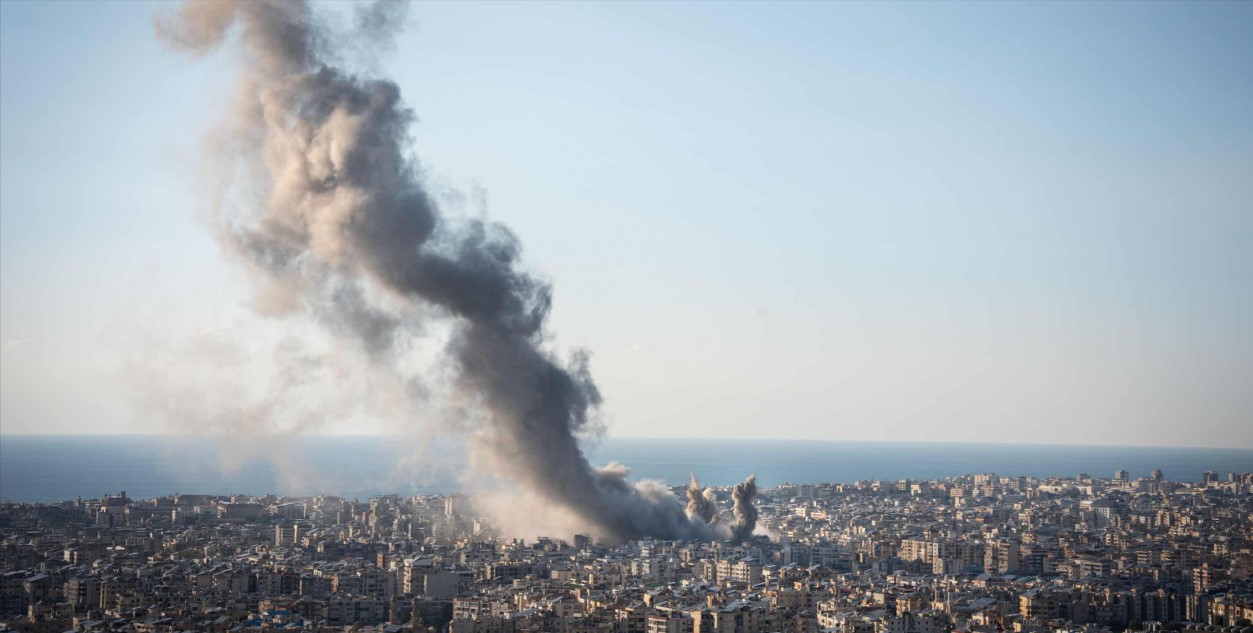
Since the beginning of the ongoing war, US President Donald Trump has shown his love for Iranian oil on many occasions given his dream of capturing Iranian oil resources to control the oil trade. The almost total shut down of the Strait of Hormuz by Iran is a major setback for USA, which they were not at all expecting before the war. The Strait of Hormuz has always been referred to as the Jugular Vein of the world economy in the sense that a quarter of the world’s oil passes through it.
Previously, it was quite a simple threat in case of a war that Iran would close the strait and the world would run out of energy. However, the strategy has changed during the current war in 2026 and Tehran has not merely closed the door; it has installed a currency-coded lock, this is the huge surprise. For many analysts it is a maritime regime change.
In order to open the Strait of Hormuz or reverse the maritime supremacy of Tehran, the US and Israel would try to seize and hold the Kharg Island and similar Islands like Abu Mosa and Lark close to Iran’s coastal lines, but it would be a disaster for the US troops. The US troops may be technologically very superior but ground knowledge in any case is in favour of the Iranians. The offensive would place the lives of United States troops at extreme risk and they not be able to strike a final and strategic blow to have any impact on the course of the war, they would not be able to force Iran to “surrender “and beg for ceasefire. The Iranians were preparing for this offensive option since the beginning of revolution in 1979. They are well dug in with fortified bunkers connected with tunnels all along the coastline.
Iranian are in fact inviting the US to launch a ground offensive and as per statements of some of their commanders they will convert the Strait of Hormuz into a graveyard of enemy forces seeking to invade Iranian territory; it will not only be the US troops facing the brunt, but their allies will also face the heat. This scenario could spread the conflict into a highly dangerous one, with a no-ending scenario, the impact on energy markets would be volatile.
Impact
The Strait of Hormuz at the start of war was not an objective of USA and Israel but with every passing day its importance has changed the perception significantly. For the first time in nearly a hundred years, the US dollar is losing its grip, and it is no longer the Master Player. In the midst of the conflict, the world’s most dangerous chokepoint has adopted a new currency, the Chinese “Yuan”. The closer of Strait of Hormuz has given new and long-lasting impact, its closer is announcing a new regional maritime order. The Petrodollar is dying in the heat of the desert of the Gulf States, in the contrary the Chinese “Yuan” has become the new emerging star. The US dollar, the aging heavy weight champion of global trade, is being forced to abdicate the throne. After the 1967 Arab-Israel war, the US currency (USD) became the champion of world trade. Since then, oil is sold exclusively in dollars having American security guarantees without facing consequences. Now, the scenario has changed from day one so to say i.e. February 28, 2026, the Iranian retaliation has shattered the confidence of regional neighbours.
The Gulf States are now looking for an alternative to overcome this problem. The British Prime Minister Keir Starmer has announced holding a meeting of about 35 countries to discuss how to reopen the strategic Strait of Hormuz which has been crippled by the Middle East war and consider using all viable diplomatic and political measures. This is still pending. Since the closer, Iran is allowing selective ships to pass through the Strait of Hormuz. The unfriendly flagged ships carrying oil, or any vessel transacting in US dollars are stopped or made hostage. Passage is now allowed to those tankers having flags of friendly country who are also transacting in Chine’s currency, “Yuan”. All this is happening under a Quarter Century Strategic Cooperation Agreement between China and Iran, signed in 2021 in Tehran. As the US dollar loses its role as the sole oil currency, its value will only continue to plummet. That is the reason why the closer of the Strait of Hormuz has become the Achilles Heel or Bone of Contention for US and Israel.
If the world, including the UNO are looking for stability, economic viability and long-lasting peace in the region they should galvanize meaningful peace efforts by bringing the adversaries on negotiating table.
Iran has recently rejected the US proposal because they think it is excessive and unreasonable, in fact they have suggested their r own few points for ending the conflict, which include recognition of Iran’s sovereignty over the strategic Strait of Hormuz. Iran is also asking for payment of war reparations. In any case it seems that Tehran is not in a mood to back to the pre-war position. Meanwhile, Iran offered the EU (European Union) transit access through the Strait of Hormuz and in case EU accepts the deal, they will also have to pay in Euros not in US Dollars – this will be a turning point for financial markets. Even if Iran war ends the damage will be colossal for the Dollar because demand for the Dollar will fall automatically, reserve share collapses and US inflation will rise beyond imagination.
In case both USA and Iran did not settle the issue politically and the conflict is prolonged, Iran will maintain its grip on the Strait of Hormuz and keep on engaging through its retaliatory missiles strike on GCC countries. The global oil market will remain in a state of flux and indefinite turmoil as the effects will also disrupt the supply chain of other commodities resulting in a global recession. The global economy will be plunged into chaos and also threaten world food security.
Conclusion
The Strait of Hormuz is not merely a narrow passage of water, it is the life line of the global economy. Any disruption here does not stay regional, it reverberates across energy markets, currencies and geopolitical stability worldwide. In an increasingly interconnected world, the security of this vital choke point is not just a regional concern, but a global imperative.
A former US Treasury Secretary Jack Lew said. “The dollars’ role in the global financial systems gives us powerful tools”. But in the Iran-US war, this powerful tool is losing its dominance rapidly and could end up having a huge influence on the outcome of war in favour of the US adversary. The war at this stage and apparently at a lower level or at least on the international media, the US and Israel may be winning but they are losing the structural war. The bold claims made by the USA that Iran would be destroyed in just four days have now been shattered beyond recognition. Iran has stood firm and has fundamentally altered the strategic landscape.