

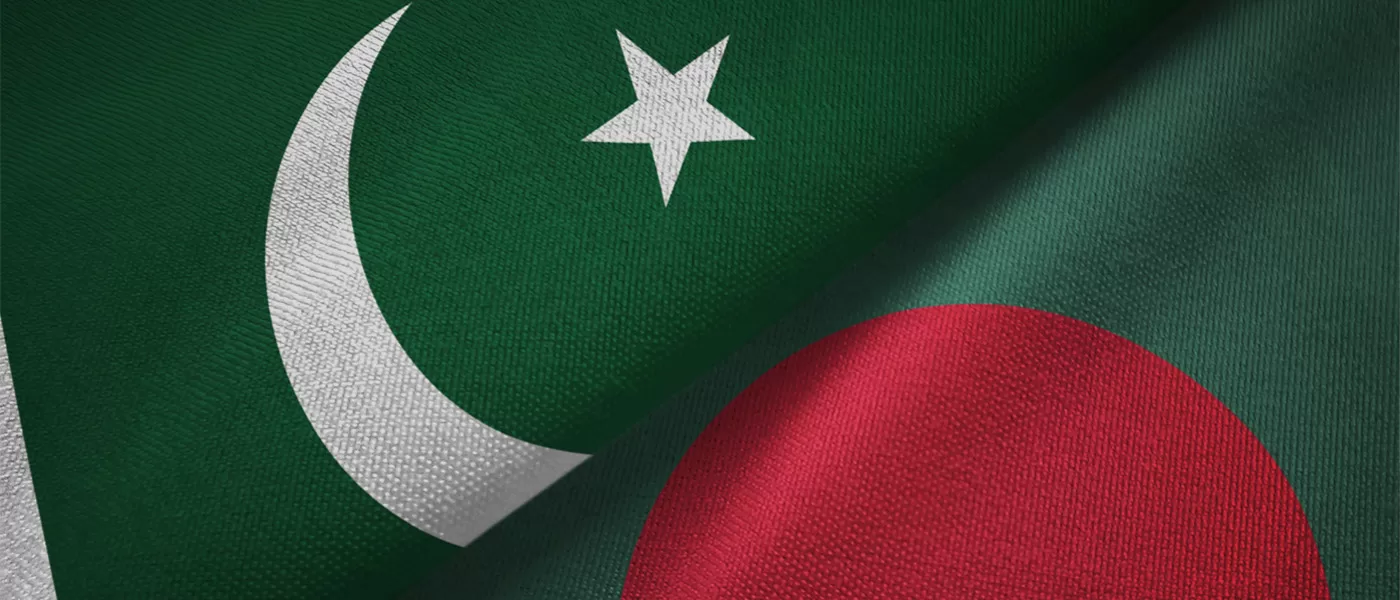
As our world becomes more defined by various barriers, such as political, economic, and cultural, there is a critical need to cultivate connections that exceed these divisions. As I reflect on our shared heritage between Pakistan and Bangladesh, I am reminded of the rich tapestry woven from our diverse histories, cultures, and experiences. I want to share an insightful perspective on the profound significance of the connection between Pakistan and Bangladesh, drawing from a personal narrative—one shaped by a Bengali mother and a Punjabi father. This dual heritage serves as a poignant reminder of the shared experiences that bind us as a nation. I cherish the moments spent enjoying traditional Bengali dishes like Sutki fish and Potol at the home of a friend, showcasing the beauty of cultural exchange that surpasses borders. However, this bond has not always been easy. I recall the complexities my family faced navigating our identities—embraced as Punjabis in Dhaka while acknowledged as Bengalis in West Pakistan. Such experiences encapsulate the intricate dance of identity that many of us engage in, reflecting the broader challenges we encounter in two countries.
A striking aspect of our history lies in figures like Zia ur Rehman, whose roots in Karachi serve as a testament to the intertwined destinies of our countries. Zia ur Rehman, known for his vision of a unified South Asia, proposed the bold idea of a No Visa, No Tariff policy during his visit to Pakistan in 1978. Unfortunately, this visionary concept was stifled by bureaucratic hurdles but he laid the groundwork for his visionary initiative, SAARC.
I see that our problems can be resolved by a straightforward solution: let us declare No Visas, No Tariffs, and eliminate customs duties between Pakistan and Bangladesh. The apprehension surrounding such policies often stems from fears of uncontrolled migration or economic imbalance. However, I challenge this notion by emphasizing the mutual benefits that would arise from enhanced cooperation. The potential for people-to-people connections and economic exchange could redefine the narratives we tell about one another.
Additionally, I suggest making the possible payments in Bangladeshi Taka or Pakistani Rupee, facilitating trade and commerce in a way that fosters interdependence rather than separation. This simple yet profound idea could revolutionize our economic interactions, allowing both nations to thrive together instead of in isolation. The economic relationship between Pakistan and Bangladesh has significant potential, grounded in their historical ties and shared cultural heritage. Despite facing challenges, both nations have actively worked to enhance trade cooperation. Their trade dynamics are influenced by their history as part of undivided British India until 1947 and Bangladesh’s emergence as an independent nation in 1971. Bilateral trade has been steadily increasing, reaching approximately $1.5 billion in 2023. However, this figure, while representing growth, still does not reflect the full potential of trade between these two sizable economies.
Former Bangladeshi Foreign Minister Muhammad Shamsul Haq articulated a hopeful vision for Pakistan-Bangladesh relations when he stated that “Bangladesh and Pakistan were bound by many common ties rooted in a shared history and culture, which was overshadowed but not obliterated by the tragic happenings of 1971.” He reminded us that the role of Bengalis in the creation of Pakistan is an undeniable part of our history, as Abdul Kasem Fazlul Haq, a Bengali Muslim leader, moved the original Pakistan Resolution. As we look to the future, both nations must prioritize collaboration and growth. By embracing the shared values that unite us, Pakistan and Bangladesh can cultivate a more mature and prosperous relationship that benefits their people for generations to come. I remember that during Sheikh Hasina Wazed’s second tenure, I initiated a back-channel dialogue with her advisor, Gohar Rizvi, on the condition of deniability with the blessings of Senator Sartaj Aziz, aiming to bridge our differences. These discussions at the DHA Golf Club brought us close to a solution, yet they were missed opportunities. Under Hasina’s third tenure, dynamics have shifted, affecting my engagements, including a refusal to my further lectures at the National Defense College, Dhaka and complications around family visas.
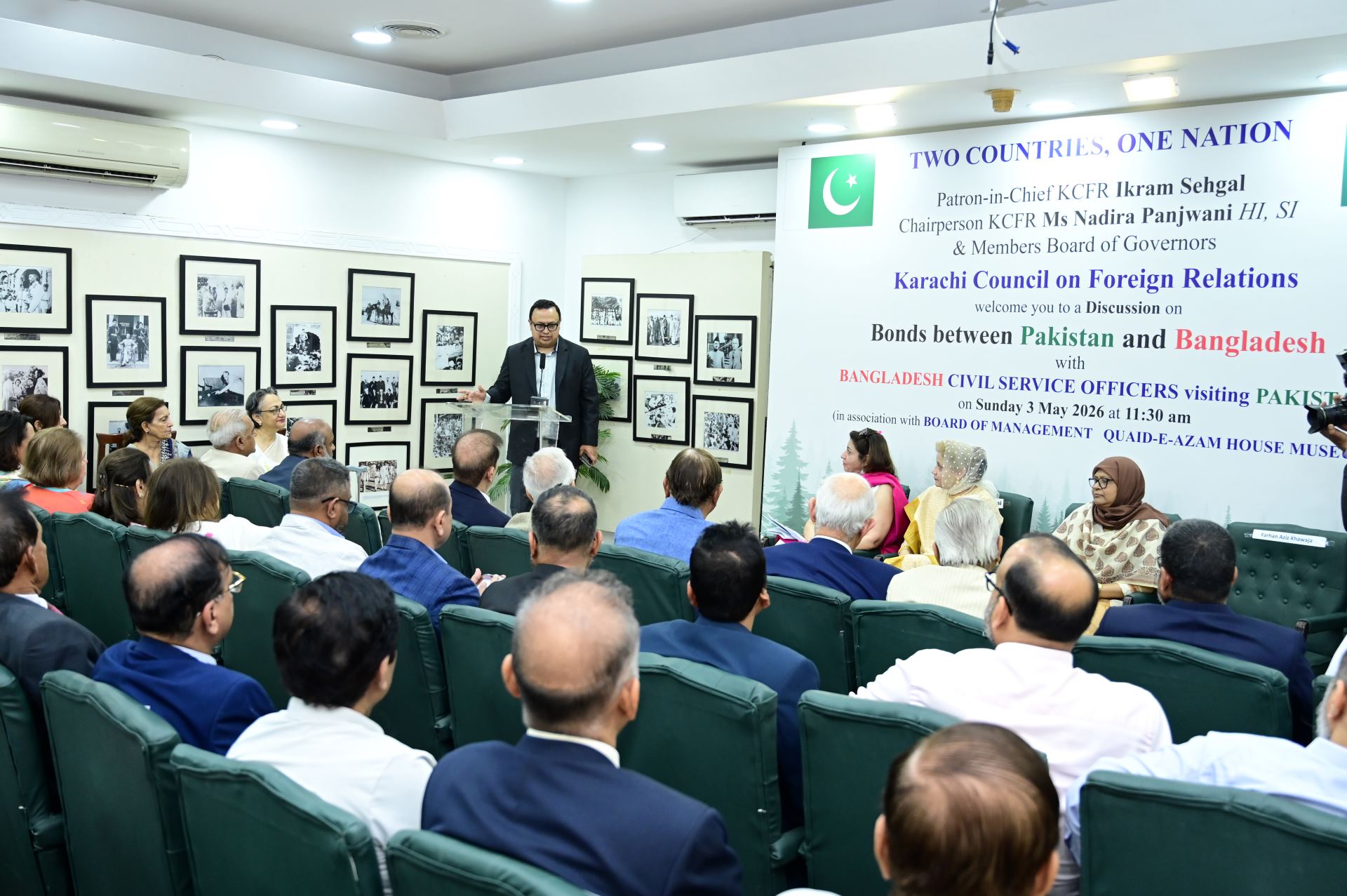
The conflict is transforming now, in a recent KCFR event in Karachi, Muhammad Ruhul Alam Siddique, High Commissioner of Bangladesh to Pakistan expressed his keenness to work for a better visa policy for Pakistanis and developing a conducive environment for people. He always emphasized on people to people contact at every level. Today, it’s worth noting that there are significantly more Bangladeshi military students studying in Pakistan than vice versa. This reflects the potential for deeper ties. We seek peace with India, a goal aligned with India’s interests as well, especially considering our deterrence capacity. Given that 90% of Bangladesh’s border is with India, the necessity of maintaining a large military presence raises questions. It’s time to focus on building a collaborative future.
I am hopeful that the new generation in Bangladesh will shed the burdens of the past and adopt a more pragmatic approach. To avoid being held back by historical grievances and develop meaningful relations moving forward, Dhaka and Islamabad must seriously consider the No Visas No Tariffs policy.
During President Pervez Musharraf’s visit to Dhaka in July 2002, both sides agreed to establish a Pakistan-Bangladesh Joint Commission to enhance trade relations, alongside cooperation in educational, cultural, scientific, and other areas. However, progress has stalled, and both nations have not fully honored the commitments made in these bilateral agreements.
As we navigate the complexities of our shared past, it is essential to embrace our similarities while celebrating our differences. The journey toward mutual understanding and cooperation is not just a political necessity; it is a moral imperative. By working together, we can create a future that honours our intertwined legacies and cultivates a spirit of collaboration.
Let us heed the call for unity and embrace the growth potential that lies in breaking down barriers. The vision of a future where borders are mere lines on a map rather than divisions between people is not just a dream; it is a goal worth pursuing. Together, Pakistan and Bangladesh can forge a path toward a brighter, more connected future.
Ikram Sehgal