
Every year, the annual gathering of international leadership in New York for ministerial session of the United Nations’ General Assembly (UNGA) provides a venue for quick bilateral and multilateral interactions amongst global leaders. Prime Minster Imran Khan spared five days for this event. Though his interactions were wide ranging and wholesome the primary focus was on Kashmir and Afghanistan. India’s annexation of occupied Kashmir territories and America’s abrupt walking away from signing the agreement for restoration of peace in Afghanistan had upset the apple cart of peace making in South Asia, both these events have wide ranging implications for Pakistan’s state and society. The Prime Minister’s time was well spent in the US as he amply highlighted Pakistan’s grand standing on these two issues and galvanized international support for moving ahead for solving the two conflicts having implications beyond South Asia.
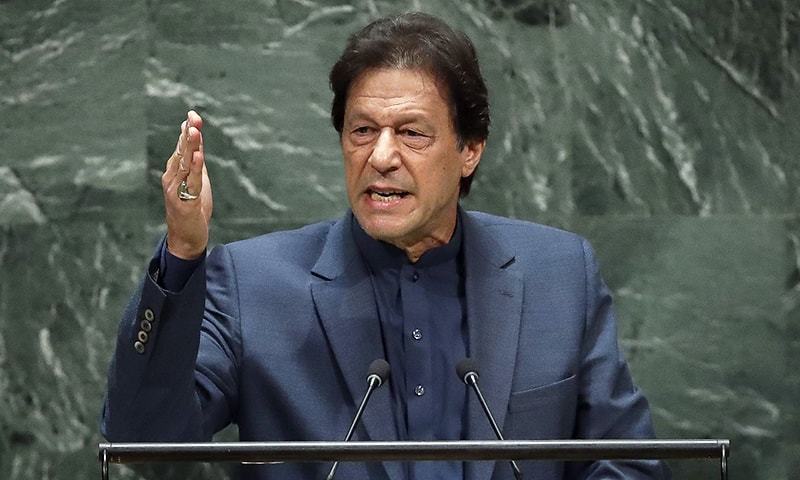
The flag ship event of Imran Khan’s visit to the US was his address to the 74th Ministerial Session of the UNGA. He focused on four points and touched upon many more work-in-progress type happenings in the prevalent World Order. His speech was a mix of statesmanship and populist approach. He spoke for nearly 50 minutes against an allocated time of 15 minutes. He spoke in detail on challenges of climate change, money laundering, Islamophobia and Kashmir. Of these the first three have global implications while the last one, beside domestic and regional repercussions, also has global underpinning. The Prime Minster highlighted the responsibilities of the international community towards all these challenges.
The Express Tribune aptly commented [editorially] on September 29, 2019 under the caption “Imran at UNGA”:
“He pulled no punches. He minced no words. He made no bones about condemning the slumbering world conscience while highlighting the Indian barbarism in Kashmir. He warned the world in stark terms of a bloodbath in the state under illegal Indian occupation and made it loud and clear that Pakistan was ready to fight till the end in case a war was imposed on it. Prime Minister Imran Khan hit all the right spots as he delivered his maiden speech at the United Nations General Assembly on Friday [Sept 27]… with repeated bursts of applause from the audience punctuating his address. While the ongoing Kashmir situation formed the gist of the PM’s address, he started off with an issue that threatens the whole world the climate change. “If nothing is done, we are scared humans are facing a huge catastrophe,”… countries contributing to greenhouse gas emissions must be pushed, with the UN taking initiative. He went on to discuss illicit financial flows or money laundering. While many believe the issue was meant for the consumption of PM’s supporters back home, the fact is that with Pakistan caught in the FATF web, it did merit an audience at the UNGA platform. “Corrupt elites must not be allowed to park their money [abroad]. Why do we have these tax havens? Why are they legal, these secret accounts?” the PM raised stinging questions, asking the UN to lead steps for redressal. The PM also expressed concern at Islamophobia that was growing at an alarming pace. “Islamophobia is creating divisions, hijab is becoming a weapon,” he observed, adding without qualms that a woman “can take off clothes but she can’t put on more clothes”…. the PM represented the sentiments of over two billion Muslims around the world as he explained the Muslim world’s reaction to sacrilegious content: “The holocaust is treated with sensitivity because it gives them [Jews] pain. That’s all we ask. Don’t use freedom of speech to cause us pain” as “the Prophet [PBUH] lives in our hearts”. And as the PM presented the case of the Kashmiris at the global stage, he did it full justice. As he spoke, the Kashmir issue unfolded in a proper sequence with nothing left out, even though he did not have anything written out on a piece of paper. Deliberating on the longstanding conflicts for 23 minutes, the PM expressed his fears about of a potential nuclear conflict insisting it was not a threat in case of the global community not paying attention to the suffering of the nine million Kashmiris held hostage by nearly a million Indian troops for about 55 days. Imran turned out to be the first leader after ZA Bhutto who had the courage to directly hit the Indian leadership, as well as the RSS ideology, at the UNGA. Capping the speech very aptly, the PM said, “This is a test of the UN. You are the one who guaranteed the Kashmiris the right [to self-determination]. This is the time not to appease but to take action … Is the world going to appease a 1.3 billion plus market or stand for justice and humanity. ”Prime Minister Imran Khan deserves full marks for forcefully raising the Kashmir issue at the UNGA. There is, however, still the need to work out and adopt a comprehensive action-oriented policy to be maintained at all costs”.
Dawn’s editorial “UNGA speech” on September 29, commented
“Mr Khan delivered a speech focused on four key areas: climate change, financial corruption, the perils of Islamophobia and lastly — and most importantly, since it was the main purpose of his visit — Kashmir. On the first three issues, Mr Khan made some valid points although more informed input from his advisers could have yielded greater impact… But all shortcomings were compensated for by the subject Mr Khan saved for the last: the appalling situation in India-held Kashmir. He spoke with heartfelt conviction: “What I know of the West, they wouldn’t stand for eight million animals to be locked up. These are humans,” Mr Khan said as he spoke of the pitiable conditions that people are living under in occupied Kashmir.“I have pictured myself locked up for 55 days … Would I want to let this humiliation continue? I would pick up a gun” are words that are likely to stay with those who listened. Besides drawing attention to the plight of the Kashmiris, Mr Khan framed his plea to the international community by calling out the UN. “It is a test for the United Nations. You are the one who guaranteed the Kashmiris the right [of self-determination]. This is not the time for appeasement.” Comparing Indian Prime Minister Narendra Modi’s association with the Hindu nationalist RSS to Hitler and the Nazis, he asked how the world would respond if it were Jews and not Muslims under curfew — a scenario that might resonate more with an international community that for decades has rightly viewed the Holocaust as amongst the worst atrocities in history. In delivering an unequivocal, thunderous message to the world on Kashmir Mr Khan did the right thing for millions of Kashmiris living under siege. For that, he must be given credit”.

Through his powerful address at the UNGA, Prime Minister’s message to world leadership was loud and clear: Pakistan is no longer a pawn, a joker, a bystander on the world stage. It is active, engaged, relevant and responsible. Prime Minister’s speech has been widely appreciated within and outside country, including his political foes. However, the underlying fact is that UNGA is nothing more than a debating forum for venting out frustrations, with no practical value towards addressing the international crises. Imran Khan’s speech will not help in mitigating any of the four challenges he was at pains to articulate. It is ironic that most of such issues are the fallout of prevailing global political order and are pillars for sustenance of global status quo. Nevertheless, the Prime Minister’s powerful presentation on Kashmir cause has lifted the public morale in Pakistan and Kashmir, and has heightened his stature, within and outside Pakistan.
US President Donald Trump urged India’s Prime Minister Narendra Modi on September 24 to improve ties with Pakistan and “fulfill his promise to better the lives of the Kashmiri people,” the White House said after the Trump-Modi meeting on the side-lines of the annual UN gathering. Earlier, talking to reporters at a joint press conference with Modi before their bilateral meeting, Trump suggested a Pakistan-India summit on Kashmir, expressing his optimism that the “good things” would happen when the “two great gentlemen” will meet. He said he believed that Prime Minister Imran and Prime Minister Modi would “get along when they get to know” each other. The US president heaped praise on the Indian prime minister calling him “father of India”.
In a series of tweets after the meeting, India’s Foreign Secretary Vijay Gokhale said that Kashmir issue came up during the Trump-Modi meeting. “We raised the challenges we face with regard to terrorism, especially in Jammu and Kashmir,” he said. Modi “put forward our perspective on the issue of terrorism” and Trump showed understanding. “PM Modi made it clear that we are not shying away from talks with Pakistan but we expect certain concrete steps to be taken by Pakistan before that, and we don’t find any efforts by them,” Gokhale said in a tweet.
On September 25, US President Donald Trump again said he encouraged India and Pakistan to work out their differences in separate meetings with their prime ministers this week.“ I said, ‘Fellas, work it out. Just work it out,’” Trump told a news conference after attending the UN General Assembly.“Those are two nuclear countries. They’ve gotta work it out,” he said.
Tensions between India and Pakistan reached feverish pitch on August 5 when New Delhi unilaterally annexed occupied Kashmir, revoking a constitutional guarantee that gave a special status to the disputed territory. A strict lockdown and communications blackout was imposed in the region that snapped off internet and mobile telephone service across occupied Kashmir. And when Trump and Imran met, the crackdown had crossed its 50th day. Trump was then asked about his opinion on the lockdown in IOK. Instead of answering the question put up by a Pakistani reporter, Trump started praising the journalist. “He is a good reporter. Where do you find these reporters?” he asked PM Imran.
Earlier Donald Trump floated a number of non-starters related to Kashmir, Gulf crisis and contain China policy. While Prime Minister Imran Khan was still queuing up for a meeting with Trump, the latter was hobnobbing with Modi in a 50,000 gathering in Houston and pledging to, jointly with India, counter Muslim extremism. He also announced the schedule for first ever joint tri-service military exercise with India. During the Houston gala there were visible signs of anxiety on Modi’s face as time to deliver on America’s contain China policy and on his Kashmir promises is nearing. An equal number of protestors had gathered outside the football stadium to condemn Modi’s policies on various accounts.
Modi had rehearsed his comic “Contain China” episode by propping up the Doklam crisis, purportedly on Bhutan’s behest in 2017. He was thoroughly embarrassed as China preconditioned any talks with India with its troop withdrawal from Doklam; ultimately Modi had to eat dust. And after coaxing Trump to mediate on Kashmir during 2019 summit of G-20 at Osaka Modi annexed Indian Occupied Kashmir on August 05, promising economic uplift of residents of IoK.

Trump has reiterated his offer for mediation between Pakistan and India on the Kashmir dispute but emphasised that arbitration could not be carried out unless both parties involved welcome it; what a useless offer, embedded with a non-starter both by default and design. If trump had any sincerity in resolving the Kashmir dispute he should have offered a supporting resolution in the UNSC. Mandating Imran for mediating between the US and Iran was equally comic; the matter is too complex for poor Imran. Though Imran was quick to meet President Rouhani; later he climbed down, making the mediation subject to Iran’s willingness. In a way Trump’s mediation gimmick has come back a full circle to haunt him.
Over and above Trump laid his claim on the Nobel Peace Prize. When told that he could get a Nobel prize if he helped resolve the Kashmir dispute, Mr Trump said: “I would get a Nobel prize for a lot of things, if they give it out fairly, which they don’t. They gave one to Obama immediately upon his ascent to the presidency and he had no idea why he got it. You know what? That was the only thing I agreed with him on,” Mr Trump said. Notwithstanding, credit goes to Trump for avoiding new wars and making efforts to bring some of the ‘Wrong Wars’ to a close.
According to ABC news, “Justice for All”, an interfaith human rights group, and its allies had organised a massive protest demonstration outside the Houston venue with protesters chanting “Go back Modi” and “Modi is a terrorist”. Muslims and Sikhs from different cities of Texas – including Houston, Dallas, Austin and Saint Antonio – had chalked out a plan to disrupt Modi’s rally at the Stadium. The Sikh community joined hands with Pakistanis to protest New Delhi’s barbaric treatment of Kashmiris in IoK. The “International Humanitarian Foundation” also responded to Prime Minister Imran Khan’s call to gather in Houston. Anti-Modi and anti-India banners were put up around the Houston venue.
Prime Minister Imran Khan met US President Donald Trump on September 23 when he explained Pakistan’s clear, categorical and firm stance on Kashmir, Afghanistan and Iran. The meeting was the first of two between the leaders during the UN session — followed a “Howdy, Modi!” rally in Houston on September 22. White House Chief of Staff Mick Mulvaney, National Security Advisor Robert O’Brien and Senior Adviser Jared Kushner attended the meeting between President Trump and PM Imran Khan. After it was confirmed that Trump would meet both Indian and Pakistani prime ministers before and during the UNGA, diplomatic observers in Washington had guessed the strong possibility that he may use the meetings to discuss the situation in Kashmir.
“I trust this gentleman right here,” he added, pointing to Prime Minister Imran. Trump said he has a lot of Pakistani friends in New York who are “smart” and “great negotiators”. Addressing the media alongside Prime Minister Imran Khan before their one-on-one meeting, the US president acknowledged that the Kashmir was a complex issue that had been going on for a long time. He said that he had never failed as an arbitrator in the past and would be available to help if asked. “If I can help, I will certainly do that,” he said. “If both (Pakistan and India) want, I am ready, willing and able to do it,” he said. The riding clause, “I think it’s important that both sides want Washington to mediate on the Kashmir issue”, effectively made the offer still born. Trump claimed that he had a “very good relationship” with the two prime ministers and hoped the two neighbours would come together and resolve their differences over Kashmir. Avoiding to directly answer a question about UN resolutions on Kashmir, Trump reiterated that he is ready to play his role in South Asia if both India and Pakistan are willing. He also emphasised the need to “double, triple and even quadruple” bilateral trade between the United States and Pakistan.
When asked if he was concerned about human rights violations in occupied Kashmir (IOK), he said, “Yes…I am, I want both sides to come to the negotiating table… I’d like to see everything work out. I want everybody to be treated well. There is always a solution and I do believe that there is a solution.” Trump added, “I heard [a] very aggressive statement yesterday [Sept 22] and I have to say I mean I was there [and] I didn’t know I was going to hear that statement… from India… from Modi,” said Trump while speaking to the media alongside Prime Minster Imran Khan. Trump also seemed surprised that Modi’s statement was “very well received” within the room of some “59,000” people.
During the first Imran-Trump meeting in July also, the US president had expressed his willingness to mediate between India and Pakistan to resolve the 70-year-old Kashmir dispute an offer he has, since repeated a number of times; but has each time been rejected by India.

Speaking about the Pakistan-US relations, Trump said the previous US governments treated Pakistan badly and that he trusts the current leadership of the country. “I trust Pakistan but people before me didn’t, but they didn’t know what they were doing,” he said in response to a question. “I really trust and like him [Imran Khan],” he said. He conveniently forgot his New Year tweets of 2018.
Commenting on Pakistan’s progress to counterterrorism, he said: “I have heard they have made great progress and I think he (Imran) wants to make great progress.” About Afghanistan, Trump said he had a great discussion with Prime Minister Imran Khan on dialogue with the Taliban, the situation in Afghanistan and regional peace. Highlighting the situation in Indian occupied Kashmir, PM Imran said the lockdown of millions of Kashmiris, the escalation in human rights violations and the continued communications blackout had created a dire humanitarian crisis there. He reiterated that the illegal and unilateral actions of India are aimed at altering the internationally recognised disputed status of occupied Kashmir by violating numerous UNSC resolutions and international law.
Minister for Foreign Affairs Shah Mahmood Qureshi said US President Donald Trump had mandated Prime Minister Imran Khan to mediate between the United States and Iran. And the prime minister would discuss the issue with the Iranian leadership to find a way out. The foreign minister said the prime minister has made it clear to the US president that the region could not afford any war, as any imprudent action would draw drastic consequences. During the Saudi visit too, the prime minister had suggested an amicable solution to the US-Iran standoff. The meeting between PM Imran and President Rouhani came immediately after US President Donald Trump mandated PM Imran to mediate between the United States and Iran.
Prime Minister Imran told President Trump that a humanitarian crisis had developed in the Indian Occupied Jammu and Kashmir where eight million people were living under siege with their basic human rights usurped. President Trump was told that India would only listen to the United States so it should play its role, and both the US and the UN Security Council will have to play their part if they wanted to avert bloodshed in the occupied territory.
The PM also apprised the US leadership of Pakistan’s facilitative and constructive role in the Afghan peace process that was also acknowledged by Secretary Mike Pompeo. The prime minister reiterated that there was no military solution to the Afghan issue and called for resumption of talks to move the peace process forward.
President Trump acknowledged Pakistan’s point of view and said that he would talk to India about the situation in Kashmir, Qureshi said. In the weeks since Kashmir’s lockdown, hundreds of elected politicians, activists and trade unionists have been imprisoned or put under “house arrest”. Hundreds of thousands of young men, including minors, have been arrested in night raids by the police, with many transported to jails outside the state. When Prime Minister Imran was asked about his expectations from Trump on Kashmir, he replied that Trump heads the most powerful country in the world which has a responsibility to resolve disputes. “The world looks to the US to put out the flames in the world”. He said even though Trump had offered to mediate, India was refusing to talk to Pakistan. “In this situation, I feel that this is the beginning of a crisis. I honestly feel that the crisis is going to get much bigger [considering] what is happening in Kashmir,” he cautioned.
Prime Minister Imran Khan also urged the world community, the United Nations Security Council (UNSC) in particular, to come forward and help defuse heightened tensions between Pakistan and India over the long-standing Kashmir dispute. “If ever the UNSC needs to move, it’s now… there’s potential of the unthinkable,” he said while addressing a news conference at the UN headquarters in New York. He said he was alarmed by the standoff and spoke to the world leaders, including the leaders of the US, UK, Germany and France “This is the time the world needs to act, because this is the first time after Cuban crisis that the two nuclear powers have come face to face,” he said. “Modi has boxed himself into a blind alley,” he added. PM Imran feared that there would be “bloodbath in occupied Kashmir once curfew is lifted”. “It is madness to allow the whole situation to deteriorate further”, he said, adding “I fear there is going to be bloodbath”. He said the international community will be held responsible for impending genocide in occupied Kashmir. “I’m disappointed by international community’s apathy to IOK”, Imran added.

Referring to the Afghan issue, the prime minister said stability in Afghanistan was need of the hour and in the best interest of Pakistan. Imran underscored the importance of immediate lifting of the curfew and other restrictions, averting any dangers to peace and security, and facilitating the peaceful resolution of the Jammu and Kashmir dispute.
Prior to meeting Trump, while speaking at an event at the Council on Foreign Relations (CFR) think tank, Imran said: “Two nuclear-armed countries are facing each other…And as prime minister I am saying that anything can happen in such a situation,” he told a gathering, comprising of former US diplomats, analysts, intellectuals and media. “The international community should at least ask India to lift the curfew.” Giving a brief account of Pakistan-India relations since he came to power 13 months ago, the prime minister said that even before the Pulwama incident in February, New Delhi had continued to shy away from any bilateral talks due to its domestic politics. He said the Indian government was following the racist agenda of Hindu dominance led by Rashtriya Swayamsevak Sangh (RSS), adding it was the same philosophy which assassinated Mahatma Gandhi. Responding to a question, he said that present India was not heading in the right direction. “It is not the India of Gandhi.”
When asked by CFR President Richard N. Haass as to why Pakistan has repeatedly turned to the International Monetary Fund (IMF) for financial assistance, Imran said: “The moment you have a deficit, whether it is current account or fiscal deficit, means you are not managing your economy properly […] This inability of successive governments to manage our economy is why we keep lining up with the IMF.” He said when his party came into power last year, Pakistan was in “the worst economic situation”. He added: “I am really proud to say that we have cut down this deficit almost by 70%. We now have an economy which is heading in the right direction.”
To another question regarding former US defence secretary James Mattis’ remark that he considered Pakistan to be “the most dangerous” among all countries he had dealt with, Imran said: “I do not think James Mattis fully understands why Pakistan became radicalised.” “In the 1980s, when the Soviets invaded Afghanistan, Pakistan, helped by the United States, organised the resistance to the Soviets. And so we created these militant groups to fight the Soviets. Come 1989, the Soviets leave Afghanistan, the US packs up and leaves Afghanistan […] and we were left with these groups,” he said. “Then comes 9/11, and Pakistan again joins the US in the war on terror and now we are required to go after these groups as terrorists. They were indoctrinated that fighting foreign occupation in jihad but now when the US arrived in Afghanistan, it was supposed to be terrorism. “So Pakistan took a real battering in this,” he said.
Asked about the insurgents allegedly going from Pakistan to carry out attacks in Afghanistan, Imran said there are some 2.7 million Afghan refugees in Pakistan and there is no actual border in the tribal region. “How do we know who is coming in and going out?” he questioned. He said it was “painful” for Pakistan that the peace deal that was about to be signed between the US and Afghan Taliban had collapsed. He added he would emphasise in his meeting with US President Donald Trump that there will not be a military solution to the Afghan conflict. “I don’t think the Taliban will be able to control the whole country. I think there will be a settlement,” he said. “I honestly believe that this is not the Taliban of 2001. There are a lot of things that happened and I believe they will be more accommodating” he said.
Prime Minister Imran, who has declared himself an ambassador of Kashmiris spent most of his time out of his seven-day visit to the US, briefing US lawmakers, scholars, human rights activists and media on the repercussions of the Indian annexation of the disputed Kashmir territories. The lawmakers who called on the prime minister included US Senate Minority Leader Chuck Schumer and Chairman of the Senate Judiciary Committee Lindsey Graham. Senator Graham is among those four US senators who wrote a letter to President Trump asking him to take immediate action to end the deepening humanitarian crisis in occupied Kashmir.

PM Imran also met with the founder the Kashmir Study Group Farooq Kathwari during which he urged Kathwari to continue informing the world about India’s illegal occupation and human rights violations in occupied Kashmir so that they could see the real face of Modi’s government. The prime minister also met Amnesty International’s secretary general Komi Naidoo and discussed with him the dire human rights and humanitarian situation in occupied Jammu and Kashmir. “Worsening human rights situation in IOK as a result of an excruciating clampdown by Indian occupying authorities” was discussed at the meeting, Pakistan Foreign Office spokesperson said in a tweet. PM Imran appreciated the lead role that Amnesty was playing in presenting the real state of human rights in the occupied territory and amplifying the voices of the Kashmiri population in a state of perpetual lockdown. These efforts had helped raise international community’s awareness about the continuing suffering of the Kashmiri people. The Premier also lauded Amnesty’s report on the use of pellet guns by India and their devastating impact on Kashmiri youth. Two UN reports on Kashmir have served as a strong basis for continued civil society advocacy in support of the Kashmiri people. Naidoo briefed PM Imran on Amnesty’s advocacy work on Kashmir including #LetKashmirSpeak.
China and Pakistan share a common vision for a peaceful Afghanistan and for the right of self-determination to the people of Kashmir. The two countries are also engaged in multi-billion dollar connectivity project China-Pakistan Economic Corridor (CPEC). Imran Khan also met China’s Foreign Minister Wang Yi and stated that Pakistan attaches high priority to CPEC and reiterated Pakistan’s resolve to complete ongoing projects under the CPEC. Wang conveyed the resolve of Chinese leadership to work with Pakistan’s leadership to further strengthen Pakistan China relations in all areas of cooperation and build a community of shared future. He underscored that successful implementation of BRI and CPEC will contribute to economic stability and development in Pakistan and region. He also reiterated China’s unwavering support to Pakistan on Kashmir issue.

On September 22, US special envoy for Afghan peace process Zalmay Khalilzad had a meeting with the prime minister and praised Pakistan’s role in resolution of Afghan conflict. Prime Minister Imran, while recalling that Pakistan had always held that there was no military solution to the Afghan conflict, reiterated Pakistan’s continued support to all initiatives towards achieving a sustainable peace in Afghanistan. He also expressed the hope for an early resumption of the peace process. Condemning the recent surge of violence in Afghanistan, the prime minister said peace in Afghanistan was vital to advancing his government’s vision for a peaceful neighbourhood and for economic development and regional stability. The prime minister also appreciated Ambassador Khalilzad’s efforts for promoting a peaceful political settlement in Afghanistan. He stressed that all parties must play their role in strengthening peace and promoting reconciliation as a shared responsibility. Ambassador Khalilzad appreciated the prime minister’s support for the Afghan peace and reconciliation process, and said he looked forward to continue working with Pakistan for peace and stability in Afghanistan.
Independent assessments have it that the US-Taliban talks would resume once America has a new regime installed in Afghanistan, even though, through questionable elections. The process to elect another discredited regime has concluded. Ability of Taliban to launch 68 attacks, on Election Day alone, throughout the length and breadth of Afghanistan and Afghan government’s resolve to still manage to hold a low turnout elections are the barometer of current balance of power in Afghanistan. Yet, the billion dollar question is, will this balance stand for itself minus the occupation forces?
Kashmir does not have oil or strategic significance. That is why it is not receiving much world attention. The world today is all about money and power, unfortunately. In the weeks since Kashmir’s lockdown, hundreds of elected politicians, activists and trade unionists have been imprisoned or put under “house arrest”. Hundreds of thousands of young men, including minors, have been arrested in night raids by the police, with many transported to jails outside the state. President Trump’s recent comments on Kashmir and India-Pakistan relations have triggered speculations about direct or indirect dialogue between the two, with Washington playing the role of a facilitator. About a week before meeting the two prime ministers, President Trump had told reporters at a White House briefing that “a lot of progress” has been made in defusing India-Pakistan tensions and his later statements have strengthened these speculations.
In all, Prime Minister’s visit to the US was quite fruitful, it was a time well spent. He forcefully put across Pakistan’s point of view on all national, regional and global issues. Nevertheless, his responsibility does not end here. At the national level there are serious shortcomings with regard to all four issues which he chose to highlight at the UNGA, that need meticulous work by his government to close the gaps between his articulations and ground realities. For example, due lack of requisite support Pakistan was unable to field a HR related resolution pertaining to Indian occupied Kashmir at the UN Human Rights Council. The PM and his team have a lot of follow up work to do on his UNGA speech. Hard work on the diplomatic front must begin forthwith and persist, indeed there is no room for complacency.