

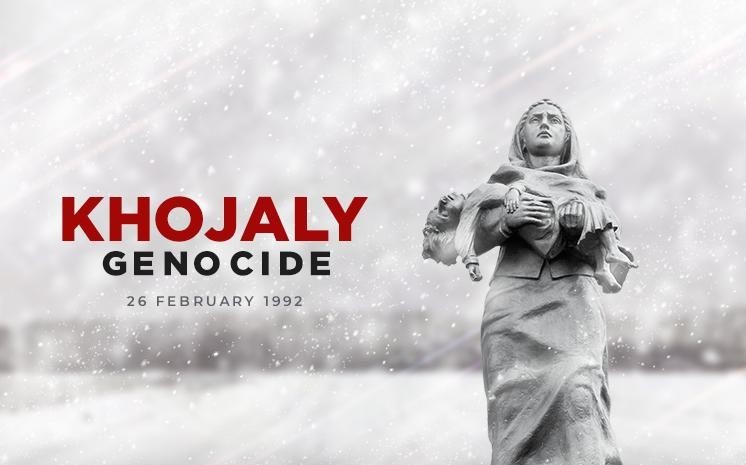
The history of mankind is full of tragic incidents of massacres and attempts of genocides under the barbaric rubric of ethnic, religious and nationalist causes. Numerous cases of wars within states and between states have caused an unbearable wave of brutality and violence around the globe. The human suffering mainly based on territorial clashes attached to incompatible national standings of governments portray a miserable picture of humanity which victimise innocent inhabitants. The history of every region has witnessed various incidents of mass killings because of armed conflicts. An updated and recent account of international history of bloodshed linked to armed conflict lies in the former Soviet region. Armenian and Azeri leaders from Caucasia maintained their positions over the land of Karabakh; one of the major unresolved territorial conflicts in recent history is the Nagorno-Karabakh issue between Azerbaijan and Armenia. Attempts by Armenia to annex the land of Nagorno-Karabakh is in violation of internationally recognized borders, this erupted in an unending wave of bloodshed in the Caucus region.
The landlocked mountainous area of Karabakh is geographically located on the south-western part of Azerbaijan by touching the Armenian border. By covering 4,400 square kilometres of land this area consists of five administrative divisions of Azerbaijan i.e. Askaran, Hadrut, Agdere, Shusha, and Khojavand. Khojaly is the main but second largest town of the Nagorno-Karabakh region which is primarily a part of Azerbaijan but could not escape aggression from bordering Armenia. Khojlay became a devastating picture of Armenian’s bloody and belligerent behaviour of genocide of the larger Azeri population by burning alive, scalping, beheading, gouging out eyes, and also bayoneting of pregnant women. The nationalist-leader and third president of Azerbaijan, Heydar Aliyev stated in his speech on the tenth anniversary of the Khojaly massacre, “This merciless and cruel genocide was the most dreadful mass terror act in the history of humankind.”
The genesis of Khojlay massacre is rooted in the end of the Cold War and the dismantlement of Soviet Union. The dissolution of USSR inaugurated a clash in the southern part of Caucasus region between Azerbaijan and Armenia and also ended Moscow’s responsibility of managing the conflicts between its colonial areas. As a result of Soviet break-up in 1991, both Azerbaijan and Armenia secured their independence while developing their contesting claims over the land of Karabakh. The end of decades-long Soviet rule was considered to be a golden opportunity for Armenia with Armenian leaders being less reluctant in initiating military operations in Karabakh territory. Taking advantage of Soviet rule over Caucasia, the Armenian army implemented its plans of territorial extension with the help of Moscow toward Azerbaijan by forcing thousands of Azeri people to evacuate their homes. The areas of Basarkechar and Vedibasar together with parts of Zangezur were deceitfully declared as the integral parts of Armenia. Such process of illegal occupation reached Nagorno-Karabakh by expelling countless Azerbaijanis from their areas. Gradually, the Armenian influence was augmented and the illegitimate claims of Armenia against Azerbaijan became the primary cause of regional instability. The growing regional disturbance based on persistent armed violence resulted in the Khojlay massacre.
The brutal war cemented in Armenian bellicosity was an exceptional case of bloodshed in the history of mankind when in 1992 the Armenian military launched inhuman military operations against the Azerbaijani population of Nagorno-Karabakh. This was the violent phase of conflict which added an awful image of humanity in Caucasian history. The town of Khojlay, during the night of 25-26 February became a terrible picture of human rights violations when the Armenian army with the collaboration of infantry regiment No. 366 of the former Soviet Union implemented their brutally aggressive policy. The support from Russian infantry was cited by President Heydar Aliyev on the seventh anniversary of Khojlay massacre as “Armenian military units supported by Russia’s 366th infantry regiment razed the Azerbaijani town of Khojaly and massacred its peaceful, innocent residents including a considerable number of the elderly, women and children. In reality, the Khojaly tragedy is one of the greatest human atrocities of the 20th century. Every effort must be made to seek the world community’s unbiased and resolute position regarding this genocide. On this day of National Mourning, I bow before the sacred spirit of these innocent victims and express my deepest condolences to their families and relatives and to our nation. May God rest their souls.”

Attempts at fleeing the town by the citizens along with efforts for their rescue remained ineffective because all road links of Khojlay to surrounding Azerbaijani areas were blocked. Helicopter and pedestrian connections were the only available options which were difficult to access by local residents, these conditions helped the Armenian army in the massacre of on local citizens who were helpless against the brutality of the invaders. A few inhabitants who were successfully in fleeing were eventually captured and slaughtered. This is widely considered to be an attempt of genocide against 7,000 population of Khojlay, including 63 children, 106 women, and 70 old men. Additionally 130 children left without parents and 1,270 people were taken hostage while the whereabouts of 150 people remained unknown. Those who attempted to escape from the armed operation were covered by pre-organized military units of Armenia, this way approximately 613 residents became the merciless target of Armenian army.
In response to a thin layer of international criticism the mainstream Armenian leadership refused to accept responsibility for the crime committed by their military officials at Khojlay. By maintaining their own justification over the Karabakh conflict, the Armenian authorities denied launching any cruel operation against the residents of Khojlay. Leading Armenian state officials developed their defensive stance by calling the massacre as a standard military operation against Azerbaijani soldiers, moreover it is also maintained that the civilian casualties in the Khojlay operation was not a deliberate act but contrary to the fabricated stance of Armenia, the massacre at Khojlay was evidently reported and debated by the international media. The story of Armenian raids over the Azeri population, killing them while fleeing became an international content without generating the voices for accountability.
The official stance of Armenia cannot override the voices of the victims, information relevant to the loss of human lives has spread across the globe. Moreover, the documented evidence of eye-witnesses and the registered details collected by independent sources are sufficient show the merciless action by Armenian army in Karabakh. Efforts by Azerbaijani teams for collecting dead bodies by helicopter also became target of Armenian firing from the ground.
The low priority displayed by the international community towards the Khojlay massacre has weakened the chances of peace and for justice for victims of Armenia’s bellicose policies. The utter lack of a systemic procedure for a durable process of peace between Armenia and Azerbaijan desperately needs international attention, leaders from world’s capitals need to address the human suffering of Karabakh, by emphasizing particularly on the Khojlay tragedy. It is essential that voices are raised internationally for justice against such large scale killing of innocents, such a campaign will help the international community in designing appropriate measures for the accountability of Armenia. The internationalization of Khojlay massacre through proper campaign can further help the international community to prevent a repetition of such a massacre in the world. It is necessary for world leaders to look at the concept of genocide or massacre out of its theoretical domains. Due to the Armenian lobby in the west, the turning of a blind eye from Khojlay might be helpful in winning Armenian sympathy but the occurrence of such a tragic incident again in anywhere in the world would be greatly disastrous.