





The Problem
This article is neither in favour nor against the construction of Kalabagh Dam (KBD). It merely attempts to examine the various factors that have turned it into such a contentious issue. The totally partisan views being expressed in the print and TV media by the participants has further clouded the truth. Those opposing the KBD see nothing good in the project, only disaster and those who support it see no evil, only benefits. Without a true understanding of the nature of the dispute its satisfactory resolution would be very unlikely.
In the KBD controversy the chasm between those in favour and those in opposition to the dam construction appears unfathomable. While a majority of Pakistanis across the political divide agree that construction of dams over the Indus has become an inescapable requirement, the majority of Members of the National Assembly from Punjab with the support of the Punjab Provincial Assembly maintain that the construction of KBD must begin without further delay whereas the other three provincial assemblies insist that KBD must not be built at any cost and instead other dam sites should be explored, even if it amounts to further delays. The opposition maintains that constructing the KBD will lead to the desertification of Sindh. How does one bridge such divergence of views? To better understand the oppositions’ point of view, it is necessary to comprehend what truly are the motives behind those opposing KBD. Broadly speaking they can be classified into three categories but before examining them a brief review of the history of Kalabagh Dam project would be pertinent.
History of Kalabagh Dam Project
The identification of Kalabagh as a suitable site for damming & harnessing river Indus for power generation & as a water reservoir was done way back in 19531. Serious study of dam construction was undertaken in 1962, after the famous Indus Basin Treaty was signed between India & Pakistan under the auspices of the World Bank. In the treaty, of the six rivers of Pakistan that emanate from India/Indian held Kashmir, the water of three western ones (Indus, Jehlum, Chenab) were meant exclusively for Pakistan, while the water of the other three eastern ones (Ravi, Sutlej and Beas) were given to India with the provision that India was permitted within certain constraints to dam the three western rivers for hydel power generations only but not for storage. Many leaders especially in Sindh are highly critical of the treaty accusing the then regime of Ayub Khan of a ‘sell out’. Ironically many Indians similarly accuse their government of Nehru of a ‘sell out’ where exclusive rights of water of their three rivers had been given to Pakistan. The critics of the treaty fail to appreciate that India was planning to divert waters from all six rivers to meet the growing agriculture needs of East Punjab, Haryana and Rajasthan. If a compromise solution under the aegis and guarantee of the World Bank had not been brokered, India being the bigger, more powerful neighbour and the upper riparian could have destroyed Pakistan’s economy by denying it its share of water. A debilitating war for the very survival of Pakistan would have become inevitable. The treaty thus prevented a major man made catastrophe in the region.
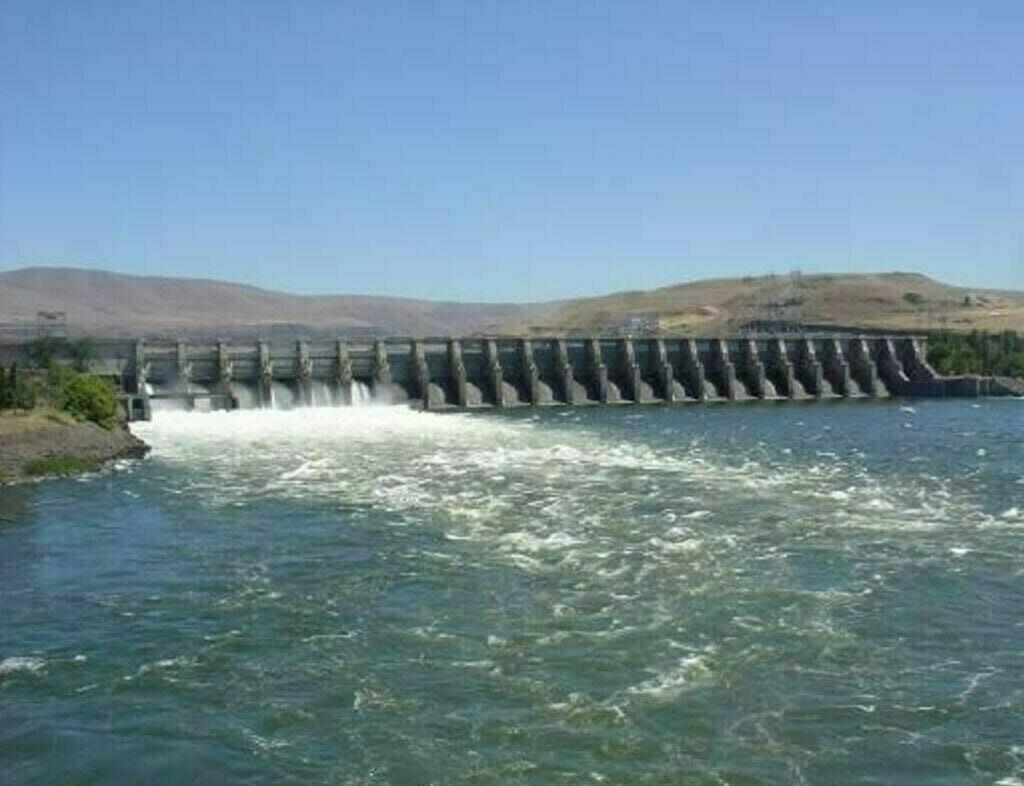
Following the Indus Basin Treaty, the World Bank assisted Pakistan in construction of dams, link canals and barrages to make up for the loss of the three eastern rivers. Mangla, Kalabagh & Tarbela were the sites identified where large dams both for hydel power & water storage could be built. Mangla was the first to get completed. According to Mr. Rashid Rahman of Lahore, Kalabagh was the next in line but the Ayub Government preferred Tarbela ostensibly because it was a bigger & more expensive project & the World Bank had agree to provide loans for its financing. The Government thought that the opportunity for such a large loan may not be forthcoming in the future and since Kalabagh required far lesser resources by comparison, it could be completed in the next phase2.
Tarbela Dam was completed in 1973 during the government of Z. A. Bhutto. There are reasons to believe that if his government had stayed in power, construction of KBD would have commenced in the late 1970s. Zia’s Military government from 1978 to 1985 was too preoccupied in its first seven years with other issues. KBD came back into focus in 1985 when Junejo was the PM but by then the entire project had become controversial. Sindh opposed it because it did not want to hand over control of river Indus, its only source of water to Punjab; NWFP opposed it as they were led to believe that a large portion of their fertile land would be adversely affected because of rising water table as a result of the KBD reservoir. Since then the position has continued to harden further with Punjab vociferously pleading for KBD and Sindh & NWFP opposing it with equal ferocity. From 1990 onwards opposition to KBD by Sindh & NWFP has become a battle cry for political parties in opposition against what they portray as Punjab’s big brotherly attitude towards the other three provinces. Baluchistan, the fourth and the smallest member (population wise) of the federation had little to gain or lose with the construction of KBD but they decided to side with Sindh & NWFP to show their solidarity with the smaller provinces.
Those Genuinely Opposed to KBD on Technical / Environmental Grounds
This group is convinced that Kalabagh Dam is not technically feasible & the ecological & environmental damage it will cause will exceed the benefits that can accrue from it. They maintain that not enough water exists in the Indus River to justify the enormous financial & ecological cost that will be incurred in the dam construction. They dispute the water statistics as given by WAPDA & have their own figures to back their claims. They further maintain that the adverse impact on the nation’s ecology and environment that will result if the Indus is dammed at Kalabagh will be far more damaging than the likely benefits in terms of water availability & inexpensive hydel power generation. They cite the experience of USA where the enthusiasm for construction of large dams has waned considerably because of the long term negative impact to the overall ecology of the region as a result.
Those who oppose KBD Because of Mistrust
A sizeable number of people in Sindh oppose KBD because they are very apprehensive about giving Punjab the control over the flow of Indus River as a result of the construction of the dam. They point out to a number of serious violations of water treaties among the provinces in the past by Punjab that has hurt Sindh. This group may be willing to concede the technical & financial viability of KBD but refuse to support it because of lack of trust.
To be fair to the opposition, their actions have been conditioned by the socio-political culture in the country. Pakistan’s turbulent history has not let democracy take a firm root 63 years after gaining independence. Even when the government is under some form of democratic setup the conditions for a sustainable democracy are not there resulting in periodic derailing of the entire process. Democracy can only function if governments can be changed through free & fair elections. An independent judiciary & election commission are the absolute minimum requirements for the process to succeed. Unfortunately in Pakistan all state institutions including these two vital ones remain subservient to the government in power. Under such a dispensation the likelihood of the opposition defeating a sitting government in an election is remote. No political government since 1972 (with the exception of Zulfiqar Ali Bhutto’s first term and the PML (Q)’s coalition of 2002) has completed their constitutionally approved period – they were either dismissed or overthrown. The resultant elections had invariably resulted in the will of the establishment prevailing over the will of the people. ‘Establishment’ is a nebulous term in the context of Pakistani political milieu, generally referring to the top Army leadership & the bureaucracy of the state, with the former holding the key cards. Agitation is the only option open to the opposition & agitational policies has taken firm roots in the country’s political culture. All political parties, big or small, are guilty of this practice when out of power.
The Dilemma
That many experts are convinced that rejection of the construction of the Kalabagh Dam is seriously hurting Pakistan’s economy is apparent. They are aware that barring Punjab, the other three provinces are in fierce opposition to the Dam and cannot be unmindful of the fact that simply raising of the issue brings to the fore major inter-provincial fault lines which can jeopardize the entire federation. And yet they refuse to abandon the project and continue to press for its construction as they are convinced not confronting the challenge would in the long run be even more harmful for Pakistan.
As has been highlighted in paragraphs 6 to 8, there are three categories of dissenters. With the first, a rational debate is possible & provided the parties base their arguments on mutually agreed statistics preferably from a neutral source, agreement can be reached one way or the other.
With the second group, the success would revolve around confidence building measures. As a first step, Punjab has to accept that serious inter provincial water accord violations had taken place earlier & concrete steps need to be put in place to prevent recurrence. One of the major objections to KBD by Sindh is the construction of right & left bank canals that are to emanate from KBD. Without elimination of these canals from the master plan, Sindh is unlikely to be convinced that Punjab will not divert its share of water especially during lean periods. According to Mr. Rashid Rahman, Punjab has conceded to Sindh’s demands3 & if KBD is planned without the east & west canals, it may be possible to reach a consensus with this group provided other mutually accepted guarantees are also put in place. It may be pointed out here that besides generation of hydel power, KBD is attractive to Punjab because these two canals would have brought large tracts of land in Southern NWFP & Punjab under cultivation. If these two canals are eliminated from the design, it is possible that Punjab may no longer pursue KBD with the same degree of zeal.
The 3rd group is the most difficult one as its opposition is based on an entirely different agenda. It is motivated not so much because of the ill effects of KBD but because it is a handy subject that can be exploited to rally the masses against the ruling party in an effort to effect a regime change. In a TV talk show, a dissenter was asked by the host if he would reconsider his stance if theoretically speaking technical statistics prove that KBD is beneficial to all provinces. His answer was an emphatic no: regardless of what the statistics show KBD would be opposed. This group will only change their stance if by doing so they can regain power in the centre. Should that happen, they will sing a different tune.
In terms of numbers, the 3rd group may be in a small minority but they are the elected members of the assemblies and theoretically represent the will of the people of their constituencies. They have the ability to rouse people’s sentiments against the government & without bringing them on board, any decision to build KBD would violate the spirit of democracy. While some of them can be coerced or can even be bought, they cannot be convinced through logic & reasoning.
Where do we go from Here?
TV and radio talk shows on the dam controversy have generally failed to educate the public on the issues involved. These invariably end up as point scoring session where one side can see no harm & the other no good. No mega project can be all good or all bad & in the end the benefits have to be weighed against the drawbacks to determine its viability. It would help if neutral experts rather than government & opposition parties air their views more frequently.
Water resources are already scarce & with the burgeoning population this precious commodity will get scarcer. Increased availability of water has to be assured & the very survivability of the nation may hinge on this single factor. Nobody in Pakistan denies this aspect but its people would like to know if building of large water reservoirs are the only available options. Large dams involve massive capital investment and have a large gestation period. There are also socio and ecological price that has to be paid when natural flow of the river is obstructed through man-made structures. This is not to suggest that dams should not be built but should the nation not examine and invest in alternate means to alleviate the water shortage; means that can be implemented at a fraction of the cost of the large dams & with little of its attendant controversy. Here are some that can be examined.
Brick Lining of Canals Experts opine that 30 to 50% of our water is lost due to seepage because the majority of canals are not brick lined. Besides the loss of the precious commodity, the seepage results in water logging & salinity, laying thousand of acres of otherwise fertile cultivable land waste. How much would it cost to brick line our entire canal system? How long would the whole process take? One can guess that the process would be less expensive than the construction of a large dam & could be completed in a much shorter time frame. Even if a partial accomplishment of brick lining saves us 20% of water losses it should amount to more than the storage capacity of one KBD. If the project can help alleviate the water shortage and prevent the nation from a severe water crisis ten years down the road, should it not be undertaken on a war footing concurrently with the planning of large dams?\
Economical Use of Water Pakistan has one of the most elaborate canal network systems in the world & flood irrigation is the method employed for irrigation. Flood irrigation is simple to operate but it is an extremely wasteful use of this precious commodity. Three decades ago when fresh water was available in abundance Pakistan could afford the luxury of flood irrigation technique: it can do so no more. Regardless of how many dams are built on Indus, Pakistan must gradually shift to more economical modes of irrigation. Israel has demonstrated that with scant water from river Jordan, it has made deserts bloom through the adoption of drip system. Jordan is following suit. We too eventually will have to change our old wasteful ways to overcome the ever growing water shortage. Besides agriculture, our cities’ water systems are extremely wasteful because of numerous seepages & leaks. A revamping of the water system of our cities besides setting up recycling plants for reclaiming used water and establishment of desalination plants to meet the requirements of coastal cities/towns is inescapable. To quote a cliché, not to do so is not an option.
Enhancement of Tarbela & Mangla Capacity Both Tarbela & Mangla storage capacity has shrunk and will continue to shrink due to natural silting. The height of Mangla dam is being raised but in due course silting will further erode its capacity. Are there viable technical/financial solutions to overcome this phenomenon? Dredging may be unfeasible purely from a financial viewpoint. Or is it? Other techniques like construction of special tunnels for silt removal may be looked into. Desilting of the existing dams will enhance their storage capacity. A study of this aspect to ascertain its financial and technical viability would be worth examining.
Large dams serve dual purpose of electricity generation & water storage. Brick lining of canals, more efficient use of water and de silting of existing dams will help overcome the water shortage but the need to tap hydel power for generation of affordable & environmental friendly energy would remain. Only dams can fulfil this void. The search for suitable sites for hydel power generation by construction of large or small dams must continue independent of the need to ensure availability of adequate water for our present and future generations.
In the end, one hopes the government succeeds in building a consensus on the big dams & if majority agree that Kalabagh Dam is the one whose construction will benefit the whole federation, KBD should be built. Realistically speaking reaching a consensus is not certain & even if it does eventually occur it will take time. Work on alternate dam sites must continue so that if a couple of years down the road KBD still remains embroiled in controversy, plans for the alternate sites are ready for immediate implementation. Construction of large dams notwithstanding, the effort to enhance the capacity of the present ones and more efficient water management techniques both in the rural & urban areas must be relentlessly pursued.
End Notes
1. TV interview by Mr. Shamsul Mulk, Ex Chairman WAPDA on GEO channel on 25 December 2005
2. TV talk show on Kalabagh Dam on GEO on 22 December 2005. Also corroborated by Mr. Shamsul Mulk, Ex Chairman WAPDA during TV interview on GEO channel on 25 December 2005.
3. As stated by Mr. Rashid Rahman, a senior Punjab journalist during a TV talk show on GEO channel on 22 December 2005.