




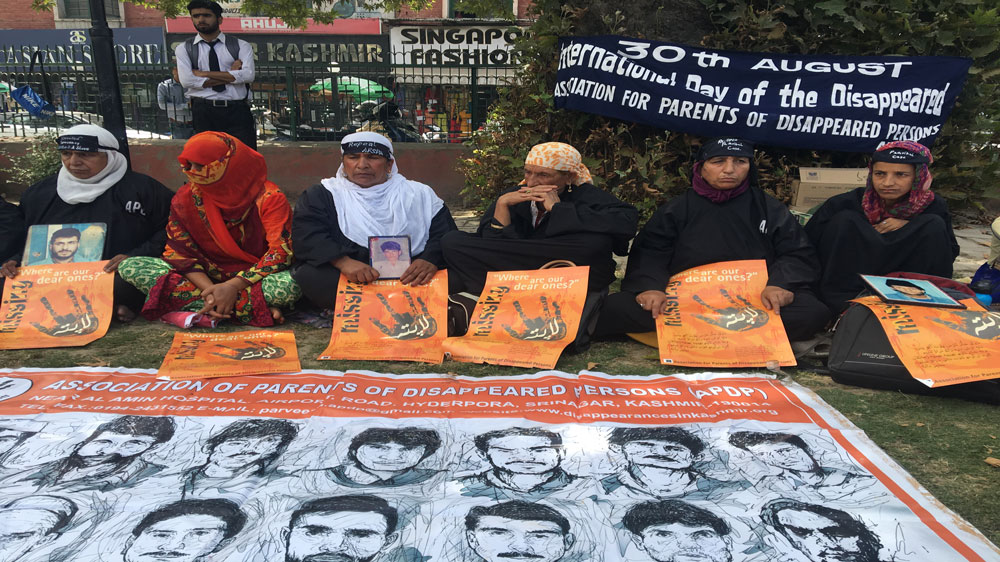
The contemporary faces of human right abuses and their relevance to the disputed territory of Kashmir cannot be ignored while analysing the South Asian security environment. A wave of human right abuses mainly involving frequent massacres, enforced disappearances and suspension of political and social freedoms by Indian forces in Kashmir has become a reality for the whole world. The uncountable cases of rapes, sexual harassment, fake encounters and killings have promoted a culture of violence in Kashmir. The presence of Indian forces in Kashmir has created an environment of psychological torture without respecting age or gender. In this way, the cruel treatment of women, children and older men have become a standard tool of New Delhi for curtailing the Kashmiri voices seeking independence. The massive human rights violations have not only highlighted by the regional states of South Asia, but the proponents of human rights from different corners of the world have also raised serious concerns on this issue.
The miserable plight of human rights and cruel treatment to Kashmiri Muslims is a matter of great concern to the international community. This region between two nuclear powers is portraying a horrific face of Indian forces. An increased number of Indian security forces is not only promoting the Hindu mind-set among the Kashmiri people, it also gives rise to more victims of human rights abuses. Some international organisations, including the United Nations (UN), has admitted publically this terrible face of New Delhi in occupied areas of Kashmir. The Office of the UN High Commissioner for Human Rights (OHCHR) has provided a glimpse of Kashmir seeking justice in a 43-page report. The report “Update of the Situation of Human Rights in Indian-Administrated Kashmir and Pakistan-Administrated Kashmir from May 2018 to April 2019” has provided a comprehensive detail of major human rights violations. This report is based on numerical detail regarding different patterns of merciless behaviour in occupied Kashmir by Indian troops. In reaction to the OHCHR report, the Modi government refused to accept this report and challenged its legitimacy.
Other than the UN, various other organisations have provided their impartial views and rational analysis based on empirical statistical on Kashmir. A London based policy institute, Chatham House, in a public survey, mentioned the miserable situation of Kashmiri people living under Indian occupation. The report of Chatham House “Kashmir: Paths to Peace” prepared in 2010 discussed the various crimes of humanity in Kashmir had caused thousands of deaths by broadly painting a tentative picture of South Asian political future. Several other reports and surveys from different parts of the world tried to highlight the enduring struggle of Kashmiri people against the brutal Indian occupation. Another international organisation, Human Rights Watch (HRW), suggested several times in its reports to New Delhi to stop the human rights violations in the occupied areas of Kashmir and to compel the security forces to respect the human rights. In response to the central claims of HRW, New Delhi is continuously saying that the increasing number security forces and their operations are fundamentally designed to ensure law and order in Kashmir. An intentional movement of millions of people for the promotion of human rights working around the globe, Amnesty International, has declared the impunity with which human rights violations are taking place has become one the gravest problem in the contemporary world. The advocates of the human rights working under this world’s largest human rights organisation have demanded investigation into crimes against humanity in Indian-controlled Kashmir because it is widely believed that the cruel treatment of innocent Kashmiri people is being un-investigated and unpunished. The Kashmiris are now looking toward the international community for justice.
Instead of addressing the legitimate voices of freedom from Indian occupation, the leading architectures of Kashmir policy from New Delhi are consistently supporting the suppression of Muslim Kashmiri population. Similar to abovementioned analysis, the major studies conducted on Kashmir accept the presence of freedom voices of Kashmiri residents and the cruelty of security forces mainly in Muslim majority areas. The occurrence of human right abuses in the pro-India or Hindu areas is non-existent because New Delhi is following a policy of genocide against Muslim majority areas.

The genesis of the Kashmir dispute is inherited in the partition of the subcontinent in the post-colonial era when the British colonial retreat left the land of Kashmir undecided between India and Pakistan. The unfinished partition agenda of British in the form of Kashmir gave rise to an unstoppable India-Pakistan rivalry and an unending competition between two states. The downgraded diplomatic values between and Pakistan has brought a miserable picture of human rights in which the Indian security forces formally allowed by New Delhi to carry out human rights violations in order to curb the Kashmiris freedom struggle people. The inhuman behaviour of Indian forces under the broader rubric of New Delhi’s formal Kashmir policy is the central point of the unsolved Kashmir problem because Indian occupation in Kashmiri areas is inherited in Indian strategic thinking which encourages Hindu leaders to create a greater India in the South Asian subcontinent. The main maxims of strategic thoughts adopted by Hindu leadership of New Delhi in empowering its regional belligerent behaviour is cemented in its higher regional hegemonic ambitions. In order to meet its strategic mission of becoming a dominant power in the Southern part of the Asian continent, the Indian leadership is determined to develop cooperative ties with technologically advanced and economically developed nations. This way of managing foreign relations has compelled India to maintain cooperative relations with the states located outside of South Asia. A disorganised and obscure framework of foreign policy adopted by New Delhi has resulted in an Indian anti-neighbourhood policy which led the Hindu leadership to expand Indian borders. This expansionist behaviour of Indian leaders has created several territorial issues with the territorially adjoining nations.
While examining the Indian foreign relations with neighbouring states, the problem of Kashmir cannot merely be overruled because the clash of New Delhi with Islamabad is the leading cause of Indian aggression in the region. Pakistan, the only country possessing sufficient counterbalancing potential against India, has been recognised a sole power standing against human rights violations of Kashmir. Indian policymakers are determined to stand against the states supporting Islamabad in the regional and extra-regional affairs. A combination of India hegemonic strategic design and its anti-neighbourhood policy has disturbed the regional security environment of South Asia. Moreover, Pakistan has developed its stable position internationally in defence of Kashmiri Muslim population surviving under Indian aggression. This situation has the led the two governments to maintain their inflexible positions over the Kashmir issue. The quest for dominating the neighbouring states and efforts for redefining the borders of India, Hindu leaders from New Delhi have declared Jammu and Kashmir as an integral part of India. The Hindu policymakers of New Delhi have proposed, designed and adopted several legislative and illegitimate steps to control this disputed territory.
Different Indian governments always preferred an aggressive policy regarding occupation of Kashmir in which the occurrence of extremely callous treatment has become a vibrant trend. Modi administration has augmented New Delhi’s claims over Kashmir, and the state of permanent hostility between two nuclear neighbours of South Asia extends further. The Modi regime has complicated the Kashmir issue and made it one of the world’s most dangerous flashpoints. Narendra Modi’s winning another five years in Indian politics has raised the probability of Kashmir genocide to a new high due to the horrible political past of Modi. The rule of Modi as chief minister in Gujarat has declared him globally ‘a man with massacre on his hands’ due to his involvement in 2002 Gujarat violence. It was the worst religious violence in the history of India and attached a stigma to Indian national image globally. People around the world protested against India in reaction to the bloody face Modi in Gujarat. There were fourteen independent organisations mostly from the US and Canada who formed a coalition, “Coalition Against Genocide” to respond to the Gujarat riots under Modi.

Even though Modi rule in Indian politics has brought a wave of bloodshed and brutality in the religious divisions of India, the custodians of peace and stability from the developed world remain reluctant in holding New Delhi accountable for violence in Muslim areas. The extremist Hindu ideology has been empowered by Modi administration, and an atmosphere of psychological fear and violence has been extended to Kashmir. Inhumane treatment and continuous suppressing of fundamental human rights have resulted in an awful situation in which a constant wave of fear and misery has encircled the Muslim majority areas of Indian-controlled Kashmir. The Modi regime is primarily responsible for carrying out a genocide in Kashmir and has decided to continue the presence of occupational forces in the disputed territory of Kashmir, which exhibits further extension of abusive security laws in occupied Kashmiri areas. Beyond human atrocities, the suspension of political and social rights has added fire to the fuel. The prolonged curfews, restriction on the movement of people, prevention of free expression, suspension of electricity and shutdown of telephone, mobile and internet services have become today integral features of Kashmiri culture.
The greater responsibility lies on the shoulders of the international community generally and the custodians of peace specifically. People living in the capitals of developed worlds and the leaders of the superpowers need to realise the pain of Kashmiris. More specifically, the advocates of human rights around the globe need to listen to the voice of innocent Kashmiri because a delayed response will probably cause more victims. Apart from states having economic and strategic ties with India, the role of international organisations is equally vital in stopping New Delhi-sponsored brutal rule in occupied Kashmir. All the member states of the UN are forced to uphold the respect of human rights while managing their internal and external affairs. The 193 members of the UN, including India, have a prime obligation of respecting the human rights beyond the ethnic and ideological division parallel to prosecuting and punishing the perpetrators of gross human rights violations. The members of the principal organs of UN, the General Assembly and the Security Council, are bound to support the International Humanitarian Law which instructs a state to respect and protect the human rights and freedoms of individuals or groups. The advocates of peace and stability are looking toward the 74th session of the UN General Assembly where the international community will be able to listen to the voices of innocent and unarmed Kashmiri population. This gathering of world’s leaders will be an opportunity for the international community where a specific response to the Kashmir will not only compel India to resolve the dispute with neighbouring Pakistan peacefully, but it will also let the leaders of powerful nations force New Delhi on the respect of human rights in Kashmir.