

Part V
Note: Written on 29th March 2026. To be read in conjunction with Global Order 1 to 4
‘The whole problem with the world is that fools and fanatics are always so certain of themselves, but wiser people so full of doubts’ Bertrand Russell.
More than a month has gone by as we stand witness to a senseless war that is more likely than not rearrange the Global Order in so many ways that most did not imagine. Creative narratives and inventive accusations have been manufactured by the US-Israeli duo against Iran as they searched for justifiable cause. I am not an Iranian aficionado, but Iran has remained calm, collected and firm to its position. The US President, so generous in his verbosity has since accused Iran of being a terrorist state, extremist, fanatics and the evilest people on earth threatening the region. Iran has not prosecuted a war against another nation in modern history or at least not pursued direct violence against another nation without having been given cause. These accusations are shamelessly projected by those who themselves were found willing to gain notoriety in the Epstein files.
Iran has already been subjected to war earlier, without reason or cause in 2025 for 12 days by the same US-Israeli alliance. It remained limited to 12 days because the surprise response Iran mounted against an unprovoked attack at the time, was far above and beyond the expectations of Israel as well as the US. Instead of learning the right lessons from that adventure, where the US had to intervene with a staged bombing attack to facilitate a ceasefire, thus rescuing Israel, the Duo have now decided to have another go. Both these incorrigible countries, at least, cannot be faulted for lack of persistence – even though, it is commonly believed, that as reportedly but famously stated by Einstein that, ‘Doing the same thing over and over again and expecting a different result is a sign of insanity’.
So the war goes on and just to put matters in perspective, what we have so far concluded is that the objectives for Israel were always an expansion of its delusive idea of a Greater Israel, a thought that has remained unchanged to date, despite the thrashing Israel is receiving. For the United States, a reluctant collaborator, the intent was to secure trade corridors and denying them to the Chinese BRI system, disrupting their Global connectivity. The US is reluctant because it never actually had a dog in this fight and was more or less, cultivated by Israel – to be explained later. However, the stated objectives were to persuade Iran to give up on its nuclear enrichment programme, dismantle its ballistic missile capability and to dissociate itself from its regional proxies/allies – all three objectives that can only serve the Israeli security dimension and have no bearing on the US in any way. So to understand why the US got involved in this war, is to understand that it had became a compulsion on account of Israeli influence. The American socio-politico fabric, heavily infiltrated by American Israeli Public Affairs Committee, (AIPAC), demanded that the US funding and resourcing must go to Israel. AIPAC has a 96%-win rate for political candidates it has backed and who are now office-holders. Israel controls the US.
Congress, is instrumental in all presidential campaigns and deeply complicit in funding US politicians who support an Israeli agenda. All this, combined with the coercive potential of the Epstein Files, ensured that President Donald Trump remained true to the Israeli cause – a classic case of the tail wagging the dog. It was hilarious to watch as US Congress men when confronted on the street in public and asked the question, ‘America first or Israel?’ did not find it within themselves to answer the question. The neocons and compromised senators like Lindsay Graham keep demanding that Iran be attacked – the sooner the better. As such when Netanyahu urged, and Trump complied with Israeli demands ensuring that the US entered into an Israeli war on Israeli conditions. The only benefit the US could have from such a war was control of sizeable Oil & Gas reserves, critical trade corridors, and at the same time, challenge the Chinese domination of Global Connectivity that China was realising through its BRI Project – all this was a bonus, a kind of reward for facilitating Israeli aggression. They now realise they are in a non-winnable war.
The method to madness was mounted by an attempted regime change in Iran. It was preceded by a money manipulation scheme undertaken by dubious banking systems in UAE under the expert supervision of Scott Bessent, the Secretary of the US Treasury (his claim to fame was his role in the Soros Affair of UK in 1991). The subsequent civilian protests in Iran were then used as a stage to infiltrate agents that carried out mass killings, widely reported by the Western press as the initiation of a regime change and anti-government protests. The manoeuvre failed.
Iran demonstrated a cohesive national support by a majority margin that was openly displayed on the streets. The US-Israeli duo then resorted to a bombing campaign designed to assassinate the Iranian leadership and destroy the infrastructure. Iran was prepared for such an eventuality and had been structuring its military strategy for 30 to 40 years to fight just such a battle – where unity of command as a conventional military principle was subordinated to the principle of the unity of effort. Despite suffering huge infrastructural losses and with their leadership decimated, it is still apparent that Iran currently controls the battle ground and the war theatre, and can raise or lower the war-fighting tempo at will. Their graduated, incremental application has turned this into a war of attrition that is in their own favour, exhausting the Israelis in particular and burdening the US to bear an unreasonable cost of war. Earlier accounts have described the opposing strategies in detail, here it would suffice to state that Iran so far has prevailed while the US-Israeli alliance is quickly running out of options. Hence the demands switched from unconditional surrender to negotiations – from a 48-hour ultimatum to opening the Gulf – to a 10-day relief.
Apparently extended generously, to give negotiations a chance where Trump is desperately in search of a face-saving solution.
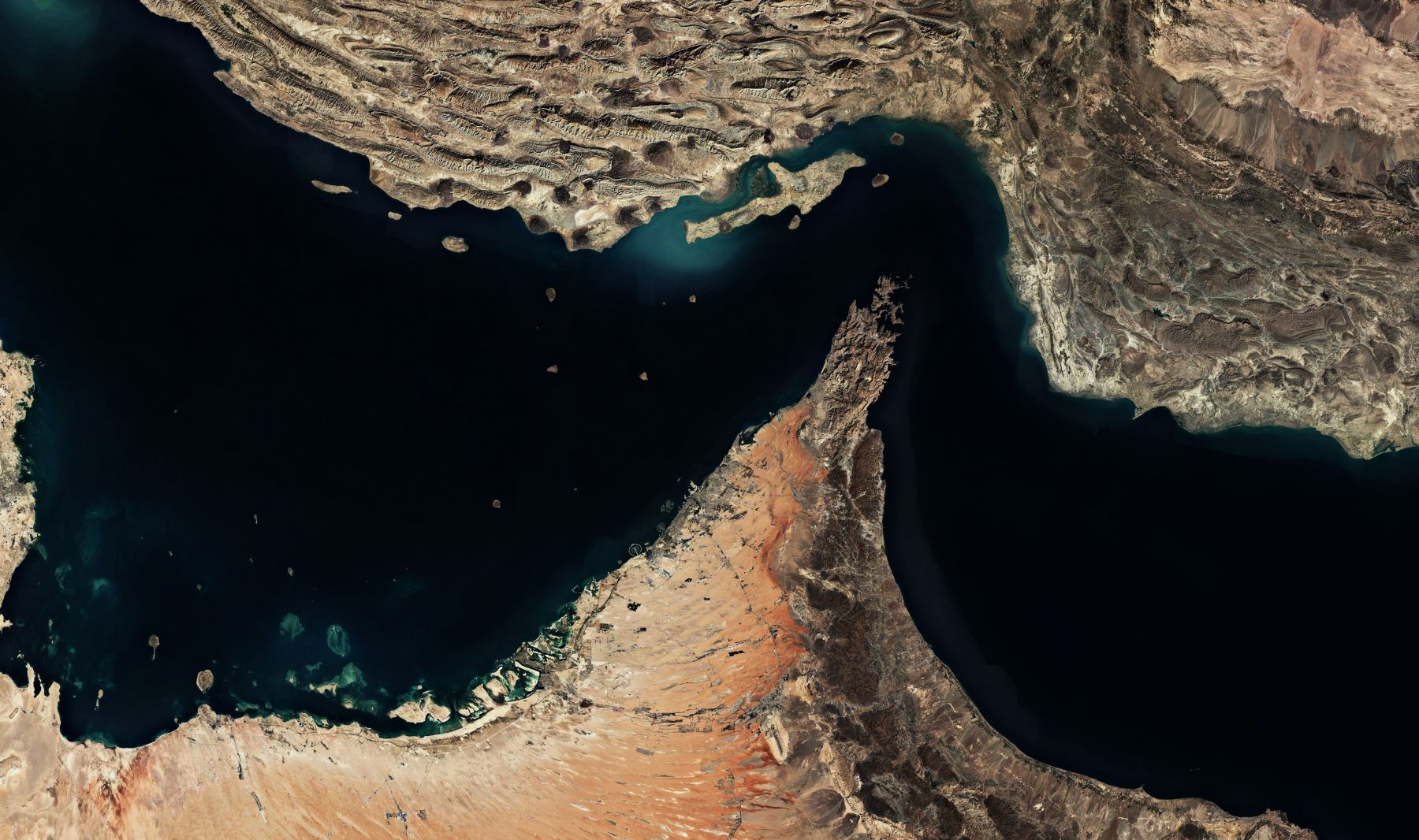
All sides have clearly defined their conditions to come to any terms and these stated conditions are maximalist, which denies any off-ramp to either side. These conditions are rigid, inflexible and have a ring of finality about them – either this or nothing. Any one side that comprises with their own set of terms presented will face a huge domestic political blow back, to what would seem to be a tacit surrender. None of the governments in play can afford to step back, blink and give into the demands of the other nor would they survive if they did. This brings into question the very process leading to negotiations – are the proposed talks just a ruse? It is widely reported that Trump’s offer is widely seen as a manipulation of the global money market and is a method to allow time for a concentration of military assets to arrive in the theatre and assemble for invasion. These fresh troops, along with those already present in the Gulf are to undertake a ground invasion or at least posture for such a contingency, thus strengthening negotiating positions. Israel has clearly announced it is not part of these alleged talks and it obviously cannot afford to be, but it also leaves a door open for a potential reneging on any agreement arrived at, as done repeatedly by the US-Israeli alliance in the past. For Israel, this is probably the last time any US administration would allow or tolerate being manipulated/ blackmailed/coerced as this US regime has allowed itself to be exploited with this compromised President as the US leader. Israel also is clear that if Iran survives this round of hostilities, it will not rest till Israel is undone as a concept, as well as a state. Iran has publicly made their position clear, they are not involved in direct or indirect negotiations. With this situation at the conclusion of a month of the conflict, objectives have now gradually shifted – for Iran it is to survive and secure a region without the presence of the US, for the US it is now the opening of the Hormuz Strait – a face saving condition which allows the US a respectable rational to declare unilateral victory and withdraw from the conflict. For Israel, fearing it may be abandoned, nothing less than the total truncation of Iran into small fiefdoms would be acceptable – to make Iran dysfunctional as a state. Thereon Israel can pursue its Greater Israel dream.
Notwithstanding the destruction Iran has suffered so far, Israel too has been massively devastated. Reportedly, Israel has lost a 100 tanks to the Hezbollah in Lebanon, its cities are attacked by Iranian missiles, their infrastructure in Haifa has broken down and the Dimona Nuclear Plant is under threat having already experienced a few incoming missiles. Protests have also broken out in Israel against this war and Netanyahu’s administration.
All 13 US bases in the region have been abandoned, aircraft carriers damaged and about 20 hi-tech aircraft are down. Iran has reported that the US tried to assemble troops for a landing on the Kharg Island in and around Kuwait – they claim that the assembly was dispersed with 500 US causalities. Trump is gradually blaming Hegseth for miscalculating the operational environment. JD Vance has publicly blamed Netanyahu for dragging the US into this war, thus questioning the alliance itself.
Donald Trump has turned on his Gulf allies and insulted MBS of Saudi Arabia claiming ‘he has been kissing my ****’. The Saudis in response released pictures of the destroyed US base in Saudi Arabia; information that was so far censored. Rubio’s last trip to Europe was a disappointment for the US – there were no takers. The US is effectively isolated. The war has since escalated with additional targets being attacked in the Gulf by Iran as retaliation for attacks on its steel mills and energy plants. The Houthis have joined in the war and Bab el Mandab is now threatened, which if shut down would divide the East from the West in a divided Globe, disrupting supply chains, information, banking and businesses all over.
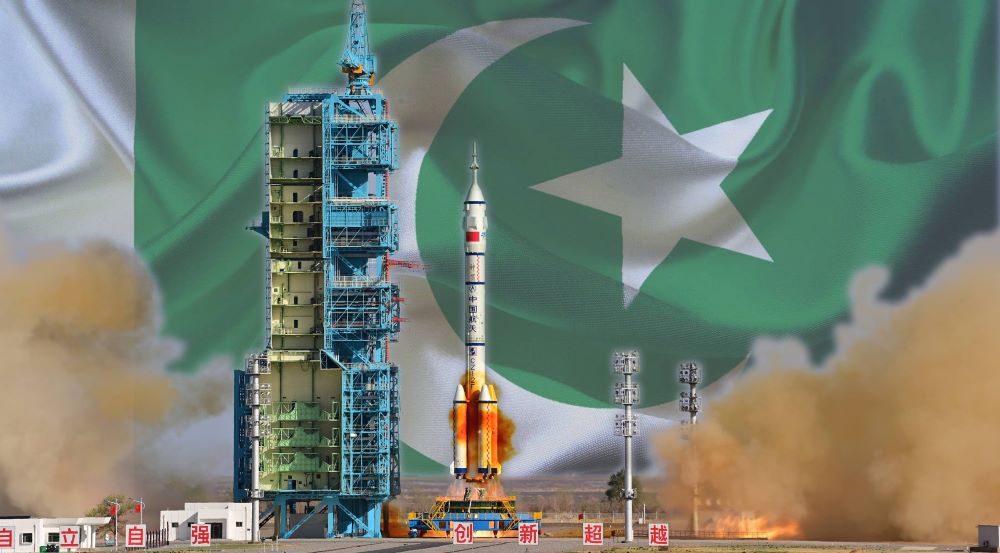
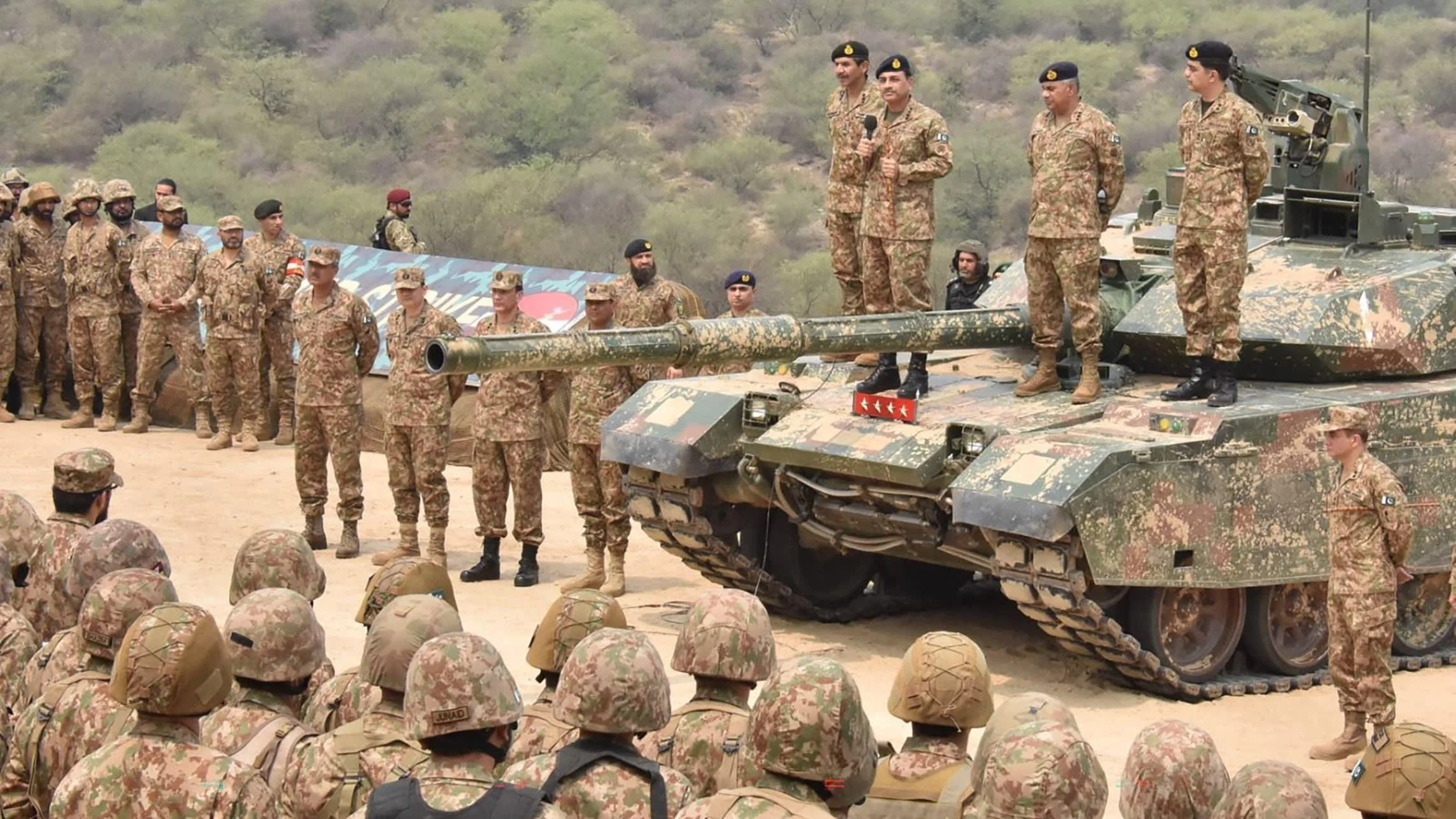
With these ominous developments on the horizon, suddenly Pakistan comes into the lime light and is now seen as a mediator chosen/nominated by the US to bring about a resolution to the conflict. Pakistan is being widely spoken about in favourable terms at the international plane. Pakistan has no conflict with the international community other than with India and Afghanistan and has a reasonable reputation despite efforts by some quarters in demonising Pakistan. Pakistan has been in such a situation before as well, where it brokered the rapprochement between the US and China in 1971. Pakistan was central to negotiations related to the Soviet withdrawal from Afghanistan at Geneva in the mid-80s. Pakistan was also deeply involved in mediating between the US and the Taliban in Doha in 2021 securing the conditions for a US withdrawal. Also, Pakistan has for a substantial time, been the biggest contributor to the United Nations Peacekeeping all over the world, amongst other things. This has allowed Pakistan to build up a reputation over the years where subsequent administrations, collectively, created a depth in diplomacy that is now facilitating the present regime in hosting the talks. However, coming to specifics, the US has selected Pakistan because it has a long-standing military to military relationship which has weathered the ups downs of yesteryears.
Thus it was a call from CENTCOM that started the ball rolling; the US is comfortable dealing with the Pakistani Military leadership. Also, worth mentioning is that the US sees and treats Pakistan as a client state, who is easily susceptible to influence – i.e. willing to do what it is requested to do. Iran, on the other hand has had a reasonable relationship with Pakistan despite sectarian issues and the January 2024 Iranian missile attack in Balochistan and a bombing campaign in response by Pakistan. Normal relations were restored within 24 hours, proving more than anything else, the robustness of their bi-lateral standing. Thus Iran trusts Pakistan and with both warring parties comfortable with Pakistan, it was only natural for Pakistan to have been selected.
Iran has publically stated that it welcomes Pakistan’s efforts but that it is not part of these discussions. However, the question is why has Pakistan taken on an activity with a potential for regional risk to it? We find the answer in Pakistan’s dependence on the IMF, its insolvent economic situation, a quest for additional military hardware, political legitimacy of this government and a better overall national image. Thus quadrilateral talks have been scheduled for the 29th – 30th March, 2026 at Islamabad to include the foreign ministers of Saudi Arabia, Turkey and Egypt. Of the four countries involved two have recognised Israel, i.e. Turkey and Egypt. Turkey is a major supplier of energy to Israel and is a member of NATO. Egypt has reasonable relations with Israel but its population is wary of any further warming of ties. Saudi Arabia has publically announced that it is not willing to accept a ceasefire and wants the US to address the Iranian question permanently.
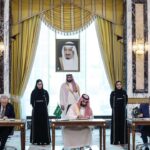
Saudi Arabia also has a ‘Defence Agreement’ with Pakistan – the validity of which has been tested by the Saudi’s signing a defence deal with Zelensky, President of Ukraine in preference to invoking the Agreement with Pakistan.
The talks are aimed at trying to broker a ceasefire between the US-Israeli alliance and Iran. In the first place, Israel is neither part of any process leading to a negotiated settlement nor has agreed to commit to any arrangement that calls for a ceasefire. It implies that Israel will either be a spoiler who could scuttle any deal or that the US may even abandon Israel, to go it alone, if there is any break-through. However, without an Israeli consent, these negotiations lack any sense of reality. Secondly, the quadrilateral group has no mandate to influence or establish any conditions or structure an environment to facilitate these talks.
Pakistan is currently only a messenger, carrying messages from the US to Iran and vice versa –
nothing more. Thirdly, none of the countries in this group, other than Pakistan, is trusted by Iran and have very little credibility. Fourthly, the 15 points elaborated by the US for a resolution to the crisis and the 5 that have been forwarded by Iran as a response, do not point towards anyone retracting on their stated position. Fifth, there no visible confidence building measures being exercised by anyone to create an environment for a possible resolution. Sixth, the current escalation in the mutual bombing campaign targeting infrastructure, centres of economic activity, research institutes and universities point towards a growing animosity by the belligerents. Finally, the on-going US troop build-up points towards a possible ground invasion of Iran in the near future. Thus these talks appear to be more of a staged activity to buy some time to allow the US to concentrate and assemble the forces it needs to – there will be no outcome from these talks. If there are to be any meaningful negotiations between the US-Israeli duo and Iran, it would have to involve China and Russia or even both to set up a credible guarantee-base that could enforce peace – without either of the two, any process will be reduced to mere theatre.
For Pakistan, this a good opportunity to establish its foreign policy goals and diplomatic standing. However, it would have to come clean on a number of things. First, the Defence Agreement with Saudi Arabia, as reported by the Financial Times, was just a gimmick to secure finances and to establish a notion of deterrence.
There was little sincerity behind it by either-side and each was using the other. This needs to be corrected. A team of security experts need to meet up with the Saudis and frame an outline agreement that must be presented to the parliament and have the approval of the senate to become a binding document – a Defence Pact; that is, if this is the road the Government wants to go down in the near future. However, in keeping with the fluid situation as it stands today, it is recommended that Pakistan should wait till the conflict is over and then to seek ways to establish a regional agreement, including Iran. Till then, the foreign office needs to do its home work as to what options are available to Pakistan in such an environment and then to prioritise them. Also, Pakistan can clearly state that with the overall change in the environment, it needs to reconsider its early agreement to be part of the Board of Peace. Instead Pakistan must initiate a case in the United Nations as well as the Security Council for the realisation of the long-standing and overdue, ‘New York Declaration’, as a resolution to a Two-State Solution for Palestine. Pakistan could offer its services towards structuring and enforcing such a resolution along with other willing States. Pakistan also must prepare itself for the future necessary reconstruction of infrastructure that would urgently needed in the region.
Pakistan’s Afghanistan policy is paying dividends and things seem to be improving. Back sliding at times by the TTA must be severely punished so that direction is not lost. There should be no negotiations with the TTP, compromises or any other futile adjustments, as in the past. What matters now is a concurrent plan that needs to be implemented for containing domestic grievances. Political reconciliation, transparent, open and involving a solution led by the people of respective areas would give even greater dividends and permanency.
Pakistan cannot afford to remain in a continual state of conflict and violence.
The Gulf conflict could easily become a protracted war. Pakistan needs to define its course of action and position to deal with such a scenario. However, despite how long this conflict goes on, the international scenario is fast changing and the global order is diffusing into a multi-polar world. Pakistan needs to recognise that its interests lie within the Eastern Hemisphere more than anywhere else – especially in the domain of economic development, financial credibility, security status and sovereign recognition of its regional presence. Making the right choices now would secure a future for Pakistan, allowing its generations a fair chance to handle the complexities of a hi-tech age and a new global social order.‘
A man who has committed a mistake and doesn’t correct it, is committing another mistake’, Confucius.
Critique by Sarfaraz Khan Niazi
31 March 2026
Dear General Tariq Khan,
I am writing in response to your article “Corridor Wars – Hidden Agendas and an Illusive Peace,” dated 29th March 2026. In doing so, I engage with it as a fellow analyst who regards both the subject matter and your extensive record of strategic analysis with seriousness.
Your analysis comes at a pivotal moment and addresses issues of significant regional and global importance. It is precisely because of this significance that the reasoning employed warrants the same level of rigor as the conclusions presented. I offer my observations in this spirit, with respect for your expertise and with frank disagreement on several substantive points.
In your article, the use of “illusive peace” conveys a markedly different nuance compared to the more frequently employed term “elusive peace.” The latter suggests that peace is genuine yet challenging to achieve—an aspect that exists theoretically but remains just beyond reach. Conversely, “illusive” indicates that the concept of peace itself is an illusion—something presented, promised, or perceived, but not authentically present or attainable in its current form. Therefore, I interpret your title not as a commentary on the difficulty of attaining peace, but as a more profound critique: that what is referred to as “peace” in this context may in fact be a fabricated illusion, concealing ongoing structural conflict rather than resolving it.
My principal objection is not to your conclusions per se, but to the epistemological confidence with which you present them. You describe the US-Israeli war aims, Iran’s command posture, the mechanism by which AIPAC coerced the Trump administration, the staged nature of the Islamabad talks, and the prospective trajectory of the conflict as if each of these constitutes an established fact rather than an informed inference. In scientific and analytical discourse, there is a categorical distinction between a well-evidenced claim, a plausible interpretation, and a speculative assertion. Your article frequently collapses this distinction. When you state, for example, that Trump’s negotiating offer is “widely seen” as a cover for assembling invasion forces, you are treating a suspicion – however reasonable – as a demonstrated operational reality. The burden of proof is not a procedural nicety; it is the structural load-bearing element of any serious strategic analysis. Once that burden is quietly transferred from the author to the reader, the argument moves from analysis into assertion.
A subsequent and related challenge pertains to the privileging of intentionality as the primary explanatory variable. The central thesis of your argument posits that the United States’ involvement in this conflict was not driven by strategic calculations of its own interests but rather by influence cultivated by Israel and coercion through the leverage of the Epstein files and AIPAC’s congressional sway – a phenomenon you describe as a “classic “tail wagging the dog” scenario. While I do not dismiss the documented and analytically significant influence of Israeli lobbying in Washington, reducing the entire structural foundation of U.S. involvement to this single mechanism of coercion leaves substantial aspects unexplained. American administrations have maintained costly, strategically ambiguous commitments in the Middle East across multiple presidencies, political cycles, and intelligence agencies, each with distinct institutional interests related to the region’s energy architecture, alliance formations, and the balance of power. Furthermore, the United States possesses genuine and enduring strategic interests in trade corridors and the containment of China’s Belt and Road Initiative (BRI), objectives you yourself identify. To argue that these interests simply serve as a bonus for Israeli compliance, and thus diminish their significance, introduces those interests while simultaneously stripping them of independent explanatory power. While it is conceivable that the United States may be acting irrationally relative to its long-term interests, the most plausible explanation for such potential irrationality resides within the internal incentive pathologies of its political and defense establishments rather than external manipulation by a client state.
I must respectfully observe an asymmetry in your characterization of the parties that, in my view, undermines the analytical integrity of the discussion. Iran is described as “calm, collected, and firm,” strategically prepared over a span of thirty to forty years, employing graduated escalation with disciplined precision, and exercising control over the battle space at will. Conversely, the US-Israeli alliance is depicted as erratic, insane by Einstein’s definition, manipulated, compromised, and rapidly exhausting its options. I do not dispute that the evidence as reported may substantiate several of these observations individually.
However, the cumulative portrayal ascribes a coherence and rationality to one party that is systematically denied to the other. No state, including Iran, operates with the internal consistency this framing implies. Iran’s decision making is also influenced by factional pressures, ideological imperatives, economic constraints, and the inherent unpredictability of war. A thorough analysis must apply symmetrical skepticism to all involved parties. Whenever one actor is granted the benefit of principled strategic rationality while the other is reduced to a caricature of manipulation and miscalculation, the analysis shifts from strategic assessment to advocacy, regardless of the author’s intentions.
Regarding the United States specifically, the portrayal reflects a superpower that “never actually had a dog in this fight” and was later drawn in through Israeli coercion and political infiltration. My perspective is more structurally based and less sympathetic to the coercion hypothesis. American foreign policy in the Gulf region is influenced by decades of institutional path dependency, including forward basing agreements, defense procurement cycles, alliance treaty obligations, intelligence relationships, and the domestic political economy of energy security. These are not passive constraints that external lobbies can merely activate or override; they constitute the inherent logic guiding American strategic conduct. The public blaming by JD Vance of Netanyahu and Trump’s turn against Gulf allies, as you report, are indicative not of a manipulated principal finally awakening, but of a political system producing incoherent outcomes due to internal incentive structures pulling in conflicting directions. This distinction is vital, as the remedies differ: a state manipulated into war can theoretically be de-manipulated; however, a state whose institutional framework generates such outcomes requires structural reform, a process that is significantly more complex and protracted.
Your treatment of the Islamabad talks constitutes one of the more significant judgments within your discourse, and it is at this juncture that I find myself most explicitly at variance with your conclusion.
You assert, supported by considerable analysis, that these discussions are “more of a staged activity to buy some time” for a United States military build-up, and that in the absence of China and Russia’s involvement, they will amount to “mere theatre.” I find the second assertion more defensible than the first. It is entirely plausible that the negotiations lack the necessary structural framework—such as guarantor states, enforceable conditions, and mutual confidence building measures—to achieve a sustainable settlement. However, the conclusion that they are thus purely theatrical overlooks a crucial distinction: negotiations driven by instrumental motives can still impose genuine constraints on escalation dynamics, even if neither party aims for a sincere settlement.
The existence of a formal diplomatic channel establishes focal points, imposes reciprocal reputational costs on first-strike escalation, and facilitates information flows that may temper the pace of hostilities. To dismiss this functional value solely because the process appears insincere is to conflate motive with consequence. A ceasefire brokered for questionable reasons remains a ceasefire. Pakistan’s role, whether as a messenger or as a mediator acting within a mandate, holds operational significance, provided that the channel itself serves to discipline escalation. Where I believe your analysis exhibits a substantial gap – and this is provided as constructive critique – is in its consideration of the societal dimension of the conflict.
Your discussion is organized around leadership decisions, military strategies, and diplomatic maneuvers; however, it pays limited attention to the sociological foundations that sustain these conflicts. You observe that protests have erupted in Israel against the war and Netanyahu’s administration. This represents an analytically significant data point that your framework does not sufficiently incorporate. Societies do not engage in costly wars while their populations remain passively indifferent; rather, they do so through active mobilization of collective identity, historical grievances, and moral vocabularies that render sacrifice comprehensible.
The extent to which Israeli civil society tolerates or opposes ongoing hostilities, as well as the degree of coherence or fragmentation within Iranian civil society – whose public demonstrations you mention in the context of the failed regime-change attempt – are variables of genuine strategic importance. An analysis of this conflict that focuses solely on state decision-making and military doctrine provides an incomplete model of how conflicts of this nature are sustained, escalated, or ended.
Regarding Pakistan’s mediating role, I adopt a more cautious stance than your qualified endorsement implies. Nonetheless, I acknowledge that the historical precedents you cite—the 1971 US-China rapprochement, the Geneva process concerning Soviet withdrawal from Afghanistan, and the Doha facilitation—are authentic accomplishments that validate Pakistan’s credibility as a channel. My reservation pertains to differentiating between a nation that has historically served as a useful conduit and one that currently holds the leverage to influence outcomes. You explicitly acknowledge that Pakistan presently functions more as a messenger than a mediator with a mandate.
Furthermore, none of the other quadrilateral participants—Saudi Arabia, Turkey, and Egypt—commands Iran’s trust, and Saudi Arabia has publicly declared its opposition to a ceasefire, seeking a permanent resolution of the Iranian issue. These conditions do not support effective mediation; rather, they expose Pakistan without conferring influence. The motivations you identify for Pakistan’s involvement—IMF dependency, economic insolvency, desire for military hardware, and the political legitimacy of the current government—are legitimate national interests. However, they also exert pressures that could undermine the independence of judgment essential for effective mediation. Consequently, I advocate for an even more cautious approach than you suggest: Pakistan ought to clearly define the boundaries of its role, resist any pressure to assume ownership of a process lacking the structural preconditions for success, and safeguard its credibility until a more substantive diplomatic framework becomes feasible. At its most fundamental level, your analysis is driven by a significantly important and under examined thesis:
that this conflict concerns as much the control of trade corridors and the rivalry between American and Chinese models of global connectivity as it does issues related to nuclear nonproliferation or the security architecture of Israel. This analytical approach is valuable and, in my opinion, largely accurate. My concern is that this thesis – which could serve as the basis for a rigorous structural analysis – is situated within a narrative framework that depends on conspiracy theories and coercive tactics as its primary causal mechanisms. Consequently, a well-founded strategic argument is presented through an interpretative perspective that, in certain instances, requires the reader to accept conclusions that are not sufficiently supported by the evidence provided.
The Epstein files as a coercive tool, the Treasury manipulation scheme in the UAE, and the staged civilian protests as agent-infiltrated mass killings – each of these claims may be valid; however, each is asserted rather than conclusively demonstrated. A strategic analysis of this nature warrants an evidentiary foundation that is commensurate with the seriousness of these claims.
If I were to distill the central tension into a single formulation: your discourse attributes purposive coherence to what may be emergent fragmentation, and deliberate orchestration to what may be structural momentum propagating through the path of least institutional resistance.
None of this diminishes the value of your written work. Conversely, your framing of the corridor war thesis, your assessment of Pakistan’s structural constraints, and your recognition that the global order is transitioning into a multipolar configuration necessitating Pakistan to realign its interests toward the Eastern Hemisphere are observations of genuine strategic significance that merit broader engagement. My contention is straightforward: these observations would be more compelling and enduring as analysis if the causal framework supporting them were subjected to the same rigorous standards of evidence as the conclusions themselves.
The pertinent questions are correct; however, the responses require a greater tolerance for demonstrated uncertainty and a more disciplined delineation of what is known from what is inferred.
I trust you will receive this response in the spirit in which it is offered – as the considered engagement your work merits.
Answer to Critique by LT GEN (Retd) Tariq Khan
Dear Professor Niazi,
Thank you for your letter of which I am in receipt of and have learnt that you are likely to publish in the same magazine —an admirably structured critique that combines scholarly precision with the quiet confidence of a man who believes adjectives and theory, when properly supervised, can prevent wars.
Let me begin where you began—with the matter of “illusive” versus “elusive.” Your distinction is, of course, technically correct. “Elusive peace” is something that exists but evades capture; “illusive peace” is something that appears to exist but does not. You interpret my usage as a philosophical escalation. I must confess: I am relieved it was noticed. The choice was deliberate. In the present context, I find it increasingly difficult to treat “peace” as a shy but real creature hiding behind diplomacy, rather than a rather well-advertised mirage that obligingly appears at conferences and disappears on contact with reality. If this is a linguistic crime, I plead guilty—with intent.
1. On “epistemological confidence” (or my failure to sound sufficiently unsure of myself).
You suggest I collapse the distinction between evidence, inference, and speculation. I accept the charge—with a procedural clarification. In contemporary geopolitics, the evidentiary chain is not merely incomplete; it is often actively obscured, curated, or weaponized. To insist on laboratory-grade proof before forming judgment is to confuse analysis with archival work. One imagines, Clausewitz patiently waiting for declassified documents before writing his On War—and deciding, quite sensibly, to postpone the Napoleonic Wars until the paperwork was in order. By the time certainty arrives, it tends to come with a memoir and a book tour. I therefore operate in that uncomfortable but necessary space where pattern and precedent, occasionally stand in for documents.
If I sound confident, it is not because I know everything—it is because hesitation, in such environments, is frequently indistinguishable from irrelevance.
2. On intentionality versus structure (or whether the machine is running itself).
You caution that I privilege agency—indeed, conspiracy—over structural forces. I appreciate the warning. Structures do matter; they explain continuity, inertia, and the comforting predictability of bureaucratic behaviour. What they do not explain particularly well is deviation—especially when that deviation is abrupt, repeated, and curiously aligned with the interests of actors ostensibly peripheral to the structure itself. At such moments, one is tempted to ask whether the system is expressing its internal logic—or whether someone has discovered the control panel. My argument does not abolish structure; it merely declines to treat it as an alibi.
3. On asymmetry (Iran the strategist, others the improvisational ensemble).
You argue that I grant one side coherence and deny it to the other. A fair concern—if symmetry were an empirical requirement rather than an aesthetic preference. States are not obliged to behave with equal rationality for the sake of analytical balance. If one actor appears to pursue calibrated escalation while another oscillates between objectives with the enthusiasm of a pendulum, describing both as equally coherent may satisfy methodological symmetry but does violence to observation. That said, I concede the broader point: no state is as rational as it believes itself to be, nor as irrational as its adversaries insist.
4. On the Islamabad talks (theatre, but with consequences).
Your distinction between motive and effect is elegant and well taken. Yes, even insincere negotiations can impose constraints. My scepticism lies not in their utility, but in their inflation. We appear increasingly inclined to mistake the existence of dialogue for the presence of strategy. If these talks function as a pressure valve, they are useful. If they are mistaken for a pathway to resolution, they risk becoming a particularly well-scripted distraction. Not all theatre is harmless; some of it sells tickets to a tragedy already underway.
5. On the societal dimension (the people inconveniently exist).
Here, I concede without resistance. You are entirely correct: societies are not decorative backdrops to statecraft but active participants in the production of conflict. My omission was not theoretical but practical—an attempt to prevent an already long analysis from becoming a census report. Nonetheless, your point stands. Wars require not only strategies but audiences, and sometimes the audience rewrites the script.
6. On my thesis being undermined by speculative elements (or my alleged flirtation with the dramatic).
You suggest that my corridor war framework is analytically sound but compromised by reliance on insufficiently evidenced claims. I understand the concern. However, we find ourselves in an era where reality has developed a disconcerting tendency to resemble conjecture. Financial pressures appear where they should not; alliances behave in ways they historically did not; and decisions emerge that, when viewed through a purely structural lens, seem almost… whimsical.
The analyst is thus faced with a choice: remain safely within the boundaries of demonstrable fact and risk missing the pattern, or step beyond them—carefully—and risk being accused of imagination. I chose the latter. It is an occupational hazard.
If I may conclude my response so far with an observation: your critique is grounded in admirable restraint, symmetry, and evidentiary discipline. Mine is driven by pattern recognition, anomaly detection, and a lingering suspicion that events are not always as accidental as they appear. Between us, we may approximate the truth—though I suspect it will continue to evade both of our preferred methodologies with equal enthusiasm.
Finally, I must also apologise in that I am not an academic and cannot think like one. My own nature is one which is averse to being formatted by convention, methodology, or procedure and as such I have more of a free-mind, disciplined only by reality more than procedure, usually at my own peril and sometimes where I may not be taken too seriously. However, having spent the better part of 40 years in the Army and most of them involving kinetic Operations the world over, ‘cautious thought’ has never been my claim to fame. I cannot think like an academic just as you would not be able to think like a soldier. Sitting on the fence has not been the hallmark of my conduct in the field or in my life and I am too old a dog to learn new tricks now.
So you must forgive me if I insist in still remaining who I am, despite of how little you may think of my analysis and writings but I am more given to commitment, firm conclusions, anticipation, operational appreciation and a thorough analysis of the obtaining environment. I have often refused to allow my own students to stand on the crutches of ambiguity, challenging them to construct a single sentence in a stated commitment without using the words: ‘If, but, actually and because’. The use of these words define an exit-strategy of an uncertain mind.
I am aware that I am addressing a very learned man and as such hope that you will give me license for lacking in the intellectual domain that you may be used to operating in. In my world, all that matters is that, ‘what was the end-state’ and not ‘how one arrived at it’. The end-state is my commitment to my readers and I base it on my experience, reputation and standing – either they believe me or they do not; it’s a take-it or leave-it exchange.
In closing, I appreciate the seriousness of your engagement. It is a rare privilege to be challenged with such intellectual rigor—and an even rarer one to be corrected on vocabulary while being accused of strategic overreach.