


Various sets of conceptual tools have been developed in order to understand international relations. It is assumed that there is some sort of pattern in the world. The disagreements are not, for the most part, over facts, which are largely known, but over the interpretation of facts. In other words, people have different theories of how international relations operate. Therefore, we need to understand these theories and their application.
A successful foreign policy maker seeks to promote a country’s strategic interests by devising policies based on brutal realism, above all kinds of illusions, romanticism and emotions. In International Relations, it’s called Realpolitik. It’s like ‘the anti thesis of idealism’.
The Realist World View
As a political theory, realism can trace its intellectual roots to the ancient Greek historian Thucydides and his account of the Peloponnesian War between Athens and Sparta ( 431- 404 BCE.), the writings of Kautilya (minister to the Maurya emperor of India more than two thousand years ago), and especially the political thought of the Italian theorist Niccolo Machiavelli and the English philosopher Thomas Hobbs.
Realism as applied to the 20th century world politics, views the state as the most important actor on the world stage since it answers to no higher political authority. Moreover ‘conflicts of interests are assumed to be inevitable. Realism also emphasises the ways in which the anarchical nature of international politics dictates the choices that foreign policy makers, as rational problem solvers who must calculate their interests in terms of power, must make’.
Within the realist paradigm, no means is more important than the acquisition of power – the capacity to exercise influence over others, especially by military means. Similarly, no principle is more important than self-help – the ultimate dependence of the state on its own resources to promote its interests and protect itself. In this conception, state Sovereignty, a cornerstone of international law, gives heads of the state the freedom and responsibility to do whatever is necessary to advance the state’s interests and survival.
According to this paradigm, ‘respect for moral principles is a wasteful and dangerous interference in the rational pursuit of national power’. It reflects that to the realist, therefore, questions about the relative virtues of the values within this or that ideological system cannot be allowed to interfere with sound policy making. ‘A state’s ideological or ethical preferences are neither good nor bad – what matters is whether it’s self interest is served’. Thus ‘the game of international politics revolves around the pursuit of power: acquiring it, increasing it, projecting it and using it to bend others to one’s will’. At extreme, realism appears to accept war as normal and rejects morality as it pertains to relations between individuals.
At the risk of oversimplification, realism’s message can be summarized in the form of ten assumptions and related propositions:
“A reading of history teaches that people are by nature narrowly selfish and ethically flawed, and cannot free themselves from this deficiency.
“ Of all of people’s evil ways, ‘no sins are more prevalent, inexorable, or dangerous than their instinctive lust for power and their desire to dominate others’.
“ The possibility of eradicating the instinct of power is a utopian aspiration.
“ Under such conditions, international politics is – as Thomas Hobbs put it – a struggle for power, “a war of all against all”.
“ The primary obligation of every state – the goal to which all other national objectives should be subordinated – is to promote the “national interest”, defined as the acquisition of power i.e. influencing others by any means.
“ ‘The nature of international system dictates that states acquire sufficient military capabilities to deter attack by potential enemies’.
“ ‘Economics is less relevant to national security than is military might; it is important primarily as a means of acquiring national power and prestige’.
“ ‘Allies might increase a state’s ability to defend itself, but their loyalty and reliability should not be assumed’.
“ ‘States should never entrust the task of self-protection to international organizations or international law and should resist efforts to regulate international conduct’.
“If all states seek to maximize power, stability will result from maintaining a balance of power, lubricated by fluid alliance system.
Thus, according to James Patric (1993), Herz John (1951), and Kaplan Morton (1968) realists, the primary obligation of every state is to promote the ‘national interests’, defined as the acquisition of power.
It follows that, for the realist, international relations is the analysis of states pursuing power. ‘The achievement of comparative peace is the result of the manipulation of power. All other issues are subordinate to this’.
Some realists deplore the picture of the world they feel obliged to paint and wish it were different. However, they argue that this is what people are like. ‘One must work with the world as it is and not how one would like it to be. To deplore power politics is like deploring the fact that lions kill their prey in cruel ways. It may be regrettable but this is the nature of lions. If one comes into contact with them, one should take prudent precautions. Likewise this is the nature of human beings’. Realists need not like the world as they see it, or justify it morally. However, they argue that it would be dishonest and self-defeating to pretend it is otherwise. I will also state that weak alliances create remote chances of power and therefore countries like Pakistan could not achieve their national interests.
APPLICATION
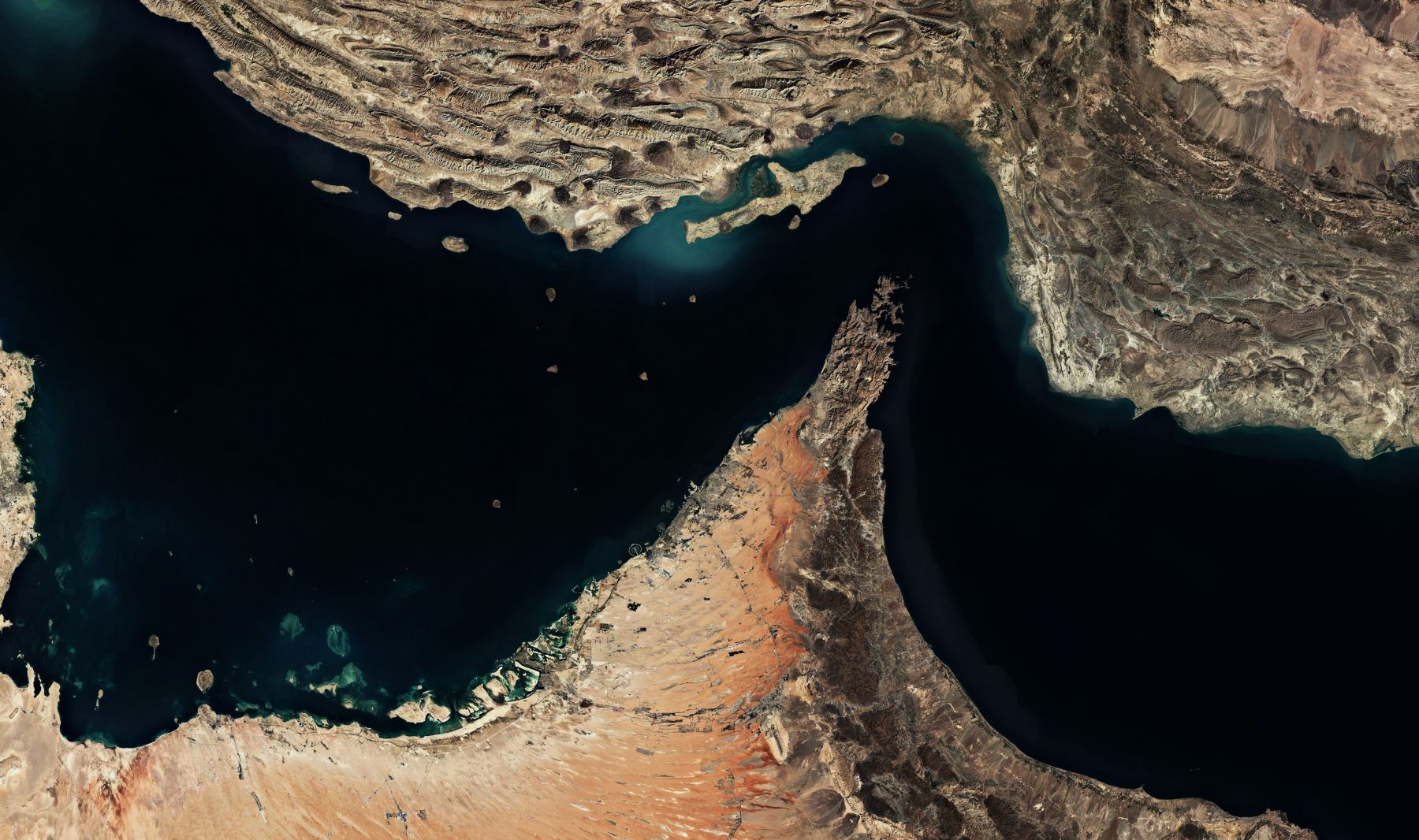
Middle East politics is the true reflection of realism. States have maximised their power by developing their military arsenal. Turkey, Iran and Egypt during 1947-73 were following pure realist views. If the Shah of Iran was concerned with ‘his hegemony of Persian Gulf’, Turkey was following a secular path to associate herself more with Europe to cash her bargaining position. Military might was on the rise. Egypt was dominated by realpolitik partly due to the Palestinian issue and partly by the nationalists coming into power in 1954. For her, it was an era of wars and dreaming of becoming a hero of the Muslim world in general and of Arabs in particular. Pakistan’s alignment with the Western world was to have its say in the region. The acquisition of Gwadar from Oman was also to maximise her power vis-à-vis Iran and India.
Since its creation, Pakistan remained affected by its antagonistic relationship with India, which compelled it to adopt realist policies. Thus its relations with the world and with Middle Eastern countries were defined in terms of India. Pakistan’s position in the international power game was seen in terms of its neighbours and shifts with the changing geopolitical configurations; nonetheless, it sought to fulfill the first requirement of all Pakistanis: ‘strengthening the security and preservation of the territorial integrity of Pakistan’ against what it perceived as the Indian threat. In diplomatic language it’s called ‘quest for peace and regional stability’. This resulted in joining of alliances network in 1950s. Another consideration of Pakistan’s foreign policy was the religious dimension of its national identity. Pakistan proclaimed its fraternal goodwill towards Islamic nations. In its search for allies, the country has fallen prey to unfortunate encounters with Arab nationalism.
Pakistan’s founding ideology was not clearly defined due to confusion among various leaders, including Jinnah. His numerous speeches reflect that he wanted Pakistan to be a secular state, while the slogan on the basis of which the country was sought was Islam. Movements like Jamaat-e-Islami, loyal to the universalistic logic of Islam, were against Partition from the start. Nevertheless these groups eventually supported Pakistan. Still to be resolved was the contradiction between a nationalist concept of the state and the universalising ideal of Muslim society. Such confusion dominated its Foreign policy during 1950s and 60s. The Middle Eastern countries, proud of their thousand year history and Arab nationalist movements understood Indian National Congress Party’s anticolonial struggle better than the secessionist arguments that had given birth to Pakistan. The importance attached to Kashmir – a disputed land between India and Pakistan, was given the religious colour and Pakistan’s main condition for friendship with a third country was its stance on Kashmir. It, later on, became the basis of its good or bad relations with Iran and Turkey at one hand and Egypt at the other.
Indo-xenophobia and confused ideological leverage du tot diverse stake-holders put Pakistan’s security in question and the backing of a great power was needed. The hour of the treaty had struck. In May, 1954, Pakistan and USA signed a mutual support and defence agreement which was not a military alliance but marked the beginning of American arms sale to Pakistan. In Sept, Pakistan signed the Manila Pact, founding document of the Southeast Asian Treaty Organization (SEATO) and, above all, confirmed its alliance with Washington. In 1955, Pakistan signed the Baghdad Pact – of more direct local relevance – which united Muslim countries ( Iraq, Turkey, Iran), with the aim of frustrating Soviet ambitions towards the Middle East and its warm seas. Britain was also a member but US was not – although it was moving spirit behind it. When Iraq left after the 1958 revolution, this became CENTO. Unlike NATO – and contrary to Pakistan’s wishes – neither SEATO nor CENTO had its own military command, and did not make provision for an immediate joint intervention in the event of an attack on one of its member states. These treaties gave Pakistan no protection against India. At the same time, Pakistani leaders wanted to retain optimum room for manoeuvre. Pakistan, through such alliances wanted to gain power against India while the Great powers wanted to use her against their arch rival – the Soviet Union – a crude demonstration of Realpolitik.
The Suez Crisis of 1956 revealed the other side of Pakistan’s reluctance to alienate itself from Western countries. Although ‘Pakistan approved of Nasser’s nationalization of the Suez Canal, it wanted international control of shipping’. Prime Minister H.S Soherwordy condemned the intervention of French and British troops; he had every intention of staying with the Baghdad Pact, which did not have a good image in Arab countries.
In 1959, Pakistan with Turkey and Iran signed a defence agreement with Washington which provided for possible American intervention in the event of an attack by ‘international communism’. Pakistan still thought that it would prove to be, one way or another, deterrence against India. Thus to counter India, Pakistan sought Soviet hostility as well. The U- 2 incident of 1960 was a time of great crisis which Pakistan bore while leaning on the US. But during the 1965 war against India, Pakistan felt betrayed and she realised the importance of alliances politics. All in all, the pro-western policy it had followed since 1954 did not completely live up to Pakistan’s expectation. It is true that the country obtained American aid that was vital to its continued survival, but on the other hand it had lost Arab world and Soviet Union allied herself closer to India. In the mean time, India due to her enmity with China also sought aid from USA. Thus politics of alliances offered no military protection against India, there was no prospect of any diplomatic pressure to hold referendum in Kashmir, and it compromised pan-Islamic solidarity by making Pakistan look like an ally of imperialism against the upsurge of Arab nationalism.