
Iran is fighting an existential war. Till these lines were being written, Tehran had surprised the pundits of doom by holding fast its fort, and was unrelenting to the Israeli-United States aggression. This is not another war on the Islamic Republic — a country which has braced four decades of sanctions, embargo and an eight-year duel with Iraq — from the duo that do not believe in a rules-based world order. Rather, it is literally a biblical extension of their beliefs wherein the Jewish state and its abettors across the Atlantic want to expand the State of Israel from Euphrates to the Nile. With Iran under clergy standing as a last obstacle, especially after Arab and Muslim states having cowed down under the Abraham Accords, it was time to plough it out. Little did the impulsive US President, Donald Trump, and the war-criminal Benjamin Netanyahu, with a Polish non-Jewish origin, know that obliterating a civilization is not a piece of cake.
Iranians, irrespective of their inherent differences with the religio-political order of the day, have stood fast and have acted in true resilience and nationalism. An immediate credit to the brave nation is the fact that thousands of tons of carpet bombardment and extermination of its hierarchy could not lead to toppling of the house. The fact that ‘regime change’ dream stands unrealised and Iran continued to fight
for a week or so with its leadership in vogue is a testament of their success story. What Iran is today owes its credit to the fallen Supreme Leader Syed Ali Hussain Khamenei. He made Iran invincible during his more than three decades of ironfist rule. With religious autonomy, which he enjoyed under the office of Wilayat-e-Faqih, as well as the man supposed to pronounce the last word, Syed Khamenei led from the front.
The manner in which he has built the edifice of Iranian Revolutionary Guards Corps (IGRC) and the tiers of military leadership in all of the 30-plus provinces is a doctrine of supra-marital affairs.
Iran’s military gear and the subservient leadership stood fast as the supreme leader was taken out by airstrikes of Israel and the US on February 28, 2026, in a dare-devil attempt contrary to International Law. The succession of Syed Mojtaba Hussain Khamenei as the Supreme Leader was a surprise, but it has consolidated for all times the revolution in vogue.
Whenever the history of Iran and realpolitik will be written, the assassinated Khamenei will be eulogised with two cardinal credits: One; he made the Islamic Republic’s military invincible by amassing it with state-of-the-art missile program, even in the absence of a formal air force – one that it is unbeatable now by trillions of dollars of supersonic technology-laden Patriots, THAADS, ARROW, Iron Dome and Interceptors; and Two; he was the last man who believed in the moral ethics of warfare by denouncing a nuclear bomb. Iran under his leadership was a Uranium-enriched state but one step short of going nuclear. Thus, the Americans and Iranian negotiators were close to a deal in Muscat and Geneva before the war-mongers at the White House and Tel Aviv decided to go over the brink.
It is a testimony of Iran coming out clear and exhibiting itself as a pacifist state. Little can be expected under a more radical Mojtaba Khamenei, who has taken the world order by surprise by vowing to fight on, and declaring to keep the Hormuz closed until Arab states shunt out American bases from their respective soils. The reason is simple: he has a homeland to defend, a revolution to safeguard, a blood to revenge and a promise to keep by defeating the aggressors and penalizing the abettors!
The first two weeks of warfare simply suggests that it is not merely a war with, or on, Iran. It is transnational with fears of going global. Russia and China are sitting on the fences but are not neutral in any sense. Moscow and Beijing are strategically aligned with Tehran in the geopolitical context, and it is no secret that they are supporting, at least in terms of intelligence sharing, and moreover acting as a deterrence as the Islamic Republic pounces on all of the GCC countries, and as far as deep into the State of Israel.
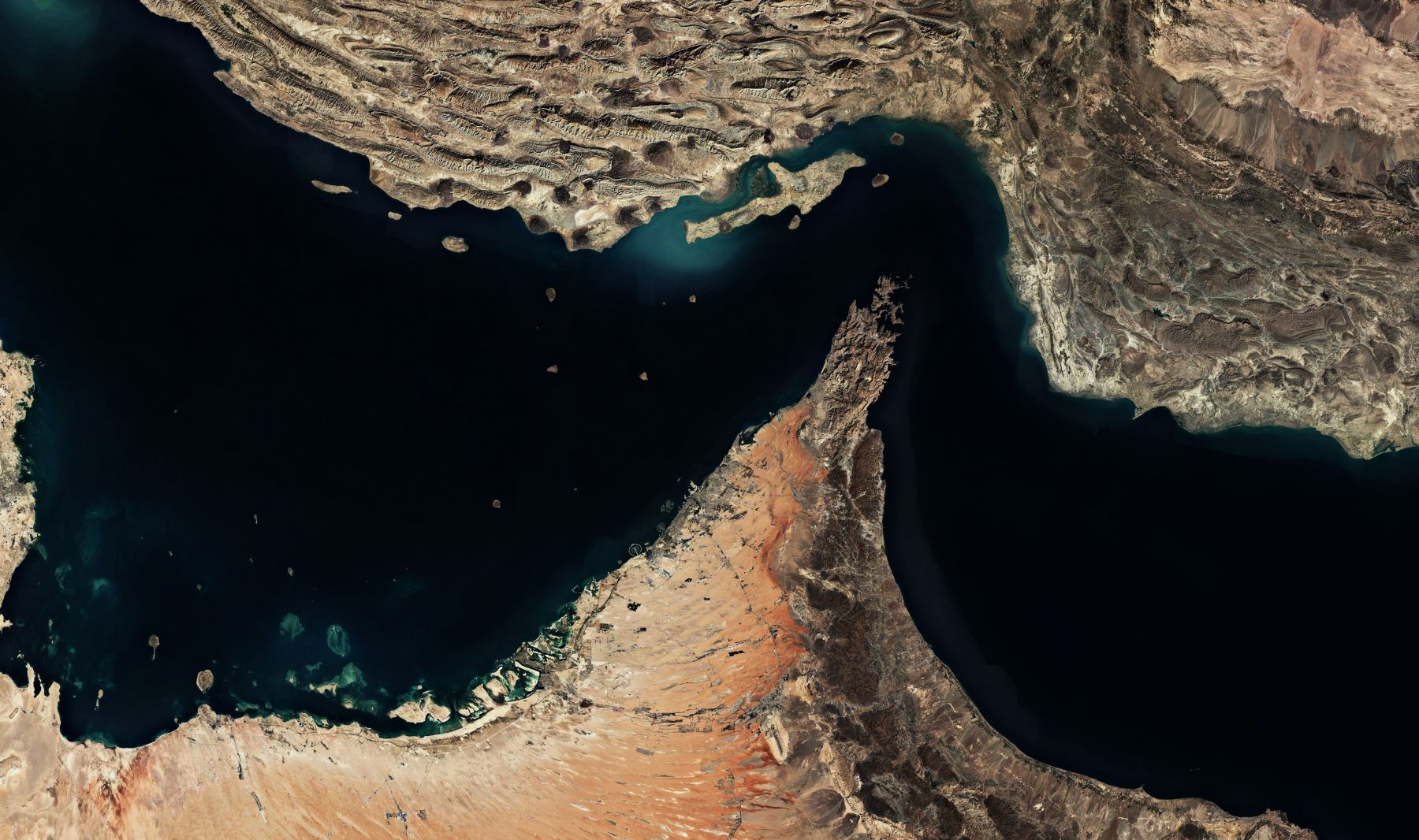
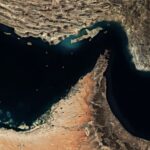
The closure of the strategic Strait of Hormuz is a game-changer and has sent shivers down the spine in terms of global energy security. Oil prices have sky-rocketed and a barrel is being sold for over $100, checkmating the economic wheel across the globe. For the first time in history, the International Energy Agency (IEA) has released 400 million barrels of oil, designed to counter the shutdown of a vital shipping lane as Hormuz is controlled by Iran.
So scary is the situation that Tehran has attacked all of the flagship vessels in the 167-km Strait that are aligned with the US and Israel in any way of warfare. So high is its confidence that it has called upon the member states to sail their ships across the water channel after expelling US envoys from their respective capitals! Alireza Tangsiri, Commander of the IRGC Navy, took a jibe by saying: “We guarantee the security of any oil tanker, under any flag, that can convince an American destroyer to escort it through the Strait of Hormuz”. That scenario indicates that the chips are falling for the US and Western order in the region. Arya Yadeghaar, an Israeli researcher, aptly described the evolving situation by writing on ‘X’: “looks like the story of a US dominated West Asia is over, and Iran accomplished that in one week”. Period. The most horrible fallout of the war is the liquidation of GCC’s socio-economic potential. The once hubs of serenity and stability are theatres of war, and are on the receiving end.
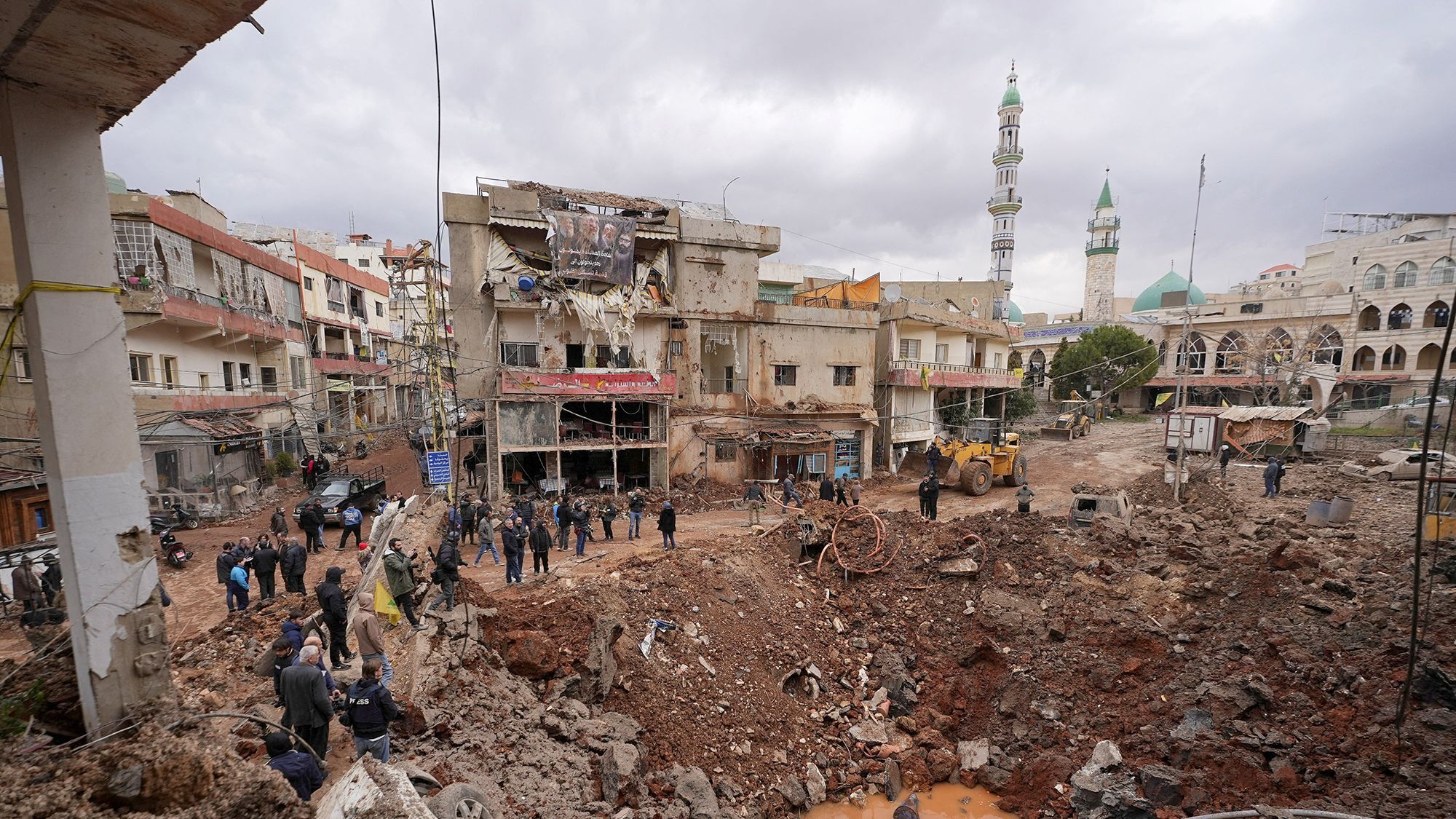
Thousands of Iranian drones and missiles have played havoc with the confidence of doing business in Riyadh, Manama, Kuwait City, Dubai and Abu Dhabi, Doha and even on the shores of Oman. Not to mention the trauma that Tel Aviv, Haifa and other towns in Israel were facing with each passing day. The Islamic Republic has stuck the Jewish State with vengeance, and the heat is being felt. Precision-guided attacks on US military bases in Bahrain, Qatar, and Saudi Arabia as well as in the UAE have exposed the hollowness of the security shield that was promised to these clientele states by the Pentagon.
The Arab folks in their tetra-rich lands were seen running for helter-shelter, as expatriates decided to call it a day. The wealthy and the powerful in the Mideast were seen chauffeuring to flee, or struggling to catch a million-dollar flight to greener pastures by abandoning their treasure trove real estates, and pets. The iconic DIFC in the UAE ceased to function for many days, as banks and high-tech giants offices in the region were under the ire of Iranian firepower in retaliation.
The entire goodwill of the Middle East stability was made to bite the dust. A new order of compulsion and convenience is underway, and the superpower that waged this undesired war was seen sitting clueless, urging middle powers to play their role in making the Hormuz navigable, and prevailing over Mojtaba Khamenei to cease fire. That downturn of Pax-Americana is a telling tale of power arrogance coming full circle to rub its nose!
The most defining moment for the United States is the fact that its decades of goodwill in terms of diplomatic superiority and military hardware is in thin air. Tehran had called the bluff. Two of the robust aircraft carriers, USS Gerald Ford and USS Abraham Lincoln were on the retreat away from the Persian waters, after having been battered with crackers and drones that came from Iran. No American naval vessel was willing to sail into Hormuz to defend its allied-allies.
Oil production across the Middle East came to a slump as they ran out of storage capacities in the absence of churning the product out. Tehran was prevailing over the petro-dollar economy, making the US indulge in choice-less options of allowing Russia to sell its sea-borne oil to India, and cajoling with European allies to chalk-out a new doomsday scenario, if Hormuz remains unnavigable. Oil markets were losing a staggering 15 million barrels per day, a loss that spelled disaster for the global economy.
The UAE and Qatar were reportedly losing $600 million revenue per day as the world’s two largest airlines, Emirates and Qatar Airways, are literally grounded, and the US tax-payers are taking a toll of $1billion a day as their state-ofthe art interception-cum-counter attack systems stand obliterated at the hands of Iranian inferior objects.
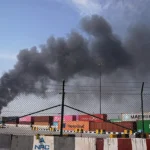
With airports of Kuwait, Dubai and Manama under drone attacks, Fujairah oil sifting installations on fire, parts of Abu Dhabi that allegedly houses American centres under the clouds of black smoke, and Saudi Arabia’s prime aviation bases for US troops under salvos, the region’s security paradigm has changed for good. Bourses worldwide have crashed, the real estate bubble of the UAE has blown apart and corporate trust in tax-free havens of Mideast gone for a toss. It is rightly said that the Mideast shall never be the same again, like the US after 9/11 attacks.
Notwithstanding, what the war has in store for the world at large in terms of socio-economic somersaults, and a blistering geopolitical mosaic, Iran has emerged as a power-broker in the region and beyond. The flip side of the story is that an overwhelming number of Americans are not in this war. This war is there because a Knesset-sponsored establishment at the helm of affairs in the United States wants to be at the appeasing end for their compatriots and patrons in Israel.
This war is a sheer injustice to the Americans who had historically and conventionally opposed interventions in Vietnam, Afghanistan, Iraq and Venezuela.
As stated by Arundhati Roy, the celebrated Indian writer of conscience, the bombing campaign in Iran was a “continuation of the US-Israeli genocide in Gaza,” meant to serve the ulterior purposes of global domination. Roy rightly summons that “Iran is not Gaza”, as the Islamic Republic is “standing up to the imperialists…” Thus, the world today stands at the precipice of a “nuclear calamity and economic collapse” – assuring the oppressed of the Bretton Woods system of a new World Order in the offing. Tehran’s terms for a ceasefire or cessation of hostilities are on the premise of its endurance. President Masoud Pezeshkian had laid down the three inviolable dictates: acknowledging the rights of Iran as a sovereign state; payment of reparations, and assurances that Iran will never again be a victim of aggression. Those words have come from a position of strength from Tehran, negating Washington’s repeated claims that the “US has won the war, and Iran is on its knees”. Vali Nasr, a respected Iranian-American academic in the US, says that, “this is a war of who is going to bear the higher threshold of pain”. And Iranians have a case-history of enduring sanctions and wars. The Trump administration has blundered by crossing the brink, and has not only exposed its limitations as a superpower but also fallen flat before its allies in the Middle East and Europe.
A Yalta of 2026 is the need of the hour, wherein the United States must call it a day in terms of animosity with the Islamic Republic.