

Part 3
(This article was written on 17th March 2026, and should be read in conjunction with Global Order 1&2)
‘ Its not hard to go back to Goebbels or the 1930s. You understand the tactic is to tell the big lie as often as possible’, Roger Waters
The conflict began with three core demands imposed on Iran: the complete cessation of uranium enrichment, the abandonment of its ballistic missile program, and the dismantling of all anti-Israel proxy networks across the region. Iran rejected these demands, and war ensued.
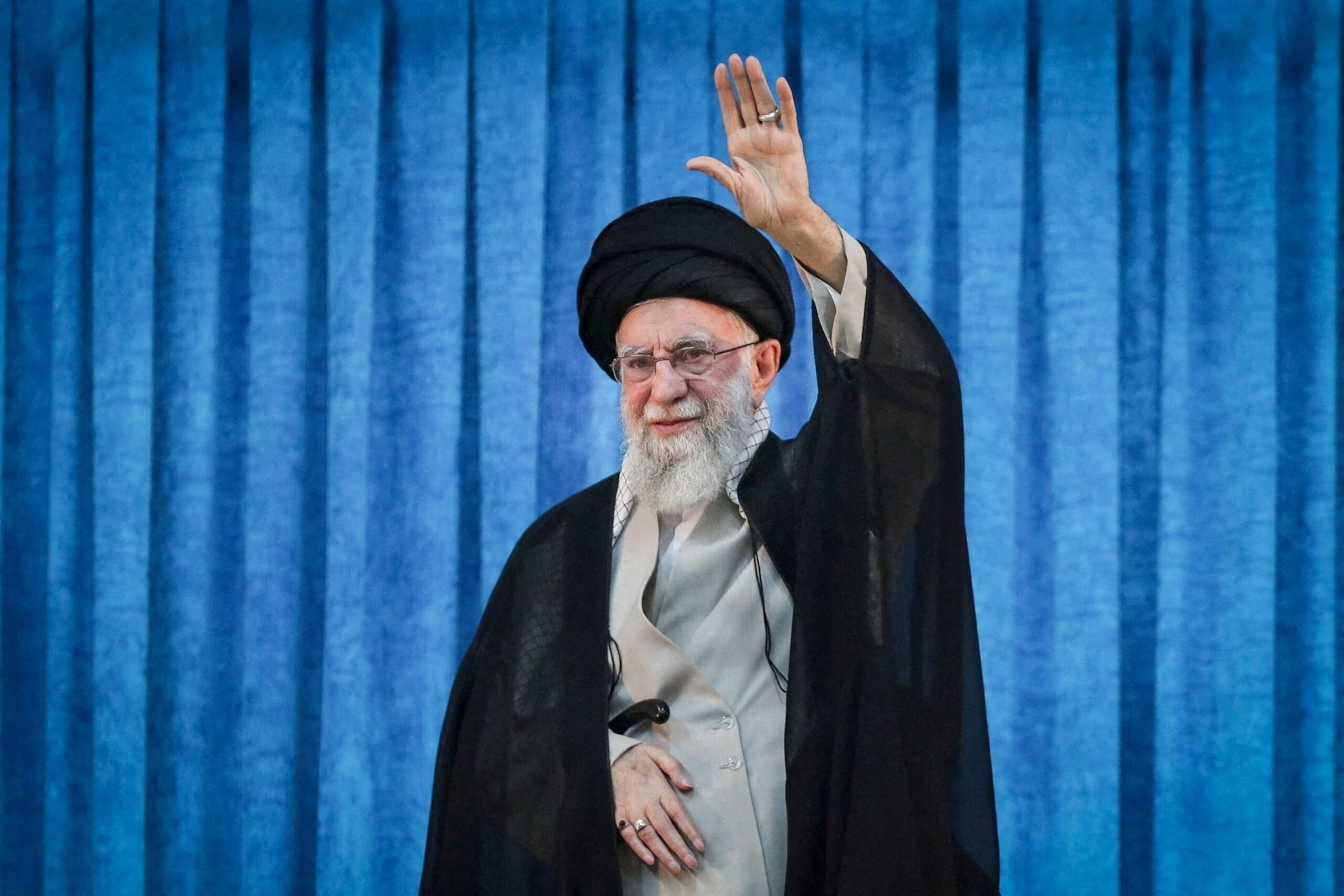
In the opening phase, joint US-Israeli operations targeted Iran’s leadership culminating in the assassination of Supreme Leader Ayatollah Ali Khamenei in an apparent attempt to trigger regime change. This objective, however, failed. The United States subsequently claimed the near-total destruction of Iran’s naval and military capabilities, projecting a swift victory within four days.
Events unfolded very differently. The US was forced to withdraw from the Persian Gulf after suffering significant setbacks, including the loss of a destroyer and damage to the aircraft carrier Abraham Lincoln, now reportedly returning in compromised condition. The carrier Gerald Ford experienced a fire and was withdrawn to port, while the George Bush now enters the theatre cautiously despite earlier claims that Iranian naval power had been neutralized. The new carrier group is more concerned about its own safety while it remains in search of operational purpose and relevance. Additionally, the US has reportedly lost over a dozen advanced aircraft including air-to-air fuellers, with explanations ranging from technical faults to friendly fire. Casualty figures remain unclear, but considering the scale of damage to high-value assets such as THAAD radar systems, Patriot batteries, communication hubs, and military bases, an estimated 200 US personnel fatalities appears plausible.
Confident of a rapid conclusion, Washington initially demanded Iran’s unconditional surrender—an echo of historical wartime rhetoric – illusions to grandeur.
This expectation has steadily shifted, from days to weeks, with timelines extending from two to four and now possibly six weeks.
Israel, meanwhile, has endured extensive missile strikes targeting military installations, radar systems, administrative centres, commercial hubs, and communication infrastructure. A strict media blackout has been enforced, reportedly under threat of imprisonment. Amid this turmoil, Prime Minister Benjamin Netanyahu has been absent from public view, fuelling widespread speculation regarding his status.
His absence from key state engagements, the cancellation of scheduled appearances, and the circulation of AI-generated “proof-of-life” imagery have intensified rumours.
Whether deceased, incapacitated, or in hiding, his absence has contributed to perceptions of leadership paralysis.
Facing mounting pressure, the US and Israel have sought to assemble a multinational naval coalition. This effort has met resistance. Several countries—including Japan, Spain, Australia, Germany, France, South Korea, and the United Kingdom—have declined participation. The Japanese Prime Minister notably questioned what additional capability such a coalition could provide beyond that of the US Navy itself. As a result, the United States appears increasingly isolated, even reportedly appealing to China for assistance in reopening the Strait of Hormuz. Threats to cancel diplomatic engagements, including a scheduled visit to China, have had little apparent impact.
By the third week, the war’s objectives had shifted. Control over the Strait of Hormuz emerged as the central issue. For the United States, reopening the strait under its authority is critical to demonstrating continued global dominance and reassuring Gulf allies of its security guarantees. Iran, however, has declared the strait open to all except hostile states, including the US and Israel and their allies. This position reflects a broader Iranian strategy: to assert that regional security should be managed by regional actors rather than external powers, directly challenging US hegemony.
Complicating matters further, Iran has activated allied forces, particularly the Houthis along Yemen’s Red Sea coastline, with a focus on the Bab el-Mandeb strait. Should this chokepoint be closed, the strategic value of reopening Hormuz would be significantly diminished. Consequently, the Yemeni coastline, Socotra Island, and Bab el-Mandeb have assumed critical operational importance.
Iran has also introduced economic pressure by permitting countries willing to transact in Chinese yuan to access oil shipments through Hormuz. This move challenges the petrodollar system and reduces US financial influence globally.
Simultaneously, the US-Israeli alliance is accused of conducting false-flag operations across Gulf states and Turkey, allegedly to provoke tensions between Iran and regional actors. Iran has denied responsibility for several drone attacks and has called for joint investigations into incidents it did not claim. Tehran has also warned that any attack launched from US bases in Gulf states would trigger direct retaliation against those installations. In parallel, Iran has proposed a regional security dialogue with Gulf nations. Western media reports suggesting that Saudi Crown Prince Mohammed bin Salman encouraged US military action have been firmly denied by Saudi Arabia.
Riyadh has distanced itself from the conflict, emphasizing that its Vision 2030 agenda depends on regional stability and economic development. These conflicting narratives suggest an ongoing information war aimed at influencing Gulf states’ alignment, though with limited success thus far.
As the conflict approaches a potential endgame, options for the US appear increasingly constrained. Without committing ground forces—an unlikely and risky escalation—its conventional military leverage is limited. Any eventual settlement is likely to reflect Iranian conditions, including the withdrawal of US forces from Gulf bases, reparations, and guarantees against future hostilities.
For Israel, the consequences may include abandoning expansionist objectives in Gaza and the West Bank, accepting a two-state solution, and relinquishing occupied territories in Lebanon and Syria. For the United States, the conflict may mark a transition away from unipolar dominance toward a multipolar global order, requiring adaptation to a more balanced international system.
Thus the war has gradually shifted from a kinetic character to one of subtler multiple dimensions, challenging convention and where relative military capacities have little meaning. The conflict has shifted into the zones of economic degradation, cost and sustainability. It has further begun to lean on media manoeuvres and opinion-shaping gimmicks. Alliances and coalitions have begun to matter. Thus this war goes on but by other means. The present scenario points towards an end to hostilities and probable war termination only when one of three predicted benchmarks are arrived at: A US withdrawal from the Gulf, an Israeli capitulation or the surrender/annihilation of Iran – whichever comes first.
In the event of a US withdrawal from the Gulf, a strategic vacuum may emerge. While Chinese and Russian technologies could fill aspects of this gap, overdependence on external powers carries its own risks. A balanced approach would emphasize acquiring military capabilities and technical expertise rather than permitting a sustained foreign presence. Thus a new reconstruct for a regional initiative may be in the offing but one that is acceptable to all.
Such cooperation would be particularly relevant for securing critical global trade routes, including CPEC, the Bosporus and Dardanelles straits, and the Suez Canal—ensuring uninterrupted connectivity between Europe, Asia, and Africa.
These evolving alignments could contribute to a new global order characterized by increased Asian autonomy and expanded Russian and Chinese influence. Competing initiatives such as the US PG2, Israel’s IMEC, and the EU’s Global Gateway may ultimately integrate with China’s Belt and Road Initiative, creating a more interconnected and potentially equitable global trade system—though not without continued competition among major powers.
From Pakistan’s perspective, the situation remains complex. While official policymaking remains opaque, the country’s foreign policy stance has generally been viewed positively—whether by design or circumstance. There are indications that Pakistan may have played a role in moderating Saudi Arabia’s position, with Iran publicly acknowledging Pakistan’s support. Pakistan’s approach toward Afghanistan also appears to be yielding results, though outcomes remain uncertain.
The recent Afghan propaganda about Pakistan’s strike on a drug rehabilitation centre is unfortunate but to be expected.
Pakistan must immediately offer to set up a joint enquiry into the matter so as to settle the rumours.
The enquiry must allow for validation and verification by mutually agreed to third party evaluators or then a UN team. Pakistan has not yet attacked the TTA or even the TTP leadership in a deliberate design and that is a good thing, it leaves space for future inter-action. However, in any future escalation this could easily change and leadership of these groups may become the focus of the attacks. So far Pakistan is concentrating on TTP hide-outs, logistics supporting the cross border terrorism and the military infrastructure (such as drone assembly plants) that are facilitating militancy in Pakistan.
It is expected that with reduced capacity, the cross border terrorism and violence too would die down and in fact as per reports, they already have. Meanwhile, India has openly aligned itself with Israel, endorsing broader geopolitical ambitions such as “Greater Israel” and “Akhand Bharat.” This convergence suggests a deepening strategic partnership that Pakistan may need to counter more actively on the international stage. When seen in the context of the TTA and India’s new love for them, these alignments must be taken into consideration and addressed.
Pakistan needs a spokesman to give regular public briefs on the war with Afghanistan thus removing doubts and quelling rumours.
Domestically, Pakistan faces critical decisions. It may need to reconsider participation in initiatives perceived as divisive within the Muslim world, including withdrawal from certain peace platforms (Board of Peace) or joining new ones. Pakistan needs to undertake a reassessment of symbolic diplomatic gestures such as Nobel Peace Prize endorsements.
Pakistan will soon have to take a position – does it become part of an Islamic unity, does it align with China or will it lean towards the US and by association Israel.
In fact, there are no options and the choice is obvious but Pakistan needs to skilfully articulate its position with clarity and firmness. There is an opportunity for Pakistan to take its rightful place within the region more autonomously, independently and with sovereign confidence.
More fundamentally, Pakistan has to address its internal political structure. The establishment of a legitimate and representative government—whether through free and fair elections or a national unity framework—is essential for effective decision-making.
This is particularly important in light of anticipated agreements such as a defence pact with Saudi Arabia.
Such agreements should be transparent, debated in parliament, and supported by public consensus, with clearly defined conditions, threat perceptions, and limitations to prevent unintended entanglements in external conflicts or wars that are not Pakistan’s wars.
The Government must take into account the fact that if it were to lean on the people and the Parliament it actually strengthens itself in international dealings by creating room for manoeuvre.
Economic resilience is equally critical. A long-term recovery plan, broadly supported and potentially constitutionally protected, would reduce dependence on external financial assistance and enhance strategic autonomy.
The plan must be designed to outlive respective and successive governments. Ultimately, Pakistan’s ability to play a meaningful regional role will depend on its internal stability, credibility, and demonstrated sovereignty.
A good international image is an important component to win an air of acceptability.
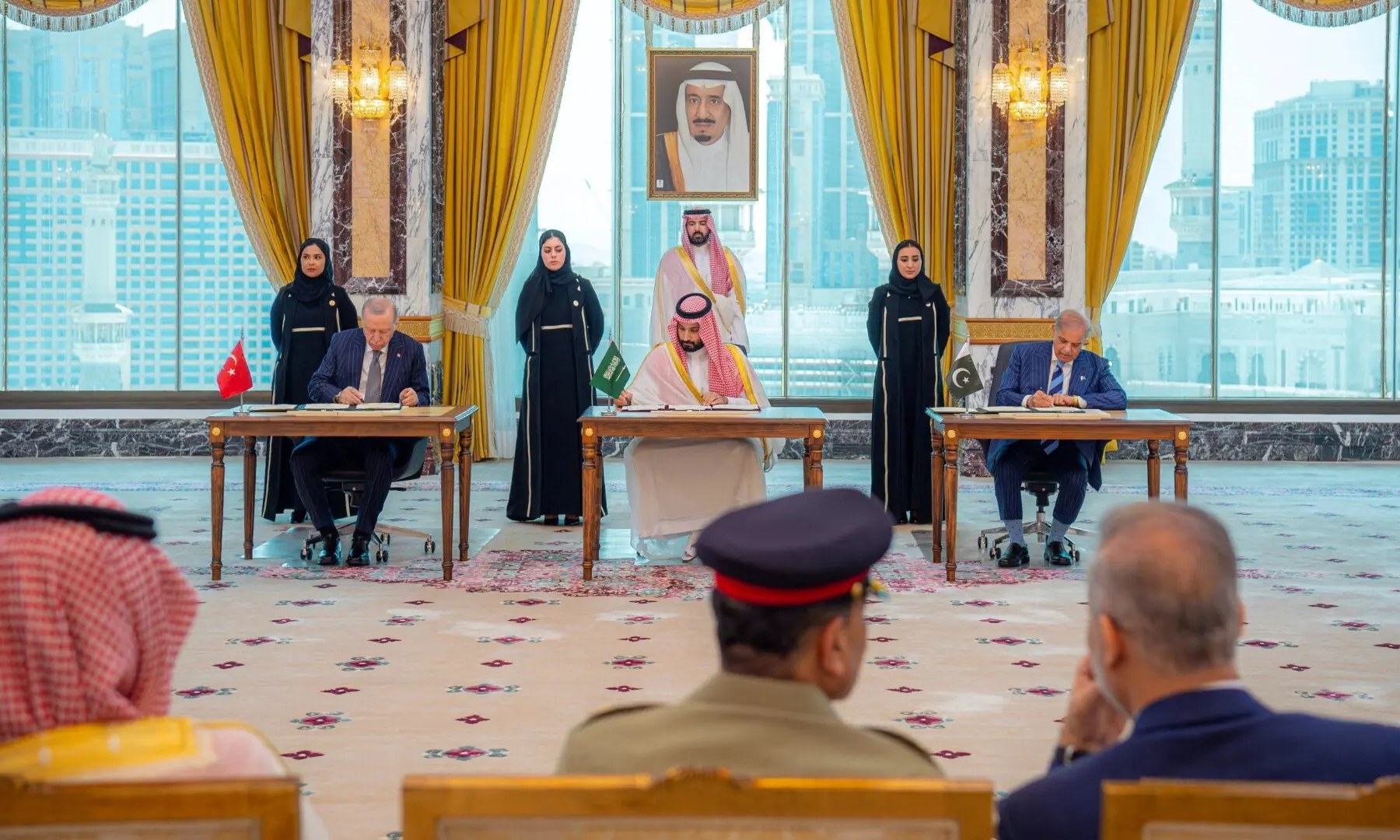
The region is undergoing profound transformation. For Pakistan, this moment presents both risk and opportunity. A cooperative regional security framework involving Saudi Arabia, Turkey, Iran, and Pakistan could establish a durable mechanism to prevent external intervention and ensure collective stability. This is perhaps the future reconstruct of regional security acceptable to all
The question remains whether Pakistan can rise above internal divisions and position itself effectively in shaping the region’s future.
The general definition of what ethnic cleansing consists of applies verbatim to the case of Palestine’
Llan Pappe.