Joint Foreign Policy Challenges
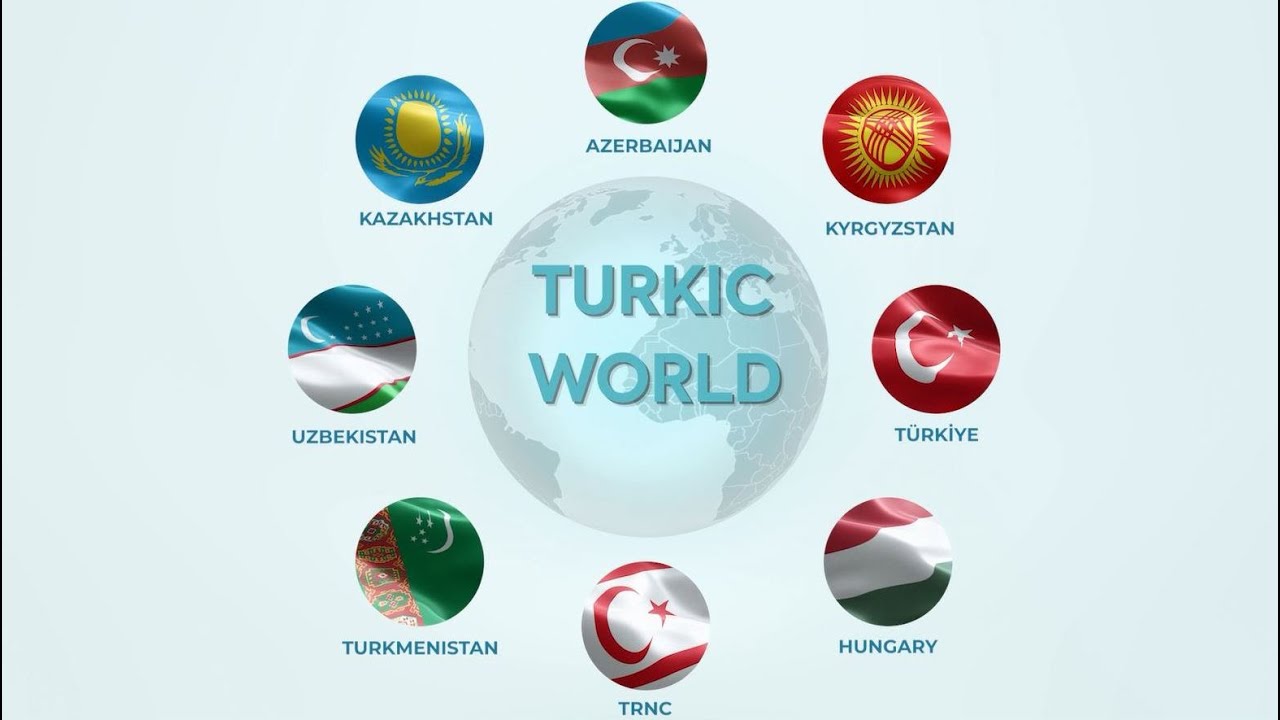
The unique location of Central Asian countries and the vast land mass, commonly referred to Turan, ideally dictate it to be a single geographical and Geo-political Union or economic bloc to play a vital role in the regional and global geopolitical environment. This bloc has the power and capability to counter any bigger power that can influence or affect the sovereignty of the members of Organization of Turkic States (OTS). From a historic perspective, Turan is being described as a specific region in Central Asian region denoting to the lands inhabited by the Turkic speaking nomad tribes and encompassing modern day Uzbekistan, Kazakhstan, Kyrgyzstan, Tajikistan, Turkmenistan and northern parts of Pakistan and Afghanistan.
Pakistan has significant Turkish historical and cultural influences, stemming from centuries of rule by Turkic and Irani peoples and shared Central Asian heritage, which can be seen in aspects of both the history and culture of modern Pakistan
This includes historical figures like the Ghaznavids, shared Islamic traditions like the Hanafi School, similar food and common Central Asian origin for clothing designs. The main objective of this article and Turan diplomacy is to emphasize and create awareness to include Pakistan in the OTS alliance based upon its cultural and genetic affinity with Central Asia. The inclusion of Pakistan in OTS union with its “tested” military and tactical power will definitely boost the strategic value of this alliance.
The “Turan Diplomacy” book envisions the development of new horizons in OTS alliance from the Pakistan’s perspective, and to formulate an aggressive joint foreign policy, connectivity, and development of a joint military industrial complex with Pakistan being added to the OTS union. The power struggle between Global North and Global South is getting to the point where major changes in the Middle East are clearly visible. The recent Gaza crisis, Iran-Israel war, Pakistan-India war, and the Russo Ukrainian catastrophic war have brought the situation to the point where major changes are inevitable. These changes are:
• Two state solution between Israel and Palestine
seem to be the only viable solution to many stakeholders and in the eyes of global nations’ oversight, however, it is still a debate if Israel will go back to pre-1967 positions to make it more appealing for those who are still resisting. The two-state solution is the primary, internationally backed proposal for resolving the Israeli-Palestinian conflict by establishing an independent state of Palestine alongside the state of Israel. However, the solution faces significant obstacles yet. The main features of this concept are the state of Palestinian that would be established in the West Bank and Gaza Strip, generally based on the pre-1967 borders. Jerusalem would be the capital for both states, with Israel’s capital in the west and Palestine’s in the east of Jerusalem. Both states would have sovereign control over their own security, cooperating each other for shared concerns. Israeli settlements in the West Bank and East Jerusalem to be evacuated since they have been considered illegal under the international law.
Also, the solution for mass refugees over the period from 1948 to 1967 to be addressed and potentially involving a right of return to Palestine or compensation, without threatening Israel’s character as a Jewish state. The terrible war in Gazza in recent years caused the death of hundreds of thousands of people men, women and children. The aftermath of war and the continuing readiness of the two sides to go again for battle, pushed the international community to intervene and set up a plan for the rehabilitation.
This issue is one of the major destabilizing factors in the Middle East that is impacting economy and geopolitics. Türkiye is playing a vital role being a legacy stake holder and a major power in the Middle East. Due to involvement of Türkiye, it is also inevitable that other OTS alliance nations cannot sit idle, so diplomatic and logistic support must be available whenever it is required.
• Pakistan India 4-day war
changed the mindset of modern warfare. In May 2025, a war between India and Pakistan emerged following an Indian false flag terror attack in Pahalgam, which led to a four-day military conflict with fighter jets skirmishes, Artillery firing at LoC, missile attacks, and drone strikes. The conflict began in April 2025 with a series of escalating events, including downgrading of diplomatic ties, border closures, and suspending the Indus Water Treaty by India. On May 7, India launched missile strikes in Pakistan, escalating the situation.
The 96-hour war between Pakistan and India has uncovered many myths, misunderstandings, and misconceptions. Pakistan emerged victorious and countrywide celebrations were arranged after a ceasefire was declared on May 10. A 31-gun salute was given in the federal capital and 21- gun salutes were given in all provincial and regional capitals to mark the great success of Operation Banyan Marsus! In this, not only the two S-400 batteries were destroyed, but more than 20 Indian air bases were damaged or destroyed. The entire depot of Brahmos missiles was destroyed.
All 77 drones that India sent to Pakistan, were destroyed. The Indian army has been deprived of air defence on the Kashmir front. This is the reason why India forced Pakistan to cease fire through the US. Otherwise, it is on record that many powerful countries were asking India to cease fire from Pakistan, but India was constantly adamant that it would teach Pakistan a lesson. Pakistan’s military claimed that the Pakistan Air Force (PAF) shot down six Indian Air Force (IAF) aircraft on May 7, 2025, during a large-scale aerial engagement. The aircraft allegedly included three French-made Dassault Rafale jets, one Sukhoi Su-30MKI, one Mikoyan MiG-29, and a Mirage 2000, including a Heron reconnaissance drone. AS per Pakistan’s claim, these aircraft were shot down in Indian airspace using Chinese-made J-10C jets equipped with PL-15 air-to-air missiles. The massive Pakistan – India clash in the skies involved total 125 jets from both sides, the largest air dogfight since WW2. From the Pakistan side, J-10Cs, JF-17s, and F-16s were used without either side crossing the border.
Modi has exposed India’s weaknesses to the whole world including its long-time adversary, China. Before launching an attack on Pakistan, many of India’s weaknesses were hidden. The war with Pakistan has made it clear to the world that the Indian army, its economy, its technology, everything is inferior. That is why now the whole world has turned its back on India.
• Iran-Israel 12-day war
is another armed conflict in June 2025, right after the Pakistan-India 96-hour war. The fighting began with an Israeli surprise attack on Iranian nuclear and military facilities and ended with a U.S-brokered ceasefire. This war exposed many weaknesses and vulnerabilities on both sides that limits ability to move any further. The Gaza crisis has also damaged both sides economically and militarily. The ceasefire was described as fragile, with no formal peace agreement, and both sides claimed victory. After the months since the war, all parties have been noticed gearing up again for a potential resumption of hostilities, as the core issues, including Iran’s nuclear program and regional influence, remain unresolved. Geopolitical challenges due to Iran will be a constant puzzle for the region due to its sectarian and unstable diplomatic approach dealing with its neighbours.
• Pakistan-Saudi Arabia Defence deal
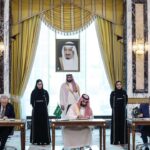
is the land mark event of the contemporary history and geo politics. This Defence deal has changed mindset and geostrategic landscape on the regional and global drawing boards. Pakistan and Saudi Arabia signed a Strategic Mutual Defence Agreement (SMDA) in September 2025, a pact that states an attack on one country is an attack on both. The agreement aims to enhance their security, strengthen joint deterrence against aggression, and deepen defence cooperation through measures like intelligence sharing and military co-production. This formalizes a long-standing security partnership and comes amidst regional tensions, although it is distinct from a formal NATO-style collective defence alliance.
A core clause states that aggression against one country is to be considered aggression against both. The pact is intended to bolster joint deterrence against potential threats. It includes provisions for increased collaboration in areas such as intelligence sharing, defence industry collaboration, and military co-production.
The agreement was signed shortly after Israel’s strikes in Qatar, which is suggested as a trigger for Muslim countries to create their own security arrangements. The pact is viewed as part of a broader shift in the Middle East, with Saudi Arabia diversifying its security partnerships beyond its traditional reliance on the United States. The pact acknowledges Pakistan’s position as a regional nuclear-armed state.
• Turkey-Egypt Defence cooperation agreement
has the key importance for the Middle East knowing the critical Suez Canal economics and Red Sea dynamics. Turkey and Egypt are expanding defence cooperation through joint ventures, including a deal to jointly produce vertical take-off and landing (VTOL) drones and other unmanned vehicles. These efforts, which also include joint military exercises, are part of a broader effort to strengthen their defence industries, reduce reliance on foreign suppliers, and deepen their strategic partnership in the region.
In August 2025, Turkey’s Havelsan and Egypt’s Arab Organization for Industrialization (AOI) signed an agreement to jointly produce vertical take-off and landing (VTOL) drones. Havelsan also signed an agreement with the Kader Factory for Developed Industries, which is affiliated with the AOI, to produce UGVs in Egypt. Turkey and Egypt have resumed joint naval exercises after a 13-years. The exercises are designed to maximize bilateral capabilities and exchange expertise on maritime security. Egypt has shown interest in potentially co-producing Turkey’s fifth-generation stealth fighter jet, the KAAN, according to The New Arab. Egypt has also expressed interest in Turkish defence products like the TRLG-230 missile and various smart munitions.
The cooperation is part of both countries’ desire to strengthen their position as defence exporters and reduce reliance on foreign suppliers. The growing partnership comes amid regional instability and potential conflicts, with both countries seeking to build greater strategic autonomy. This military cooperation is occurring alongside a broader normalization of relations, which includes reappointing ambassadors and reopening embassies.
• The political landscape changes in Bangladesh
has resulted deep embarrassment for India and its backed Sheikh Haseena regime. Indians blame on Pakistan secret service to be behind this student rebellion and ousting their puppet regime. Bangladesh’s political landscape has shifted dramatically due to a 2024 student-led uprising that removed former Prime Minister Sheikh Haseena, leading to an interim government headed by Nobel laureate Muhammad Yunus. The new government is focused on restoring democracy and reforming state institutions. The interim government has reopened political and civic space and begun reforms, allowing previously suppressed political entities to reassert themselves. The transition is fraught with challenges, including economic instability, political factionalism, and security concerns. When Sheikh Hasina left Bangladesh due to civil revolt, India lost one of its biggest assets in South Asia. Pakistan been has mending relations with its previous eastern flank Bangladesh including high level military delegates and bilateral economic exchanges.
• Lachin-Karabakh summit
On May 28 — the Independence Day of the Republic of Azerbaijan — a historic trilateral summit convened in Lachin, Azerbaijani region which was liberated from the Armenian occupation as the result of the Second Karabakh War. It brought together the President of Azerbaijan, Mr. Ilham Aliyev, the President of Turkey, Mr. Recep Tayyip Erdogan, and the Prime Minister of Pakistan, Mr. Muhammad Shahbaz Sharif. This event not only marked a diplomatic milestone but also symbolized the growing political and strategic convergence of three key regional players.
1. Celebration of Karabagh war on Azerbaijan Independence Day 28 May (Yum E Takbeer for Pakistan when Pakistan became declared nuclear power)
2. Beginning of a new powerful alliance after match of 96-hour war with India
3. Economic cooperation plus MIC sales (Middle Corridor and CPEC benefits)
The timing and location of the summit carried profound symbolism. Choosing to hold this event on Azerbaijan’s national day was a testament to the country’s independent and confident foreign policy. This summit at Lachin reflected Azerbaijan’s resolve to forge strong, value-based alliances, particularly with nations that have consistently supported its sovereignty and territorial integrity. The presence of Turkey and Pakistan on such a significant date was a message of solidarity and shared vision for the future.
The Lachin summit was more than a ceremonial occasion. It was a declaration of intent and a reaffirmation of shared values. As regional dynamics shift and new challenges emerge, the Azerbaijan–Turkey–Pakistan alliance will play an increasingly important role — not just as a security coalition, but as a force for economic development, cultural cooperation, and balanced international diplomacy. This summit marked a clear step forward in a strategic journey, one that holds promise for a more stable, prosperous, and cooperative future for all three nations and the broader region they inhabit.
FROM this summit, the future alliance of OTS and TURAN is visible.
This Lachin meeting paved the path for Pakistan to be included as a strong crescent to join this greater union, which eventually will compete ASEAN and EU economically and geopolitically.
India was considered as one of the main chess players in the global chess board of the globalists and Global North defence bloc like Quad to counter China and put India as the policeman of the Asia pacific and Middle East region. However, Indian inability to perform in the regional war with Pakistan, has shattered its invincible myth that resulted in the rise of Pakistan’s geopolitical and geostrategic influence and power in the global arena. Turkey & Azerbaijan were shoulder to shoulder with Pakistan during this crisis with India. This is the fundamental point that was clearly noticed during 4-day war and key guideline to formulate Turan OTS Foreign Policy.
• Pakistan-Turkey-Azerbaijan alignment
on all global & regional issues and common strategy to move forward and handle crisis situations backing each other or sometimes playing complicated diplomacy where one is in the shadow and other is on front, is the real power of this bond and brotherhood which is not available in the contemporary geopolitical arena and this is the basis of a parallel bloc which is the subject of this thesis.
Pakistan must leverage Turkey and its influence as a vital and fundamental tool of its foreign policy. Turkish – Pakistan and Azerbaijan military and naval alliance and strategic partnership along with Organization of Turkic states countries can be a rock-solid element in multiple domains keeping in mind the Middle East and Central Asian geo-politics is concerned. I am totally convinced that Turkey is one of the friendly countries that will come to support Pakistan in the time of needs. Pakistan has many tools and manoeuvres in all aspects, and alignment with Turkey should be another strategic manoeuvre that will be beneficial not only for both countries but also for regional stability.
Turkey has influence on many countries and Pakistan can leverage such influence with close strategic and diplomatic alignment. The joint Pakistan Turkish Partnership will serve as a strong strategic power balancer for the Middle East and IOR. Elaborating further, Turkey has plans to promote its influence keeping in mind the historical Ottoman Empire factor, so Pakistan must help Turkey in this domain. The strategic goals of Turkey will always merge and align with Pakistan’s interest one way or another. The joint development of military hardware, research and development and economic investment on each other’s side will help boost the relations and partnership between these two brotherly countries. The diplomatic stance of Turkey on Kashmir has always been in favour of Pakistan.
Pakistan’s strategy in the Eurasian geopolitical chessboard aims to strengthen cooperation with Türkiye, Iran, and Azerbaijan on the Caspian Sea to create a transit corridor that might boost Pakistani import-export and commercial trade. Pakistan wants to increase its influence and presence in the Caspian Sea, considering the outstanding geopolitical role that the region plays as an interconnector between Europe and Asia, a logistic hub, and energy market. Islamabad should discuss the possibility of strengthening cooperation with Iran and Azerbaijan to pursue this strategy and this has become even more important after strategically and tactically supporting Azerbaijan in 44 days patriotic war for Nagorno Karabakh.
The joint military industrial complex suggested above between Pakistan, Türkiye, Azerbaijan, and OTS countries will be a rock-solid achievement and will be huge regional power balancer. ECO already exists and is functional, it needs to be stretched further strategically for rapidly changing regional geo politics.
• SCO emergence as an alternative to the unipolar world
was possible after Chinese hardware was tested and proved effective as compared to the western hardware. This added lots of weight into the effectiveness of the Chinese Defence industrial complex and Pakistan was the key nation that helped China in bringing down the western myth. Also, China demonstrated its military power in the parade that was only possible after the Indian defeat. OTS (Organization of Turkic States) nations are key for the SCO (Shanghai Cooperation Organisation) primarily due to their geostrategic location in Central Asia, shared security interests, and significant potential for enhancing regional economic connectivity and trade, particularly as part of broader Eurasian integration initiatives like the Middle Corridor and the China-Europe freight routes.
Several OTS members are also full members of the SCO (Kazakhstan, Kyrgyzstan, and Uzbekistan), while Türkiye is a dialogue partner. This overlap facilitates cooperation and serves shared strategic objectives: Both organizations prioritize regional peace and stability. OTS nations are key to combating shared threats such as extremism, separatism, and terrorism, often coordinating efforts through mechanisms like the SCO’s Regional Anti-Terrorist Structure (RATS).
The collaboration between OTS and SCO members contributes to a vision of a multipolar world order, providing a counterbalance to Western-led alliances and fostering non-confrontational cooperation. The central location of OTS member states in Eurasia makes them pivotal in connecting Asia and Europe, an important factor in great power politics involving Russia and China.
The economic importance of OTS nations for the SCO is substantial, focusing heavily on infrastructure and trade. OTS countries are crucial for major infrastructure projects. The Trans-Caspian International Transport Corridor, also known as the Middle Corridor, is a key route for reducing transit times between China and Europe, a primary goal Pakistan’s Prime Minister Shehbaz Sharif and Saudi Crown Prince Mohammed bin Salman during the signing of the defence agreement within the SCO framework. SCO states collectively hold significant global energy reserves. OTS nations contribute to energy cooperation and security in the region through various pipelines and energy initiatives. Trade between China and other SCO members, including the central Asian OTS nations, has reached record highs, highlighting their role in enhancing regional economic interdependence. In essence, the OTS nations act as a bridge within the Eurasian landmass, providing vital links and shared interests that are instrumental to the SCO’s goals of comprehensive regional integration, security, and development.
• Turkey’s influence in Africa and the Middle East
can be doubled with collaboration of Pakistan. The Pak-Saudi Defence deal has paved this path. Pakistan and Turkey are manoeuvring the regional security situation and geostrategic partnership in a very effective way. Backing in UN and Global fora, supporting each other in kinetic & non kinetic scenarios, keeping Iran in control with diplomacy and hybrid techniques.
Türkiye is involved in Libya, Somalia, Qatar, and Sudan through military, economic, and diplomatic actions. In Libya, its involvement includes supporting the UN-recognized government with military aid and advisors. In Somalia, Türkiye has established a significant military presence and economic partnerships, including training troops and securing a share of its maritime resources. Türkiye has been a long-time ally of Qatar, particularly during the 2017 Gulf crisis, and the two countries have cooperated in other regional conflicts, such as in Syria and Libya.
In Sudan, Türkiye has provided humanitarian aid, and more recently offered to mediate the conflict. In Libya, Türkiye intervened militarily in the 2020 civil war to support the Government of National Accord (GNA) against Khalifa Haftar’s forces. This intervention is also motivated by geostrategic interests, such as preventing the influence of rival powers like Egypt and the UAE, and securing access to energy resources in the Mediterranean. Recently, Türkiye’s President Erdoğan has sought to play a diplomatic role in resolving the conflict and has engaged with other regional actors, such as the Egyptian President. In Somalia, Türkiye has a significant military presence, including a large training base for Somali troops and a recent agreement to train and equip the Somali navy.
A 2024 Memorandum of Understanding gave Türkiye a 30% share of the revenue from Somalia’s Exclusive Economic Zone in exchange for assistance with naval training and reconstruction. Türkiye has been a major provider of humanitarian and economic assistance to Somalia, playing a key role in improving infrastructure, education, and healthcare. Qatar and Türkiye Strategic alliance: Türkiye and Qatar share a strong strategic alliance, particularly since the 2017 Qatar diplomatic crisis, when Türkiye provided crucial support to Qatar.
The two countries have cooperated in other regional crises, including Syria and Libya, supporting aligned political factions and movements. The alliance extends to economic and defence cooperation, reinforcing each other’s influence in the region. Türkiye has been a significant provider of humanitarian assistance to Sudan for decades, with historical aid packages focusing on institutional capacity building and healthcare. More recently, Türkiye has offered to mediate in the ongoing conflict between the Sudanese Armed Forces and the Rapid Support Forces, aiming to promote a peaceful resolution. Türkiye has been strengthening its diplomatic ties with African countries, including Sudan, as part of its broader strategy to increase its influence on the continent.
• Limiting India
into its cage is the fundamental need of the hour. An economically strong India is not in the interest of anyone due to its hegemonic designs for South and Central Asia. Pakistan and Turkey are supporting each other in this regard.
• OTS as a parallel bloc
is highly desired due to the culture, genetic and historical affinity, and it will play a vital role due to any imbalance within the power poles of the world (global north or Global south) Any upset in the power pole is possible due to rapid change in technology, research, and geopolitical dynamics, so alternate must be available.
• Bridging OTS with Middle East
would be one of the successful Foreign Policy paradigms to keep intact closely with Middle East. In this regard, the Pak-Saudi Defence deal and Turkey Egypt Defence deal is a great diplomatic manoeuvre and this will make Organization of Turkic States as a bridge between Turan and ME. Keeping in mind the legacy of Ottoman the Empire, ME, Africa, and Europe was its provinces. So, regaining that political and strategic hold with geo economic offers will be a successful foreign policy. Pakistan is always willing to help Turkey in this regard. So bottom line points for proposed Organization of Turkic States Foreign Policy if Pakistan is added into this union.
• MIC development jointly
One of the key aspects of this OTS union with Pakistan inclusion is to extensively utilize and synergize each other’s expertise for developing a massive military related industrial complex to manufacture all types of military equipment indigenously and no dependency on western equipment. Pakistan and Turkey are the key technology countries that are currently working n this concept and the development is exponential.
• Agreements and pacts with ME & Africa:
Enhancing trade, economics and defence ties with Middle East and Africa should be the one of the pillars of this policy. Africa is being neglected especially Sub-Saharan Africa. This union must work for bringing such African potential into the picture. Pakistan traditionally has good ties with North African countries but it must leverage additional opportunities available with Türkiye and adding military and economic ties with eastern Africa and Sub-Saharan Africa. Pakistan sold advanced JF17 Block III fighter jets to Nigeria and is looking forward for additional buyers in this regard. Türkiye with its advanced drone technology is already on the forefront. This area should be progressed exponentially to enhance this bridging paradigm.
• Promote inter-OTS economic activity:
The economic and trade potential within this union has not been utilized up to its full capacity. The economic potential for Pakistan, Turkey, Azerbaijan, and Central Asia lies in enhanced trade and connectivity, especially through projects like the Middle Corridor, which leverages Central Asia’s strategic location to link Europe and Asia. Pakistan-Turkey cooperation is growing in areas like investment and infrastructure, while Central Asia’s own economic growth, driven by resources and strategic positioning, presents opportunities for increased trade and energy cooperation with both nations. Challenges include geopolitical complexities, the need for significant infrastructure investment, and economic volatility.
Turkish companies have invested in Pakistan, and both countries have signed agreements to improve economic ties, including a Strategic Economic Framework agreement and a Free Trade Agreement (FTA) that is still being negotiated. The resumption of the Pakistan-Iran-Turkey cargo train service aims to facilitate the movement of goods. Future cooperation could expand to sectors like agriculture, tourism, and information technology. For Central Asia’s economic potential, this area holds significant natural resources, particularly oil and natural gas, which are key exports for countries like Kazakhstan. The Central Asian economy is a substantial market, with a regional GDP of around €340 billion and an average annual growth rate of 5%.
The region’s location gives it potential as an energy hub for trade between East Asia and Europe. There is potential for increased electricity and gas trade between Central Asia, East Asia, and Europe. Turkey leverages strong cultural and historical ties to deepen its economic relationships in the region. Turkey is strategically positioned to benefit from the Middle Corridor, a trade route that aims to bypass Russian-controlled routes and connect Asia and Europe.
• Joint Research & Development:
Pakistan and Turkey collaborate on joint research projects through various institutional agreements, such as the one between the Pakistan Science Foundation (PSF) and TÜBİTAK (the Scientific and Technological Research Council of Turkey), focusing on priority areas like natural resources and sustainable development. Additionally, a “Pak-Turk Researchers’ Mobility Grant” supports joint research in fields like energy, food, and material science, with funding for travel and living expenses. These initiatives are part of a broader strategic partnership that includes cooperation in defence, energy, and agriculture.
Elaborating Key joint research initiatives, Pakistan Science Foundation (PSF) and TÜBİTAK collaboration funds joint research and development projects in specified areas, with the project selection based on a joint committee meeting after external reviews. Also, Pak-Turk Researchers’ Mobility Grant provides funding for researchers to collaborate on projects in priority areas, including energy technologies, food technologies, sustainable environmental technologies, material science, and smart transportation systems.
High-Level Strategic Cooperation Council agreement includes cooperation in science and technology, as well as areas like agriculture, energy, and environmental issues. For Defence and Energy Cooperation, Joint projects are explored in defence (like aviation and drones) and energy (including oil, gas, and rare elements). Cooperation is deepening in areas such as aerial and electronic warfare, joint military health training, and aviation technology.
• Strategic positioning
with power poles (NATO, SCO) and maintaining balance would be the key and fundamental challenge for the OTS union and Pakistan. The emergence of new power players in the region like Pakistan and Türkiye with OTS union can be seen as potential power balancer in any future upset.
• Geopolitical Challenges: There are certain internal and external threats that countries of organization of Turkic States are facing in partial to full extent. PKK/YPG terrorism in Syria/Iraq is top concern for Türkiye. These proxies are the main source of regional destabilization and a major road block for the regional progress. Turkey has undertaken many steps to counter such threat including fencing 900+ km long borders and strikes against terrorists.
The existence of such proxies is a persistent challenge for Türkiye and neighbouring countries, especially OTS nations. The Baloch proxy groups active in Pakistan’s Baluchistan province are linked with Kurdish PKK groups and expressed allegiance for same cause. The objective seems to be creating hurdles for both Türkiye and Pakistan. Pakistan has launched strategic intelligence-based operation against Baluch terror groups like Türkiye did against PKK/ YPG. But the constant funnelling of terror money from India and other globalists is a big challenge to handle.
• FETO Group Presence in Turkic world:
Residual influence globally, especially in education networks in Turkic states. Gülen movement (FETO Movement) was identified as the main culprit that conspired with certain members of the military, state bureaucrats and law enforcement officials, to depose President Recep Tayyip Erdoğan.
Although the actual coup attempt failed within hours of being mounted, it was surprisingly violent, with insurrectionists killing over 300 civilians who opposed the coup. Days after, the Erdoğan government designated the Gülen movement as a terrorist organization and initiated a worldwide hunt to capture senior members of the cult, most notably, its leader, Fetullah Gülen.
Additional fundamental challenges are mentioned here briefly that pose strategic and economic threats to OTS including Pakistan:
• Armenia-Azerbaijan disputes, despite the current positive developments over Zengezur.
• Russia competes for influence in Central Asia, backs YPG/SDF complicating Türkiye’s Syria policy.
• Iran supports Armenia; competes in Iraq, Syria, and influence in Azerbaijan and opposes Turan (OTS Union).
• Greece/Cyprus: Maritime disputes and Cyprus partition.
• Complex relations with the West; balancing between Russia and NATO.
• Russia’s Imperial Influence over Turkic States.
• Instability of Afghanistan risk spillover effects on Uzbekistan and Turkmenistan.
• Digital Divide: Weak technological integration among Turkic states.
• Weak Institutionalization of Organization of Turkic States (OTS).
• Economic & Energy Challenges
• Dependency on Energy Routes: Caspian gas (especially Azerbaijan to Europe) remains vulnerable.
• Supply Chain Realignment: Need to capitalize on East-West corridors (Middle Corridor)
• Pakistan India issues over Kashmir (potential for a nuclear conflict)
• Pakistan Afghanistan issues on terrorism and territorial claims.
• Pakistan’s quest to link with Central Asia but impacting due to instability in Afghanistan
• Pakistan’s CPEC project for regional trade but terrorism proxies pose a challenge
• Iran’s unstable stance for region and neighbours
Although there are a number of challenges and threats for OTS nations and Pakistan to handle, yet the potential is enormous both in defence and economic fronts if Pakistan is added to the OTS union. So, the above issues will be discussed in detail in the upcoming book “Turan Diplomacy”.
Dr. Nurhan Toguc contributed to this article