




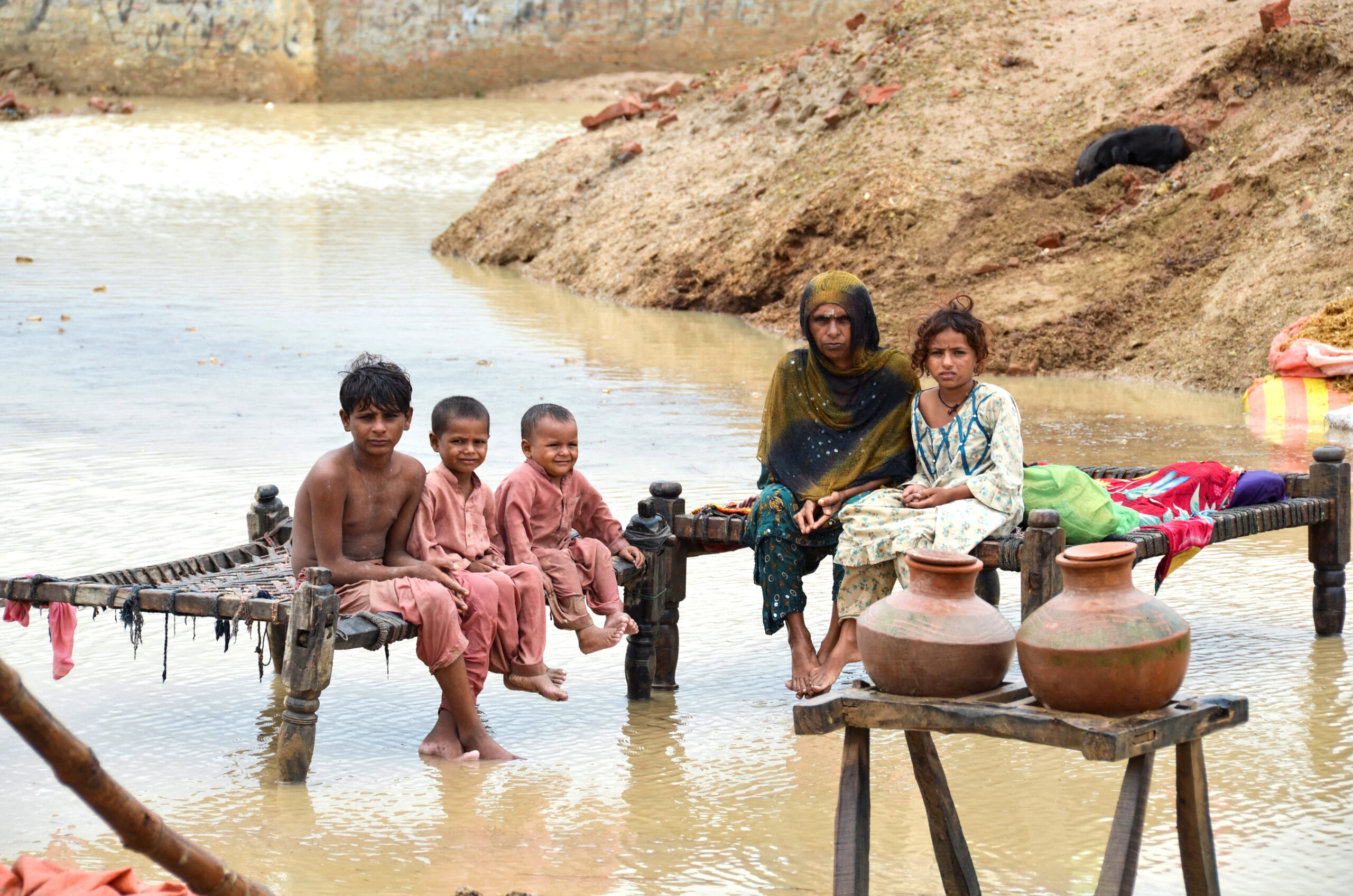
Before the recent destruction, the 2022 floods in Pakistan were the most devastating in living memory. This was reflected in these grim numbers from the World Bank. GDP hit of around 2.2%, 8 million people displaced, around 9 million pushed below the poverty line, 33 million affectees, 1730 dead, direct loss of $14.9B and economic loss of $15.2B. Scary to say the least! Add to this the upheaval in the economy with regards to inflation and cost of living and no wonder Pakistan has had to reach out to the international community for support. I am sure that just like last time, where donor conferences were rumoured to have resulted around $10B in aid for Pakistan, it may be the same presently. The question is, what next?
The adage ‘there is no free lunch’ comes to mind and the problem is exacerbated when it comes to donor pledges towards other nations.
The recipient government can go hoarse from shouting “show me the money” but there are four significant reasons why the money may not be forthcoming. One – a high percentage of pledges just fail to materialise. In 2013, a donor conference for the plight of Syrian refugees resulted in $1.5B in promises. Though in the aftermath of the escalation of humanitarian tragedy in the country only 30% was fulfilled when needed the most! Similarly, the 2014 donor conference on Gaza failed to convert a big majority of pledges into actual donation. Two – even if pledges translate into monetary support, it takes a long time to materialise and help the intended recipients. It was estimated that money for Gaza refugees – even if it had materialised – would have taken the better part of a decade to get to the people it planned to help! Three – different types of pledges can mean that most of it may not be charity after all! In case of the 2022 donor conference for Pakistani floods rehabilitation, none other than Ishaq Dar suggested that almost 90% of pledges are project loans. This is almost $8.7B, a substantial sum! The terms of these loans can make them even more unappetising though the government has claimed otherwise, with the Prime Minister saying that “we expect the terms to be lenient”. Four – donors having trust issues with the recipient nation’s track record of accounting for support funds. This is a real kicker! It is a foregone conclusion that the sordid tales of corruption and embezzlement in the country doesn’t generate much faith in the distribution mechanism. This forced the Finance Minister to say at the time, “The faster we can design and create feasibilities and impress them [the donors], the faster these pledges will materialise”. One wonders how the donors can be impressed if they have also seen the news about the mishandling of the economy to the point of imminent default!
It is not only recipient governments but the end victims who also scream, “show me the money”! In 2005, international donors provided $3.5B to reconstruct vast areas of Azad Kashmir and Khyber Pakhtunkhwa (KPK) after a severe earthquake killed 80,000 people and left 4 million homeless. Even five to ten years later, earthquake reconstruction directors were complaining that budgets were cut and money diverted to other government projects. They were told,
“when we have the money, we will pay you. All the money was given by Western governments but we have so many other problems”.
The net result being that not much of the available amount was seen by the victims in any form! In the words of one, “they told us they could build three new Balakots but we’re still waiting for one”. As a result of the devastating earthquakes in Haiti in 2010, the Red Cross collected around $500M in donations. Five years later and the Haitians were still waiting for that money to trickle down to them! The Red Cross said that it split the money for emergency relief, providing shelter, water & sanitation efforts, and infrastructure work. Though they presented a breakdown in the form of a pie chart, they wouldn’t go any further. The charity’s own documents, however, provided more clarification: much of the money never reached the people in need! This was because the Red Cross, after taking its administrative cut, gave much of the money to other third-party groups to do work on the ground, resulting in additional charges and fees! Consequently, robbing the end recipients of their rightful share. Under the guise of Research in Public Policy, the Centre for Market and Public Organisation in University of Bristol conducted a study titled pledges and publicity: an experiment in civic behaviour.
Its results suggest that a combination of a pledge campaign with transparent publicity for donors and donations
Meaningfully increased donations. The policy implications for the Government of Pakistan are plentiful. First, carry out consistent updates and listings of donors and donations post the donor conference. Second, enumerate parties being tasked with specific work in particular affected areas. Third, use technology and social media for continuous updates on projects and workstreams. Fourth, appreciate donors and enterprises who make the humanitarian effort a success. It seems a tall order especially considering the track record of all previous governments! However, there is always a start to be made and there is no reason the current dispensation can do so now, or else the clamour to “show me the money” will keep on ringing for more time to come! This bears repeating, especially in light of the recent flood-induced-destruction seen in 2025.