

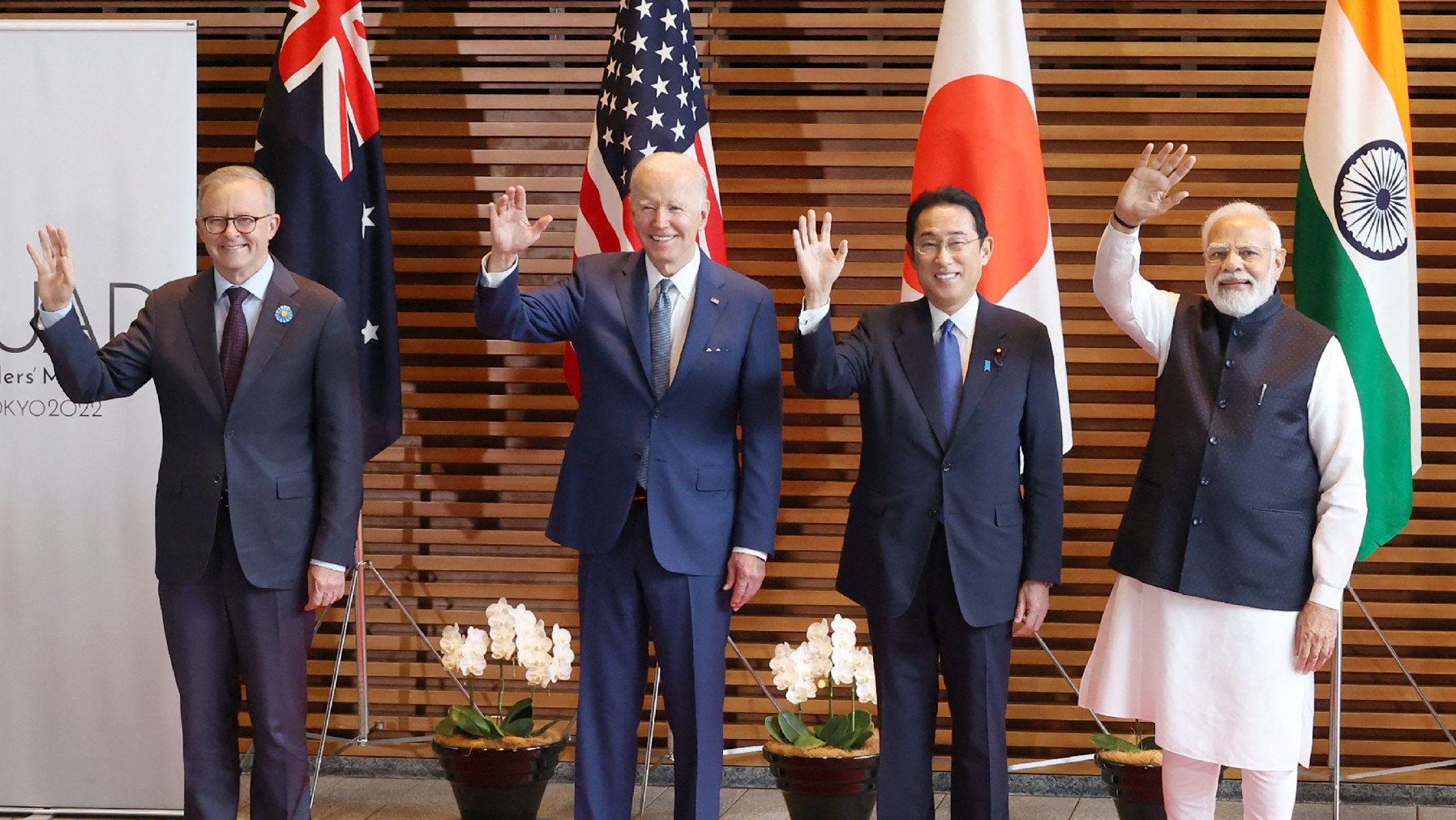
With the changing geopolitical fault lines and strategic realignments in an epoch characterized by geopolitical competition, the Indo-Pacific region as a contested arena of world power has been in the picture. At the core of such a shift is the Quadrilateral Security Dialogue (also known as QUAD) with the United States, India, Japan, and Australia. Having been initially designed as a loosely-knit consultative platform, QUAD has overtime become a vehicle of strategic coordination with some doubts on whether QUAD would possibly evolve into a formal military alliance. Although its mandate has focused only on diplomacy, maritime security, and technological cooperation, the increasing pattern of joint military drills, sharing of intelligence, and defense discussions among its members is an indication that it will see an evolution of broader convergence of strategic interests. In case of other members not part of QUAD, such as Pakistan which has a strained relationship with India, the militarization of QUAD spells trouble. The world is awaiting the emergence of a new Asian security architecture which will likely pose challenges to Pakistan’s strategic balancing, foreign policy flexibility, and regional status. This paper elaborates on the implications that such a shift in QUAD may have on Pakistan’s security calculus, diplomatic posturing and the regional order.
South Asian geopolitics will become more volatile with increased Indian strength and strategic role in the region. Pakistan’s maritime options will be limited due to India’s advanced naval capabilities and militarization of the Indian Ocean region. Indian procurement and indigenous production of military equipment will heighten the security dilemma and crystallize the arms race in the region.
Pakistan will also increase its arms production, putting a strain on its economy and increasing reliance on China. Regional militarization will affect Pakistan’s national security and a reassessment of military and strategic alliances will be mandatory to cope with growing Indian influence. Indian strength will increase with the growing Indo-U.S. military and strategic partnership. This cooperation will help India develop a blue-water navy with sophisticated technology and surveillance capabilities. This can increase the chances of military assertiveness and naval blockades disrupting the maritime traffic and trade of Pakistan. Pakistan may face restrictions and sanctions. The U.S. has recently imposed sanctions on Pakistani entities contributing to Pakistan’s Ballistic Missile program. QUAD members can impose sanctions on Pakistan for acquiescing to the whims of India and the U.S. Pakistan may not be allowed to access the markets of QUAD members and their allies. This will increase economic pressure on Pakistan.
Pakistan will face diplomatic isolation on issues such as Kashmir and maritime problems, including Sir Creek. This marginalization will weaken Pakistan’s claims, and eventually, decisions favorable to India will be made by its allies. As a weaker state, Pakistan will have to agree. Increased surveillance can monitor Pakistan’s naval maneuvers, maritime trade routes and other activities. This will also disrupt maritime channels and create disparities in naval power, thus limiting the operational scope of the Pakistan Navy. The maritime routes of the China-Pakistan Economic Corridor (CPEC) will also be disrupted. Following the Quad dialogue, China referred to it as Asian NATO, signaling the potential ramifications for Asia. Quad members have tensions with China that put Pakistan in a precarious position due to the China Pakistan Economic Corridor (CPEC). Indian presence and Quad patrols in the Indian Ocean Region (IOR) and Arabian Sea can impact the interests of China and Pakistan associated with the project. With QUAD presence extending into IOR, Pakistan will face strategic encirclement around Gwadar which is a significant strategic point for CPEC.
Internal security challenges may increase, India is already sowing insurgencies in Pakistan. If QUAD supports India, it can exacerbate militancy and insurgencies with the help of major regional players. QUAD cyber and naval collaboration could target Chinese workers and projects in Pakistan that can affect Pakistan’s security indirectly. Enhanced status of the Indian military and navy can amplify the deterrence posture of India vis-à-vis Pakistan. India will have access to advanced intelligence sharing networks, military, and nuclear technologies. Nuclear dynamics in South Asia will change, and Pakistan may increase its acquisition of tactical nuclear weapons. Military buildup will also increase on both sides, signaling a grave strategic and conventional imbalance in the South Asian region.
Pakistan-U.S. relations will deteriorate, pushing Pakistan into China’s orbit. As a member of the Sino-Russian bloc, Pakistan could face limitations in all spheres of affairs. This will limit foreign policy options for Pakistan. Diplomatic isolation in the regional groups of the Indo-Pacific will be evident when states would feel reluctant to collaborate and engage in defense and strategic cooperation with Pakistan.
With the QUAD creeping closer towards a tight-knit strategic alliance, there is a further overlap between dialogue and deterrence. Although it is not yet a military alliance on paper, its course will lead to greater coordination of defense policies that can transform the security space in the Indo-Pacific region. In the future, Pakistan must shift positions to improve its regional situation. It is a huge set of strategic changes; the QUAD with a militarized approach will cement India in dominating the region, increasing the intensity of great power competition, and restricting Pakistani operational freedom in foreign and security policy.
To traverse through this new order, Pakistan needs to keep a subtle tactic: enhancing its good foreign relations and policies, investing in regional relations, and walking the thin line between having strategic relations and overall stability in the region. The prospects of the next South Asian security edifice can possibly be the way Pakistan will be able to predict and adjust to the spill-over effect of QUAD’s militarization. It is time to prepare, and prepare before strategic realities are ossified beyond recalibration.