


An analytical exploration of strategic defense, deterrence theory, and regional stability in South Asia’s enduring conflict.
Introduction
When two nuclear-armed neighbors come to the brink of war, the world watches with bated breath.
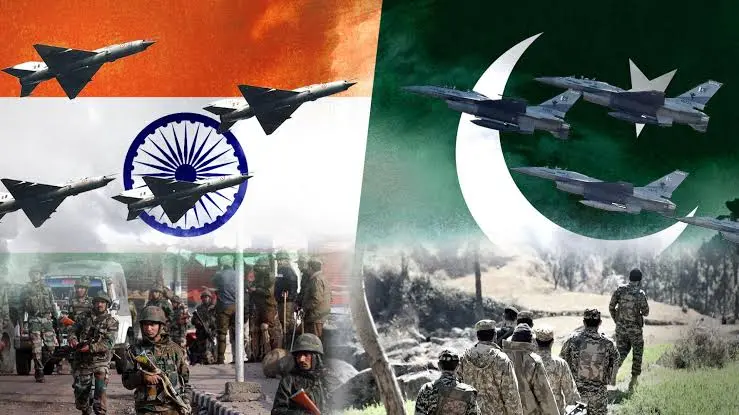
The 2025 confrontation between Pakistan and India was no exception ignited by the tragic killing of 26 tourists in Pahalgam, Kashmir, it quickly spiraled into a fierce exchange of missiles, air battles, and artillery fire. India’s late-night strikes, which struck deep into Pakistan’s territory, including civilian areas, escalated tensions to a dangerous peak. Yet, Pakistan’s response was marked by measured restraint and strategic precision through Operation Bunyan-um-Marsoos, delivering a strong yet calculated blow without crossing the line into all-out war.
This standoff revealed much more than military might. It exposed the fragile balance of deterrence that keeps South Asia’s peace intact, the high stakes of diplomatic maneuvering, and the power of restraint amid provocation. While India sought to assert dominance through aggressive posturing and global isolation tactics, Pakistan’s measured retaliation upheld credible defense without igniting nuclear conflict. The eventual ceasefire, brokered by the United States and announced by President Donald Trump, paused the violence but left deeper disputes unresolved. This article explores the unfolding events, the strategic military response, and the wider international implications showcasing Pakistan’s disciplined stance grounded in deterrence theory and its pursuit of regional stability.
Chronology Of The Escalation And Military Engagements
The Indo-Pak escalation unfolded swiftly over three weeks, sparked by the April 22 attack at the Pahalgam resort in Indian-occupied Kashmir, which killed 26 civilians. India accused Pakistan of involvement, a claim Islamabad denied, calling for an independent investigation
India responded by suspending the Indus Waters Treaty, closing the Attari border, revoking Pakistani visas, and expelling Pakistani defense personnel. Reports of harassment against Kashmiris and Pakistanis in India increased.
Pakistan countered by suspending trade, closing airspace and the Wagah border, and expelling Indian military advisers. Diplomatic ties sharply deteriorated.
India launched its first major military strike on May 6–7 under Operation Sindoor, targeting multiple Pakistani sites including mosques in Bahawalpur, Muzaffarabad, Kotli, Muridke, and areas in Sialkot and Shakargarh, plus the Neelum-Jhelum Hydropower Project. These attacks caused eight civilian deaths, 35 injuries, and one missing person, as confirmed by Pakistan’s military. Moreover, Indian strikes and drone surveillance continued on Pakistani airbases days after.
It sparked tensions on both sides, yet the world initially remained silent, treating it as an internal matter between the two states. Pakistan warned India continuously to cease its provocations but when those warnings went unheeded, Pakistan responded decisively to defend its sovereignty.
Pakistan’s measured retaliation began May 10 with Operatio Bunyan-um-Marsoos, employing precision-guided missiles like Abdali and air strikes on 26 key Indian military targets, including airbases, BrahMos missile storage, power grids, and intelligence centers. Pakistan downed five Indian jets, including three Rafales, and neutralized around 77 Indian drones over major cities in Pakistan.
Throughout, Pakistan emphasized strategic restraint and precision, minimizing collateral damage. DG ISPR confirmed that11 Pakistani soldiers and 40 civilians were martyred, with about 199 injured across Azad Kashmir, Punjab, and northern Pakistan. Civilian casualties drew nationwide condemnation. Army Chief General Asim Munir warned against further Indian aggression, reaffirming Pakistan’s readiness to respond decisively while maintaining restraint. After intense fighting, hostilities ceased following diplomatic interventions, culminating in a May 11 ceasefire brokered by US President Donald Trump.
While the ceasefire halted active conflict, direct diplomatic talks between the two sides remained limited, with tensions and mistrust persisting beneath the surface. On May 20, 2025, the Directors General of Military Operations (DGMOs) of India and Pakistan held a crucial hotline conversation, resulting in an agreement to return forces to their peacetime positions. This development marks a significant step towards de-escalation and stability in the region.
Contrasting Responses To The Ceasefire
The ceasefire brokered through US mediation was seen as a signif icant diplomatic success and a validation of Pakistan’s response; this was welcomed by. Pakistani leadership as a crucial step towards de-escalation and reiterated their commitment to peace, while firmly maintaining that the core issue of Kashmir remained unresolved.
Officials, including the DG ISPR and Prime Minister Shehbaz Sharif, emphasized that Pakistan had not requested the ceasefire, signaling confidence and strength rather than concession. The public largely viewed the ceasefire as a relief, appreciating the restraint shown by their armed forces amid provocations.
In stark contrast, the Indian government and its media expressed dissatisfaction and frustration with Trump’s announcement. Many in India expected unequivocal US support following their military actions, but Trump’s balanced remarks mentioning Pakistan equally alongside India undermined New Delhi’s narrative of sol victimhood. The Indian media criticized the US for not siding decisively with India, perceiving the ceasefire as a diplomatic setback and questioning the credibility of their military gains.
This reaction reflected broader domestic pressures on the Modi administration to demonstrate strength, and a sense that the international community was reluctant to fully endorse India’s aggressive posture. This divergence in responses highlights the complex interplay between domestic politics, international diplomacy, and public opinion in shaping the narrative around the conflict’s resolution from each country’s vantage point.
Pakistan’s Military And Information Warfare Strategy
Military Strategy and Deterrence
The 2025 escalation showcased Pakistan’s evolution into a sophisticated multi-domain military actor, adept at integrating conventional operations with electronic and cyber warfare fundamentally guided by the principles of deterrence theory.
Central to Pakistan’s defensive success was a coordinated multi-drone operation that detected and neutralized approximately 77 Indian drones over key urban centers including Lahore, Attock, Gujranwala, Chakwal, Rawalpindi, Bahawalpur, and Karachi. This layered drone defense employed both soft-kill electronic jamming and hard-kill interception methods, effectively denying Indian aerial reconnaissance and strike capabilities, thereby reinforcing Pakistan’s credible deterrence posture.
Cyber operations played a pivotal role alongside kinetic actions. Pakistan’s cyber units launched targeted disruptions against Indian military communication and command networks, significantly degrading India’s real-time operational coordination and satellite link integrity. Coupled with electronic warfare such as radar jamming and signal spoofing these efforts fractured Indian command and control mechanisms, forcing tactical withdrawals of key air assets.
This calibrated employment of multi-domain capabilities embodied the deterrence theory concept of “calculated restraint,” balancing credible retaliatory capacity with strategic prudence to avoid escalation into uncontrollable conflict.
Regionally, Pakistan’s strategic resilience was buttressed by diplomatic and intelligence support from key allies, notably China, Turkiye, Bangladesh and Azerbaijan. China’s pro vision of Intelligence, Surveillance, and Reconnaissance (ISR) assistance and advanced radar coverage played a crucial role in augmenting Pakistan’s defensive capabilities, while Turkiye’s vocal political support helped offset India’s diplomatic isolation attempts. These alliances highlighted a shifting geopolitical alignment that enhanced Pakistan’s deterrence and operational effectiveness.
Information And Narrative Warfare
Parallel to these military measures, Pakistan executed a robust informa tion and narrative warfare. DG ISPR strategically utilized timely press briefings, social media platforms, and digital content to shape domestic and international public perceptions.
Messaging underscored Pakistan’s restraint and precision, exposed Indian operational failures, and framed Pakistan as a disciplined and responsible nuclear power.
This narrative was amplified through coordinated media releases, viral social media campaigns, and disinformation countermeasures designed to neutralize Indian propaganda and strengthen Pakistan’s psychological deterrence. A vital component of this effort was the active participation of Pakistan’s youth, whose engagement on digital platforms helped disseminate accurate information, counter false narratives, and galvanize national solidarity.
The unity and resolve shown by the people of Pakistan reflected a collective commitment to resilience and peace amid crisis.
The government and military effectively leveraged digital platforms unbanning of Twitter to sustain national morale and unity, highlighting the power of a connected and aware nation standing together.
Strategic Reflections
The 2025 Pak-India military escalation starkly underscored the precarious nature of South Asia’s nuclear flashpoint, revealing the profound risks inherent in unchecked aggression between nuclear-armed neighbors. Pakistan’s disciplined application of strategic restraint and credible deterrence not only avert ed a broader conflict but decisively challenged India’s hegemonic ambitions. Through precise, multi-domain operations and calibrated retaliation, Pakistan dismantled the myth of Indian conventional superiority and reaffirmed its status as a responsible nuclear power committed to regional peace and stability.
The crisis also exposed India’s diplomatic vulnerabilities. Regional allies such as China, Turkiye, Bangladesh and Azerbaijan openly supported Pakistan’s stance and US remained neutral, reinforcing Pakistan’s growing geopolitical partnerships.
Conversely, India’s attempts to boycott or isolate these nations deepened its diplomatic isolation, highlighting the limits of its aggressive foreign policy.
Domestically, Pakistan’s media and government projected a narrative of responsibility, restraint, and resilience countering the falsehoods and incendiary rhetoric prevalent in Indian media, which often fueled hatred and misinformation.
Pakistan’s strategic communication efforts maintained international credibility while bolstering national unity and public confidence.
This confrontation reaffirmed that sustainable stability in South Asia depends on credible deterrence and sustained dialogue not unilateral aggression. Pakistan’s measured approach offers a blueprint for responsible statecraft, balancing military readiness with diplomatic engagement. Yet, the unresolved Kashmir dispute remains the fundamental obstacle to lasting peace, demanding renewed international focus and cooperative efforts to break the cycle of conflicts and foster durable regional equilibrium.