


The Democratic People’s Republic of North Korea (DPRK), also known as North Korea has been posing a constant threat to global non-proliferation efforts, specifically regarding its non-compliance with the Nuclear Non-Proliferation Treaty (NPT). The article investigates the intricate dynamics encompassing DPRK’s non-compliance and the NPT, focusing on numerous factors that have restricted the achievement of nuclear disarmament in the Korean Peninsula, the role of sanctions, and the necessity of cooperative efforts to address this issue.
After the defeat of Japan in World War 2, Korea was divided between the U.S. and the USSR, South Korea was held by the U.S., and North Korea was controlled by the USSR. Both disagreed over the shared governance of Korea, leading to separate administrations in both North Korea and South Korea in 1948. Kim II Sung gained the leadership of the North Korean Provisional People’s Committee in February 1948.

North Korea’s quest for nuclear weapons began in the early 1950s with the establishment of an Atomic Energy Research Institute in 1952, further boosted in 1956 with the signing of a Nuclear Research Agreement with the USSR. To further expand the cooperation, North Korea and the Soviet Union signed a peaceful Nuclear Energy Pact, containing the construction of research facility at Yongbyon; this led to the construction of the Soviet IRT-2000 reactor in 1956. Soviet technical assistance played the role of a foundation stone in the North Korean nuclear program. North Korean scientists continued to privately upgrade the IRT-2000 research reactor and secret plutonium reprocessing. In 1980, they introduced uranium milling facilities, along with a fuel rod fabrication complex and expanded the capacity of nuclear weapons. North Korea joined the NPT as a non-nuclear state in 1985, imposing legal obligations and allowing IAEA safeguards. NPT entered into force in 1970 and aims to curtail the proliferation of nuclear material around the globe, the elimination of nukes, and the responsible use of nuclear technology. Article I of the NPT restricts the transfer of nuclear weapons and acquisition of such weapons by non-nuclear states. Article 2, prohibits non-nuclear weapon states from the development of nuclear weapons, and Article 3 facilitates the inspections of International Atomic Energy Agency (IAEA) safeguards.
The IAEA inspections are intended to confine the non-proliferation obligations signed by non-nuclear weapon states. IAEA aims to ensure the safe, secure, and peaceful use of nuclear technology. NPT, which is considered a cornerstone of international disarmament efforts has encountered several difficulties, especially in the case of DPRK. Despite joining NPT, North Korea, continued nuclear technology advancements. In the 1990s, President Bush removed U.S. nuclear weapons from South Korea and set the groundwork for the 1992 Declaration of Denuclearization of the Korean Peninsula. However, due to the lack of inspection access, the pact failed to contain North Korea’s covert nuclear weapons development.
In 1994, the U.S. imposed sanctions on North Korea for not giving access to IAEA for inspection, as a result of the sanction, North Korea gave the withdrawal notification to NPT. As tensions spiked U.S. President Jimmy Carter proposed the US-DPRK Framework in 1994. The goal of the agreement was the removal of sanctions and to in return grant light water reactors to South Korea. KEDO was developed by the agreement to restrict DPRK nuclear weapons development.
In 2000, North Korea started to violate the 1994 agreed framework and covertly constructed a uranium enrichment plant at Kang-Son. Its clandestine weapon manufacturing facility came to light, exposing its non-compliance with NPT. In 2002, DPRK confirmed its ability of nuclear enrichment. In response, the U.S. restricted oil supply and put pressure on North Korea to cease enrichment. In retaliation, North Korea drove out IAEA inspections, restarted nuclear power plant operations, threatened missile launchers, and withdrew from NPT in 2003, saying that “it could no longer be bound by the NPT”.
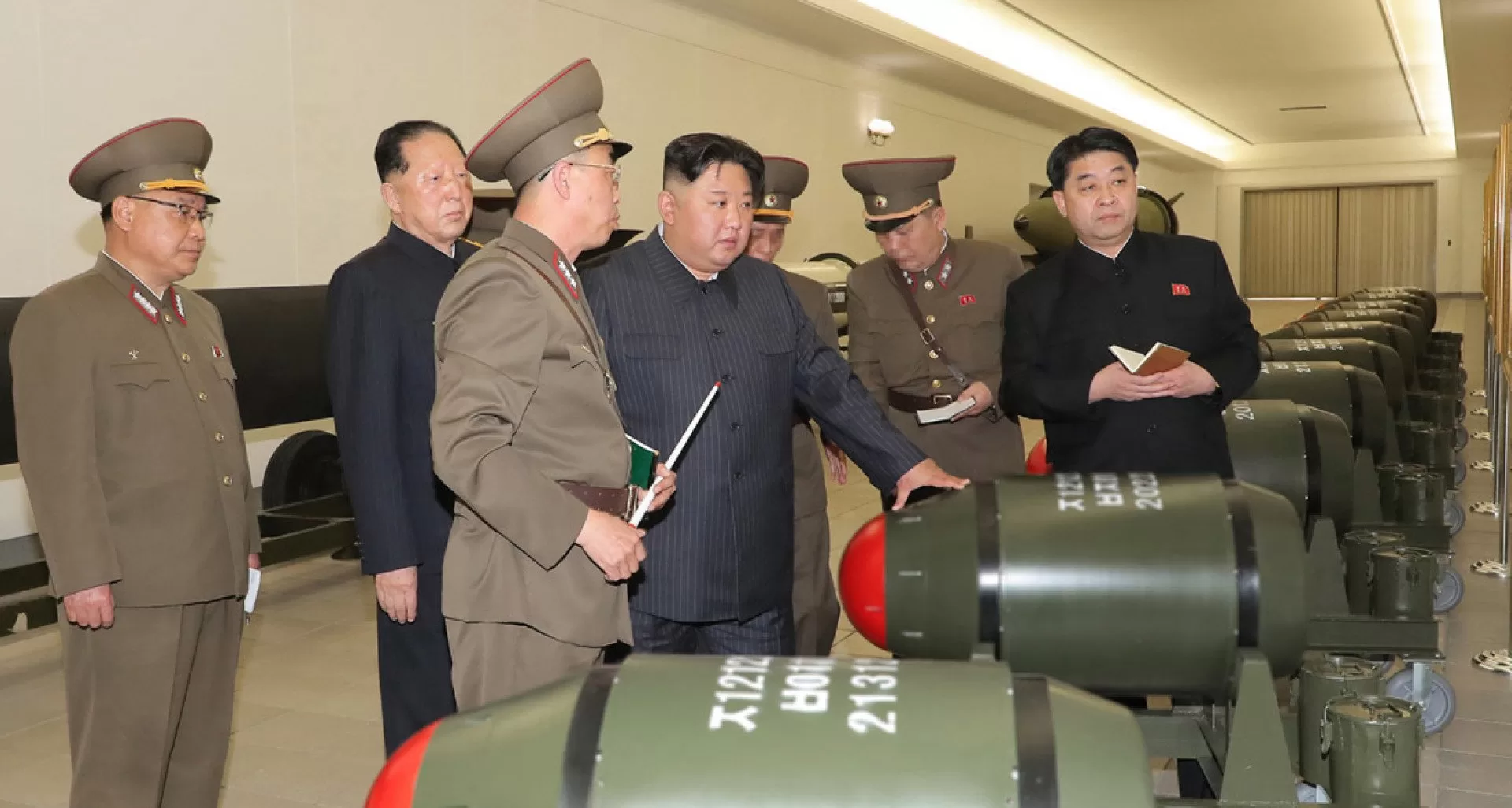
In 2006, North Korea conducted a nuclear test in Hangyong province, which caused widespread international condemnation. To counter DPRK, the UN Security Council imposed sanctions on North Korea in a bid to isolate the country and oblige its leadership to stop nuclear weapons development and testing. The world remains extremely anxious about the DPRK nuclear weapons and ballistic missile programs as it continued with six nuclear tests in 2006, 2009, 2013, 2016, and 2017 which is a significant threat to regional stability. The effectiveness of NPT to curtail nuclear proliferation came into question after North Korea’s nuclear test. Article X, a withdrawal clause of NPT, underscore its efficacy by permitting member nations to withdraw from NPT by defining “extraordinary events” as a threat to their national security. North Korea exploited this clause by accusing the U.S. of using a hostile policy against the DPRK. Its withdrawal illustrates that non-nuclear states can either join or withdraw from the NPT.

Dealing with a rouge state that has nuclear weapons, and effectively uses diplomatic tactics is extremely difficult. This is manifest by the Bush administration’s attempt to put pressure on North Korea using a combination of sanctions and incentives. Moreover, the ongoing nuclear weapons development of North Korea, poses a significant threat to regional and global security.
But the main worry is the spread of nuclear technology to state and non-state actors, including terrorist groups.Additionally, DPRK’s nuclear aspirations could initiate an arm race, successfully hindering decades of efforts of arms control. In the midst of these concerns, the international community has imposed sanctions to limit DPRK’s access to resources and technology required for nuclear and missile development. Despite these sanctions, DPRK is continuing the development and testing of nuclear weapons. To sum up DPRK’s withdrawal from NPT and progress in nuclear weapons development exhibit a violation of its international adherence to nuclear non-proliferation. Being a signatory of NPT, it had provided a guarantee to use nuclear technology only for peaceful purposes.
Since 2003, it has firmly followed the nuclear weapon program, carrying many offensive tests. This non-compliance also reduces the effectiveness of NPT which intends to anticipate the spread of nuclear weapons. Regardless of international criticism and international sanctions, the DPRK is still enlarging its nuclear weapons and in order to sort this out, effective diplomacy, removal of sanctions, and concessions from all members of the NPT are required so as to encourage DPRK to come back into compliance; this could be done by bringing the DPRK back into the NPT.
But if the non-compliance remains unchecked, as it has done so far, it could further weaken the working of the NPT and ignite a dangerous regional nuclear arms race. Moreover, an “additional clause” could be augmented in the NPT to “take action against those states that were once members of the NPT as a non-nuclear weapon states but are now non-NPT nuclear weapon states”.