




Angels
In the hadith of Gabriel, the Prophet said that people should have faith in God’s angels. Just as faith in God is meaningless without a concept of God, so also faith in angels has no sense unless we know what angels are. Ideas about angels that are current in our society, like common ideas of God, will not help us much in understanding the Islamic concept. Better to discard from the outset all those winged little boys shooting arrows or Grecian maidens playing harps.[1] The Arabic word for angel, malak—like its Hebrew cousin mal’ak—means the same as the Greek angelos; that is, “messenger.” The Koran employs the term, usually in the plural, about ninety times.
In addition, the Koran mentions several angels by name—including Gabriel, Michael, Harut, and Marut—and refers to quite a variety of angels by words that seem to designate their functions. Thus, we have reciters, glorifiers, scarers, dividers, casters, pluckers, severers, ascenders, writers, watchers, envoys, outstrippers, and so on. The Koran usually mentions these angels only in passing. For explanation, one has to refer to the Koran commentaries. In any case, it is important to know at the outset that the Koran has a great deal to say about angels.
Nowadays in our own culture, few people take angels seriously, even if popular books on the subject are increasingly common. Many Christian theologians think that angels are a remnant of a superstitious age or, at best, some sort of symbol no longer needed. But angels are an ever-present reality in the traditional Islamic mind, and the more that Muslims learn about their religion through faith and practice, the more seriously they take them. One cannot even perform the salat without acknowledging the existence of angels. After finishing the ritual prayer, the person turns to the right and says, “Peace be upon you,” even if he or she is praying alone. The reason is that it is necessary to greet the angels who, according to the Prophet, pray along with everyone who performs the prayer.

Angels are found everywhere. There are angels with God who carry his Throne and others who circle around it praising and glorifying him. Angels witnessed the creation of the human being, and an angel entrusts the human soul to the embryo in the womb. The first thing people see when they die is angels, chief among them Azrael, the angel of death.
God’s Unseen Messengers
What do angels do? Basically, they bring messages. More broadly, they carry out God’s commands. It is important that we give the word ‘message’ implicit in the name malak a wide meaning, just as we have to give Islam and other important terms wide meanings. There are many different kinds of messages, some of which we would not normally think of as messages. For example, few messages brought by the angels involve the actual handing over of an oral or written text. Only prophets receive scriptures and tablets.
The scriptures that are given to prophets are brought by one specific angel to whom God has entrusted prophecy: Gabriel. Again, we should not take ourselves too literally when we say that it is Gabriel’s function to deliver scriptures. We need to understand scripture in a broad sense. Scripture is the speech or word of God revealed to human beings with the goal of guiding them to happiness. Hence, a scripture does not have to be a book in the usual meaning of the term; the words of God, whatever form they take, can be called scripture. Since God’s message does not necessarily take the form of a book, it may take the form of a human being. This is one way we can understand the Koranic verses that describe Gabriel’s relationship with Jesus. The Koran refers to Jesus, alone among all the prophets and messengers, as God’s “word,” so he is comparable to a scripture. And one of the terms that the Koran employs to refer to certain angels is casters, because they “cast” or toss God’s messages to human beings. Hence it seems natural that Gabriel, the angel who brought the Koran to Muhammad, should be the angel who acted as the intermediary for God’s casting his word into Mary. It was he who announced to Mary that she would give birth to the Messiah.
We sent to her Our spirit [Gabriel], and he appeared to her in the image of a mortal without fault.
(19:17)
The Messiah, Jesus son of Mary, was only the messenger of God, and His word that He cast to Mary, and a spirit from Him. (4:171)
Most messages brought by the angels take the form of a concrete occurrence or event, not a scripture. We learned earlier that all creatures can be considered words of God. In that case, all creatures are messages sent by God. In other words, everything is a sign of God, which is to say that each thing teaches us about God. This teaching about God is not haphazard. The teacher is God himself, who creates the signs in order to reveal himself. Hence the term sign, which refers to natural phenomena, scriptures, and miracles, is nearly synonymous with message. If the angels deliver God’s messages, then the angels must have something to do with God’s signs. Behind every sign—every created thing—stands an angel. Some texts report that everything has an angel and that an angel descends with every drop of rain. How could it be otherwise, if the angels deliver God’s messages, and if all things are his messages?

In short, by pondering the signs in the light of tawhid, we come to the conclusion that angels play the important role of acting as intermediaries between the visible universe and God himself, the creator of that universe. But since the angels themselves are invisible, they pertain to the domain of the unseen. Hence they are heavenly creatures, suspended halfway between God and earth. Looking back on the Koran and the Hadith, Muslim authors have come up with various classifications of the kinds of angels that fill the cosmos. One account gives us fourteen major categories with no attempt to make connections (we could, for example, consider numbers 2 through 7 as archangels):
1. Those who carry the Throne of God (40:7)[2].
2. The Spirit, who is said to be the greatest of the angels.
3. Seraphiel, who will blow the Trumpet twice at the end of time. At the first blow, everyone in heaven and earth will faint away, and at the second blow, all will be brought forth to meet their Lord.
4. Gabriel, the angel of revelation.
5. Michael (2:98), who provides nourishments for bodies and souls.
6. Azrael, the angel of death.
7. The cherubim, who have no knowledge of created things and spend all their time contemplating God.
8. The angels of the seven heavens.
9. The guardian angels (82:11), two of whom are charged with each human being; one writes down good deeds, and the other writes down evil deeds
10. The attendant angels (13:11), who bring down blessings and go back to God with news of the creatures.
11. Nakir and Munkar, who question the dead in their graves.
12. The journeyers, who travel in the earth searching out assemblies where people remember God’s name.
13. Harut and Marut, two angels who came down to Babylon and taught its inhabitants sorcery (2:102).
14. The angels charged with each existent thing, maintaining order and warding off corruption. Their number is known only to God.[3]
Light
The Prophet tells us that God created angels out of light. Light is a name of God, and the Koran tells us that “God is the light of the heavens and the earth” (24:35)[4]. In order to understand what angels are, we have to understand what light is. It will not help us much to think about light in physical terms. Rather, we have to grasp the signs that are revealed to us when we observe light. Normally, we think of light as visible, but in fact, it is invisible. We can only see light when it is mixed with darkness. If there were only light and no darkness, we would be blinded by its intensity. Look at what happens when you gaze at the sun, which is 93 million miles away and is viewed through the earth’s atmosphere. If we moved outside the atmosphere, just a few miles closer to the sun, we could not possibly look at it for a moment without losing our eyesight. What we call visible light is pretty pale stuff, it can hardly compare with unfiltered sunlight, much less with the divine light, which illuminates the whole cosmos. Hence, it is said in Islam that God’s light is so bright that people have all been blinded by it.

God is unseen, angels are unseen, and light is unseen. Thus, it should not be surprising that God and angels are light. You might object and say that we see light shining everywhere, but we don’t see angels or God. Don’t we? Tawhid is telling us that the signs are nothing but God’s radiance, and the creatures are nothing but the outward marks of God’s creative power. “God is the light of the heavens and the earth” (24:35), and the heavens and the earth are the radiance or the reflection of that light.
Light is invisible, but without light we see nothing. Hence, light can be defined as an invisible something that makes other things visible. So also, God and the angels are invisible, but without them there would be no universe. Hence, God and the angels can be described as invisible somethings that make the universe visible. The opposite of light is darkness, and darkness is simply the absence of light. In other words, light is something, but darkness is nothing. We see things because a nothing has mixed with a something. We would not be able to see if there were only light, or if there were only darkness. Light and darkness must come together for vision to occur.
God is Light. The opposite of light is darkness, which is nothing. In other words, God has no real, existing opposite, since nothing is not really something.[5] If nothing is there, how can we talk about opposites? Of course, we say that nothing is the opposite of something, but this nothing does not exist except as a figure of speech or as an object of supposition for the purpose of discussion and explication.
Are creatures light or darkness? The answer, of course, is that they are neither, or that they are both. If they were light and nothing but light, they would be God, and if they were darkness and nothing but darkness, they would not exist. Hence they live in a never-never land that is neither light nor darkness.

In respect of tashbih, the creatures are light, but in respect of tanzih they are darkness. In other words, to the extent that things are similar to God, they are luminous, but to the extent that they are incomparable with God, they are dark. They must have some luminosity, or else they could not exist.
To dwell in darkness (relative darkness, that is, since absolute darkness does not exist) is to dwell in distance from God; it is to be dominated by the divine qualities of majesty and wrath, which keep things far from God. To dwell in light is to live in nearness to God; it is to be dominated by the qualities of beauty and mercy, which bring things close to God.
There is one light, and that light is God. There are many darknesses, since each creature represents darkness in relation to God. The deeper the darkness, the greater the distance from God. Absolute darkness does not exist, because it would be cut off from God in every respect. How can anything exist if it has no relationship whatsoever to the Real, which is the source of every quality?
Created things dwell in distance from God, in difference, in otherness. This is to say that they dwell in relative darkness. Relative darkness has many modes and forms, since there are an infinite number of ways in which things can be different from God. “Nothing is like Him,” but each thing is unlike him in its own unique way.
Dwelling in difference means perceiving God from the perspective of tanzih and hence to be dominated by the attributes of severity, majesty, and wrath. The goal of religion is to bring about a movement from tanzih to tashbih[6], from distance to nearness, from difference to sameness, from manyness to oneness, from wrath to mercy, from darkness to light.
The Koran frequently explains that God’s goal in creation is to bring about unity, and often it employs the terms light and darkness to make this point. The broad significance of such verses becomes clear as soon as one grasps the meaning of tawhid. Notice that in the following verses, light is one, since light is an attribute of God, but the darknesses are many, since darkness is an attribute that assumes many forms in keeping with the diversity of creation:

Are the blind and the seeing man equal, or are the darknesses and the light equal? (13:16, 35:20)
It is He who sends down upon His servant signs, clear explications, that He may bring you forth from the darknesses into the light. (57:9)
Why, is he who was dead, and We gave him life, and appointed for him a light to walk by among the people, as one who is in the darknesses, and comes not forth from them? (6:122)
It is He who performs the salat over you, and His angels, that He may bring you forth from the darknesses into the light. (33:43)
This last verse brings us back to the angels, who are created from light and are therefore able to assist God in giving light to the creatures who dwell in the visible world.
Angelic Luminosity
God is light. The opposite of God’s absolute light is absolute darkness, which cannot exist, since there is no reality outside of God to support its existence.
The angels are created of light. Hence they differ from God, who is an uncreated light. Angelic light can have an opposite, a created darkness. This darkness is not absolute darkness, because then it would not exist and hence would not be a created thing. The opposite of created, angelic light is a created, non-angelic darkness; that is, something dark in relation to the light of the angels.
The Koran refers both to created light and to created darkness in the verse, “Praise belongs to God, who created the heavens and the earth and who made the darknesses and the light” (6:1). Notice that the verse speaks of created light in the singular. This alludes to the fact that, in the last analysis, “There is no light but God.” All light is merely the radiance of God’s light, so all light is ultimately one. In contrast, darknesses are many, because they represent the infinite ways in which things can be distant and different from God.

Invisible, uncreated light (God) has no opposite. Created light is also invisible, but it has an opposite, which is anything visible—everything that can be seen with the eyes. You might say, sunlight can be seen with the eyes. Is that darkness? The answer is “Yes and no.” Yes in relation to angelic light, but no in relation to material things. Remember that talk of absolutes refers to God, who is absolute light. When we are discussing creation, everything is relative. Angels are luminous in relation to other creatures, but dark in relation to God. The moon is bright in relation to a star, but dark in relation to the sun.
Angelic light is not the same as physical light, but it shares many of its characteristics. Light is that which removes darkness, dispels shadows and obscurities, illuminates, irradiates, unveils, and reveals. Both angelic and physical light do all that. However, there are also important differences, relatively speaking. Physical light is lifeless, while angelic light is alive. Physical light illuminates, but angelic light also enlightens. To turn on a lamp is one thing, to be given knowledge through an angelic apparition—as the Prophet was given the Koran by Gabriel—is something else. For knowledge is light, and the Koran is “a clear light” (4:174)[7]. This is not knowledge as information, but knowledge as awareness. When the Buddha awoke to reality and reached enlightenment, he saw light, but it was not the lifeless and lusterless light of lamps, nor even of stars and suns.
Reading the account in Islamic terms, one can say that the Buddha saw Light itself, which is the source of all life, awareness, knowledge, and joy. We said that the opposite of created light is created darkness. If light and dark are relative terms, every created thing can be darkness or light, depending on the point of view. An angel is darkness in relation to God, while a stone is luminous in relation to nothingness.
Everything in the universe is both light and darkness, and this follows directly from tanzih and tashbih:[8] If we consider God, who is light, as infinitely distant and incomparable, then all things are darkness, but if we consider God as similar and near, then all things are light. There are many traditional expressions of this ambiguous status of everything in the universe. For example, the Prophet said, “This world is accursed—accursed is everything within it, save the remembrance of God.” Briefly, “remembrance” (dhikr) is everything that reminds people of God and every effort that they exert in order to bring God to mind.
This hadith tells us that everything other than God, everything that people experience in life, has, in itself, no positive value, because it is darkness. To the extent that things are darkness, people should pay no attention to them. However, all things are also light, that is, they are luminous inasmuch as people recognize them as signs of God and make use of their “significance” to establish tawhid. This hadith explains the personal, existential significance of such Koranic verses as:
He clarifies His signs for the people so that perhaps they may remember. (2:221)
This is the path of your Lord, straight—We have differentiated the signs for a people who remember. (6:126)
If people do not recognize the signs as the radiance of God’s light, they have lost contact with reality. For them this world is a dark and accursed place, because it gives no news of God, which is to say that it has been cut off from the Real. If the world does not help people establish tawhid[9], it can only keep them in shirk.
Let us go back to the angels. The Koran makes many statements about them that provide hints as to their nature, but people have to meditate on the Koranic signs before the meaning of these hints starts to become apparent. Take this verse as an example:
Praise belongs to God, Originator of the heavens and the earth, who appointed the angels to be messengers, having wings two, three, and four. God increases creation as He wills. (35:1)
Angels, we learn, have wings. In Islamic art, as in Christian art, they are typically depicted as having two wings. It would not be too difficult to paint them with four wings, since we have the example of butterflies and other insects. But how would you paint an angel with three wings? Already we learn that angels are not quite like the winged creatures that we know from everyday life.
Why do angels need wings in the first place? Obviously, to fly. If they act as messengers, and if God is depicted as dwelling some great distance away so that he has to send messages, they need wings to come and go. The fact that they have wings tells us that they move much faster than we do, because we only have feet.

This verse has other meanings as well. A bird or an insect needs wings to fly up, because it has weight. Without wings it would not be able to leave the ground. If it wants to come down, it stops beating its wings and glides back to earth. But angels are luminous and dwell in heaven or God’s proximity. By nature they are close to God. They need wings not to fly up, like birds, but to fly down. Then, having delivered their messages, they glide back up to their natural home. We can make the same point in the language of Islamic philosophy by saying that the “wings” refer to the faculties or powers of the angels, the means whereby they perform their appointed functions.
There are many kinds of angels—some who perform simple functions, and others who perform more complex functions. They need at least two wings, corresponding to their knowledge and their activity. But their activity may be subdivided into many different types. Notice that the just-quoted verse says, “God increases creation as He wills.”[10] Some commentators say that this means God adds wings to his angels in keeping with their functions. They cite as evidence a hadith in which the Prophet said that he saw Gabriel with seven hundred wings. That sounds like a reasonable number of functions for one of God’s most important angels.
To be continued ……
Book Reference:
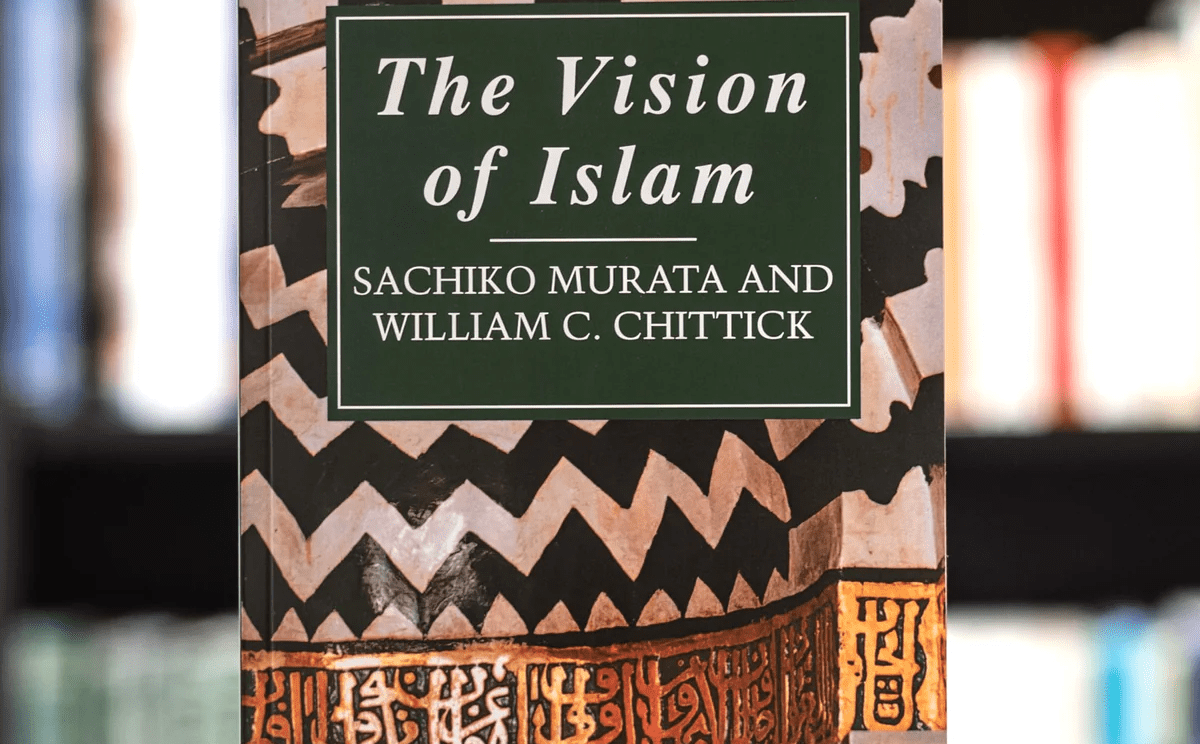
Vision of Islam [11]
https://docs.google.com/document/d/1CqNxiT0Ov0kPF-OxWWkguaRGM09zbsmXgc-aXtNmm3U/pub
[1] “The Vision of Islam” authored by Dr. Sachiko Murata and Dr. William C. Chittick delves into the multifaceted aspects of Islam,
including practice, faith, spirituality (Ihsan), and the Islamic perspective on history, drawing from the teachings of the Hadith of Gabriel.
[2] https://www.islamawakened.com/quran/40/7/default.htm
[3] For more details on these angels, see Murata, “Angels,” in S.H. Nasr, ed., Islamic Spirituality: Foundations (New York: Crossroad, 1987), pp. 324-44.
[4] https://www.islamawakened.com/quran/24/35/default.htm
[5] Note: The concept “God is Light” suggests that God symbolizes truth, goodness, and existence, while darkness, or “nothingness,” is simply the absence of light and has no independent
reality.
[6] https://staging.defencejournal.com/2024/08/10/the-vision-of-islam-7
[7] https://www.islamawakened.com/quran/4/174/default.htm
[8] https://staging.defencejournal.com/2024/08/10/the-vision-of-islam-7
[9] https://staging.defencejournal.com/2024/02/10/the-vision-of-islam
[10] Quran 35:1 : https://www.islamawakened.com/quran/35/1/default.htm اردو ترجمہ مکمل کتاب :Islam of Vision]
[11] https://traditionalhikma.com/wp-content/uploads/2015/02/Vision-of-Islam-by-Sachiko-Murata-and-William-C.Chittick.pdf