
One of the most acclaimed poets of Urdu, Mirza Assadullah Ghalib was apt when he said: CHIPAK RAHA HEI BADAN PAR LAHOO SE PAIRAHAN; AB HAMARI JAIB KO HAJAT-E-RAFOO KYA HAI (the flap of my pocket is torn and sticking to the bloody body; thus what is the need for recrafting it…).
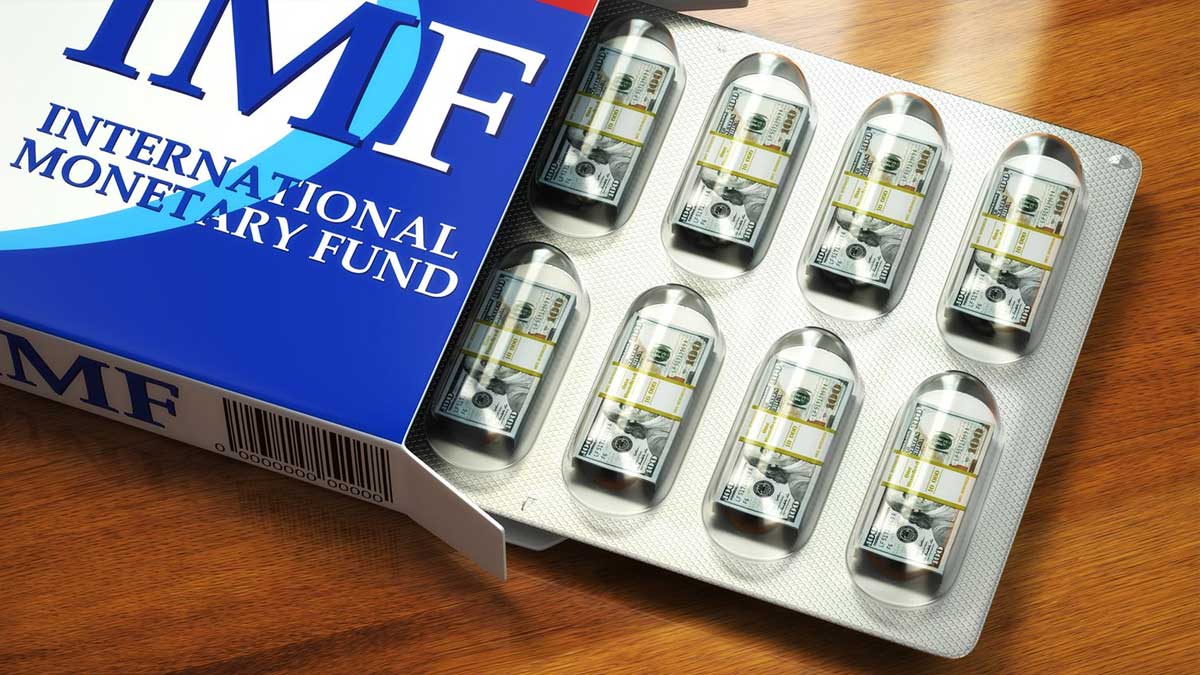
Though the legend had pronounced it on his own fate of destituteness those days under the royalty of the last Mughal Emperor Bahadur Shah Zafar, the feel of his words sounds too appealing to this day of our own livelihood. Pakistan’s economy is in tatters and the masses are in a fix. All modules of salvation have, perhaps, been tried and tested time and again, and yet the nation of 220 million is in distress. The fundamentals of macroeconomics are down and micro-economy is badly mismanaged. We have been part of International Monetary Fund programmes for umpteenth times, yet unable to jot down a proper balance sheet of receipt and payments. The donors’ dictation has ruined our articulation, and what is left behind is a junked backyard of liabilities and sick units.
Debt has crippled us beyond recognition, and owing to depreciation of rupee, we are payable to the tune of Rs50.5 trillion. In other words, it means almost 3/4th of the nation’s economy is strangulated and coma-ridden. This horrendous proportion is increasing at the pace of Rs2.7 trillion per month, roughly 42 per cent of the federal budget of Rs9.6 trillion, into abject debt, as the rupee is in the stampede zone under the might of a soaring greenback.
This apparently is a dead-end for any functioning economy, and this is where a huddle of sincere minds is desired, and not of those who operate in shadows for the lenders. Pakistan, somehow, has to exit from the modus operandi of borrowing, and living on virtual money from lenders.
It is unimaginable to believe that the country can raise the $40 billion needed this year merely to stay afloat, and circle down its balance of payments. This reason is simple: exports have plummeted, imports bill is on the rise, circular debt unrelenting and foreign exchange reserves are depleting.
The lone hope is remittances from the Pakistani diaspora, which supplements the economy to the tune of around $30 billion per annum. But the ironic aspect is that the sitting dispensation has a faux pas feeling for it, and has shunted out the expatriates from their constitutionally-guaranteed right to vote, and this enigma will continue to cast its darkness in the form of eroding faith in Pakistani economy in times to come.
Let’s take a cursory look at the horrendous status quo:
The economy is reeling under 44 per cent inflation, and the skyrocketing energy and oil prices have sabotaged the thin hope-line between income and spending. To further compound the situation are the recent monsoon floods, and the deluge has swept parts of the country back to the Stone Age. The losses are pitched at around $10 billion dollars, and the national exchequer is literally unable to fund developmental projects as the PSDP is already under Rs800 billion – and being slashed even further by Rs100 billion.
The question is are we in a position to solicit money in the form of aid and assistance from the major powers, and friendly states in the region? The simple answer is No. There are obvious reasons of realpolitik to this change of heart. The United States has stopped looking at Afghanistan from Pakistan’s prism, and since its exit from the South West Asian state, it is busy cultivating the Central Asian nexus, and Delhi’s growing cordiality with Washington has come as a catalyst. China for all practical purposes is Pakistan’s lone source of consolation, but owing to its own standoff with the international money market, and the rising animosity in the region with the United States, Pakistan cannot continue to count on it.
The China-Pakistan Economic Corridor is and will continue to act as a lifeline for Pakistan’s economy, but the catch comes in as to how and when Islamabad will open up for India to further the dream-path of geo-economics. China, Afghanistan, Central Asia, Russia and Iran are all for India being a part and parcel of greater geopolitical integration in terms of trade and mega-projects, and this is where the buck stops. Pakistan comes in the broader picture in a weaker position. Its chips are down and the economy is struggling. It has no levers to influence the region around, what to talk of holding a tête-à-tête with major powers.
It is a principle of Westphalian order that economic prowess negotiates and dictates the invincibility of a state. And this is where we lack, and continue to do so until and unless we change the entire gambit of policy-making and perceptions on state-centrism.
What is the way out?
Pakistan’s salvation prescription is a change of mindset as to how we should be governed. It needs a new socio-economic contract by putting an end to feudalism, opening up the industrial sector for hassle-free investment, promoting ease-to-do-business strategies and stringently doing away with litigation irritants that come in the form of stay orders and suspensions. And, of course, that is not possible without shunning nepotism among our midst and furthering a culture of meritocracy by absolutely abolishing corruption.
Only then Pakistan can opt for mass growth, which will lead to wealth generation and an obvious increase in exports. It’s time to acknowledge that worldwide investment security has taken precedence over perpetual security considerations. And that is viable when the state promises protection by opening up the entire ambit of institutions by pledging non-interference.
Some bitter realities as we move on:
* The government(s) are not trusted anymore in big-ticket venture deals.
* It is a conglomerate-type business company that attracts investment.
* FDIs and mega-projects now rely on efficient management under credible corporate heads.
* The phenomenon of states aiding states is shrinking, rather getting obsolete.
* It is Sovereign Wealth Funds that regulate the capital, and themselves decide where and when to pour in their money.
* Pakistan is rapidly losing the capacity to observe investment owing to its lopsided decision-making, ad-hocism and laws that act as a spanner in the works.
* Corporates and investors now demand an adaptable governmental machinery and not one that is a straight jacket. For instance; India has closed down its Planning Commission; Australia merged its Foreign Office with the Trade Ministry, Airports worldwide are run by business consortiums, etc., with the government only managing the immigration affairs.
Where do we stand?
The point is how to overcome the lacunas that we have amassed in our system, and how to create a benchmark wherein Pakistan is trusted, and international investment flies in. It is regrettable that Pakistan is losing friends and the trust that many of the regional states, especially the GCC, had always reposed in our economy. Examples abound:
* The UAE now wants debentures to invest and deposit even funds to the tune of a few billion dollars.
* Saudi Arabia’s leadership is on record having expressed its displeasure as to how Pakistan lacks a synchronized mechanism to protect investment, and the political interference that makes it almost impossible.
* Qatar reportedly is sitting on a promised investment seed-money of $10 billion from its sovereign funds hoping that Islamabad will come up with a perfect rejoinder to credibly rollover the money without any misgivings.
The Lone Twinkle:
As CPEC graduates into its second phase after having successfully completed 27 projects worth $19 billion, it is time for some deep introspection to adopt a cautious policy that should lead to industrialization. The first phase was on infrastructure building and erecting power projects. Reports say work on 63 more schemes worth $35 billion will be near completion by the year 2030, and four of the nine Special Economic Zones are in a take-off stage.
CPEC is the ‘Marshal Plan’ of South Asia that will have dividends not only for Pakistan but the region at large. China’s decision to pour in $58 billion came at a time when international donors were irked to invest in Pakistan, and the economy was nosedived.
It is regrettable that over the period of time, our officialdom has annoyed Beijing. Those who know China’s style of bilateralism would consent that the Chinese do not speak through media, nor do they exhibit their displeasure at any multilateral forum.
But the Shanghai Cooperation Organization summit in Samarkand in September 2022 saw a statement vetted by China that formally expressed concern for physical security and contractual obligations in Pakistan. So much so for our pathetic dealing of international business.
The Last Hope:
Pakistan’s diaspora of more than 10 million is its silver-lining, and the ray of ultimate hope. Studies and surveys reveal that they are willing to invest in their motherland provided it has a credible government, and legislative cushions are inserted. Even if 10 per cent of the expatriates bring in their funds for real-time investment in industry, logistics and real-estate, Pakistan with no time will be way ahead of many of the Middle Eastern and Far East economies, and pay-off its loans in a jiff. That is easier said than done, as we are obsessed with political point-scoring and more glued to petty interests.
The Ultimate Path:
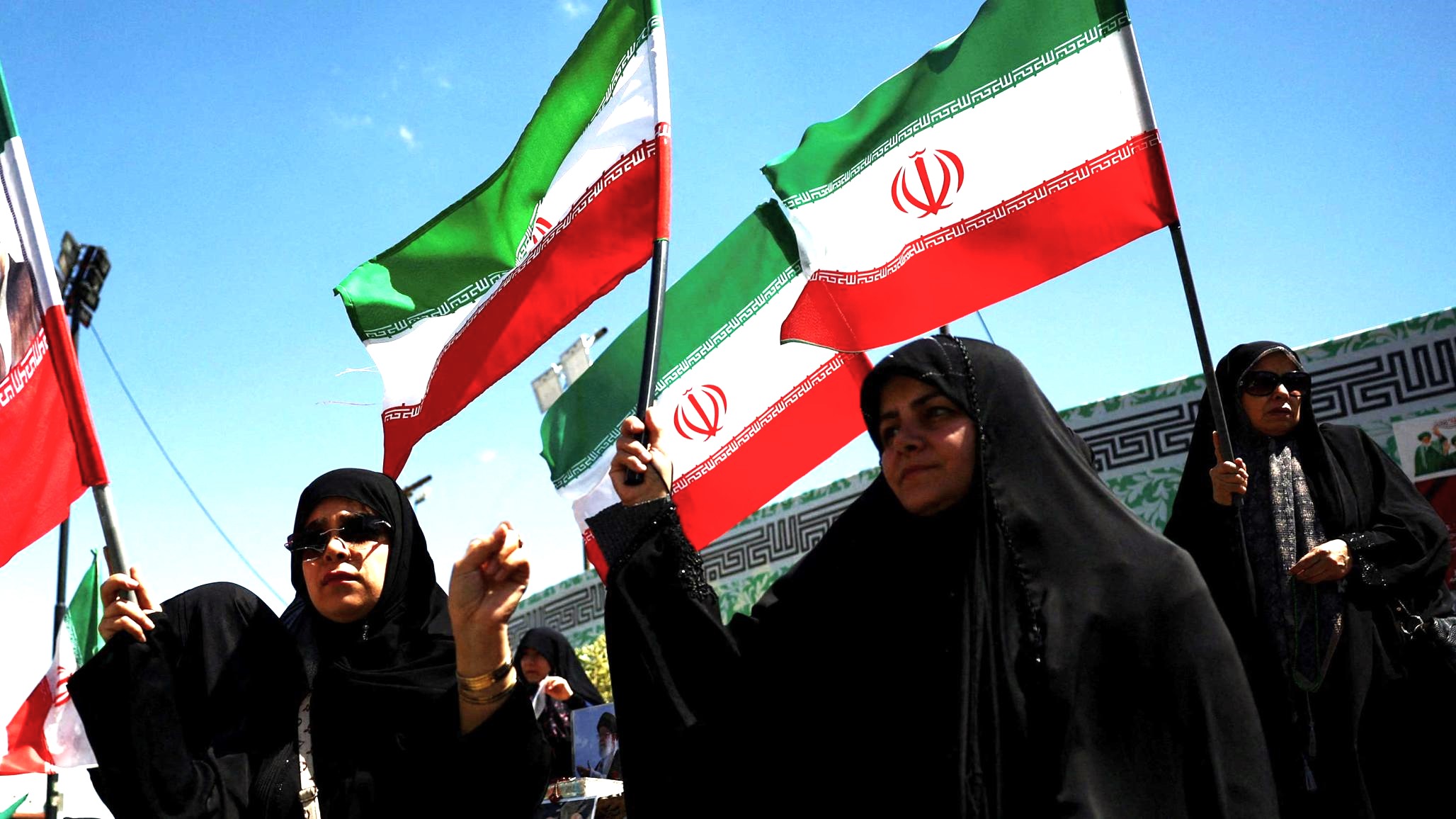
* Opt for buying oil and gas from Iran and Russia. When India can do it, why not we? Even five major American companies are in an oil deal with Russia, and are exempt from sanctions. India has been buying oil from Iran since 1979.
* Go solar in energy circumference.
* Build as many water dams as possible and do away with energy plants run on oil and coal in the next 10 years.
* Pakistan being a lower riparian state, hydel energy is the logical way to go.
* Maximize agriculture yield. China and India produce five times than we do, as they have mechanized their fields.
* Pakistan’s population boom is a strength, whereas our policy-makers present it as a liability. Again India and China with a billion-plus inhabitants are rising economies. China uplifted 700 million people out of poverty line in 30 years, and India patronized its entrepreneurs to do all they wish, and the success story of the IT industry (Silicon Valley) is a case in point.
The Way Ahead:
It’s time Pakistan starts relying on its tangibles. Stop viewing bloc politics and acting as a handler for major powers, as and when, Pakistan’s geostrategic utility and influence is up for a toss.
The country is blessed immensely in minerals, a fertile land, down-streaming water channels and an enterprising hard working nation. What is lacking is cohesion and a leadership that should stop looking from the prisms of otherness for the sake of obliging vested global interests. The moment indigenous economy and resilience is tapped, Pakistan will surely lead from the front.