

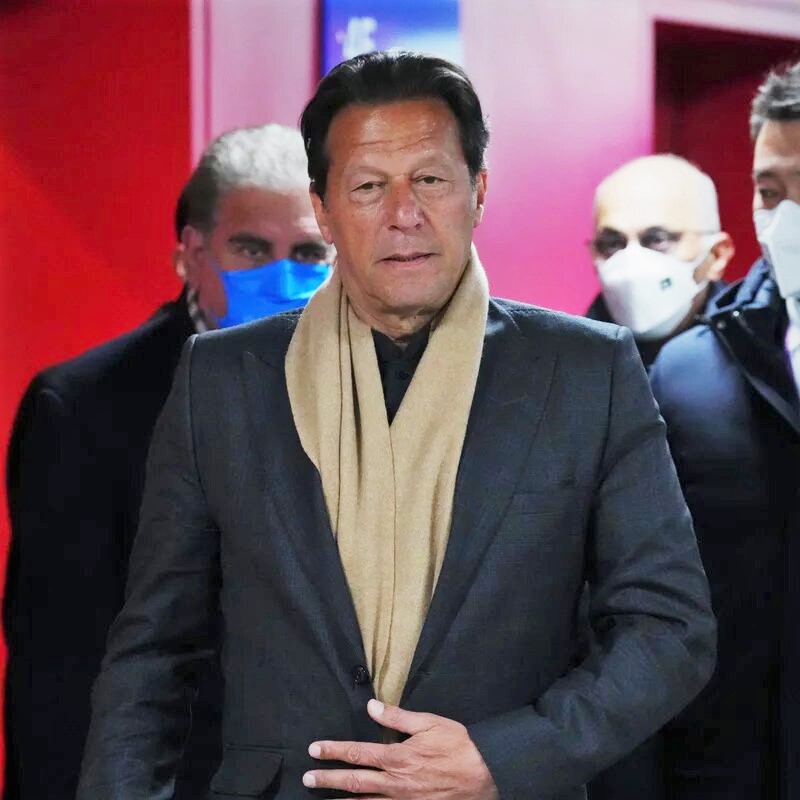
The Pakistan army is the dominant institution of the country. In the last few years, it has come under unprecedented criticism from different segments of the society. Major political parties accused it of orchestrating the installation of Pakistan Tehreek-e-Insaf government under Imran Khan. It was then accused of doing the political work of the government as Khan refused to do political work with his own hands. This situation became untenable and in 2021, senior brass decided to move into its own lane and let Khan steer his own ship. The structure was so unstable that in April 2022, the combined opposition toppled his government in a no-confidence motion. This did not bring any respite for the army, as an angry Khan unleashed his ire against senior leadership of the army. The current situation is unprecedented as urban middle class sympathizers of Khan including a number of retired armed forces officers are criticizing the senior brass.
This is the right time for reflection for the senior brass to ponder over the history of their own institution and think about measures to rehabilitate the image of the institution they love. First lesson is that complex political, social, and economic problems of the country cannot be solved by a staff college like an exercise and latest experiment should be a lesson for those who hold such simplistic ideas. The current course of political neutrality is the correct one and any national army of a multi-ethnic state that plays the hand of political favorites plays it at its own peril. A neutral army can play the role of mediator in case of a political crisis, but this role will only be accepted by the population if the army is seen as not playing favorites and there is no personal interest of the senior officers in the exercise.
In view of the dominance of the army, there is no civilian institution that can exert influence to change the prevalent situation. It needs to come from inside the institution. There is an urgent need for a broad review of modus operandi not to be limited to just political neutrality. There are several areas including size, structure, operations, use of state resources to sustain the defense structure that need a second look based on internal and external factors, severe economic strain that the country is facing and prevalent perceptions among the general population.
The Army needs the money to maintain the defense of the realm but there is an old saying that ‘take all the money you need but spend it to sharpen your teeth not to fatten your tail”. Combat and non-combat branches need to review existing allocation of resources and find ways to curb waste, fraud, and abuse.
Army needs a comprehensive review of its doctrine to incorporate all aspects in the national security. An intellectually lazy chap throws more bodies at the problem thinking it will solve the problem but this simply adds more costs without solving the problem. The new entity takes life of its own and extremely hard to discard even when it is not achieving its goal. Long standing grievances in Balochistan resulted in eruption of another round of insurgency; this is fundamentally a political problem and though the security element is important, ultimately a political solution will pay dividends rather than expansion of the security apparatus. First, the Frontier Corps of Balochistan was expanded, and XII Corps at Quetta given additional responsibility. This did not prevent attacks on China Pakistan Economic Corridor (CPEC) projects and in a knee jerk reaction, two additional light infantry divisions were raised only for this specific task. Huge sums spent on the security side heavily militarizing Baluchistan and neglecting all other aspects. It is not that the army is not aware of the problem. Command and Staff College discussions and papers written by Colonels and Brigadiers at National Defense University (NDU) highlight some of these areas, but it fizzles out.
There are many areas where several agencies and departments are duplicating the same function. A fresh look at consolidation and streamlining can channel resources in the most efficient way. Pakistan Coast Guards under the army are tasked with coastal defense and anti-smuggling operations. The Navy established Coastal Command for coastal defense augmented by Maritime Security Agency and Pakistan Marines. This integrated structure under naval command provides better management of challenges of coastal defense. The role of Coast Guards could be integrated in this structure, but the army did not want to give up this back water agency where superseded army officers are posted.
Three decades ago, a trend started where many posts were upgraded to accommodate an increasing number of senior officers. Like any good bureaucracy, it took a life of its own. Director General Inter Services Public Relations (DGISPR) used to be a Lieutenant Colonel rank post that got upgraded to Major General rank and a time came when a serving Lieutenant General was heading it. Army evolves with changing requirements and new departments are created to cater for new challenges. However, this need not to be top heavy as it increases the cost on a long-term basis. Counter Terrorism Directorate was need for the Inter-Services Intelligence (ISI) and in view of the mandate covering the whole country it is appropriate to be headed by a Major General. However, technical, personnel and logistics directorates of ISI need not be headed by Major Generals. Serving Major Generals heading military farms, federal schools and colleges and personnel department of ordnance factory is simply waste of resources. This policy needs review in view of economic challenges faced by the country.
The existing archaic protocols need urgent review. Simply look at the planning of the routine visit of a senior officer to a formation. Dozens of soldiers are employed wasting countless hours in erecting marquis, rolling red carpets, ceremonial parades and serving lavish food. Reception of a senior officer at airports is another spectacle where a dozen officers with their own security details show up wasting valuable time and precious fuel. All this can be corrected by one simple order from the top. Senior officer arrives at the venue and spends time discussing only professional matters with relevant officers and not disturbing daily routine of the whole formation.
Involvement of senior serving officers in the Defense Housing Authority (DHA) real estate schemes has been nothing short of disaster. Corps Commander is also president of DHA that is simply distraction from his professional duties. Few unscrupulous ones made huge sums of money and the whole institution is being ridiculed. No professional army can be proud of such activities. There is an urgent need to remove this task from serving officers and handed over to retired officers. This single act will go a long way to rehabilitate the image of the army.
The Pakistan army is coming under criticism from different quarters of the society for a variety of reasons. This provides an opportunity for the institution not only to review its existing policies but also its structure and methods. It should look at opportunities for reform to improve efficiency and professional competence and curb waste. This will restore the image of the institution that is the defender of the nation’s security.