The government of Pakistan considers the Central Asia Region (CAR) a reliable security partner in the rapidly changing geo-political and geo-strategic world. In the ongoing war against terrorism and mushroom growth of non-state actors, rise of human and drug trafficking nexus, achieving greater socio-economic prosperity, better political understanding and greater regional peace and stability, the governments of Pakistan, CIS including Azerbaijan must initiate serious “Security Dialogue” as soon as possible. It will provide a “Strategic Cushion” for all the countries of the CIS, Azerbaijan as well as Pakistan to maneuver in times of crises. It places Pakistan, the CIS and Azerbaijan in a better position to counter internal and external security risks.
Leadership from Pakistan and the Central Asian Republics and Azerbaijan are moving together to work closely to form a cohesive partnership. All sides share common historical and cultural linkages There is need to improve these relations further in security, military energy, social and economic domains.
Ideal Situation
Recent discussions among Uzbekistan, Azerbaijan and Pakistan have focused primarily on the arms trade, defense production and military cooperation. Uzbekistan and Azerbaijan want to take advantage of Pakistan’s relatively highly developed defense industry to establish joint ventures under which Pakistani firms would set up production or assembly facilities in these countries. Pakistan’s Global Industrial & Defense Solutions produces hand-held grenade launchers and has reached an agreement with the Defense Industry Ministry of Azerbaijan.
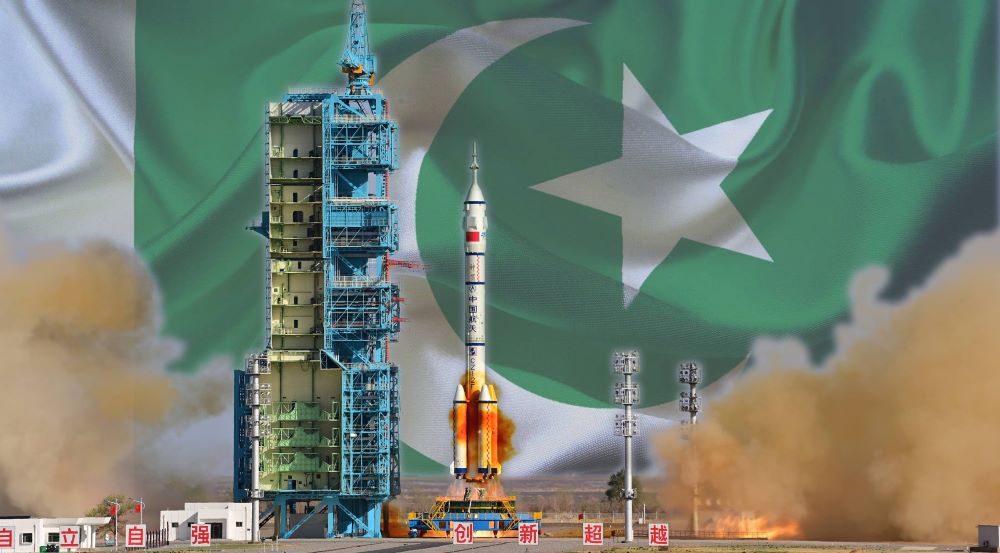
Pakistan is more focused on direct arms sales to Uzbekistan and Azerbaijan. There is a particular emphasis on marketing the Chinese-Pakistani JF-17 fighter jet to Uzbekistan and Azerbaijan. Pakistan displayed the JF-17 at Azerbaijan’s defense expo, ADEX, in September 2016 but its sale has not yet materialized due to some technical issues. Pakistan has also been promoting the Super Mushshak trainer aircraft to Uzbekistan and Azerbaijan, subsequently Pakistan has provided Azerbaijan with 10 Super Mushshak trainer aircrafts.
Azerbaijan focuses its procurement attention on ballistic missiles or on offensive weapons from Pakistan, especially the Shaheen medium-range ballistic missiles. Azerbaijan’s interest in Pakistani missiles was first reported in 2014, but talks seem to have accelerated after it emerged in 2016 that Armenia had acquired Iskander missiles from Russia.
Bilateral military cooperation among Pakistan-Uzbekistan-Azerbaijan is limited to relatively modest educational exchanges. In 2015, 130 Azeri defense personnel received training from Pakistan.

The Minister of Defense of Azerbaijan, Colonel General Zakir Hasanov met a delegation headed by Lieutenant General Omar Mahmoud Hayat, Chairman of the National Disaster Management Agency of Pakistan. During the meeting, successful results and prospects for the development of cooperation in the military and military-technical sphere and in the field of military education between Azerbaijan and Pakistan were discussed. They stressed that this cooperation is built on friendly relationship and will continue to develop. Noting that military relations are in the interests of both countries, they stressed upon the importance of increasing efforts in this area.
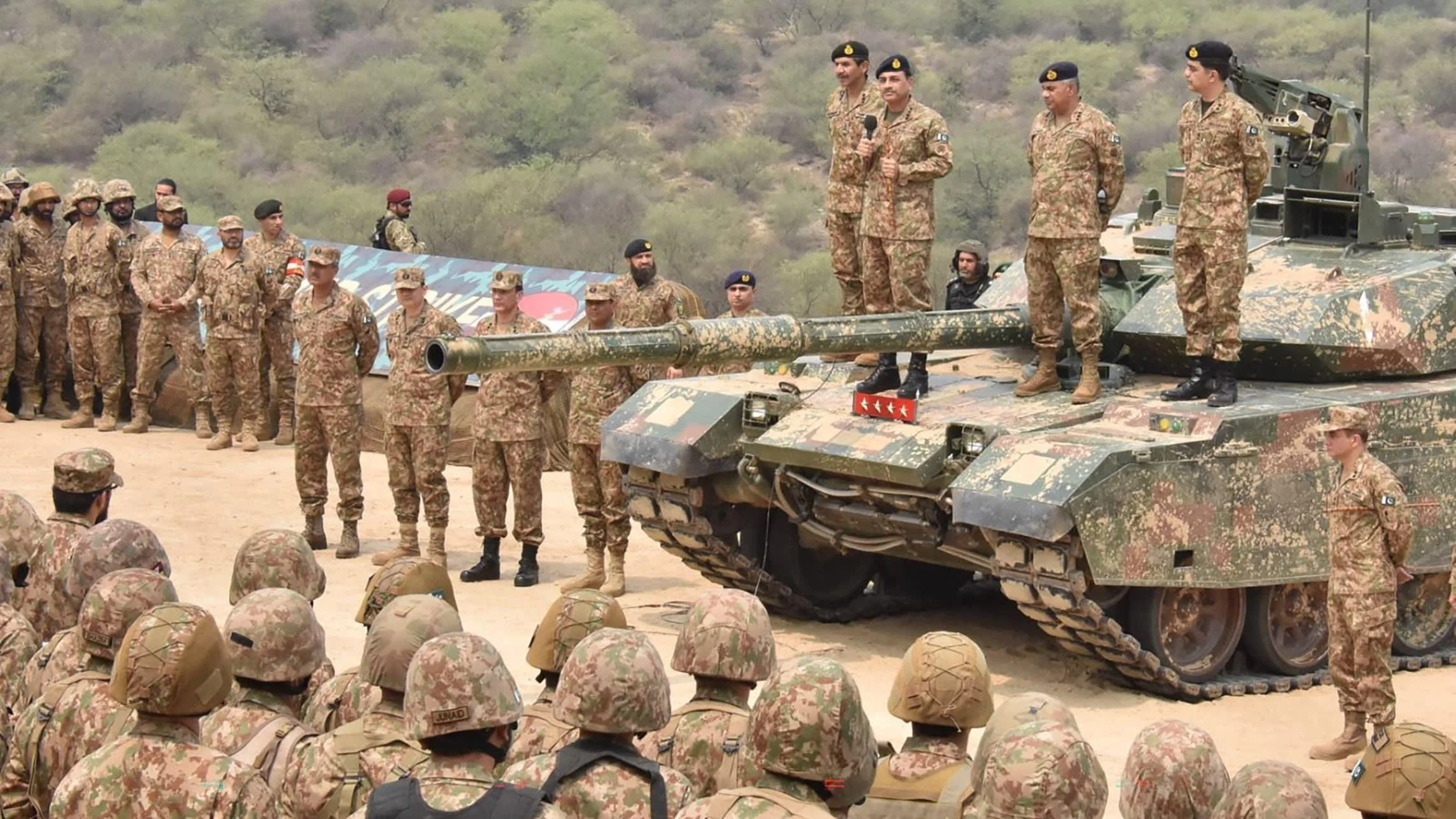
Both countries had signed a defence agreement in 2003 which allows Azerbaijani military staff, in particular, special force units to take part in annual military drills along with Pakistani Armed forces. As a part of the agreement, Azerbaijani naval personnel participated in the biggest Pakistani-led multinational exercise, AMAN-2013 held in March in the Arabian Sea.
Moreover, military and defence cooperation between Azerbaijan-Pakistan is signified by continuous dialogue in the form of high-level meetings, and military agreements such as the military cooperation agreement that was signed in February of 2014 in Islamabad. The same updated document was signed on April 1, 2015 during the Working Group meeting in Baku. In November 2016 Pakistan’s Joint Staff Headquarters and Azerbaijan’s Defense Ministry signed a plan of bilateral military cooperation in Islamabad. The sides agreed to continue cooperation in carrying out joint military exercises and discussed detailed cooperation in defense sector and joint military production.
It is hoped that the military cooperation between Pakistan and Azerbaijan will make a significant contribution in terms of regional security which is source of concern i.e. border security and growing global terrorism threat will be rectified. Azerbaijan is looking forward for starting joint production of small firearms, guided munitions, as well as anti-tank missiles. Even though the Azerbaijani defence industry was established in 2005 it has shown significant development and manufactures the well-known Istiglal sniper rifle, which is also in the basket of Pakistani Special Forces since 2012. It is suggested that Pakistan should search new ways and means for exporting of aircraft, missile systems, tanks, and another kind of military vehicles to Azerbaijan in the days to come.
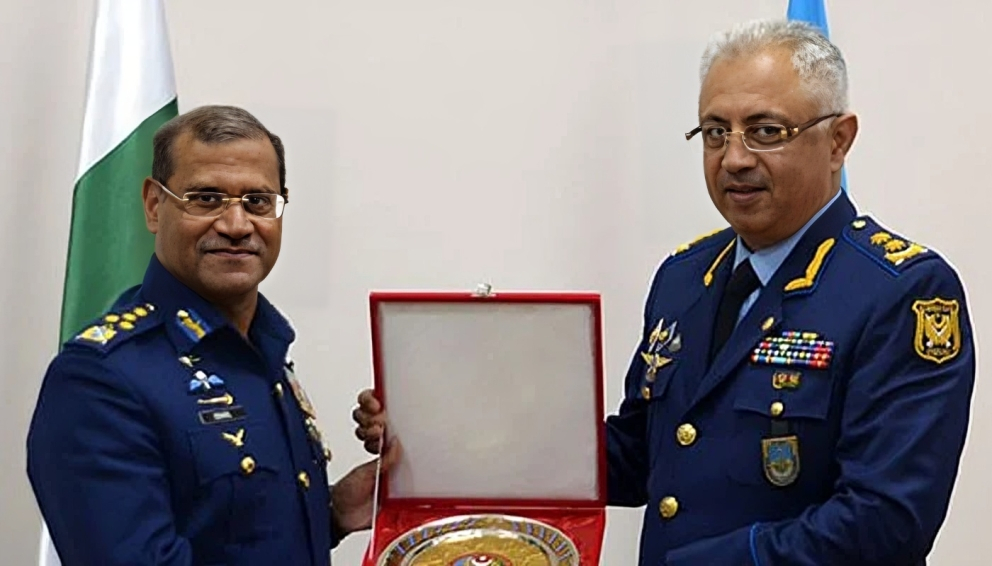
Most recently, Pakistan Air Force Chief Marshal Sohail Aman visited Azerbaijan and met with civil-military leaders there. Aman also met with Vice Prime Minister Yaqub Eyyubov and said that Pakistan would assist Azerbaijan at the time of any difficulty.
The Chief of the Air Staff, Pakistan Air Force also visited Uzbekistan and called on Major General Abdusalom Azizov, Minister of Defence and A. Burhanov, Deputy Minister of Defence and Commander Air Defence and Air Force of Uzbekistan at Ministry of Defence in Tashkent.
During the meetings, matters of mutual interest and regional issues including security situation in Afghanistan and its fall out on neighbouring countries were discussed. The Uzbek leadership lauded PAF’s pivotal role in fighting the war against terrorism and expressed their desire to learn from PAF experiences and showed keen interest in indigenization process of PAF. Pakistan has offered various capacity building measures for Uzbekistan Air Force. The Chief of Air Staff also offered military and flying training to their personnel at various PAF training institutions along with collaboration in aviation field for research and development to Uzbekistan Air Forces.

The Republic of Uzbekistan has the strongest and largest air force in Central Asia while Pakistan Air Force is also well equipped with state of the art technologies and has proved its worth and capabilities time and again. In recent times, PAF’s contribution in the war on terror earned it worldwide acknowledgement. Both Pakistan and Uzbekistan have several common interests as far as their pursuit for peace and stability in the entire region is concerned. Both sides have always endeavored to enhance bilateral defence cooperation to ensure regional security.
For the further strengthening of defense cooperation and brighten the chances of military cooperation the Uzbek ambassador to Pakistan H.E. Furqat Sidiqov invited Pakistan’s National Security Adviser Lt General (Retd) Nasser Khan Janjua to attend the International Conference on Security that is scheduled to be held in Tashkent from November 9 to November 11, 2017.
Conclusion
Pakistan-Uzbekistan-Azerbaijan relations have been revolutionized after the recent official visits on reciprocal basis. Military cooperation with Azerbaijan is increasing year by year and officers of the armed forces of Azerbaijan have already participated in different training activities in educational facilities of Pakistan’s armed forces. Similarly, Pakistani officers participate in courses of the Azerbaijan War College. Under the leadership of the National Leader of Azerbaijan, Heydar Aliyev, the Azerbaijan forces halted aggression committed by Armenia soon after independence of the country and regained substantial parts of occupied lands.
The two countries had signed a defense agreement in late January 2013 and naval officers subsequently held discussions on military-technical issues. In addition, Azerbaijani naval personnel participated in a Pakistani-led exercise, Aman-2013, held in March on the Arabian Sea. Pakistan is also seen as a potential arms supplier to Baku. Over the past few years, for instance, Azerbaijan has shown interest in obtaining JF-17 aircraft, a multi-purpose combat jet developed jointly by Pakistan and China. The Azerbaijan Ministry of Defence Industry was established in 2005, and at present, Azerbaijan produces more than 1000 items of different products, including all kinds of ammunition, military vehicles and weapons.
The newly elected Uzbek president H.E. Shavkat Mirziyoyev declared his intention to create a native military-industrial complex. He announced an imminent program to re-equip his nation’s armed forces to face the challenges of the 21st century. These reforms would be useful to cater to the needs of the Uzbek military to more effectively address current and future state and non-state threats. Uzbekistan has no large scale native arms producers and its military, the largest in Central Asia is entirely reliant on inherited Soviet era equipment. In addition, its annual military budget reported to be approximately $2.4 billion (2015 est.), is entirely inadequate to create an arms producing industry in such a short period.
Uzbekistan has the largest military in Central Asia by a substantial amount both in terms of conscripted manpower and equipment; however, it is structurally almost unchanged from Soviet doctrine which was designed to fight large ground wars. Its large stockpile of equipment reflects that doctrine with hundreds of main battle tanks and dozens of fighter planes, tools which have limited value in smaller scale tactical counterterror and policing operations.
Pakistan’s defense industry, which is capable to meet needs of domestic and international clients is now taking a special interest in the CIS i.e. Uzbekistan and Azerbaijan. Peculiar geo-political and geo-strategic conditions of Azerbaijan and border conflicts in the region alongwith the Uzbek President announcement of “military modernization” open a new window of opportunity for Pakistan to further strengthen its military/defense cooperation with Uzbekistan and Azerbaijan.