





Though it’s a lost cause, India is struggling to cook up a story before the International Court of Justice (ICJ) hoping that the ICJ will ask Pakistan to release Indian spy Kulbhushan Jadhav, a 48-year old on-duty Indian navy officer of the rank of Commander working for Indian spy agency RAW. Jadhav alias Hussein Mubarak Patel was arrested in a ‘counter-intelligence operation’ from Mashkel area of Balochistan on March 03, 2016. He illegally crossed over into Pakistan from the Pakistan-Iran border. He was found to be in possession of an Indian passport issued by the Government of India on May 12, 2015 and valid until May 11, 2024. He confessed that he is a resident of Mumbai, India, still serving in Navy and his retirement is due in 2022. All these facts are difficult for India to refute.
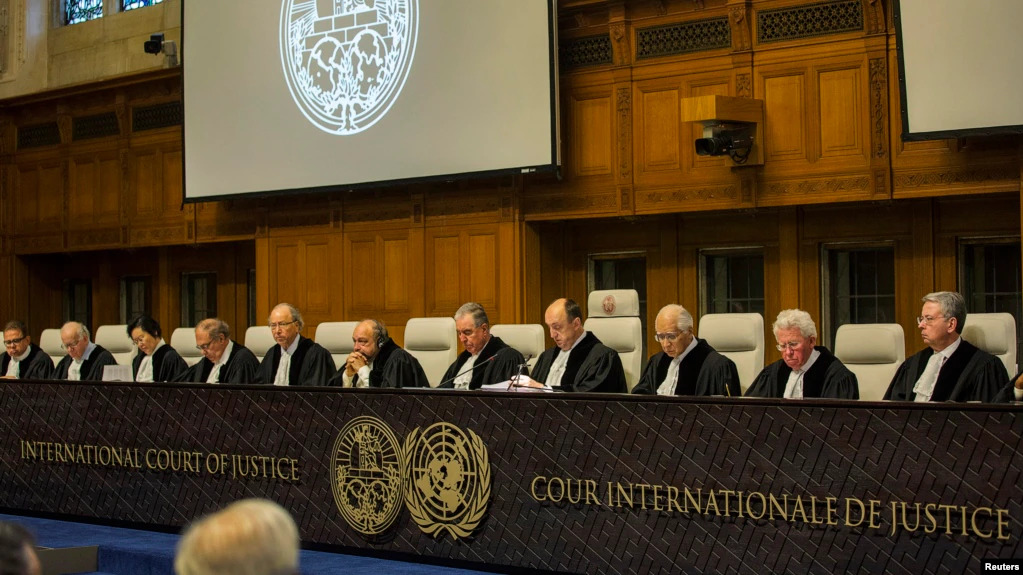
India has taken the matter to the ICJ on the plea that Pakistan did not provide India consular access to Jadhav. Pakistan stance was that the matter does not fall in ICJ’s jurisdiction because of a bilateral agreement between the two countries. In support of its arguments Pakistan has made a reference to the 2008 bilateral agreement between Pakistan and India that sets limits to which both countries would provide consular excess to captured offenders from each other’s country. And in its conduct in Jadhav’s case Pakistan has abided by the parameters of this agreement. As per the agreement, India and Pakistan have agreed not to provide consular access to those prisoners whose offenses relate to national security.
Due to jurisdiction related limitations, even if the court decides in favour of India it’s verdict will not be binding on Pakistan. To conclude the Jadhav saga quickly Pakistan has asked the ICJ to expedite its proceedings. On September 13 India submitted its initial pleadings, technically known as ‘memorial’, to the ICJ. India had sought until December to file its pleadings but the court allowed it until September 13 to do so. The ICJ had also set December 13 as the deadline for Pakistan to submit its counter-pleadings.
A four-member team handed over India’s memorial, consisting of written submission. The team consisted of India’s Ambassador to the Netherlands Venu Rajamony and first secretary legal officer Kajal Bhatt, Ministry of External Affairs joint secretary Legal and Treaties division Dr. VD Sharma and Joint Secretary PAI division Dr. Deepak Mittal. India’s written response was submitted to Mr. Philippe Couvreur, registrar of the ICJ. According to MEA, the contents of the submission will not be made public: “India has submitted its Memorial to the International Court of Justice in the Jadhav case involving egregious violation of Vienna Convention on Consular Relations 1963 by Pakistan. This is in furtherance of our application filed before the Court on May 8, 2017.” On May 18, the ICJ had ordered Pakistan to halt the execution of Jadhav until a final decision in the proceedings. “Pakistan shall take all measures at its disposal to ensure that Jadhav is not executed pending the final decision in these proceedings,” Judge Ronny Abraham, president of the court announced the decision.

Though Pakistan does not recognize the court’s jurisdiction, it decided that in deference to international norms it would abide by the stay order and also avail this God sent opportunity to put forward proof regarding Indian employment of terrorism as an instrument of state policy. Pakistan has already handed over ample data on this count to the UNSG in 2015 and 2016 which is now a part of UNSG record.
On March 29, 2016, Pakistan issued a voluntary confessional video of Jadhav over his involvement in espionage and sabotage actives in Pakistan. In his video statement Jadhav confessed to involvement in sabotage and espionage activities inside Pakistan which is the crux of Islamabad’s point of view in the ICJ. Some of his terrorists activities are: sponsored and directed IEDs and grenade attacks in Gwadar and Turbat; directed attacks on the Radar station and civilian boats in the sea opposite Jiwani Port; funded subversive secessionist and terrorist elements through Hawala/Hundi for subverting Pakistani youth against the country, especially in Balochistan; sponsored explosions of gas pipelines/ electric pylons in Sibi/ Sui area in Balochistan; sponsored IED explosions in Quetta; sponsored attack on Hazaras in Quetta and Shia pilgrims enroute to Iran and back; abetted attacks through anti-state elements against law enforcement agencies and Frontier Works Organization in areas of Turbat, Panjgur, Gwadar, Pasni and Jiwani, killing and injuring many civilians and soldiers; and launched a website with subversive content in support of anti-Pakistan elements.
For his heinous crimes Jadhav was lawfully tried by an appropriately composed Field General Court Martial under the Pakistan Army Act and Official Secrets Act 1923 and was awarded the death sentence for espionage and executing sabotage. His punishment was upheld by the appellate authority as well. Inter-Services Public Relations (ISPR) issued a statement saying that the Army Chief had approved the execution of Jadhav after a military court found him guilty of ‘involvement in espionage and sabotage activities’ against the country. India has told the world court that the appeals procedure cited by Islamabad was “worthless” because army officers could not be expected to rule against the verdict since it had already been confirmed by Army Chief. As “an appeal before a Tribunal presided over by him or officers junior to him would be an appeal from Caesar to Caesar”.
Due process of law is not yet over as Jadhav could make a clemency petition to the President of Pakistan. Pakistan had ruled out extradition of Jadhav on April 10, 2017.

Videos of Jadhav’s confession are in the public domain and are widely circulated in the media. He is responsible for espionage, sabotage and terrorism in Pakistan and has been tried according to the law of the land in a fully transparent manner. He also made a judicial confession before a Magistrate and the Court, narrating that he was tasked by the Indian Intelligence Agency, RAW, to plan, coordinate and organize espionage and sabotage activities aimed at destabilizing and waging war against Pakistan. His confession indicates that he was involved in both espionage and terrorist/ sabotage activities.
During the process Pakistan had repeatedly requested India for assistance in the investigation process however; no such request was accepted. Pakistan remains committed to the peaceful resolution of all disputes with India. Protection of its national security interest remains Pakistan’s its paramount concern, for which it will take all legitimate means.
India is trying to bring out the humanitarian aspect of a person who has made a public confession on how he was launched by India to carry out subversive and terrorist activities in Pakistan. Commander Kulbushan’s nefarious activities caused loss of precious and innocent lives of Pakistanis and inflicted material losses. Many citizens also suffered from life threatening and lifelong injuries due to Commander Jadhav’s subversive activities. Since India was caught red-handed with irrefutable evidence in a case in which its state institutions and state actors are involved in terrorism, terror financing and subversive activities in a sovereign state, it is trying to divert international community’s attention from the real issue.
Commentaries emanating from prominent international jurists point out numerous legal weaknesses in the Indian petition. A precedent already exists whereby the ICJ, while ruling on similar cases had rejected the arguments so far put forward by India. Previous verdicts by the ICJ uphold the principle of limits placed on international treaties through bilateral agreements. Like other policy goof-ups by Indian Prime Minister Narendra Modi such as military intervention in Doklam, ICJ verdict on Jadhav shall, in all likelihood, be another national embarrassment for India.