



Youth, Technology and the Future of Pakistan
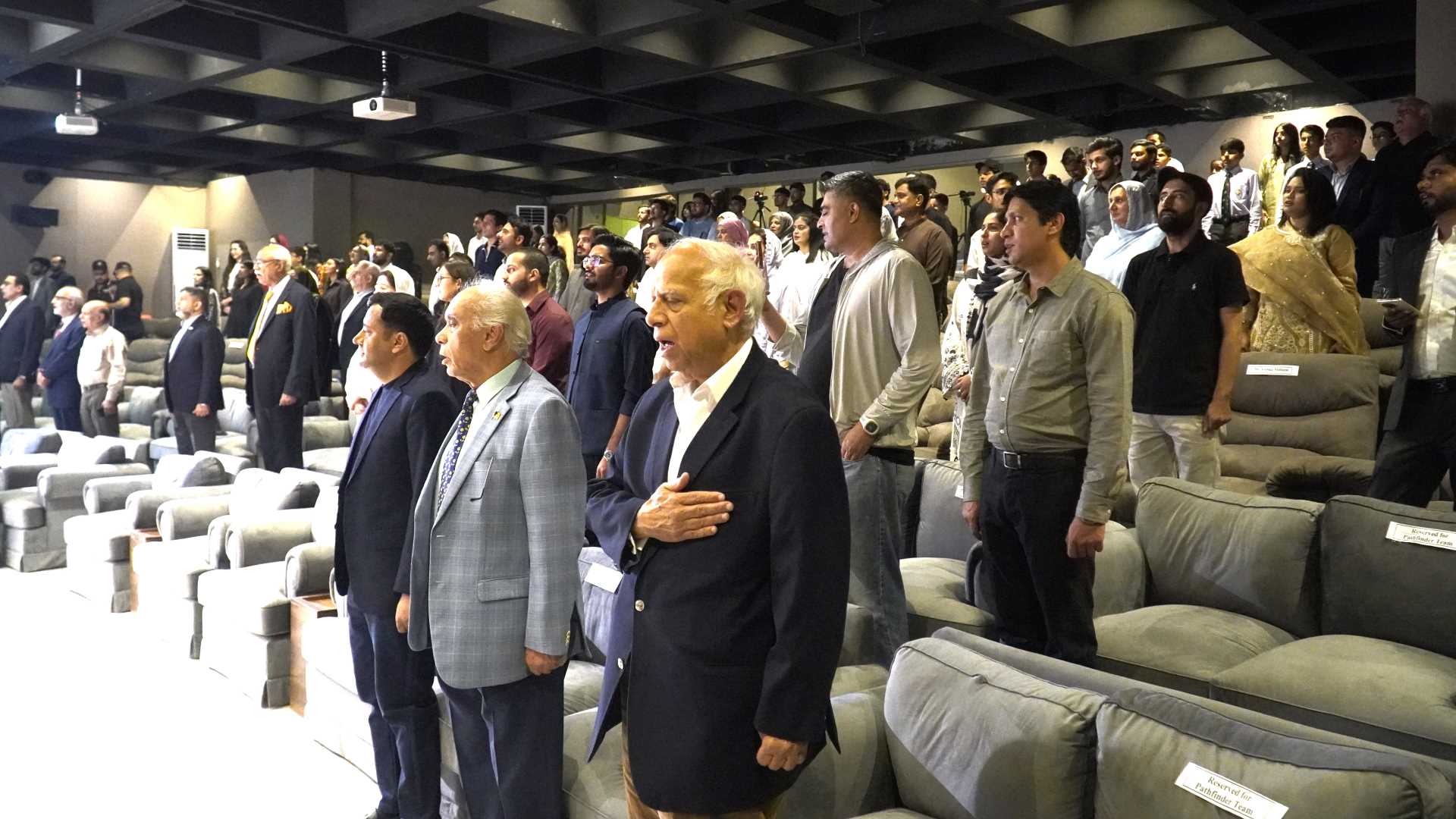
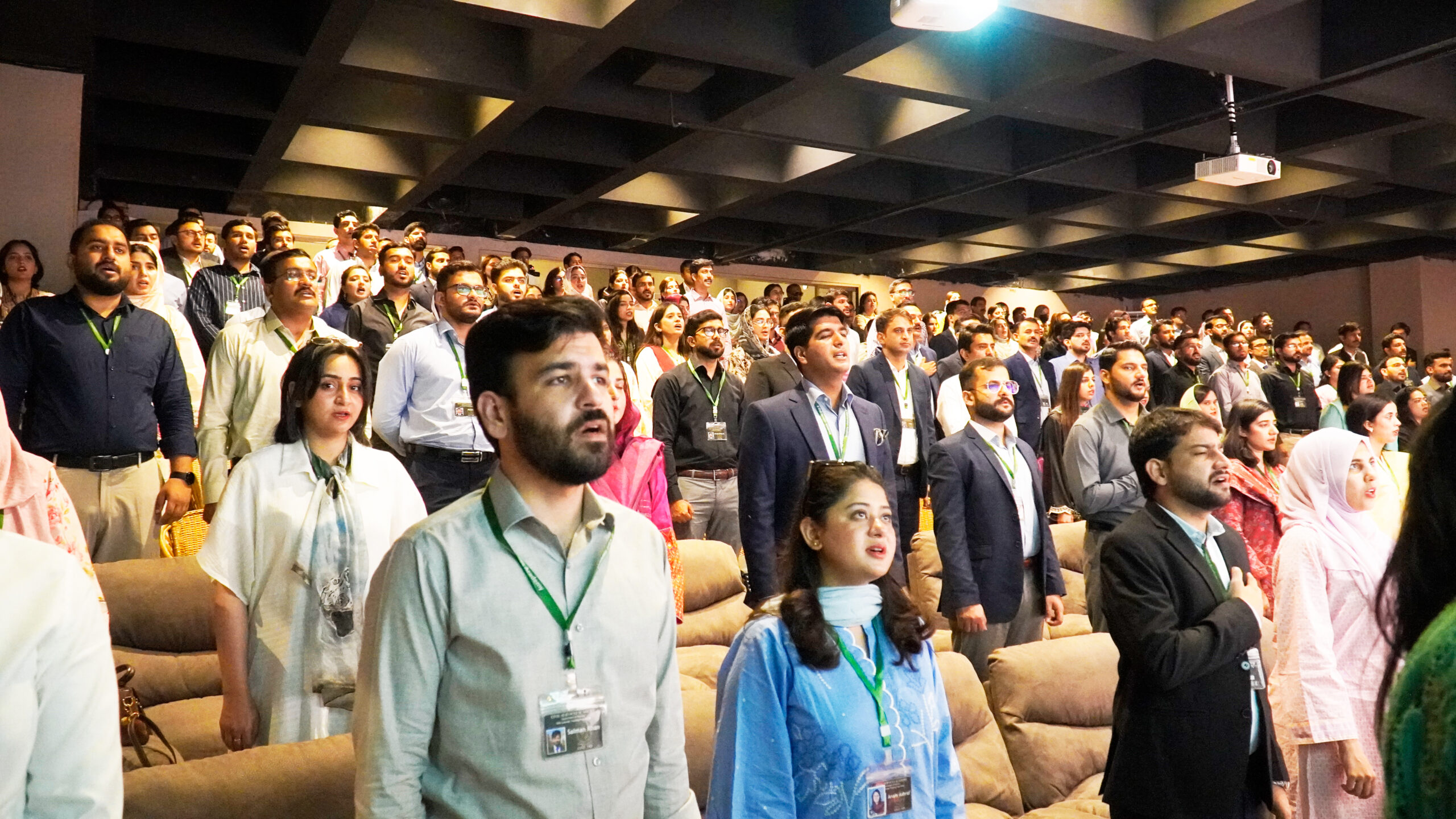
The launch event of the Pathfinder CITADEL Karachi Chapter, titled “Youth, Technology and the Future of Pakistan,” was held on 30 September 2026 in collaboration with the Global Shapers Community Karachi Hub. The event brought together technology leaders, entrepreneurs, academics, industry representatives, and young professionals to explore ways to transform Pakistan’s youth potential into practical skills, entrepreneurship, and meaningful economic impact. Speakers highlighted the importance of bridging the gap between academia and industry, promoting digital inclusion, empowering young women, and creating opportunities for innovation and start-up development.
Mahrukh Faisal (Moderator):
It is a pleasure to have you all here as we mark and launch the CITADEL Karachi Chapter. With CITADEL now expanding its presence to Karachi, we are bringing its vision of talent, innovation, entrepreneurship, and collaboration to a city known for its energy, enterprise, and ambition. To all our distinguished guests, partners, entrepreneurs, and friends: thank you for joining us and being part of this exciting new chapter. We have a great evening ahead, so let us get started.
To officially get the evening underway, I would like to invite Air Cdre (Retd) Khalid Banuri, Principal Advisor to CITADEL, to welcome us and share a few words. His remarks will set the tone for the evening and get us started on the right note.
Air Cdre (Retd) Khalid Banuri, Principal Advisor, Pathfinder CITADEL:
When I was asked to give a background brief, I thought: what is there to brief about a room full of people who are looking forward and not backwards? But then I realized that every good beginning has to have a genesis. If you understand where an idea came from and the logic that drives it, you can fathom much deeper where it might go, even though the path of uncertainty until success finally arrives.
So, in the next 20 minutes or so, I will do three things:
- I will show you the bigger picture of how a group of companies built a pathway over decades.
- I will introduce CITADEL and what it does.
- Most importantly, why it matters to you all, especially for the young people.
Let me start with the road that brought us here. Every institution that lasts begins with a simple stubborn question. For Pathfinder Group, headquartered right here in Karachi, the question was: What does Pakistan need that is not being done well, and can we do it with discipline and integrity?At first, the answer was trust. Pakistan needed people and institutions it could rely on with what it valued most: its assets, its cash, and its people. From Karachi, Pathfinder Group built a presence that today reaches over 75 cities and towns across the country. Seventy-five is not just a number on the map; each location has a team, a supervisor, families whose livelihood depends on that operation, and a leader behind it who provides inspiration and a path to dedication. I reckon this leader is virtually listening to this conversation today. But here is something I want you to notice especially: Pathfinder Group did not stay where it began. It provided pathways, not a single road, but a series of well-thought-through, well-crafted, and well-chosen next steps.
I would like to mention four key steps to you:
- First: Trust and security as its foundation.
- Second: As Pakistan’s economy got digitized, technology and finance became central, because a country that wants to grow must move money, information, and opportunity faster and more inclusively.
- Third: Innovation and entrepreneurship, the step that matters most for this room.
- Fourth: A protective crust over every foundation, which lies in people and ideas.
A group that begins by protecting what Pakistan has and then builds what Pakistan needs will eventually ask the question of what Pakistan can become. CITADEL, we humbly argue, is the answer to that third question.
Let me walk you through the Pathfinder Group entities. I want each one of you to leave knowing that Pathfinder Group is not just a company; it is an ecosystem.
First, the Security Services Division (SSD): this is where the group’s reputation was earned. Pathfinder Group includes two of the largest private security companies in Pakistan: Security and Management Services (SMS), and Wackenhut Pakistan. Together, they deploy highly trained manpower across the nation. Security is not about uniforms; it is about discipline, training, and reliability. And those are the values that run through everything else they do. But I want to focus on the second part of it as well: specialized movement security. Moving cash, valuables, and sensitive assets for banks and select clients is a science. It requires specially designed vehicles, specially trained people, route planning, and real-time coordination. Above all, it requires reliability. That name is Wackenhut Pakistan. This is led by a very dynamic COO, Jahangir Javed, whom we lovingly call JJ.
Second, the Financial Services and Technology Division (FSTD). This is where Pathfinder Group stepped into the digital age. Through this division, the group has created millions of Asaan Mobile Accounts (AMA), around 15 million and growing. Consider someone who has never held a bank account, whose savings sat in a drawer, whose remittances travelled through uncertain channels, and who does not even own a smartphone, and therefore does not know how to use apps. Asaan Mobile Account is one’s doorway into the formal economy. Its main arm, the Virtual Remittance Gateway (VRG), is led by an epitome of resilience, energy, dedication, and initiative. This phenomenon is led by Muhammad Salman Ali. This is financial inclusion at the national scale, and it sits squarely within Pakistan’s national objectives of a documented, digital, and inclusive economy. Such indigenization merits a reliable support system within the group. So, there is a software house within this group: we call it iPath, which is led by an incredible leader who may seem to be a freshman out of a university, but brings in a wealth of experience and innovation: Abdul Samad Khan, the CEO of iPath.
Then, the third division, the Digital Revolution Division (DRD), which brings software and digital solutions into the group’s portfolio, building systems, not just deploying people. It has SMS Services and SMS Technologies, blending the services and technological sides behind it, led by people who are not present at the moment, but they could be listening to you: an amiable, sharp, and observant CEO, Shakeel Ahmed, and a technology CEO who is focused and methodical, Iqbal Butt. So, let us step back and see this pattern: security builds trust, finance builds access, and digital builds capability.
All of it, every single entity, aligns with what Pakistan needs: a secure environment, an included population, and a competitive digital economy. There is one more ingredient, and that is not on any organogram. For over two decades, the group has convened Pakistan-focused dialogue at the World Economic Forum (WEF) in Davos, Switzerland, through the Pakistan Pavilion. The group has always understood that a country’s story must be told with confidence on the world stage. Governments represent countries; private sector entities like Pathfinder Group do their bit through resilience, persistence, and innovation. Hold that thought, because it returns in a moment. And it does not end here. I told you the fourth step was people and ideas. This is where Pathfinder has built a family: its Corporate Social Responsibility (CSR) endeavours through the PathfinderCare Foundation, led by the polished, eloquent, and highly reflective Brig (Retd) Mujahid Alam, who is also not here at the moment.
Here is what the PathfinderCare Foundation means:
- Providentia Books Foundation, which has collected and provided thousands of books for school-going children who were deprived of them.
- The Elena Care Foundation, providing insurance care for the families of Pathfinder Group’s men and women, especially those who might succumb to sickness or come in harm’s way.
- The Pathfinder Interfaith Harmony Initiative, helping reduce intolerance and apathy in society.
- The Kashmala Family Welfare Centre, helping by developing a cottage industry where Pathfinder Group now has plans to help widows and orphans find a livelihood with honour and dignity.
The list goes on. So, if you have security, finance, digital capability, and CSR, what is missing? The answer is one thing that no balance sheet can manufacture: the next generation. About a year ago, at Pathfinder Group’s Islamabad venue, the group launched a new initiative with a deliberately bold name: CITADEL, the Centre for Innovation, Technological Advancement, Digital Entrepreneurs, and Leadership, led by the knowledgeable, soft-spoken, yet firm and persistent AVM (Retd) Asad Ikram. Note that name: CITADEL. Look it up. A Citadel is a fortress, but not one built to keep people out; that is the difference. The fortress exists to protect and nurture something fragile and precious: a young person’s idea in its earliest, most vulnerable days. Every innovator has a moment when the idea is fragile, when funding is absent, and everyone says,
“Be realistic. Is it going to work?”
A citadel is a place that holds the line during that moment. In 12 months, CITADEL has become a known entity in Pakistan’s innovation landscape.
It hosted a national Davos Start-up challenge final in Islamabad. It carried eight Pakistani start-ups to the Pakistan Pavilion at Davos in January 2026, something no nation had enabled at the World Economic Forum (WEF) before. So, after that veritable success, when CITADEL opened applications for the WEF Spring Jeddah Challenge, it received 337 start-up applications, including 56 from 16 different countries. Young founders around the world are looking at Pakistan and saying, “That is where I want to compete. Twelve months- that is not a slow burn. This is what happens when a strong institution gives young people a real platform. And that platform is coming to Karachi.
Let me explain how CITADEL is built. It rests on three integrated verticals, and I am sure my colleague will talk more about that, but very briefly, I want you to think of them as three stages of a single journey, as more verticals are being envisaged as we go along.
The first vertical is the Career Jumpstart Institute for students and fresh graduates. Let me be blunt about a hard truth: Pakistan produces graduates in large numbers, but degrees do not open doors of opportunity. Two and a half million young men and women join the job market in Pakistan each year. The job vacancies are not even a million. What this means is that out of every three young persons, only one has an opportunity or a possibility of finding a job. The Career Jumpstart Institute focuses on preparing people with outcome-driven upskilling, executive development, and placements that perhaps not many are endeavouring to do, both nationally and globally, so help us, God. Its programs, including the Tech Fellowship in Applied AI, Blockchain, and Cybersecurity, are project-driven and mentored by experts from the industry.
The question in this vertical is not “What did you study?” but “What can you do, and who will hire you for this?”
So, we make you job-ready so you get the jump-start. The rest will depend on your performance.
The second vertical: Escape Velocity Accelerator. I have an Air Force background, so we use such terminology all the time. This is for start-ups. In physics, escape velocity is the speed an object needs to break free of gravity. Every founder in this room would know the gravity I am talking about: limited capital, limited mentorship, limited access to markets.
The accelerator provides investment readiness, venture development, global linkages, and exposure to investors. As one of our senior group leaders put it, CITADEL is designed to defy economic gravity, turning talent into jobs, start-ups into scale, and innovation into growth.
And the third vertical is Strategic Innovation Consulting. This is for enterprises and the public sector, and that is where Karachi’s corporate world comes in. Established companies must innovate, or they will be outpaced by the start-ups that the second vertical creates.
This vertical helps organizations build innovation capacity, digital infrastructure, and measurable transformation.
Now see how the three connect:
- The first vertical creates talent.
- The second creates enterprise.
- The third creates demand and adoption in established organizations.
Talent feeds start-ups. Start-ups challenge and partner with corporates. And corporates hire more talent. So, this is a cycle, not just a program. Behind the cycle is a simple idea: The Triple Helix- academia, industry, and the government working together- because no single sector can build an innovation economy on its own.
And why has CITADEL come to Karachi? Because Karachi is where Pakistan’s economy breathes. Let us be factual about it: it is the country’s commercial capital, its principal port city, the home of its largest corporate community, and most of its financial institutions. It is a city of relentless hustle. Due to that hustle, this room is full, but there are several others still trying to reach it: the young entrepreneur running a start-up from a shared office, the graduate commuting two hours for his or her first job, the family business trying to digitize before a competitor does. If Islamabad is where CITADEL found its footing, Karachi is where it can find its scale and hence contribute to the national cause. And this is not a coincidence of geography; it connects to a larger national purpose. Pakistan’s development goals, whether digital exports, formal sector jobs, or foreign exchange earnings, will not be met by policy documents alone. They will be met by a generation of young Pakistanis who build, sell, and export ideas. CITADEL Karachi is our contribution to that mission, and today’s soft launch is the first step. I am delighted that we begin this journey alongside the Global Shapers. Several of them are present in this room. They are living proof of this concept: young Pakistanis who rose through their own effort and are now turning back to lift others. They will tell their own story shortly, because they can tell it better than I can.
So, let me put away the organizational charts and speak directly to the young people in this audience, the graduates and the founders. Every year, I meet young professionals who share a version of the same worry: “I have the skills, but I am not getting opportunities.” So, let me offer a thought that I have shared with many audiences, and I tend to believe it more and more every year: technical skills get you shortlisted; your personality gets you promoted.Your degree, your certificates, and your coding languages open the doors to opportunity and to interviews. But what happens after the door opens is determined by how you communicate, how you handle failure, whether you have fear of failure, how you lead a team and how you build trust. That is why CITADEL does not stop at technical training. Alongside technical prowess, it invests in the whole person: confidence, communication, leadership, ethics, and storytelling. We are not producing employees who can merely follow instructions and follow them well; we are producing leaders who can solve problems nobody has assigned to them as yet. So, let me give you three simple messages to carry out of this room today:
- Treat uncertainty as terrain, not as a threat. Nobody can tell exactly what the job market will look like in ten years. AI is already reshaping entire professions. But every disruption creates openings for those who are prepared. So, prepare to learn, not just to know.
- Build in public, fail early, and fail small. Do not wait for the perfect idea. Test it, get feedback, and improve it. The founders who succeed are rarely the ones who never failed; they are the ones who learned faster.
- Find your community. No one succeeds alone. The Global Shapers understood this. Mentors, peers, and networks are the real infrastructure of success. CITADEL is designed to be that community for you.
Pakistan is a young country; a large share of our population is under 30. In many nations, that would be called a demographic challenge; I call it a demographic invitation. Let that sink in. If you give our young people skills, platforms, and belief- and looking around this room, belief is what I see here- they will build the future. So, let me close by returning to where I started. A pathway is not built in a day.
Pathfinder Group built its pathway over years, step by step: from trust, to access, to capability, and now to ideas and people.
CITADEL is the newest step, and in Karachi, it takes its first step today. The Pied Piper, the wonder boy, the person who conceived, built, consolidated, and put the Pathfinder Group on the map, whom you will hopefully get to hear in person later in the evening, Ikram Sehgal once said: “This is Pakistan’s moment.” May I dare add: a moment only becomes history if someone seizes it, and the people who can seize it are in this room, several of them, so welcome to CITADEL Karachi.
Ask questions, challenge us, bring your ideas, and build with us. We are not here to tell you what your future should be; we are here to make sure that when you are ready to build, the fortress is standing behind you.
Mahrukh Faisal (Moderator):
So, one of the most important themes that Mr Khalid highlighted that runs throughout CITADEL is the idea of creating opportunities for young people and giving them the space to contribute, connect, and make an impact.
That brings us to the Global Shapers. To tell us a little more about the Global Shapers Community and the work we are doing, we have Mr Murtaza Lashari, who is the Curator of the Global Shapers Karachi Hub.
Murtaza Lashari, Curator, Global Shapers Karachi Hub:
Before I explain what we are doing, I would like to mention that the official UN guidelines define youth as people up to the age of 32. In other words, those up to the age of 32 are considered young people. However, there is another category of youth defined not by age but by heart.
These are the people who remain young at heart and continue to learn throughout their lives. There is a quote very close to my heart by former UN Secretary-General Mr Kofi Annan: “You are never too young to lead, and you are never too old to learn.”
Global Shapers Karachi is part of the World Economic Forum’s youth community. We are present in 455 cities across the world, with 12,000 active members and alumni globally.
The core concept behind our work is to learn from the challenges faced by different cities around the world, particularly those whose challenges and problems are similar to the ones we face here in Karachi, and find solutions by learning from their experiences. At the same time, we share the challenges we face in Karachi with other communities around the world and explain how we have addressed them.
Therefore, the fundamental concept is to establish connectivity and facilitate the exchange of knowledge and experiences across the world. We call our members “Shapers,” meaning that we strive to shape things, design things, and create things. Our Shapers come from diverse professional backgrounds. Many of us work in technology, many are involved in climate-related issues, and many are still pursuing their studies in academia. However, the main reason we are here in this room with all of you is to build connections and collaborate with different stakeholders. I am particularly grateful to Pathfinder Group for providing us with this opportunity, as it already brings together stakeholders from academia and the corporate sector.
This collaboration allows us to connect with these stakeholders, exchange ideas, and explore opportunities to work together.
Mahrukh Faisal (Moderator):
To proceed, our next speaker needs little introduction. With decades of experience in Pakistan’s technology and entrepreneurship landscape, Ms Jehan Ara has been a strong advocate for innovation, start-ups, and the growth of Pakistan’s technology ecosystem. As we centre our discussion today around youth, technology, and the future of Pakistan, it is a great pleasure for us to have her with us this evening. Ladies and gentlemen, please join me in welcoming Ms Jehan Ara, Founder and CEO of Katalyst Labs.
Ms Jehan Ara, Founder and CEO, Katalyst Labs:
It is a great pleasure to be here. Of course, who does not know Mr Ikram Sehgal and the wonderful work that the Pathfinder Group has been doing? Regarding participation in Davos, I remember that my friend Dr Huma Baqai attended last year and had so many wonderful things to say about her experience. There is no doubt that such participation makes, and has already made, a difference to Pakistan’s image, the professionals working here, and those involved in the social sector.
I think the launch of the CITADEL Karachi Chapter is a great idea. The more people who can contribute to the development of young people and help them develop their abilities, the better. We often think that we are helping them, guiding them, and shaping who they will become. However, that is not entirely true. Yes, we are there to provide some guidance, but young people are ultimately responsible for building their own identities and determining who they become. The youth of this country are exceptionally talented and capable. All they need are opportunities and inclusion. As Murtaza mentioned, policymaking should be inclusive, and young people must be involved in the process. They are the ones who will either benefit from the policies introduced today or suffer the consequences of misguided decisions.
I believe it is time for us to stop repeating some of the statements we hear on television every day, read in newspapers, or listen to in speeches, such as “Pakistan has a lot of potential” or “Pakistan is a country with great potential.”
I have been hearing these statements myself for the past 30 or 40 years. The question is: when will this potential translate into a tangible impact? We cannot simply keep talking about potential without putting it to use. It is like having tools in a drawer. A tool may have enormous potential, but unless you take it out and use it, there is little point in having it. Similarly, we have a large population, but unless our people are allowed to contribute and fulfil their capabilities, having a huge population serves little purpose. In fact, it can become a disadvantage. This is why people look at us and argue that our demographic situation is a negative factor because they question how we will feed, educate, and provide healthcare to such a large number of people. We can address these challenges, and we should. However, we must allow young people to participate in the country’s development because they understand what is needed and what they want.
Technology is a particularly important example of this. No matter how many years people like me have spent working in the technology sector, we cannot claim to know exactly what is needed at all times. Technology changes every day, and young people adapt to these changes much faster than those of us who have been part of the sector for many years.
They understand what technology can achieve, the dangers it presents, and the benefits it offers. They also understand that if technology can be used for the benefit of this country and its people, they should be allowed to make that happen. We must not keep them out of the room; they should be part of the discussion and decision-making process. This is something I strongly believe in.
One of my greatest joys is seeing the young people I have worked with over many years demonstrate how they can make a meaningful impact on society. Some of them are actually here in this room, working in education and agricultural technology, or Agri-tech. People like Azima Dhanji from ConnectHear and Muhammad Waqas from WonderTree are working to help people with disabilities use technology to overcome barriers and carry out activities that might otherwise be difficult for them.
Their work demonstrates how technology can be used for good. Similarly, when I see young people who understand that access to education is unequal, I feel encouraged by their efforts to use technology to make educational opportunities available across the country. If we can extend access to education beyond major cities to smaller towns and villages, we will be doing the country a great service while helping young people realise their potential.
Being born in Karachi, Lahore, Islamabad, Peshawar, or Faisalabad does not necessarily mean that someone is more intelligent or capable than a person born elsewhere. There may be someone living in a small town in this country who, if given the same opportunities that we have had, could achieve far more than we have. We must therefore ensure that everyone has access to such opportunities, and technology can help us achieve this. However, technology alone will not solve the problem unless we also ensure that people have access to smartphones. I would not even emphasise laptops anymore because, although they may be necessary in offices and certain professional settings, a good smartphone can provide access to an enormous amount of local and international knowledge in almost any language. Smartphones can help bridge the information gap and enable people to learn, develop skills, and access opportunities that might otherwise remain beyond their reach.
We must ensure that as many people as possible have this access. When I speak about young people, I mean both young men and young women. Unfortunately, many women in smaller cities and towns are not allowed to have their own mobile phones. They may have to share a phone with the entire family or with three brothers, and they are told that they can use it only for a limited period. This is simply not enough. How can these women become productive members of the country and society if they are not given the freedom and opportunity to learn and apply what they have learned?
These are some of the issues that personally concern me. We must make sure that we open doors for everyone because there is no reason to exclude anyone. Those who are denied opportunities will inevitably find it more difficult to develop their abilities and contribute to society.
We have already seen how well many Pakistanis perform when they move abroad and are given the right opportunities. Just last week, we had Dr Nergis Mavalvala from MIT; the Dean of the MIT School of Science is from Pakistan, specifically Karachi. Who would have imagined that? She left Karachi, pursued her education internationally, and then benefited from the opportunities available in the United States to apply and build upon what she had learned. We should be able to provide similar opportunities here in Pakistan. Not everyone can go abroad, and we cannot expect all our people to travel to the United States or Europe to benefit from their educational systems, cultures, and access to knowledge.
These opportunities must also be created here at home. Only then will we begin to see a meaningful difference.
That is all I want to say. I am extremely proud of my community because its members have demonstrated that they want to transform Pakistan. When the government talks about digital transformation, it should not simply mean taking existing processes and making them digital.
Instead, it should mean transforming the way we do things, creating better and more effective systems, and using digital technology to make those systems accessible to everyone.
My community is working towards this transformation in various fields, and I am proud to see its members making a difference. I feel fortunate to have played a small role in helping shape some of these individuals, but ultimately, they have gone on to accomplish what they themselves knew they were capable of achieving.
All of us have a role to play in contributing to the development of the young people of this country, and we must continue working together to ensure that they have the opportunities, resources, and support they need to fulfil their potential and contribute to Pakistan’s progress.
Mahrukh Faisal (Moderator):
I would like all of you to hold on to this last thought that she shared on inclusion, because that is what we will proceed with.So, to keep us all locked in, we will now move towards another important subject: the power of youth and women in Pakistan’s digital future. Mr Muhammad Salman Ali is a digital transformation and financial technology leader with extensive experience in digital banking, payment solutions, financial inclusion, empowerment, and technology strategy.
He currently serves as CEO of Virtual Remittance Gateway. He is a member of the Global Expert Community and the GovTech Forum, WEF. He joins us now to share his insights.
Muhammad Salman Ali, CEO, VRG:
I would like to build upon the points regarding youth and the points Madam Jehan Ara has raised. What do we mean by youth? Youth is a journey, a phase of life between childhood and adulthood. When young people have an idea, that idea should eventually mature into economic independence.
But who will enable them to achieve that? Once again, the question is: who will make it happen?
For the last 40 years, we have been talking about Pakistan having enormous potential. While adults make up a significant portion of the population, young people constitute a major share,
nearly 52 per cent.
Why, then, are we not translating this youthful population into real economic strength? From my perspective, the answer comes down to three things. First, the right mentorship. We are not providing young people with the appropriate mentorship they need. They may have an idea, but they require the right direction, guidance, and support to turn that idea into something meaningful. Second, connecting education with industry. This is the biggest gap I have observed. I am in contact with many university leaders, but there remains a significant disconnect between education and entrepreneurship.
We need to establish stronger links between academic institutions and industry so that students can transform their ideas into viable businesses and start-ups. Helping them take an idea to the next level remains a major challenge that we must address.
Third, patience and resilience. Young people can sometimes be impatient, and they need to understand that failure is an acceptable part of the journey. They should be encouraged to take initiative, learn from their mistakes, fail quickly when necessary, and then start again with renewed determination. Failure should not discourage them from pursuing their goals; instead, it should help them improve and move forward. When we consider all these challenges, the question is why we have not been able to capitalise on the potential of our youth. Addressing this issue is the responsibility of three pillars.
The first is the government, which must create an enabling environment for young people to develop their skills and pursue their ambitions. The second is the private sector and industry, where organisations and individuals are already doing commendable work to support young talent. The third pillar is all of us. This is a shared responsibility, and we must volunteer our time to support young people and make them feel that we stand with them.
We need to establish continuous engagement programmes for youth because supporting their development is not a one-time activity; it is an ongoing process that requires sustained commitment.
This is something I strongly believe in, and believe me, the power of Pakistan’s youth can be seen through simple, practical examples. Consider the WEF, one of the world’s leading platforms for global discussions and engagement with key stakeholders.
Why has it launched initiatives such as the Young Global Leaders programme and other global talent programmes that bring together talent from across 170 countries? When the World Economic Forum looks at Pakistan, it is not just looking at Pathfinder or CITADEL; it is also looking at the talent, capabilities, and potential of Pakistan’s youth.
Similarly, why has the World Economic Forum launched initiatives such as the WEF Innovators Challenge, through which Pakistani start-ups were registered with the support of CITADEL? What did CITADEL present to the world? It presented the youth of Pakistan and demonstrated their potential. Global forums are actively seeking out this potential because they recognise its value and want to harness it. So, why should we not do the same ourselves? We need to create an ecosystem right here in Pakistan that identifies, nurtures, and supports this talent and provides young people with the opportunities they need to succeed.
The last point I want to emphasise is the inclusion of women in Pakistan, particularly
in professional fields.
This issue is close to my heart and has always been important to me. My mother was a working woman, and both my sisters and my wife are working women as well.
We introduced a well-known initiative in Pakistan called the Asaan Mobile Account (AMA) as a first step towards financial inclusion and empowerment. Unfortunately, many people are still unaware of this initiative.
Over the last four years, we have facilitated the opening of 15 million accounts. These accounts do not require a smartphone or an internet connection; they work on basic feature phones using USSD technology. Can you believe that 36 per cent of these accounts, amounting to approximately five million, belong to women?
I can tell you that a woman sitting in her home in the former Federally Administered Tribal Areas (FATA) is using this system to conduct financial transactions. We have empowered women by using the technology they already had in their hands. This is a success story that the World Economic Forum has showcased globally through its digital publications. The organisation has produced videos, conducted remote interviews, and documented the impact of this initiative. Once women have access to a bank account, they can use it to access credit and loans, which they may then invest in establishing a beauty parlour or running small neighbourhood shops. These are tangible outcomes that demonstrate the real impact we have created for women. The possibilities are endless, but the inclusion of women, particularly young women and aspiring entrepreneurs, is essential. I encourage everyone to step forward and support them even more. Traditionally, women in our society have not always been given equal opportunities, and they also need access to upskilling and professional development so that they can fully participate in the economy and contribute to society.
The launch of the CITADEL Karachi Chapter is a significant step forward, particularly for Karachi, as it brings together a broad range of services and opportunities. I encourage all of you to come forward with your ideas, discuss them with CITADEL, and work alongside the organisation. Do not simply join CITADEL; become its partners and help expand its work further.
We have leaders like Noman here, and we will be undertaking numerous initiatives in collaboration with one another, CITADEL, and Madam Jehan Ara. About 15 years ago, Pakistan’s IT industry was fragmented and lacked a clear roadmap. Much of the credit for organising and bringing structure to Pakistan’s IT industry goes to Madam Jehan Ara. Therefore, I encourage you to learn from her experience and not to limit yourselves or your ambitions.
Everyone in this room, from the most senior person to the youngest participant, should contribute their time, knowledge, and experience towards the development of our young people. At the same time, we should also make a conscious effort to spend quality time with our elders, learn from their wisdom, and value their experience.
Mahrukh Faisal (Moderator):
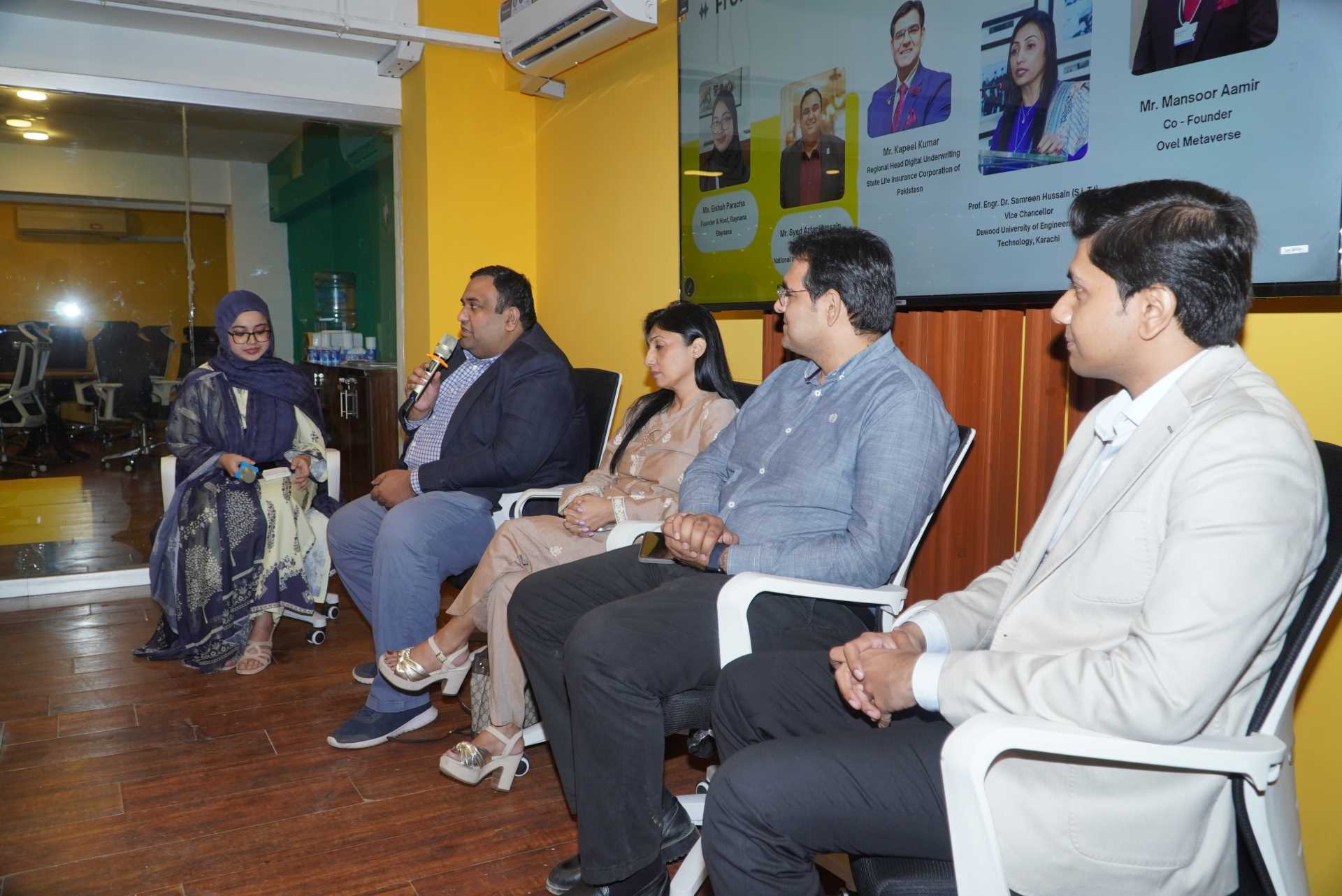
And now we come to one of the key conversations of our evening: our panel discussion on “Converting Youth Potential into Capability.” As we have been discussing, Pakistan has no shortage of young people with talent, ideas, and ambition. The real question, however, is: how can we create the right pathways for that potential to become skills, careers, businesses, and meaningful impact?
Today’s panel brings together perspectives from the start-up ecosystem, academia, the corporate sector, and youth leadership. We will explore how we can better connect education with industry, create more opportunities for young people to build and scale their ideas, and equip the next generation with the capabilities they need to succeed.
Ms Eishah Paracha will be moderating this session for us today. She is a Global Shaper and a founder working across Muscat and Karachi. She is the founder and host of Baynana, a growing media platform connecting conversations across South Asia, West Asia, and North Africa around technology, culture, youth, and the future.
I would also like to welcome our esteemed panellists to the stage. Please welcome:
- Syed Azfar Hussain, Project Director, NIC Karachi;
- Dr Samreen Hussain, Vice Chancellor, Dawood University of Engineering and Technology, Karachi
- Mr Kapeel Kumar, Regional Head of Digital Underwriting and Founder of The Founder Space
- Mr Mansoor Aamir, Co-founder of Oval Metaverse.
Ms Eishah Paracha (Moderator):
Today is very exciting for me because throughout my work in the past few years, I have conversed with a lot of builders working in tech, entrepreneurship, and academia. Today’s conversation in itself is very special and close to my heart because this room contains people who shape all of these conversations, and I am very happy to have our esteemed panellists among us. To begin, please give a very brief introduction of what you do and how your work impacts the community.
Syed Azfar Hussain, Project Director, National Incubation Centre (NIC) Karachi:
We have been in operation for the last eight years. We have incubated over 470 start-ups and accelerated almost 15 start-ups. We are currently inducting our next cohort for acceleration, which will bring it to 20 accelerated start-ups. What we do is help early-stage businesses, as well as businesses that are ready to raise capital or ready for investment. We build a community around them. The program is a public-private partnership: the public side is the Ministry of IT and Telecommunication through its Section 42 company, Ignite National Technology Fund; the private side consists of LMKT and YBG (Younus Brothers Group), which is one of the leading conglomerates in the country.
Dr Samreen Hussain:
I have served as the founding Vice Chancellor of Begum Nusrat Bhutto Women University in Sukkur and the founding Vice Chancellor of Aror University of Art, Architecture, Design and Heritage. Currently, I am heading Dawood University of Engineering and Technology. I am the first-ever female Vice Chancellor of an engineering university in Pakistan in its 76-year history, and that is an important milestone.
Now, coming to what I am doing in this area, because there is a great deal of work underway, let us set aside industry-academia linkages for a moment, as we are already doing a lot in that area. By the way, I am the Gen Z among Vice-Chancellors. When Khalid Banuri mentioned that he was 48, I thought I should point out that I am 47! Let me explain what we have actually done differently at the university. As an academic, I often bear the brunt of criticism from the entire industry, even though there is not always an alignment between the industry’s expectations and the constraints faced by the academic sector. These are two different subjects, and I will not go into their details here. Instead, I would like to share what we have achieved within those constraints.
First, I broke away from the conventional Business Incubation Centre (BIC) model. The Higher Education Commission (HEC) approached me and said, “We are providing you with PKR 1.6 million to establish this BIC.” I replied, “Keep that PKR 1.6 million.” Instead, I am investing almost PKR 728,000 every month in supporting my university’s start-ups at NASTP in Silicon Valley.
I believe that if you have a broken phone or a broken car, you will not take it to the electronic engineering or mechanical engineering department of a university to get it repaired; you need to go to the right place. Similarly, start-ups need an appropriate environment and the right support system to develop their products and become commercially viable. We provided them with that environment and address, and Alhamdulillah, out of our four start-ups, three are now up and running with active cash flows. This is what I have done differently at the university.
For a public-sector university, this was a significant undertaking because we are accountable to the Public Accounts Committee and must also deal with the financial constraints and deficits associated with the government sector. Nevertheless, Alhamdulillah, I am one Vice Chancellor who never asks for money from alumni or the government. Whatever they provide, I am happy to work with it. On this basis, we established the Research Product Development Unit (RPDU) at NASTP, and I warmly invite all of you to visit it. We have start-ups operating there, and just yesterday, our steering committee, which includes representatives from the Securities and Exchange Commission of Pakistan (SECP) and the Intellectual Property Organization (IPO), conducted the selection process for the next cohort of start-ups to occupy the available space.
Two start-ups are being retained because of their performance and cash flows, while two are moving out. One has merged with a performing start-up, Epsilon Smart Systems, while CyberGuard has merged as a spin-off to fulfil its orders. As Vice Chancellor of a public-sector university, this is the potential I offered, and we have put it into practice over the past two years.
It has now become a success story that I can share with other Vice Chancellors to demonstrate what we can achieve without changing the curriculum. We hear a great deal of criticism from industry. When I was a student, Banuri Sahib spoke about the gap between academic degrees and practical skills.
So, what are we doing differently to address this issue? First, we must recognise that not everyone is born to be an entrepreneur. This is an important distinction that needs to be understood.
I used to conduct Senior Management Course (SMC) and Mid-Career Management Course (MCMC) training sessions for bureaucrats, during which I would use the whole-brain model to help them understand their strengths and identify the professions in which they could excel. Industry placement is another area on which we are focusing.
Our graduate employability ratio was 89 per cent last year, and this year we have already reached 42 per cent, even though our convocation is scheduled for December. How are we developing these competencies?
As a public-sector institution, we are investing public funds in our students’ professional development by paying for their micro-degree programmes and international certifications. The Google Career Certificate in AI Essentials is now a degree requirement for every student at my university. We also provide Health, Safety, and Environment (HSE) certifications wherever
they are required by the industry.
As a result, when our students graduate, they do not leave the university with just a degree; they also possess an internationally recognised skill set. These are the kinds of changes we can introduce as academics within our institutions. We are putting forward these initiatives to demonstrate what can be achieved through investment in human development and human capital. This, in my view, is how we can realise the potential of our young people.
Kapeel Kumar:
I work with State Life, and I am also the founder of The Founder Space. As discussed earlier, we often talk about building ecosystems. However, I am sorry to say that I feel we have created more of an “ego system” than an ecosystem. Therefore, we should work together to build a genuine ecosystem where we support and help one another. By shifting from these ego systems to collaborative ecosystems, we can grow together and create opportunities for everyone.
Mansoor Aamir:
I am Mansoor Amir, co-founder of Oval Metaverse. We essentially build virtual reality environments for banks and schools, and I am really grateful that we were incubated in 2021 at NIC Karachi, and in 2022 we were accelerated at Katalyst Labs through A Hub.
I am also associated with the Global Shapers Community: I represented the community in 2024 at the WEF headquarters as curator that year, and this summer I attended the Annual Meeting of the New Champions representing all Global Shapers in Pakistan.
Eishah Paracha (Moderator):
Dr Samreen, since you are from academia, work with a university, and serve as Vice Chancellor, my question to you is: we talk a lot about future-readiness in education. How do you think universities right now are preparing and upskilling incoming youth beyond degrees? Do you think current academic skills are up to par, and how are we advancing on those fronts?
Dr Samreen Hussain:
I think I covered half of the response already in my intro: the MDP program and the RPDU initiative. Once, while talking to the Consul General of China, he said a very nice line:
“If anything starts with money behind it, it has a meaning.”
So, we are investing money in our students. When people talk about someone having a raw idea that nobody believes in, where no one puts money behind them, we are putting money behind them in terms of their rents and janitorial charges that we pay to NASTP, which comes to more than PKR 1.2 million monthly.
Nothing is charged to the student or to my fresh graduates. We have provided them with IPO certifications at our own cost and SECP registrations at our own cost. We are not just telling them, “Go with your idea.” We mentor them and put our money behind them through a longitudinal journey. This is something different that universities can do. Even when someone asked me, “How can you convert a mathematician into an entrepreneur?” I said all R&D revolves around data analytics, which is nothing but mathematics or social sciences- you name it! It is all about how we look at them and their utility. The point is this: Vice-Chancellors need to look beyond curriculum critiques, and industry should too. Taking engineering as an example: we are signatories of the Washington Accord, which means we have a curriculum on par with the 26 member countries.
That is why we are at Level 2. The real point is: what are we doing differently with our students? Here, we do not draw the line between tertiary education pedagogy and high school pedagogy. The true meaning of tertiary education to me is to stir curiosity; it is not to spoon-feed the student. However, we often try to spoon-feed them the same way they were dealt with in high school. I remember when I was taking courses at MIT: they gave me take-home assignments on the very first day I entered the class. Here, if I do that, students might go on strike and say,
“They don’t know the answers themselves, so they are asking questions before teaching us!”
We have to change the direction of the flow of knowledge. This is the difference between education and knowledge: we are imparting education, but we should be imparting knowledge. We should trigger and stimulate curiosity. Do we teach them every feature of a smartphone in a curriculum? No. Yet how do they know every feature of it better than I know my own phone?
That comes from curiosity. What is missing in our teaching is not the curriculum design, but the pedagogical style we maintain. We have to stir curiosity: let them read first, come back to class, question us, and have a debate, because tertiary-level learning is peer learning. I learn a lot from my classrooms. This is how we need to bring a paradigm shift if we really want that potential to surface and deliver.
Eishah Paracha (Moderator):
Moving on to Azfar: since you deal with the National Incubation Centre, work with start-ups, and work with students, do you see all of these skills, capabilities, and the learning coming out of universities translating into what founders and the industry need right now?
Syed Azfar Hussain:
Why do we expect all founders to come right out of university and immediately start their businesses? Why cannot a founder have ten years of industry experience before starting a business? This notion is actually incorrect. It is something I could play to the gallery with and have everyone in the hall applaud me for, but no one in research supports this. Around the world, mature founders build businesses through experience; they have 5, 10, or 20 years of experience, learn the ropes through different professional engagements, and then build something. Relying solely on universities to produce entrepreneurs is rare. Even among Ivy League students, people do not just step out as entrepreneurs right away; cases like Mark Zuckerberg and the big names we celebrate are exceptions. Not all of them were entrepreneurs straight out of university. We have to understand that gaining practical knowledge and building something, especially for a nationwide, national, or global solution, requires the desired experience.
Air Cdre Banuri made a great point during his welcome address: CITADEL’s focus is on building that broader ecosystem. A university alone cannot give you fully-formed entrepreneurs right away. They can nurture the entrepreneurial spirit in students, enhance it, and help them become early-stage thinkers, but expecting them to produce market-ready founders immediately is an unfair expectation. Having an ecosystem where you bring together corporations, universities, and people with the right connections makes you far more capable of becoming an entrepreneur who builds solutions that solve real problems. Hats off to CITADEL and Pathfinder Group for thinking along these lines, because creating what the industry actually needs is vital.
Regarding what universities are teaching: I have been part of different ORICs and BICs. Dr Samreen mentioned that she has restructured the traditional BIC model at her university, but I have been part of these programs and know good discussions are happening at the university level as well.
What we need to do is help students prepare for what is happening in the next one, two, or five years. We do not have time for 10- or 20-year policies anymore because of how rapidly things are changing. We just need to make sure their basics are strong, and they will find their way. We see innovation happening on the sidelines all the time; we do not always need a formal program for it; we just need an enabling environment and the right mindset around them.
For universities, instilling that mindset is enough. Even though I represent the largest incubator in Pakistan, I will be frank: many entrepreneurs, even at the student level, do not necessarily need an incubator. They can have their own way forward simply because they have the right mindset.
It is time for universities to develop that mindset, and the students will find their own way.
Eishah Paracha (Moderator):
I agree with what you mentioned about exposure and being connected to the industry out there. But right now, for example, if someone has been working in tech, we have AI and emerging technologies coming in that cut the entire experimentation phase very short. I would like to ask Mr Kapeel shortly that since you work with founders as the founder of The Founder Space and deal with many people who are building products, how do you see people moving from a promising idea to something that actually survives in the market? Because at the end of the day, the goal is to produce something that delivers real output within the industry.
Kapeel Kumar:
The question is not whether a start-up will grow, but whether it will create value. When we create value, start-ups grow organically because they have a market for their products or services. In our country, many start-ups are launched simply for the sake of starting a business, often because everyone else is doing it. I believe that people should first gain five to ten years of professional experience before starting their own businesses.
I think the founders of any start-up should complete two or three internships after graduating from university. They should pursue these internships in companies operating in the same field or industry as the start-up they intend to establish. During these internships, they should observe the systems, supply chains, and value chains of these companies and understand how they conduct their businesses. This experience will help them establish and manage their own start-ups more effectively.
My request to founders is to conduct proper research before launching their businesses. Business Incubation Centres (BICs) have an important role to play in universities, provided they are functional. Out of the 120 BICs in Pakistan, only 13 are functional. BICs should operate effectively and serve as support systems for students. Only then will start-ups begin to grow and succeed.
If our foundation is not strong and research-based, we are more likely to experience failure. In Pakistan, 80 per cent of start-ups do not reach their third birthday.
Eishah Paracha (Moderator):
Mansoor, you have been working with Global Shapers for a very long time; you served as curator; you are a co-founder yourself; and you work with a very niche audience. For everybody here, Mansoor works with metaverse technology, which is something largely unexplored in Pakistan, one of the first start-ups in the country to do something similar, and you have represented Pakistan on stages all across the world. To wrap it up and sum up the theme of moving from Youth Potential to National Impact: how does individual success become national impact?
Mansoor Aamir:
I feel like we all have a role to play here. Starting from universities, as Azfar mentioned, it is all about the entrepreneurial mindset that we need to inculcate in our students, and then providing them with a platform. You can provide students with an entrepreneurial mindset, but then we need an ecosystem like CITADEL and all these incubators and accelerators we now have.
There was a time a few years back when we did not have accelerators in Karachi or Pakistan, and that was where we found a gap. A lot of people came in and started accelerators because they were needed: many start-ups were incubated, but after six months at NIC, they had nowhere else to go. So, we need to create a complete pathway. We need to connect these start-ups, our youth, and anyone who wants to do business or sell something, because every good business needs recurring sales, paying customers, and a strong team.
These are the elements we need to work on. If we have all the pieces in place, we can build a great ecosystem. We just need more groups and entities like CITADEL and Pathfinder Group, and leaders like Azfar and Jehan Ara to step up, and for others to follow their lead, so that we have a better country and a better world.
Eishah Paracha (Moderator):
With that, we conclude the panel. I would like to thank you all for joining us today and for sharing your thoughts. Now we move on to the Q&A session.
Audience Member:
We have talked about education and knowledge, but where is the wisdom? I think what was said a minute ago touches upon the very foundation of our social existence, which is the exchange of information. It is wonderful to acknowledge and respect what Dr Samreen has achieved, but as a social ecosystem, we are not connected. Technology is important, but what about wisdom?
There is a saying attributed to Hazrat Ali (R.A.) that highlights the difference between a person who relies solely on his own thoughts and one who seeks advice from others to survive and succeed. I think we often overlook this social context in Pakistan. We have beautiful hearts, and we are good people, but as Kapeel was saying, our egos are the real problem. They are making us unwell as a society, and that is why we continue to struggle.
Eishah Paracha (Moderator):
Yes, of course. A lot of the time, talent operates in silos, and we have to connect everything into an ecosystem, as Air Cdre Khalid Banuri mentioned. That is why all of us are in this room together: to connect, network, figure out where we can share opportunities, and Insha’Allah create a better future for Pakistan.
Mahrukh Faisal (Moderator):
Let us quickly circle our focus back to CITADEL Karachi and what comes next. What does this chapter look like? What opportunities are we looking to create, and how can entrepreneurs, businesses, talent, and partners become part of this journey?
Air Cdre (Retd) Farhan Ahmed, Project Director, Pathfinder CITADEL:
I totally agree with Ma’am Jehan Ara when she said that it has become tiring to the ears, frankly speaking, at least for my generation, to keep hearing about “youth potential in Pakistan.” It is overused, just like that other word, “resilience in Pakistan.” But this time around, having worked with this team for quite some time, I must say: there is something very peculiar about these young people. Young people today are very different. I will tell you very frankly:
today we talk about youth empowerment, women empowerment, and we say the youth are the future, that they are who we are going to be for Pakistan and all that. But let me tell you very frankly why we actually do it: we do it to stay viable. If you do not speak their language, you are done for. If you do not walk the talk, they will not listen to you. If you do not understand Gen Z’s language, you become irrelevant.
So, gentlemen, live in the age you are actually living in! We have morals, we have lessons, and we have experience, all said, agreed, and done; we know that. But let us ask ourselves some questions: Is that enough for this age? Is it good enough for these young people to simply follow us? What do they actually need? They have the minds; they have the courage; in fact, they are more patriotic and loyal than I am, despite my having worn a uniform for 33 years. They have more of Pakistan within themselves than many of us grey-haired people sitting in the front rows! What do they need? They just need a platform.
They just need a field to run in, not for us to create impediments, but to create pathways for them. And that is what we are here for. I have listened to the panellists and to the wise words of Ma’am Jehan Ara. The contributions she has made would probably take two to three lifetimes for anyone else to achieve, but she did it in just one!
Why are we in Karachi? Why CITADEL? Why this focus on empowering youth? It is for our own selfish reason: to stay viable with the youth, to walk alongside them. After achieving what we did in one year, Air Cdre Khalid Banuri mentioned it and explained it elaborately, to sum up what we have done since starting in Islamabad last August:
we have put the youth of Pakistan on the pedestal of the WEF, on the pedestal of the OIC, and on the pedestal of the DCO. And now we are going with Swedish Fintech Delegation from 6 Oct to 8 Oct 2026 organised by Switzerland Global Enterprise (S-GE) at MANAMA, Bahrain
This has been our journey, and none of it would have been possible without the
young people sitting at the back.
Just see the difference: whenever one of their members comes up, they cheer loudly, but whenever one of us comes up, it’s just polite clapping!
So, ladies and gentlemen, it is an eye-opener for all of us. Make your pace fast enough to keep step with them. Do not claim what you cannot deliver. Do not preach what you do not practice.
Here at this platform, Pathfinder CITADEL is in Karachi not for its own egoistic system. We do not wish to create another silo of technology. The industry is here, students are here, academia has been here; we are here to collaborate, we are here to cooperate because we believe in sharing.
It is our firm belief that silos get us nowhere. So, we are open to partnerships; we are open to walking with anybody and everybody who contributes to the future, and that means the people sitting at the back.
Mahrukh Faisal (Moderator):
As we come toward the final part of the evening, we have an opportunity to hear directly from the leadership behind this vision, who has been with us virtually since the beginning today.Pathfinder CITADEL is ultimately about bringing people, ideas, and opportunities together, and creating the connections that can lead to something bigger.
To share his thoughts on where Pathfinder CITADEL is headed, what this Karachi chapter can mean, and how all of us can play a role in the journey ahead, I am very pleased to invite our Co-Chairman, Ikram Sehgal.
Ikram Sehgal, Co-Chairman, Pathfinder Group:
What I have heard tonight has been very refreshing.The main question before us is: where do we take Pakistan, and who is there to take Pakistan forward?The point made by everyone is that the consensus opinion is clear: all of us together can do this if we cooperate and coordinate. For this discussion, I must commend Air Cdre Khalid Banuri, Air Cdre Farhan Ahmed, the CITADEL team, and of course Jehan Ara and the others sitting here. We can only make dreams become reality if we nurture that dream and leverage our vision into practical life.I think I am very lucky.
I have just turned 80, and I have seen Pakistan through a lot of tribulations, right from the 1965 war, the first one I fought, through two and a half wars later, and then all the problems we have faced all along.The problem lies not in anything else, but in leadership. We have tremendous capability. I do not want to use the word “potential” either, because we have the future of Pakistan sitting right here in this room, at least a small semblance of it in the form of the Global Shapers. They represent the Gen Z that we are looking at to take us into the future.
What we would like to do is to leverage that, as our motto says, to turn every challenge into an opportunity. I take you back: being a member of the World Economic Forum for almost 38 years now, I found that Pakistan was underrepresented and barely even shown in those corridors.
So, I took it upon myself to change that. It cost a lot of effort and a lot of money, but we persevered. Some of you have been to Davos and have attended our breakfasts there.
Insha’Allah, we will host our 22nd breakfast next year. What we did in Davos was a first for Pakistan: for the first time in the history of Davos, we took startups there. I am sure that in January you will see a lot of countries bringing their startups to Davos, following what we did, but it was Pathfinder Group and CITADEL that led the way, and it was a magnificent thing.How did we do it?
We did it because we believed in ourselves. We had the confidence that we could do it and show Pakistan for what it really is: a land of opportunity. Pakistan has everything: minerals, resources, manpower, and a strategic geopolitical position. You just have to make sure that what happens here can be leveraged into something tangible.
I want to repeat: I was in the streets of India as a prisoner of war escaping from captivity, barefoot, in a lungi, with not even a single rupee in my pocket. Yet I am here today heading a major group. Why was that possible? First of all, it is Allah’s blessings, and with Allah’s blessings comes the belief that it can be done.
What you dream, you can turn into practical reality and into great opportunities for yourself.That is what we have set out to do today. We are sitting here together; let us put all our resources together, let us put all our brainpower together, and let us leverage that into something good for Pakistan.
Pakistan is a great place; it is the centre of everything. We often run ourselves down, but we have a tremendous amount of potential. I use the word “potential” not in the abstract sense, but in the sense that we must leverage it into real opportunity.
I am very grateful to all of you for being here at CITADEL and Pathfinder Group today, and I thank you for taking the time.
Please help turn this time into something tangible, and give us that opportunity and leverage to take us into the world that we all hope for, a world we have not yet fully achieved, but certainly can achieve.