




Revolution has always evolved throughout history; it has never been a fixed idea. It has never belonged to any particular class, system, or method. As technology advanced and political and ruling systems changed – from monarchies to nation-states – revolution changed its shape along with them. From the French Revolution to the anti-colonial independence movements, revolutions were primarily associated with armed insurgency, resistance to colonial rulers, and protests against unjust kings, corruption, elite control, and unfair economic structures. The Industrial Revolution further reshaped the revolutionary moment by accelerating urbanisation, deepening class divisions, and expanding labour-centric industries. It generated a stronger demand for labour rights and new forms of political representation. In the twenty-first century, however, revolution is more commonly driven by social media platforms, online campaigns, and youth-organised protests capable of bringing millions of people together from around the world. The methods have transformed, but the objectives remain the same: to criticise inequality and demand social, political, or economic transformation. Historical and modern revolutions alike can, in part, be read as struggles against unjust systems of authority and privilege, though this is only one of several lenses through which they can be understood – economic, political, cultural, and religious factors have all played their part. Their consequences differ, however, because contemporary movements tend to be more decentralised and often struggle to achieve broader structural transformation.
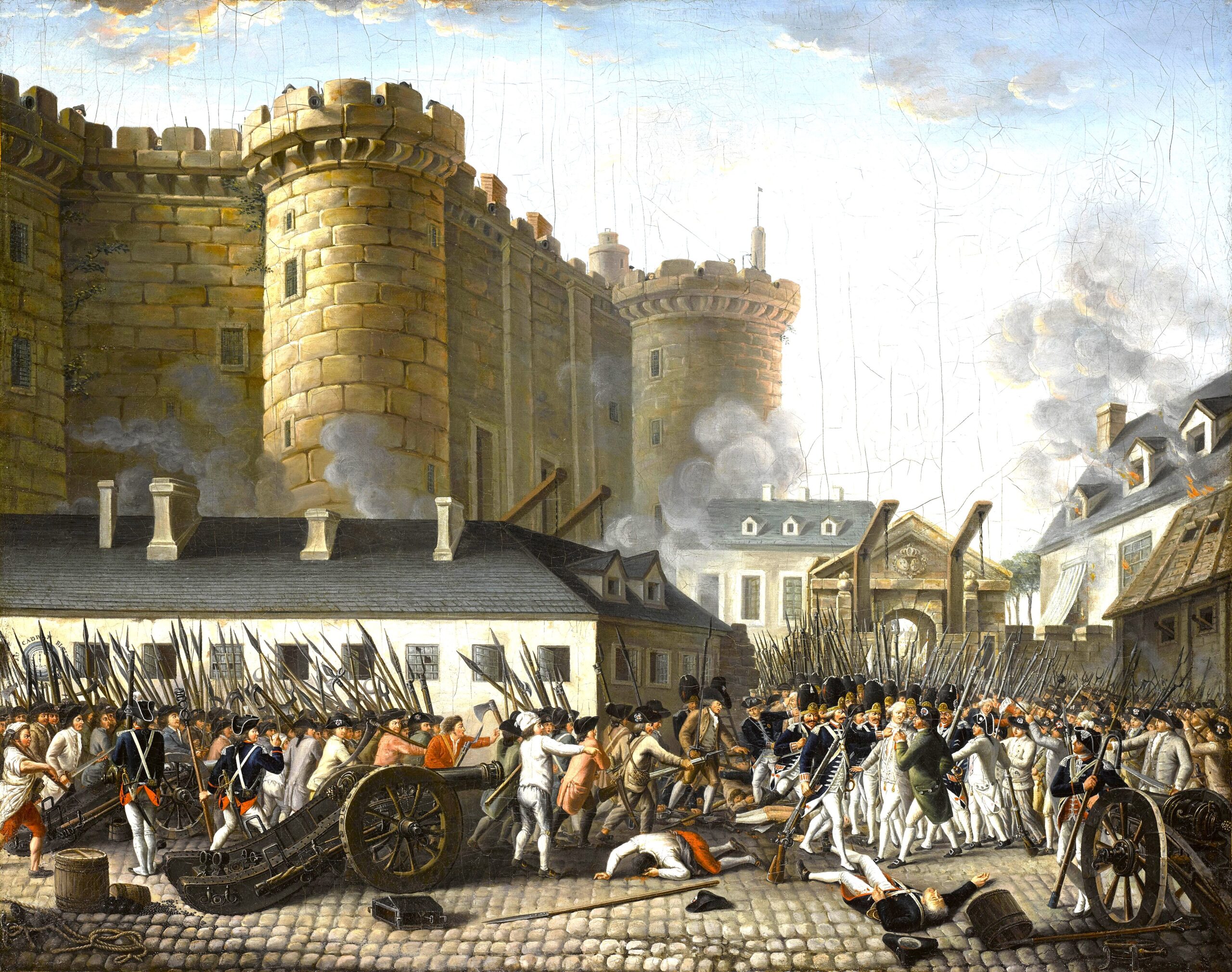
Historically, the French Revolution is one of the clearest examples of how economic suffering becomes political rebellion. In 1789, France was a society organised around inherited privilege. The monarchy and nobility enjoyed wealth and status, while the common people were subject to heavy taxation, faced extreme hunger, and were denied political power. As food shortages worsened and prices rose, the burden fell disproportionately on ordinary citizens. The French Revolution shows that revolutions are born from hope but shaped by conflict, violence, fear, and competing visions of the future. Despite the chaos, it dismantled deeply entrenched monarchical privilege and demonstrated that ordinary people could become historical actors in their own right. The Russian Revolution of 1917 offers another important example: The Tsarist monarchy proved incapable of meeting the demands of the common people, and socialist ideas, among other political and economic grievances spread rapidly among workers and political organisers, feeding into the eventual uprising. The Iranian Revolution provides a further example, though one that stands apart from the others in important ways. In 1979, the people rose against the dictatorship of Mohammad Reza Shah Pahlavi, driven by anger over his corruption, his alignment with Western powers, and the lack of political freedom under his rule. Yet unlike the French or Russian uprisings, the Iranian Revolution was not primarily a struggle over land, wages, or class position; it was, at its core, an ideological and religious revolution. Ayatollah Khomeini and the Shia clergy gave the movement its language, its leadership, and its ultimate vision: not simply the removal of an unpopular monarch, but the replacement of a secularising, Western-oriented state with an Islamic system of governance rooted in religious law and clerical authority. Opposition to the Shah’s rapid Westernisation, his perceived subservience to the United States, and policies seen as eroding Iran’s religious and cultural identity mobilised a broad coalition – clergy, merchants, students, and the urban poor – under a shared moral and spiritual framework rather than a shared class interest. This gave the revolution a distinct character: its grievances were economic and political, but its driving force and its eventual outcome were ideological and religious, aimed at reordering society according to faith rather than redistributing wealth or power among classes.
Beyond these cases, the anti-colonial revolutions across Asia, Africa, and Latin America further broadened the meaning of revolution. Their struggles were directed not only against local rulers and kings but also against the foreign empires that controlled their lands, resources, and political authority.
One useful, if partial, way of understanding why people revolt comes from Marx, who argued that revolution does not occur simply because people are angry, since anger exists in every society; it begins when people come to see their suffering as the product of an unjust system rather than personal misfortune, a shift he termed class consciousness. This idea offers some insight into the French and Russian revolutions, where grievances over land, wages, and inherited power played a significant role. It applies far less neatly to the Iranian Revolution, whose central motivating force was religious and ideological rather than economic, and it captures only part of the picture in the anti-colonial struggles, which were shaped as much by nationalism and the fight against foreign rule as by class interest. Taken together, these revolutions are best understood as challenges to inherited and unaccountable power more broadly, arising from injustice and inequality – economic, political, cultural, or religious – rather than from any single cause. These earlier revolutions also shared certain practical features: they depended heavily on physical spaces, street movements, crowd mobilisation, and print media. Revolutionaries typically distributed pamphlets, organised strikes, and called people out into the streets.
Over time, however, revolution evolved from a fight against a single ruler to a fight against an entire system, and it has now transformed further into a digital-age movement in which people fight for justice, freedom, and dignity. The key difference between the older revolutions and today’s Gen Z movements lies in the structure of power being challenged. Older revolutions were typically fought against monarchies, empires, and industrial capitalism – systems that were vast, hierarchical, and often spread across multiple continents, which made these struggles prolonged. Contemporary revolutions by contrast are usually confined to a single state and can mobilise participants within days, thanks to modern technology and social media platforms.
Recent Gen Z movements, particularly in South Asia and Southeast Asia have given rise to a new form of modern revolution. This wave arguably began with the Arab Spring in 2010–2011, when the Tunisian president resigned after weeks of mass protest. Videos and photos of the Tunisian demonstrations went viral on Facebook, YouTube, and other platforms, and as people elsewhere saw that change was possible, protests spread rapidly across the wider Arab region. More recently, the youth-led protests in Bangladesh in 2024 offered a powerful example of this modern form of revolution. The movement began as opposition to a quota system in government jobs, with widespread unemployment and limited career opportunities fueling deep frustration among young people. What started as dissent against the quota system soon grew into a broader movement for political change.
In 2025, Gen Z protests in Nepal illustrated another dimension of modern revolution. The unrest was triggered by the government’s decision to ban several social media platforms. What initially appeared to be a dispute over freedom of expression quickly expanded into a wider outpouring of anger over corruption, nepotism, unemployment, and the privileged lifestyles of the political elite. Similarly, in 2022, Sri Lanka’s Aragalaya movement began when Gen Z activists organised protests against the government amid a severe economic crisis, after the country defaulted on its debt. The pressure of the movement ultimately forced President Gotabaya Rajapaksa to flee the country. More recently, in India, remarks made by Chief Justice of the Supreme Court Surya Kant – comparing unemployed youth to “cockroaches” who turn to social media and activism out of frustration – sparked outrage among young people online. The backlash led to the formation of a new political party, the “Cockroach Janta Party,” which quickly gained attention and popularity among Gen Z internet users. The resulting pressure, generated through what became known as the “Jantar Mantar Protest,” ultimately contributed to the resignation of the Indian education minister.
Taken together, the evolution of revolution – from these older struggles to today’s Gen Z movements – shows that revolution continually adapts to technological change while its underlying objectives remain constant. As technology has evolved, the methods of revolution have transformed even as its core purpose has stayed the same. Revolution has shifted from a prolonged struggle to transform an entire political structure to a faster, digitally driven movement often focused more narrowly on changing leadership. In this sense, modern revolutions tend to produce more limited outcomes than their historical predecessors. Ultimately, the success of the modern Gen Z revolution will depend on its ability to convert digital mobilisation into lasting institutional reform and genuine government accountability.