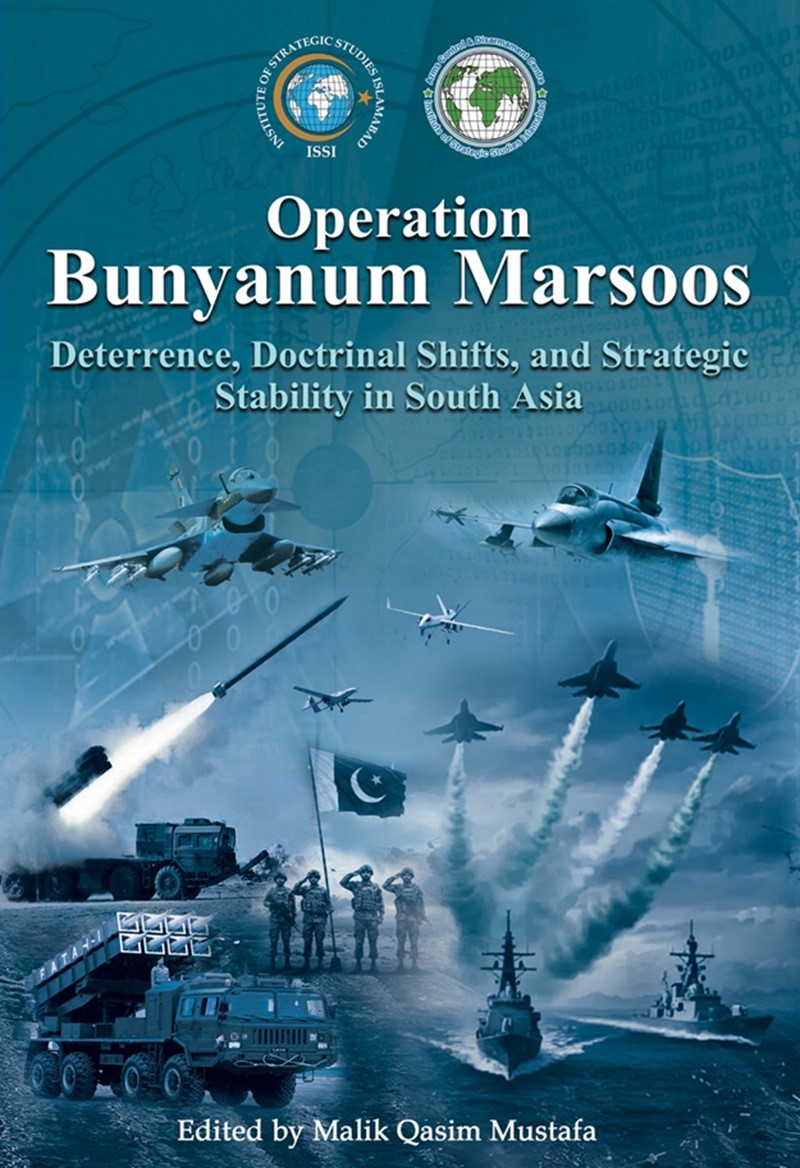



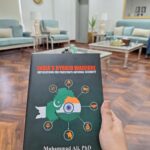
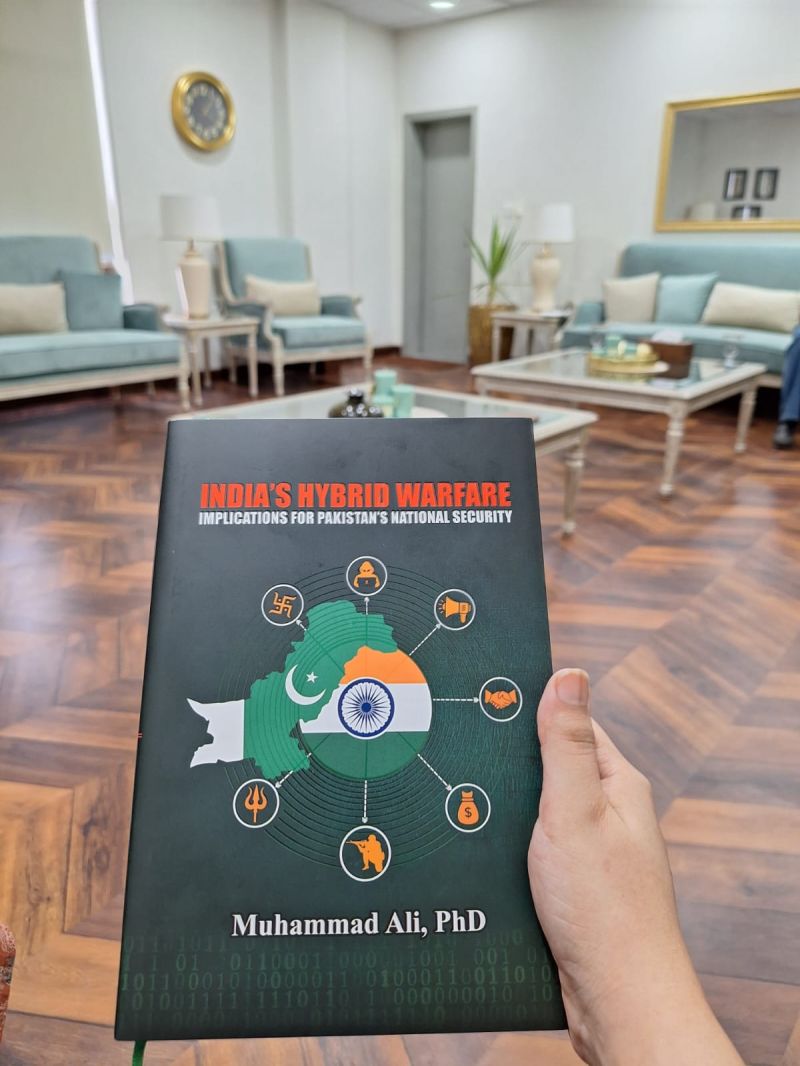
(South Asia Watch-SAW, 2026), ISBN: 978-627947530-5 (Pages xiv- 414).
The Pahalgam incident, causing a four-day mini war between India and Pakistan, has attracted the attention of international academic communities towards the South Asian regional nuclearised order, where New Delhi’s reckless strategic calculation has once again gone unchecked and unrestrained. Its attempt to establish a new normal has proved a new abnormal while jeopardising peace, security, and stability in the region. The aftermath of the four-day armed clash compelled intellectual communities worldwide to upgrade their conventional analytical frameworks, while also shifting away from their exclusive focus on Modi’s ultranationalist, ideologically driven political manifestations. In this scenario, the book under review presents a non-traditional overview of Indian regional engagement, aligning with the hybrid warfare doctrine supported by the updated Indian strategic culture. It is mainly based on extremist ideological patterns rooted in the notions of Hindutva and Akhand Bharat, which are the epicentres of the book’s scholarly conversation, carried out by Dr Muhammad Ali, an alumnus of an Islamabad-based university. Alongside building an international reputation grounded in his intellectual strength Dr Ali sought to weave his professional and academic experience into the book’s central theme: how shifting global and regional power dynamics affect Pakistan’s national security. His intellectual insight about India’s explicit use of hybrid warfare doctrine against Pakistan, forcing the Islamabad-based defence planners to take appropriate security measures, underlined a turning point in the conventional patterns of the New Delhi-Islamabad strategic contest.
The book’s central theme is divided into three directions: New Delhi’s use of hybrid warfare under the Modi government’s ideological transformations of the country’s foreign policy, its inevitable impacts on the conventional designs of Pakistan’s national security, and the contribution of both factors to the existing literature on the South Asian regional security environment. In other words, this book tells the story of the changing features of New Delhi-Islamabad’s decades-long strategic competition, where the exclusive use of conventional military capabilities has become a thing of the past with the rise of hybrid warfare. The book’s seven chapters cover different topics related to the conceptual understanding of hybrid warfare and its South Asian version introduced by the Modi government. After briefly elaborating the book’s core argument, its transformation into a systemic study supported by a comprehensive literature review, and the impact of India-launched hybrid warfare on Pakistan’s national security, the introductory pages of the first chapter concisely explain the conceptual understanding of the hybrid warfare phenomenon and its South Asian implications. The qualitative research design, using a combination of descriptive and explanatory techniques, outlines the book’s structure, data collection methods, and the challenges the author faced during the study, as noted in the first chapter. The subsequent chapters initiated the debate on India’s illusion of securing dominant status in its region through extremist ideological patterns, rooted in a belligerent approach to serve New Delhi’s contemporary strategic aspirations.
Arguments about India’s quest to become a regional hegemonic power are primarily linked to its relations at the regional and extra-regional levels, while consolidating support for its proclaimed rising-power status. According to the second chapter, this has led New Delhi-based political decision-makers to cultivate supportive, multi-level collaborative interactions exclusively with great powers by activating India’s global political and diplomatic outreach. The third chapter outlines an adequate understanding of Hindutva ideology and its genesis in Kautilyan strategic thought, and their emerging configuration with hybrid warfare doctrine. It provides a logical understanding of Indian strategic thinking, its major turning points, explicit projection in foreign policy, and transformation in contemporary policies of Modi’s government. The fourth chapter places exclusive emphasis on hybrid and 5th generation security threats and their significance for Pakistan’s national security in the age of disruptive technologies. It explains the Indian preferred ways of using hybrid warfare as an appropriate tool for exaggerating Pakistan’s internal crisis of diverse nature, corresponding to exploiting domestic vulnerabilities, and creating a security dilemma in the region (p. 181). The Modi government’s multiple offensive manoeuvres against Pakistan, which intensify Islamabad’s struggle on the economic front, along with information operations through manipulated facts and worldwide disinformation campaigns, are the main points of the book’s fourth chapter. The mention of the EU Disinfo Lab report (India Chronicles), spreading unconfirmed information and unverified facts through fake news outlets, further points to New Delhi’s updated hybrid warfare approach against Pakistan (p. 195-196).
The arguments in the fifth chapter cover Pakistan’s comprehensive national response to India’s increasing reliance on hybrid warfare. In this chapter, the author articulates Pakistan’s proposed strategic choices and way forward in the politico-diplomatic, economic, information, and cyber domains. The analysis suggests that formulating credible confidence-building measures in the cyber domain is an unignorable demand for regional stability, but rationalising it in the desired direction is a challenging task (p. 241). An updated account of varying arguments on the recent phase of India-Pakistan military face off 2025 has been maintained in the sixth chapter, in which the discussion focused on the aftermaths of the Pahalgam incident, and Pakistan’s decisive and well-calculated retaliatory response in the form of Bunyanum Marsoos, aligned with Article 51 of the UN Charter, confirming every nation’s inherent right to self-defence (p. 257). The Chinese technological support to Pakistan’s warfighting capabilities, especially in the air defence systems enabled Pakistani forces to shoot down Indian fighter aircraft, including the Rafales. Chinese strategic support helped Pakistan secure victory by creating air superiority over India (p. 265). The last chapter summarises the arguments of all chapters and a concise conclusion, in addition to articulating five takeaways and recommending new research dimensions to continue the book’s debate.
Based on these descriptions, it can reasonably be maintained that the book discusses the aggressive transformation of Indian foreign policy and the use of Hindutva ideology as a transformative vehicle in Indian strategic thinking, aligning with the hybrid warfare doctrine. The author’s argument about the initiation of a new episode in New Delhi-Islamabad relations after the 2025 Pahalgam crisis could be treated as an appreciable contribution to the existing literature on changing patterns of South Asian regional strategic affairs. It could also be considered a commendable academic investigation into hybrid warfare and its application in South Asian regional security complications. It also explores the inevitable connection between India’s contemporary strategic thinking under Modi’s leadership and its deteriorating impact on peace and stability in the region. This book could be treated an essential read for people interested in understanding the post-2025 dynamics of South Asian regional political order, affected by the India’s increasing reliance on the combination of conventional and non-conventional warfighting plans.