


All is not well in Balochistan, but not all is lost. That reminds me of Martin Luther King, Jr., who said: “We must accept finite disappointment, but never lose infinite hope.” The resilience of the people to stand for their due rights, coupled with the bravery of the security forces to assert the writ of the state in all adversity, is the silver-lining in the backwaters of Pakistan. All that is desired is the right resonance between the two, and it is here that the role of political parties is in wanting in all fairness. They are the ones who are in need of bridging the gap between the state and the citizens.
Balochistan, unfortunately, is a victim of diverse narratives. As home to the world’s ancient tribalism, an inherent gun-trotting culture, societal defiance to foreign intervention, and a lopsided Westminster awareness, the reclusive and geographically largest province of Pakistan has its own power-laden crests and troughs. Thus, it is experiencing dramatic highs and lows in the realms of stability, governance, and security. That has hindered it from functioning as a standard stable and democratic polity. Cross-border influences and meddling in terms of men and material have made it worse.
The good point, however, is that the youth of Balochistan have a supra-enlightened level of awareness. Their view of “Pakistaniat”, as eulogized by Javed Jabbar is “from pride in being Muslim to overcoming historical hardships and resilience as a nation,” is never lost. Despite being inferior in population to a sprawling landmass, many of the Baloch have had the luxury of seeing the world from not only the Soviet and Capitalist perspective, but also from the crosscurrents of Middle Eastern dynamics. That is their erudition, and will go a long way in overcoming the fissures of insurgency and bad governance.
The million-dollar question is, why is the province teetering with instability? There is no simple answer to it. It is trapped in an unstable circle where power dynamics are in a flux, hindering consensus and subsequently hampering peace. At the same time, the province is home to deeply polarized narratives held by different stakeholders. Moreover, there is a communication deadlock which has pushed the province and its people into a syndrome of ‘victimization’, aggravating socio-economic and political grievances.
Let’s take a brief overview of various narratives in an earnest endeavour to figure out a way forward:
The most applicable narrative is from those who incidentally cater to hardliner-ism. The locals are subscribing to it in a larger number. That is also the popular nationalist version, though. They base their arguments on deprivation, and absence of their due socio-political rights. They blame the authorities for usurping their legitimate rights, and indulging in exploitation. That underscores a prevailing sense of alienation, soaring identity crisis and an unending duel over their resources. The people, mostly in the peripheries, hint at political marginalization, heavy presence of security forces and the phenomenon of ‘enforced’ disappearances as elements that fuel resentment. Last but not least, they openly express their distrust in ongoing developmental projects, especially those under the CPEC domain, and canvass that they are neither on board nor beneficiary. Lack of Sui gas supply to the locals is primarily a case in point.
The second narrative that is rapidly taking roots is from the insurgents. They rely on societal defiance and armed resistance, and tend to justify violence by citing a breakdown, and frequent interruptions in civil rule. They also canvass that the Westminster democratic model is alien to Balochistan, and the state-centrism in vogue is a curse. This section of society has its proven connections with extra-territorial elements, and takes cues from local warlords who had decamped for one reason or another, and are busy fueling and financing an armed resistance. Likewise, many of these elements being in cahoots with foreign spying agencies are no secret. They also have well-mushroomed abettors in the tribal and political realms that widely act as sleeping cells. The paradox of ‘missing’ and ‘forcefully abducted’ persons forms their thrust of grievance, and remains an unresolved enigma despite adequate and broad-based intervention of the state in addressing this fissure.
The third and most indispensable one is the tribal chieftains’ perspective. The province conventionally being a tribal society led by Sardars (elders) has its weird and unqualified logic of mandatory obedience to the kingpin. This blind-obedience aspect is toiling, and has had its repercussions over the entire society hampering development and a collective sense of belonging with the Statehood of Pakistan. That had assumed an official decorum as State authorities after the creation of Pakistan relied heavily on a single window initiative of befriending the tribal chiefs, and that too at the cost of locals. That led to further empowering them, and the state went into an appeasement mode with them with the passage of time. The subsequent crossing of swords with them as the state tried to assert its authority had led to a somersault. Sardars only focus was on retaining their grip over the fiefdom by hook or crook, and enjoying unhindered autonomy.
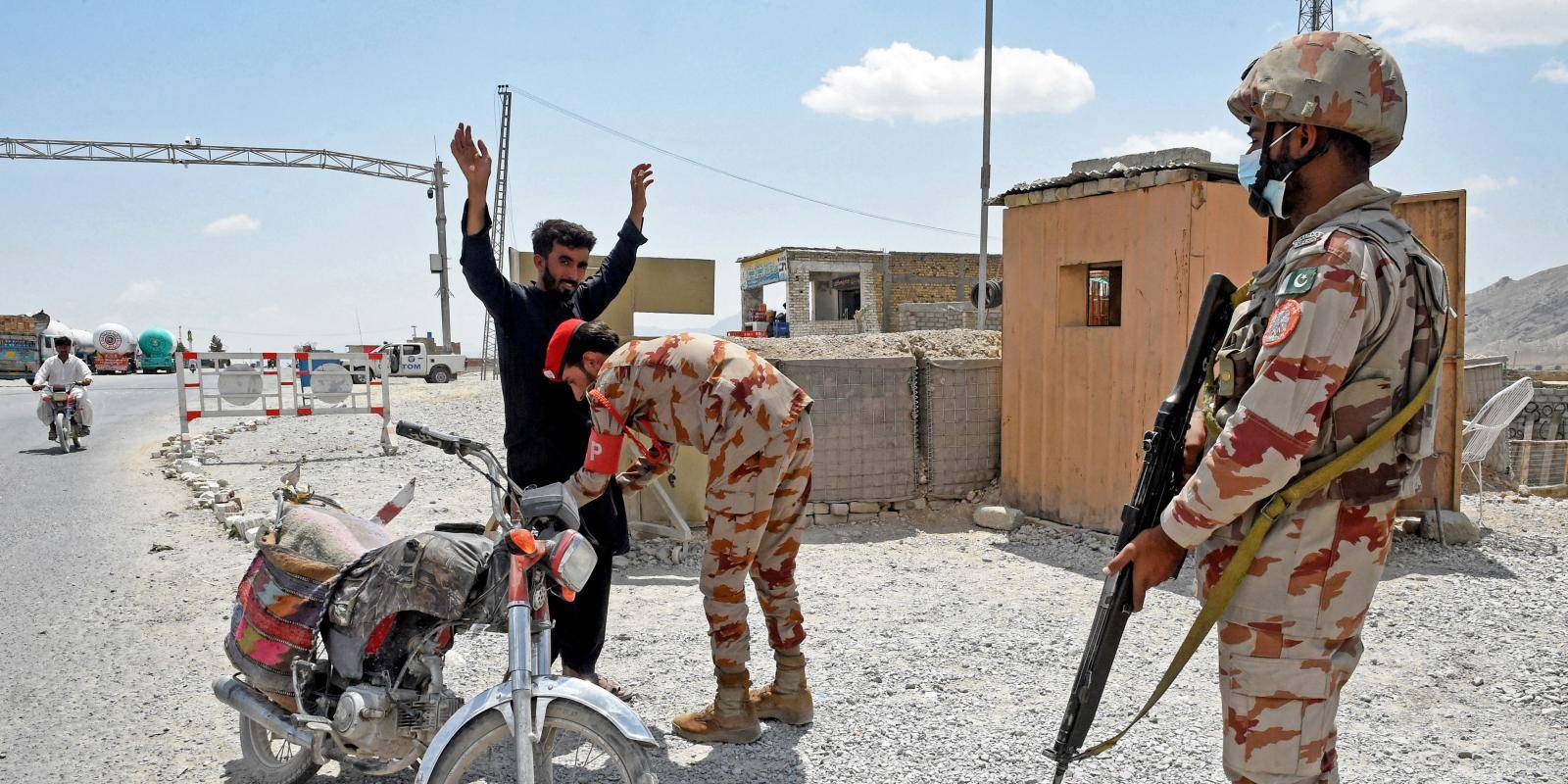
The fourth and most vital narrative that is in need of being properly understood is of the security forces. The prime intention of law-enforcement agencies is to further the writ of the state, and in doing so they have a zero-tolerance towards separatists and militants. Their prime mandate is to deter foreign intervention, and to exterminate the terror nexus both home-grown and infiltrated. The security forces presence in the province is a source of strength for the general masses and the state-apparatus, but has widely been canvassed as a burden on economy and as an element of intrusion. The point is a large number of nationalists and pro-insurgency elements see the assertion of state writ through the law-enforcement agencies as an impediment on their path of objectives. Thus, the conflict of interest has breached the political divide. Poor civil institutional outreach, rampant corruption and the so-called elected strata’s lack of interest towards their constituents had turned the province into a quagmire. Thus, the province simmers with lawlessness, degeneration in terms of development and governance, and a low-intensity insurgency, inevitably compelling the security edifice to intervene and lead from the front as the province faces an existential threat.
Balochistan is 43.6% of Pakistan’s area, but has a nominal population of about 14.9 million, according to the 2023 census. Lopsided and ad-hoc governance modules since 1947, as well as frequent federal interventions, had pushed it further into regression. The so-called 18th Amendment that was meant to empower provincialism did not fix the institutional causes of Balochistan’s marginalization. The reasons are self-explanatory as the elected cadres and local administrations looked the other way, and preferred nepotism over genuine representation and development.
The irony is that a province that has almost half of the country’s landmass has only 16 general and four reserved seats in a National Assembly of 336, rendering it a status of an outcast: irrelevant in power politics and decision-making domain. Moreover, lack of interest of major political parties in the backward province and mushrooming of tiny nationalist entities had led it into a terrain of fragmentation and indecisiveness in national affairs.
A glance at the financial profile of the province reveals that the 2026-27 budget totals Rs1.089 trillion. Of this, Rs797 billion is non-development spending, and Rs206 billion is the provincial PSDP: Rs106 billion for new schemes and Rs100 billion for ongoing ones. Including federal and foreign-funded projects, the total development spending is about Rs291.5 billion, whereas the province’s own revenue target is Rs170 billion. Thus, it is no surprise that the UNDP places Balochistan’s overall development level at par with Sierra Leone, which has a human development index (HDI) of 0.467. Balochistan’s HDI’s, though being a sub-national entity, is 0.444.
It is worth-noticing that the reasons Balochistan is sliding into anarchy and parochialism has its roots in socio-economic and political waywardness. Lack of an efficient and public-centered governance edifice is at the root-cause of all ills. It is fueling fire to pro-insurgents and pushing the people into a secluded domain of inactivity. Smuggling, poppy cultivation and gun-running have further compounded the crisis, and opened vistas of social mobility in an unlawful domain. A recent study trip to the province led to the impression that around 60% of pro-state people are scared and fence-sitters, who cannot refuse interactions with the insurgents and indoctrinated terrorists. This is where the state has to push back to reclaim the space that non-state actors and their political abettors are encroaching upon.
It is alarming to note that the year 2026 has proved to be the worst in terms of a spike in terrorism. Profile killing of Punjabi workers, two daredevil attacks on Jaffer Express train, the Baloch Liberation Army (BLA) launching a coordinated offensive on, at least, 12 towns and cities across the province under an operation named, Herof II (Black Storm II), apart from suicide bombings and sporadic attacks on security installations, schools, banks and markets are instances that hint at caving in of state writ. The security forces, of course, can neither be mere spectators, nor their leading from the front be termed as unwarranted. Their sacrifices and valuable input, indeed, are in national interest.
Yet, there is a socio-political and judicial dimension too to this fissure and cannot be overlooked. Pro-BLA elements and their sympathizers in the political circles voice concern over the hasty judicial process through which they are met with. The life-imprisonment of Baloch Yakjehti Committee’s Dr Mahrang Baloch, in what they term ex-parte sentencing, is a case in point. Many believe her stance was in locals’ interest as it pertained to ‘missing persons’, to which the state was ‘callously’ not forthcoming in redressing the grievances. A synchronized and ordained judicial apparatus, and a vibrant appellate, can turn the tables in not only dispensing speedy justice but also putting an end to concerns in terms of inordinate delays and inherent procedural lacunas.
There is a catch-22 situation here: the entire issue of missing and forced disappearances is not only thoroughly debatable but is also infected with misnomers. Not all missing persons, supposed to be in thousands, are in state custody. Many are unaccounted for reasons of going berserk across the porous western frontiers, being recruited by non-state nexus, or becoming a fodder to terrorism.
The Commission of Inquiry on Enforced Disappearances (COIED), Pakistan, was posted with 10,636 cases of missing persons from March 2011 through September 2025. Out of them 84.4% of cases were disposed of, i.e., a staggering 8986, whereas around 1,650 cases are reportedly under investigation across the country.
The military sources, however, have substantial homework to prove that less than 200 cases are pending. The enigma is that this valuable piece of information is out of the public domain, and there are widespread misgivings. Unfortunately, parliamentarians and policymakers were seen ducking out by refusing to talk on this subject in its right knowledgeable perspective. This has galvanized the problem to extreme proportions. A forum with lawmakers, civil society, media-persons and notable peers from infected regions can do a great service in bridging the gap, and assuring the aggrieved that the state is responsive and the issue retains highest priority in public interest.
Balochistan paradoxically is in a conflict management stage, and not conflict resolution. Successive governments and elected representatives have failed their constituents by remaining oblivious to ground realities and not focusing on genuine development. This has inclined the common man towards those who speak from the pulpit against the state. It is a bitter reality that BYC, BLA and likes are more approachable than organs of the state. Thus, the people are right in forming an opinion that this edifice of representation and governance is not delivering, and rather leading to a dead-end of decadence.
The province is in need of being studied from the lens of history, geography, tribalism, realpolitik and aspirations of its dwellers. It demands both long-term and short-term strategies, and one that comes to encompass genuine representation under the Constitution of Pakistan, shuns extra-regionalism and revulsion. Provincial devolution alone cannot resolve grievances if locals experience exclusion, insecure access to justice, or benefits captured by elites.
Credit is due to the armed forces for manning more than 870 kms of porous borders and around 1200 kms of National Highway in an era of turmoil. Their ongoing combing operations, IBOs by army, Frontier Corps and intelligence agencies frequently run up against difficult geography and an environment conducive to the militants. Yet, the job is well done even in adversity.
The province has a serious political problem and can only be handled in the parameters of law and constitution. No number of grievances can justify armed groups’ attacks on civilians. Lack of accountability, sparse settlement, under-provision of resource, electoral exclusion, and limits on political participation are issues that are fanning separatist tendencies, and are in need of being addressed on a war-footing basis. A Truth and Reconciliation Commission is desired to make a new start under the canons of Pakistaniat.