


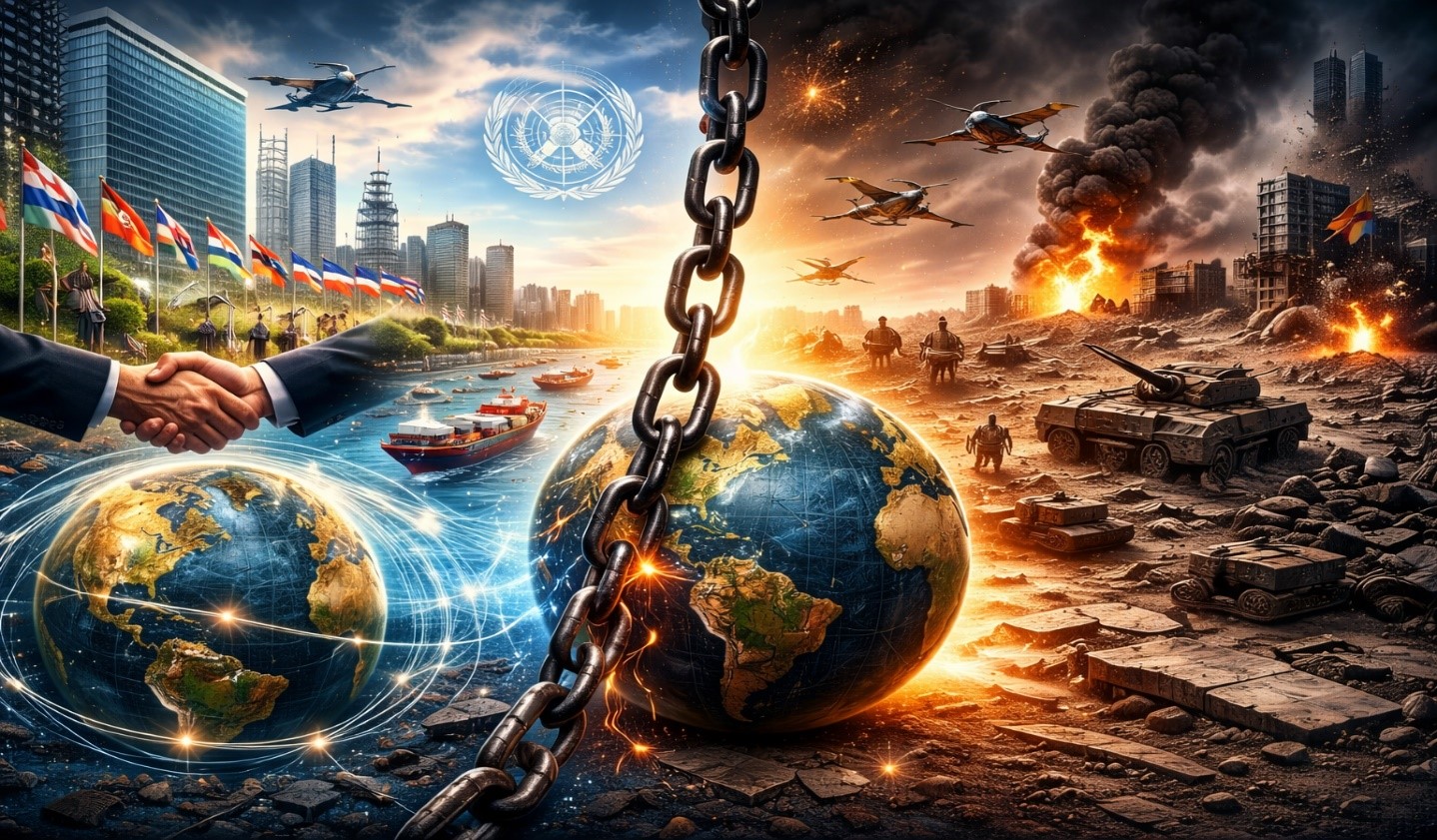
Realism never left; it merely receded from view while a brief liberal moment convinced the world that power politics had been tamed. Today, that illusion lies in ruins across a cascading sequence of conflicts unfolding in stark succession – from the ongoing Iran–U.S.–Israel war, which has ignited a multi-theatre confrontation across the Middle East, to the rising tensions and security realignments in the Western Balkans, severe conflicts in Africa, the protracted and grinding war in Ukraine, the devastation and humanitarian catastrophe in Gaza, the brief but dangerous India–Pakistan confrontation of 2025, and the persistent great-power rivalry between the United States and China, most visibly in the contested waters of the South China Sea. These crises, spanning regions and intensities, collectively signal not isolated breakdowns but a systemic return to hard power politics. Though liberalism continues to shape trade, institutions, and diplomatic engagement, its promise of a stable, rules-based international order has decisively eroded under the weight of geopolitical competition and insecurity. In its place, the enduring logic of power, deterrence, and survival once again defines state behavior. In such an environment, policymakers searching for clarity need look no further than realism – the oldest and most enduring framework of international relations. Often dismissed as cynical or outdated during the era of globalization, realism provides the indispensable, if uncomfortable, framework for understanding the brutal logic of our world. Its focus on anarchy, power, and national survival is not a relic of the past; it remains the essential operating manual for twenty-first-century statecraft.
Realism as a school of thought in international relations rests on the enduring premise that the international system is anarchic, lacking a supreme authority to enforce rules or guarantee security. This condition compels states to prioritize survival and act in their self-interest, guided by a permanent human drive for power.
From Thucydides’ observation that the strong dominate while the weak suffer, to Thomas Hobbes’ depiction of life in an anarchic state as “nasty, brutish, and short,” realism underscores the timeless logic of power politics. Hans Morgenthau framed politics as governed by objective laws rooted in this quest for power, while Kenneth Waltz emphasized that anarchy structurally forces states to operate as self-help units, constantly aware of their relative power. John Mearsheimer added that great powers inherently seek to maximize their strength to secure survival, and Stephen Walt’s balance-of-threat theory highlighted that states align against immediate dangers rather than ideological preferences. Graham Allison’s “Thucydides Trap” further illustrates the structural tensions when a rising power challenges an established hegemon. Together, these insights provide a clear-eyed, analytical framework for understanding state behavior, security, and power dynamics in a world defined by perpetual anarchy, offering a realistic – not idealistic – view of international relations.
The geopolitical events of recent years constitute a brutal, ongoing masterclass in these principles.
On the grand strategic stage, the U.S.–China rivalry is the defining great-power competition of our time, widely viewed through the lens of structural tension, which describes the contests when a rising power challenges an established hegemon. China’s assertiveness in the South China Sea – through militarized islands and expansive maritime claims – and its growing pressure on Taiwan reflect the offensive logic: rising powers seek regional dominance to secure themselves. The U.S. in turn has responded with textbook hard balancing by strengthening alliances and institutionalizing security partnerships such as AUKUS and the Quadrilateral Security Dialogue, reinforcing its military presence and tightening technological and economic constraints. This evolving power transition is less about ideology and more about structural competition – a classic realist contest over hierarchy, influence, and the future balance of power in the Indo-Pacific. This structural power transition is the ultimate realist drama.
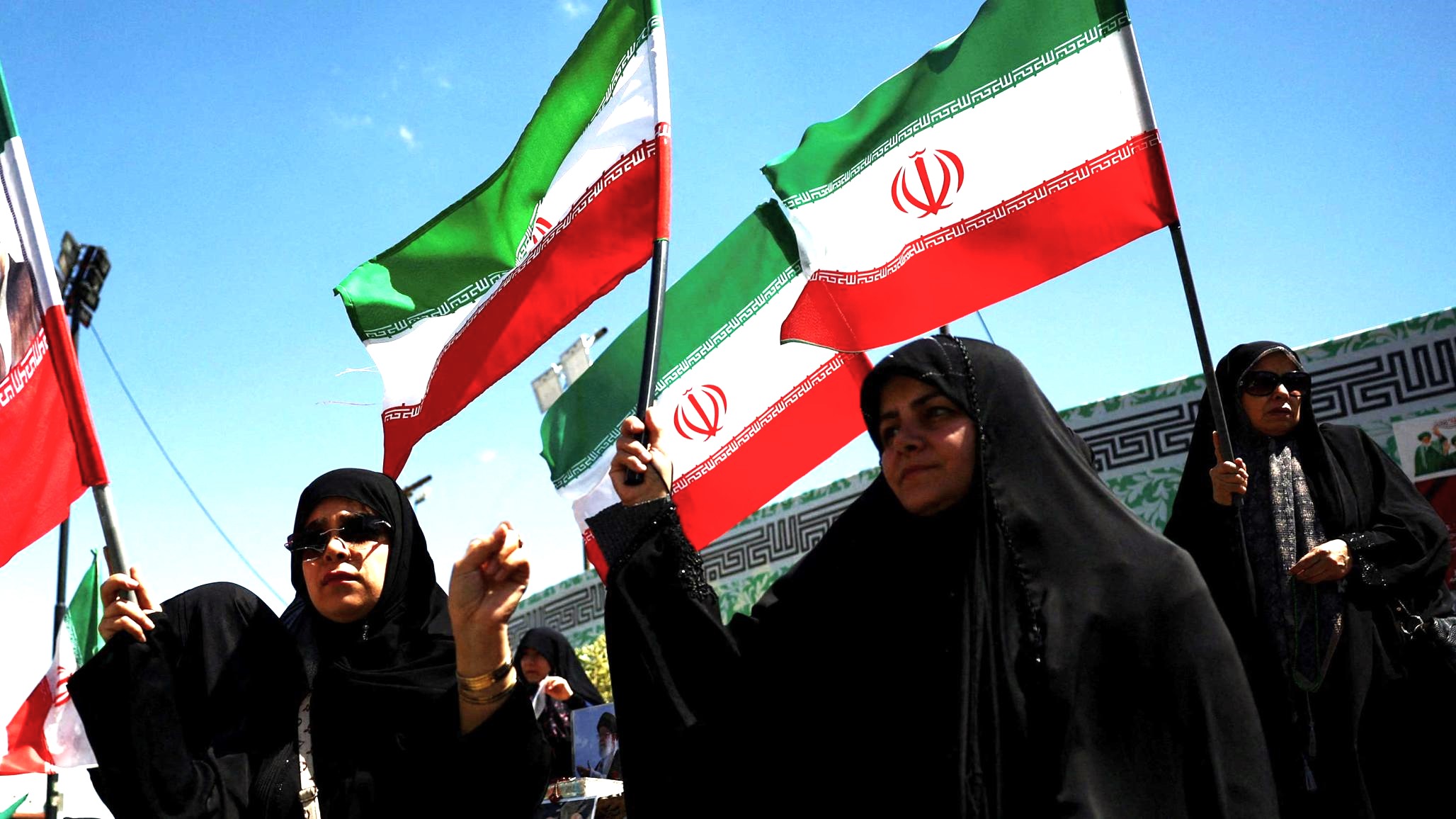
The ongoing Iran–U.S.–Israel war represents perhaps the clearest contemporary embodiment of realism in action, where survival, deterrence, and power projection decisively override norms, institutions, and diplomatic restraint. Initiated on February 28, 2026, through coordinated U.S.–Israeli strikes targeting Iran’s nuclear facilities, military infrastructure, and senior command, the conflict has rapidly escalated into a multi-domain war spanning the Gulf, Levant, and beyond, with sustained missile exchanges, drone warfare, and proxy engagements across multiple theatres. Casualty estimates run into the tens of thousands across Iran, Israel, and the wider region, alongside extensive destruction of critical infrastructure, including energy facilities, ports, and military installations. Iran’s retaliatory strikes have targeted Israeli urban centers and U.S. military bases across the Gulf, while expanding attacks to regional energy infrastructure in states aligned with Washington, demonstrating a strategy of imposing systemic costs. Central to the conflict is the disruption of the Strait of Hormuz, a chokepoint through which roughly 20 percent of global oil and LNG supplies normally pass, now effectively restricted, triggering one of the largest energy supply shocks in modern history. Global supply losses are estimated at up to 15 million barrels per day, around 15 percent of total world supply, while shipping has sharply declined and insurance costs have surged. Simultaneously, attacks on tankers, ports, and offshore infrastructure, alongside the mining and militarization of key sea lanes, underscore the strategic use of geography as a weapon.
U.S. and Israeli actions, ranging from large-scale air campaigns to sustained efforts to degrade Iran’s military and nuclear capabilities, reflect a textbook realist pursuit of overwhelming superiority to neutralize a perceived existential threat, while Iran’s reliance on asymmetric retaliation, proxy networks, and control over vital energy corridors illustrates its attempt to restore deterrence and rebalance power.
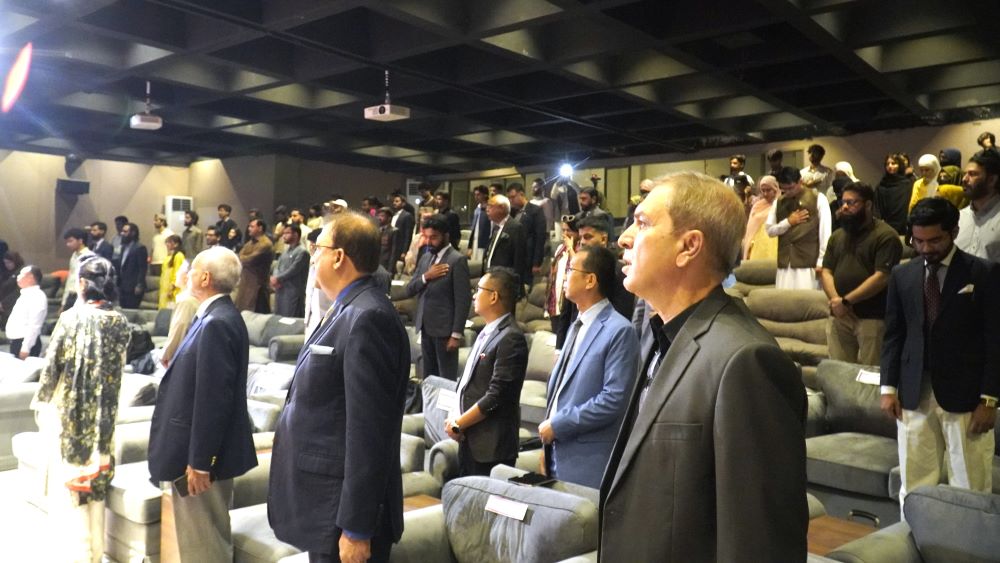
Most recently, after weeks of intense escalation, a two-week ceasefire brokered through Pakistani mediation created space for diplomacy, leading to the first round of the Islamabad Talks (April 11–12, 2026), the first direct U.S.–Iran negotiations in over four decades; however, despite more than 20 hours of discussions, the talks collapsed due to irreconcilable differences over Iran’s nuclear program, sanctions relief, and control of strategic chokepoints such as the Strait of Hormuz. The failure of the talks compelled Pakistan to push more strongly for a second round.
The U.S. administration’s nod to this, along with the subsequent visit of Pakistan’s COAS/CDF to Tehran, suggests that both sides seek an end to the conflict. Even these ceasefires and negotiations reflect realist logic, as they are driven not by trust or shared norms but by shifting costs, strategic recalculations, and attempts to renegotiate power under pressure; in essence, this conflict is governed not by international law or institutional restraint but by the raw calculus of power, security, and survival, precisely as realism predicts.
The war in Ukraine stands as a stark validation of the logic of offensive security. For over a decade, warnings had indicated that the expansion of NATO into what Russia considers its vital sphere of influence would inevitably trigger a violent backlash. Viewing great powers as inherently disposed to seek security through domination and the maximization of their relative power, the crisis was foreseen.
Vladimir Putin’s invasion is not an aberration of irrational madness; it is a catastrophic exercise in this realist logic – a pre-emptive strike intended to degrade a perceived existential threat and decisively reshape the European balance of power. The Western response, in turn, is pure balancing: the monumental effort to arm Ukraine is driven not solely by abstract justice, but by the imperative to prevent a rival from achieving a decisive and dangerous shift in the regional power hierarchy.
The escalating reconfiguration of power in the Western Balkans in early 2026 offers a striking contemporary European validation of realism’s core logic. The formation of a formalized military alignment between Croatia, Albania, and Kosovo – with quiet coordination from the U.S. and political backing within NATO – has triggered a classic security dilemma response from Serbia, which enjoys diplomatic and strategic support from Russia and maintains close ties with Hungary.
What one bloc frames as stabilizing defense cooperation is perceived by Belgrade as strategic encirclement, prompting increased military production, expanded security coordination with Bosnia and Herzegovina’s Republika Srpska leadership, and renewed outreach to Moscow.
The involvement of the European Union – rhetorically committed to regional integration yet strategically divided – further underscores that in Europe’s periphery, hard-power calculations and balance-of-threat dynamics override liberal assurances, reaffirming realism’s enduring explanatory force.
Concurrently, the conflict in Gaza provides a harrowing demonstration of realism’s grim logic, where security is pursued with minimal constraint. Israel’s military campaign, following the October 7th 2023 attacks, has been characterized by a scale of force that leading international institutions, human rights organizations, and a recent UN Commission of Inquiry report deem to have involved potentially serious violations of international humanitarian law, including crimes against humanity. From a realist perspective, this represents the apotheosis of a self-help doctrine operating in an anarchic environment.
The strategic calculus prioritizes the total degradation of a perceived existential threat above other considerations. The role of the U.S. is equally illustrative of hegemonic self-interest. The U.S. has provided uninterrupted diplomatic cover, including multiple vetoes of UN Security Council ceasefire resolutions, and sustained military supply, ensuring its key regional ally maintains decisive military superiority.
This is a strategic, not a normative, alignment – a classic realist move to secure a client state’s strength and ensure one’s own influence outweighs any competing international consensus.
Across Africa, multiple overlapping wars further reinforce realism’s core claim that power, survival, and resource control ultimately drive state behavior. The Sudan civil war alone has caused over 150,000 deaths and displaced more than 12 million people as of early 2026, reflecting a brutal struggle between rival military elites for control of the state and its resources. In the Sahel (Mali, Burkina Faso, Niger), insurgencies linked to ISIS and al-Qaeda have expanded dramatically, with thousands killed annually and entire territories slipping beyond state control, prompting military juntas to prioritize regime survival over democratic norms and to realign toward external patrons like Russia.
Meanwhile, in the Democratic Republic of Congo, renewed fighting involving the M23 rebel group and regional actors has displaced over 7 million people, largely driven by competition over strategic minerals such as cobalt and coltan – resources critical to global supply chains.
These conflicts are not failures of liberal order so much as confirmations of realist logic: weak states fragment under anarchy, elites compete violently for power, and external actors intervene not out of principle but to secure influence and access to resources. In Africa, perhaps more starkly than anywhere else, the international system reveals itself not as a rules-based order, but as a hierarchy of power struggles where survival and strategic advantage decisively outweigh law, morality, or institutional restraint.
The volatile rivalry between India and Pakistan – reignited in the brief but intense border war of May 2025 – serves as a stark regional illustration of realism’s core principles. Sparked by a disputed territorial incursion and escalating rapidly with the unprecedented battlefield use of tactical weapons, the crisis reaffirmed the realist axiom that in an anarchic international system, states ultimately rely on military capability to secure survival.
Both countries behaved as classic self-help actors, guided not by ideology but by calculations of territorial integrity, deterrence credibility, and relative power. The failure of decades of confidence-building measures and diplomatic frameworks to prevent hostilities reinforced the realist critique of liberal institutionalism: when fundamental security interests are perceived to be at stake, established norms and institutions are readily sidelined. In the conflict’s aftermath, Pakistan’s quiet participation in the proposed “Board of Peace” for Gaza further reflected realpolitik in action, signaling a pragmatic pivot from ideologically rooted championing of the Palestinian cause toward strategic alignment. Confronted with economic strain and heightened threat perceptions from its eastern neighbor, Pakistan appeared to prioritize securing economic and diplomatic support from the U.S. over rhetorical consistency, demonstrating once again that in high-stakes international politics, survival and positional advantage consistently outweigh professed values.
Of course, a robust argument must acknowledge realism’s boundaries. It is not a universal key. The theory struggles to fully explain deep cooperation on transnational issues such as climate change or pandemic response, where liberal institutionalism offers crucial insights. The potent role of ideology, religion, and national identity – so key to understanding Ukrainian resistance or the ideological dimensions of the Gaza conflict – is better captured by constructivist thought. Furthermore, the thick web of global economic interdependence and complex supply chains acts as a significant brake on outright conflict, complicating pure, zero-sum power calculations. However, these factors ultimately operate within the overarching, inescapable realist framework. Ideology often follows security; alliances form from threat perception. The fact that deep economic ties did not deter Russia’s invasion of Ukraine proves that when core security interests are at stake, realist logic trumps liberal interdependence.
The hopeful assumption that history had “ended” has proven dangerously naive. We are living in the world the realist canon describes. Recognizing this is not an endorsement of amorality; it is, as Morgenthau implored, the essential first step toward understanding the driving forces of state behavior. Realism demands we see the world as it is: a realm where, absent a global leviathan, the dread of insecurity and the relentless pursuit of power and resources remain the immutable engines of history. For policymakers, ignoring this leads to miscalculation. For citizens, it provides clarity to cut through rhetorical fog. The age of power politics is not back – it never left. Realism is, therefore the indispensable guide to navigating a world where the timeless lessons of survival and strategy are written daily in the starkest of terms.