






“The Future of Pakistan- good or bad- will be determined by its youth- especially by people who are between 15-29 years of age today. What will happen will depend upon the choices that are made today”.
Many years ago, historian Will Durant noted that society was founded not on abstract ideals but on the nature of man, and that the prevailing character of a people determines the structures of governance in their respective states. There is a clear connection in this thought between the role of leadership and the society that it either helps to build or causes to decay.
Taking up another facet of leadership, namely, in its exercise in matters of war and peace, Aristotle saw only three causes that justified war – preventing men from slavery, putting men into positions to exercise leadership directed to the interest of the led, and to enable men as masters to those ‘who naturally deserved to be slaves’.
The last cause repulsive as it may sound, reflected the near universal acceptance of human bondage as a socio-economic necessity.
What has outlived the otherwise contemptible custom and several others is the notion that there will always be leaders and followers; while some will innovate, others will imitate, some will blaze the trail, others will walk the path.
What does it take to be a leader?
One may wonder then what exactly does it take to be a leader? But more importantly, what it takes to be a leader that others would want to emulate?
Leadership is a phenomenon that defies a single definition. It is nothing but a set of values and competencies that are intricately interwoven. The values remain constant, while the competencies may become diverse depending upon the circumstances. Leadership has some classic lessons that are permanent in nature. It requires integrity- the ability and willingness to do the right thing even when no one will ever know; it needs excellence in all our endeavours; it needs setting examples that others would want to emulate, thereby pointing at what Aristotle termed as the ethos. But perhaps more importantly, it needs an aggressive spirit to take bold and timely decisions. This could be in times of war or natural disasters, or intense corporate decisions. Taking bold and timely decisions is a path where the process is arduous – it needs discipline and character, involves learning, unlearning and occasionally re-learning the lessons of history.
The contemporary world is transitioning in many ways. The way the leaders act is also influenced in a changing world. The aspects requiring a continuous focus include decision making, speed and active listening. It involves empathy but not at the cost of rational compassion.
The Generational Change Business
While leadership still remains a factor of values and competencies, the reference nodes, priorities and approaches to life and work are changing significantly. This is primarily because of the social or political turmoil that occurs when a particular generation is growing up. It is therefore imperative that an overview of how generations think and act as the time goes by, be taken into account.
In contemporary Pakistan, most of the decision makers are the so called Boomers, the generation born in the 18- year period spanning 1946 to 1964, i.e. in 2025 they could be 79 to 61 years of age. This was the post-World War II generation that came of age during times of significant social and political upheaval. They are much different than the generations that came before or after. They subconsciously look for stability and value family, primarily due to the aftermath of the Second World War. The next generation, termed Gen X, are those born between 1965 and 1980, with ages between 60 to 45 years. This demographic cohort is known for being independent, adaptable and often tech- savvy.
They are mostly self-reliant. This gen has grown with PCs and internet. They are mostly in senior management positions, in the Government as well as the private sector.
The more relevant generation however, is Gen Y, often referred as the Millennials, born from 1981 to 1996 (44 to 30 years in 2025). They are more tech- savvy and comfortable with the internet and digital technologies like laptops. They look for innovative and collaborative options, prioritize work – life balance, are ambitious, and seek opportunities for personal growth. They are also peculiar for having grown up with technology. They often have their negotiation skills challenged, since this generation has moved away from the social skills depictive of the earlier generations. Most of the middle to senior management in the changing contemporary world comprise Millennials. Several in this category keep appearing, albeit briefly, in the job market, striving for better options.
Then comes Gen Z, which is a cohort typically born between 1997 and 2012. These digital natives are the currently marketable professionals. For them, gadgets like laptops are often considered obsolete as they mostly live and work through palmtops and smart phones. Their formative years include events of social change like the rise of social media, or the Covid 19 pandemic. This Gen is considered pragmatic about work, but often characterized with work anxiety regarding their future prospects. They enter a job market where there is less premium on postgrad degrees, as job openings in Artificial Intelligence and automation are transforming the market. They put a strong emphasis on diversity and inclusion and are often passionate about social justice. They are thus often wary of manufactured content, thereby occasionally coming into conflict with the earlier Gens. Gen Z with their ages between 13 to 29 years, are currently the high school to undergrad students, or young professionals.
The latest Gen entering the job market at a relatively young age is Gen Alpha, as the cohort 15 years or below age group. They are indeed the true digital natives, with ever- present access to smart phones, tablets and social media. Their patience with social media platforms is also wearing thin, thereby using seconds to decide whether they want to view any media content or not. They are also characterized with authenticity and transparency. They may be still in school but are already comfortable with e.g. online shopping decisions. But make no mistake, they are increasingly enjoying off – line time, which implies that despite their comfort with technology, they consciously can revert to quality time including physical exercise.
The Pakistani Scene
It is interesting to consider how this generational change affects the job market in Pakistan. One dominant view suggests that the attributes of these generations, especially the ones relevant to employability, tend to overlap depending upon the social structure the individuals come from
The rural divide may suggest clinging to more traditional approaches. This however forms the relatively unskilled job market. Nevertheless, even the unskilled are tending to learn some new skills, like use of smart phones, etc. Amongst those more tech – savvy, one could find digital natives among Millennials, or conversely Gen Z thriving more on tradition like the Boomers, though this would be rare and tantamount to change.
The biggest challenge though for the industry or other employers is how to develop clarity and understanding amongst three representative generations – Boomers/ X – the decision makers; GenY/ Millennials – trainers and middle management, and Gen Z those entering the job market with an undergrad degree. Looking at their respective attributes, it can be seen that all three Gens have a differing world view and divergent sensibilities. They don’t even speak a similar language. There are also a diverse view on how to fix this problem. For some this is not even categorized as a problem. Several employers see Gen Z as unemployable, since their own sensibilities requires, for example, permanence in jobs as an essential commodity for reliability.
The Gen Z world view considers project – based approach as more prudent, since they can offer total commitment to the promised work time.
So What Happens Now?
Some leaders, in particular in the corporate world have recognized the difference in various approaches and are trying to provide a more relaxed work environment. Most, though not all, recognize that adjustments are needed from all sides. The forward looking organizations are endevaouring to make the best of the situation. Take PAF for example that conducted a multi-disciplinary process a couple of years ago, on developing the understanding and the issue of behavioural change amongst generations, since the bulk of its trainees are Gen Z or Gen Alpha, while its trainers remain Millennials, and several decision makers are Gen X or Boomers.
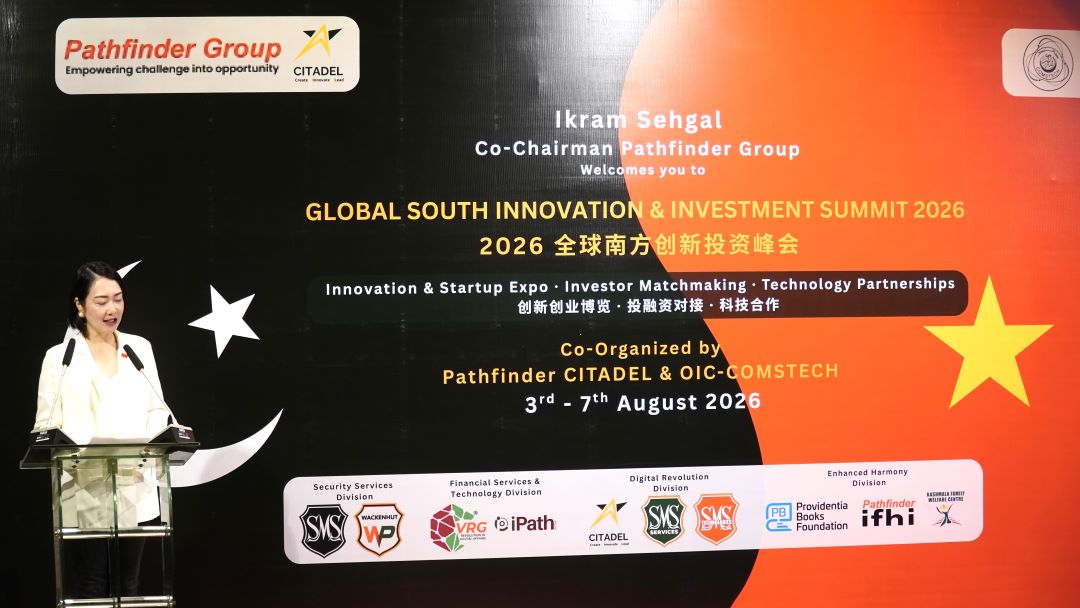
The Pathfinder Group, a private sector group of companies has commenced a series of workshops, titled the Pathfinder Challenge, wherein it brings together the young and older generations, into a dialogue process, with an objective to understand conflicting views and finding ways to empower the coming generations to be ready to run Pakistan in 20 years or more, from now. Over a span of months, Gen Z and others have explored avenues to tackle many diverse subjects, that include, but are not limited to, climate change in the year 2050, developing leaders of character in a world of artificial intelligence, augmenting effective leadership at the work place, and tackling a fear of failure. The Pathfinder Challenge is now attracting several young persons from universities and/ or the young professional forums, who are becoming interested in finding structured frameworks to deal with the differing approaches of the ‘work’ generations. Quite recently, a series of workshops were also conducted to understand how parents or teachers view the variety of approaches.
And What about Technology?
The technological advancement is now a way of life. The new or emerging technologies are transforming not only what we do, but how. It has been said that in two decades or less, the education being imparted in universities will not be the ones fetching jobs. What this implies is the re-skilling and/ or up-skilling would be the way of life for the future. But here is the catch. The future is already here. The time to act is now. As is said in naval terms, this requires all hands on the deck, implying that a ‘whole of the nation approach’ is now essential. What do we need then? Those in the job market require re-skilling i.e. adjusting to the needs of the market, since their current jobs will be obsolete in a few years. Then there are those workers who will need to change say from running call centres that require minimal skills, to upskilling to learning about new technologies.
In Pakistan, every year 2.5 Million young men and women enter the job market. But there are not even half a million jobs that exist currently. This suggests emphasis on skills development, and encouraging startups. While the Governmental entities like National Vocational & Technical Training Commission (NAVTTC), IGNITE, MOIT, etc carry an augmented focus, some universities emphasize upon skills along with theoretical and academic knowledge building, but the fissure is still too large. The private sector needs to partake. This will be a win- win as there appears to be a gap in the practical application of the knowledge acquired through the academia, and the needs of the market. Innovative trainings are thus needed to cater for technological advancements, to encourage entrepreneurs to contribute to the digital world’s demands. The need is to build and groom leaders of tomorrow today.
Conclusion
The foundation of leadership has character at its core. The value system helps a leader transcend boundaries, maintain rational compassion that is a more prudent approach than simply being empathetic. An interesting analogy suggests there are eight universal laws of heroic leadership: maintaining absolute integrity; knowing one’s self; declaring one’s expectations from the teams; displaying commitment to the cause; expecting positive results; taking care of the whole team; putting duty before self; and finally to lead from the front.
Inculcation of leadership qualities remains forever a process. It cannot be a destination – but always a journey.