



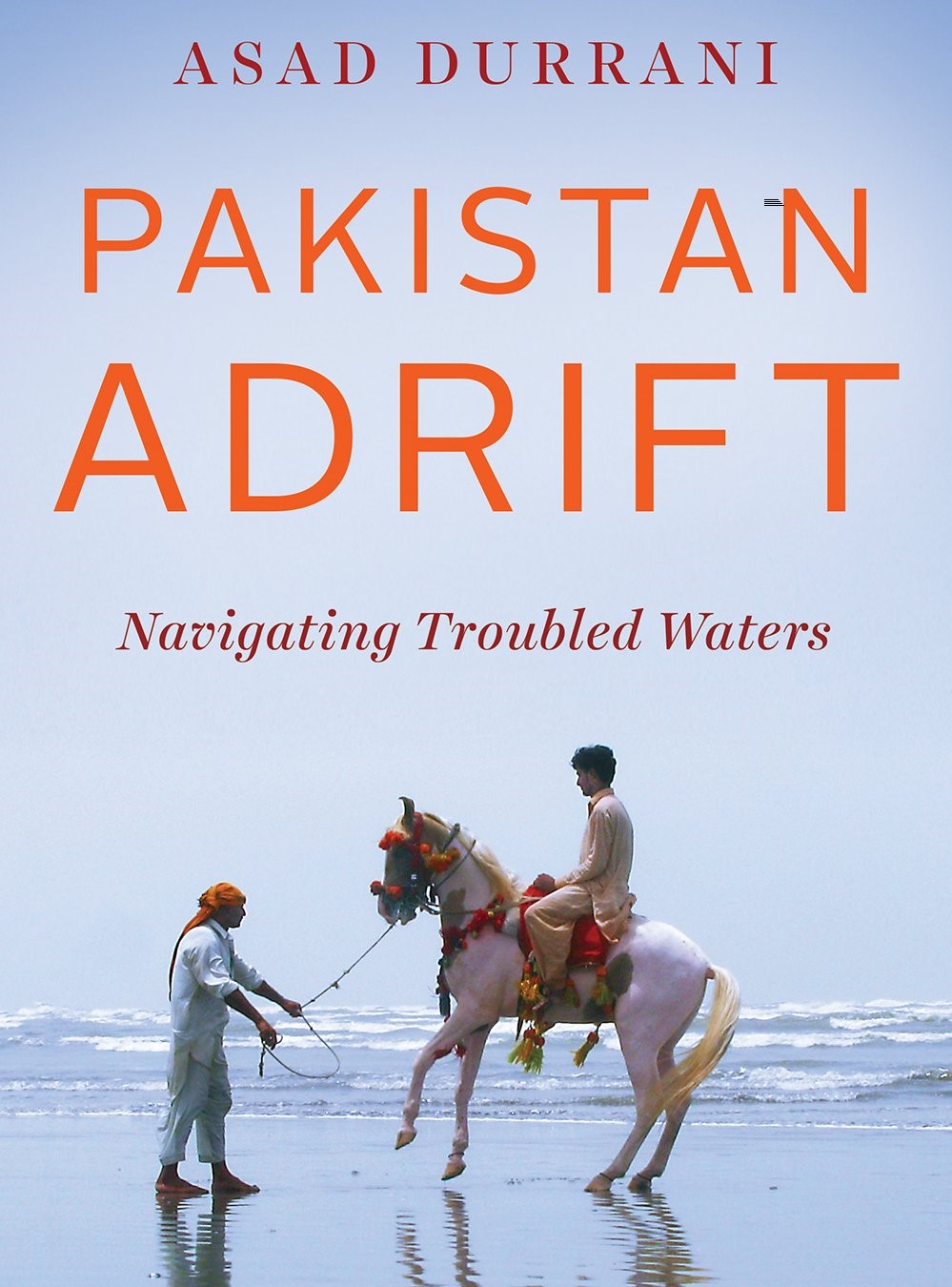
Former Director General Inter-Services Intelligence (DGISI) Lieutenant General ® Asad Durrani’s memoirs “Pakistan Adrift” will be released in Pakistan in the second week of October 2018. This is a memoir of a former DGISI and Ambassador and his perspective about events of the last two decades.
Durrani is considered a cerebral officer by his peers who had a good career profile. Like most officers in the business of intelligence, the most controversial part of his career was his stint as head of Military Intelligence (MI) and ISI. This book is his perspective about the events but provides the reader an insight into the dynamics of power at the higher echelons. He is candid in accepting his own mistakes especially his role in distributing money to politicians. The Supreme Court of Pakistan is hearing this case.
Two segments about his stint as ambassador to Germany and Saudi Arabia are his views about these two societies. The most interesting segment is the chapter on terrorism where he seriously discusses the subject, its various shades and the use of this term by various states to pursue their own interests. He also elaborates on the consequences of the recent destructive policy on the consequences of the recent destructive policy of the United States of dismantling fragile states that has unleashed new demons. Very little academic and policy discussion has been devoted to this crucial subject that has made the world more dangerous, violent and unstable.
Durrani has devoted a significant segment towards the issue of Afghanistan. His own personal experience as DGISI and observations on later events where he had some contact in the form of ‘track two’ parleys accurately reflects the thought process of a majority of Pakistani officers. This view is based on a genuine national security interest of Pakistan about its western neighbor as the country bears the fall-out directly. As these officers interact with Afghans in official capacities they sometimes get blindsided. Pakistan has influence over some Afghan clients but Afghans are very good at playing one against the other. they have survived as an independent nation based on mastering this art. Amir Dost Muhammad Khan’s letters to the Czar of Russia, Shah of Persia and British Viceroy of India in nineteenth century sums up the foreign policy of the country. A good friend of former Afghan President Hamid Karzai told me in 2002 what Afghans thought about the new phase. Many key Afghan players were of the view that ‘in the previous round, neighbors played their game and we ran away from the country. This time around, we are staying put and if neighbors don’t behave, we have sworn that we will make sure that the winds of chaos will not stay in Afghanistan but blow in the other direction’. Afghan and Pakistan liaisons with Americans in Kabul share a space. At prayer time, Afghans always insist that the Pakistani counterpart lead the prayer but a Pakistani can be seriously mistaken by this gesture. When with Americans, Afghans are unanimous in their view that the real problem is not Afghanistan but Pakistan. Like any other intelligence agency, ISI is a large bureaucratic organization and not monolithic. Mid-level officers of the organization may have a unique perspective about an event and in some cases not in agreement with policies adopted by the high command. My own work on the subject to get an opinion of the boss and his subordinate about a given event or policy provided some limited insight about many shades of grey.

In this work, Durrani is confident in claiming that ‘since leaving service, I have spilled a few beans, so to speak, but not once have I been cautioned or charged with indiscretion’. This claim was severely tested recently. Three months ago, his informal conversations with former Indian intelligence chief about diverse topics were published in a book ‘The Spy Chronicles’ that caused an uproar in Pakistan. He was severely criticized and, in some cases, abused by his uniformed colleagues. Pakistan army headquarters summoned him for an explanation and an inquiry was initiated. Hopefully this work will help in understanding his views and not add more indiscretions to his charge sheet.
Durrani’ s book provides a useful insight into the thought process of senior brass. Shaky civil-military relations with deep mistrust on both sides is explained by Durrani with many anecdotes. Recent events have shown that this Achilles’ heel of Pakistan has not shown any sign of improvement. In view of the recent events of Pakistan and in the neighborhood, it looks that Pakistan’s policy has been consistent about what it views as its core interests. This book should be on the reading list of those interested in Pakistan.