

America faces another Vietnam moment over the Afghan conflict. Pulling out of the peace process and talks of use of more military power by President Donald Trump resonate with what President Lyndon B Johnson did during Vietnam conflict. According to Brian Willson, a Vietnam era USAF night security commander, American military action “left 26 million bomb craters, sprayed 21 million gallons of DNA-altering chemical warfare on the landscape and people, murdered some 6 million Southeast Asians, destroyed by bombing over 13,000 of Viet Nam’s 21,000 villages, 950 churches and pagodas, 350 clearly marked hospitals, 3,000 high schools and universities, 15,000 bridges, etc. And why all this overwhelming firepower and destruction? Incredulously, to prevent the Vietnamese from enjoying their self-determination absurdly touted as necessary to stop “communism.” Does a kind of psychopathy exist in American cultural DNA? American “behaviour against the Vietnamese, a nation of peasants with one-sixth the population of the USA, one-thirtieth its size, ranks as one of the worst of a number of barbarisms in the 20th Century”. And now Trump has floated a rhetoric of finishing the Afghan war in a week, by killing ten million Afghans! The billion dollar questions is: Can the US afford another Vietnam category baggage and yet survive while retaining its current stature in the World Order?
Though the US has pulled out of talks with the Taliban on the pretext of killing of one white American solider during a raid in Kabul’s diplomatic enclave, reports point out that the US led occupation forces have killed thousands of Afghan since the talks began, and most Afghan casualties were of non-combatants including women and children. Even US commentators have speculated if the killing of American serviceman was the reason, the Trump administration would not have entered into talks in the first place since this year alone at least 16 soldiers have been killed in Taliban attacks. Another reason is that the US wants to go ahead with another sham presidential election to impose a stooge regime on Afghan people. As the voting has taken place on September 28, process of installing another discredited regime in Kabul is in its final stages, hence resumption of US-Taliban talks may not be far away.
Nonetheless, now effectively under impeachment in stark similarity to President Richard Nixon, President Trump may not be as brave as Nixon, or put mildly, he may not have the moral and political courage to acknowledge American defeat in Afghanistan.
The peace process in not dead and buried, in fact there are indications that the US and the Taliban are in touch to resume the faltering peace process. But whenever talks resume, the US pushes new preconditions. This new scenario has once again put the spotlight on Pakistan. Pakistan has played a key role in facilitating the nine rounds of talks between the US and the Taliban in Doha. The positive role played by Pakistan to bring the Taliban onto the negotiating table was the main reason Trump had invited PM Imran Khan to the White House in July and in September.
Afghanistan was one of the top agenda items during the Imran-Trump summit. Pakistan has begun its diplomatic efforts to bring the dysfunctional Taliban-US peace talks back on track, fearing that an absence of negotiated settlement would trigger a new phase of civil war. After months of talks in Doha, the two sides had agreed to a draft accord that would have seen over 5,000 US troops withdrawn from Afghanistan alongside vacation of five military bases within 135 days, in exchange for security guarantees from Taliban. However, the deal, intended as a preliminary step to a wider peace agreement, faced heavy criticism from the Afghan government, which was shut out of the talks. Just at the end American and European media came up with a whole range of anti-Deal argument urging President Donald Trump to walk away from the peace process. Nevertheless, it is not the first time that Americans have walked away from such processes at the culmination stage typical ugly American continues to call the shots.
There is a feeling in Pakistan that there might be other reasons that compelled the US to take the drastic step. Analysts and commentators even in the US are questioning if the killing of a soldier was the actual reason. They say if that was the case the US should not have entered into talks with the Taliban in the first place since this year alone 16 US servicemen were killed by the insurgents. One possible reason behind Trump’s last-minute decision may be to persuade the Taliban to agree to a permanent ceasefire, something the group has long resisted. Pulling out of the talks could be for enhancing the bargaining position of the US viz. a viz. Taliban.
Conflicting reports suggest that the Taliban are still communicating with US negotiators, at least to find out what to do next. The Taliban spokesperson claimed that the Camp David meeting with the US was delayed because Taliban wanted witnesses to the peace agreement. They wanted a signing ceremony witnessed by the foreign ministers of several countries, including Pakistan, Russia and China. The Taliban had accepted the invite, demanding the deal be announced first by Qatar. Reportedly, the Taliban shura, or leadership council, had opposed its negotiators going to Camp David and admonished those who had accepted US peace envoy Zalmay Khalilzad’s invitation that was extended at the end of August.

One positive development has been Trump’s decision to fire his National Security Adviser John Bolton, known for his hawkish stance. He was lobbying against striking the peace deal with the Taliban. Bolton’s sacking means that Trump is still willing to opt for the peace deal in Afghanistan. However, for any meaningful progress, Trump will have to part ways with his Secretary of State Mike Pompeo as well who is working at cross purposes with Trump’s vision regarding Afghan peace.
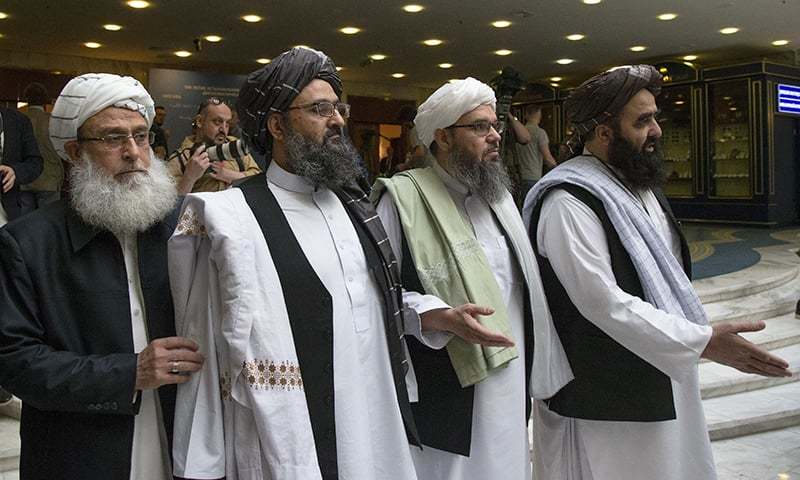
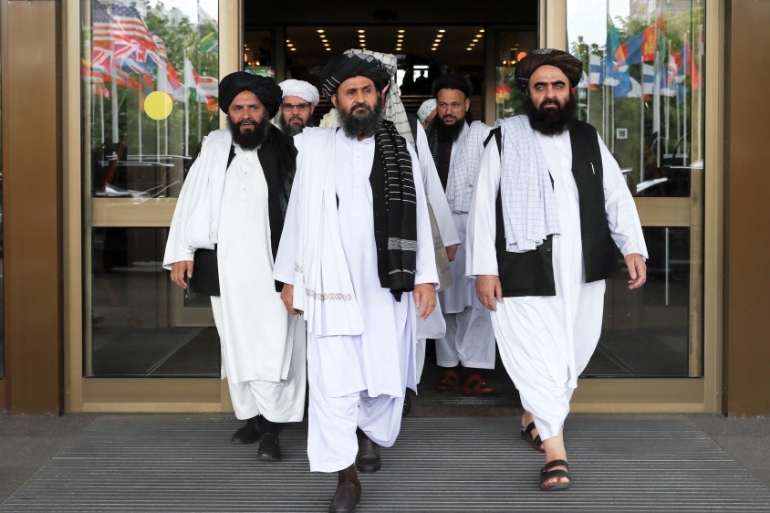
The acumen of Taliban is remarkable, after the collapse of talks they didn’t waste any time and sent a delegation each to Russia and China to discuss prospects for withdrawal of American troops from Afghanistan following the collapse of talks. Development is a part of the overall effort to enhance regional support, with visits to China, Iran and Central Asian states. “The purpose of these visits is to inform leaders of these countries about the peace talks and President Trump’s decision to call off the peace process at a time when both sides had resolved all outstanding issues and were about to sign a peace agreement,” said a senior Taliban leader in Qatar. Spokesman of Taliban, Suhail Shaheen said the delegation held consultations with Russian envoy Zamir Kabulov, a special representative to Russian President Vladimir Putin on Afghanistan. Russian foreign ministry spokeswoman Maria Zakharova said. The Taliban leader who spoke on condition of anonymity, said the purpose of the visits was not to try to revive negotiations with the US but to assess regional support for forcing it to leave Afghanistan. The Americans blame Russia for providing financial and military support to Taliban for keeping Americans bogged down in Afghanistan.
Taliban’s nine-member delegation travelled to Beijing and met Deng Xijun, China’s special representative for Afghanistan, said Suhail Shaheen. “The Chinese special representative said the US-Taliban deal is a good framework for the peaceful solution of the Afghan issue and they support it,” Shaheen said. Mullah Baradar, the Taliban delegation’s leader said they (Taliban and the US) had held a dialogue and reached a “comprehensive deal”, Shaheen tweeted. “Now, if the U.S. president cannot stay committed to his words and breaks his promise then he is responsible for any kind of distraction and bloodshed in Afghanistan,” Baradar said. China supports Afghans resolving their problems themselves through talks. China has been deepening its economic and political ties with Kabul and is also using its influence to bridge the differences between Pakistan and Afghanistan.
Mullah Baradar, the lead negotiator and believed to be the most influential of the Taliban interlocutors has been pushing for a peace deal in Afghanistan even before the US was willing to enter talks. As far back as 2010, he had secretly opened peace talks with Afghanistan’s then-president, Hamid Karzai. Even as Washington seeks an exit to its longest war, the Taliban are at their strongest since their ouster in 2001 and hold sway over more than half the country, staging near-daily deadly attacks across Afghanistan.
Occupation forces alongside Afghan troops and Taliban have been engaged in heavy exchanges across Afghanistan. The Taliban have been unapologetic about their relentless attacks which have been blamed for the talks’ collapse. These attacks were never one sided; though under reported, occupation forces have been rather ruthless in the use of disproportionately high military power. Pompeo boasted on September 08, that “more than 1,000 Taliban have been killed in battles over the past 10 days alone”. Suhail Shaheen the Taliban spokesman in Doha seemed anything but repentant. He argued that the US has also continued its military campaign in parallel to the peace talks, adding that “there was no cease-fire and the agreement was not signed.” Taliban continue to strike Afghan installations at will and the violence soars as presidential elections are approaching, scheduled for end September which the Taliban have announced to resist. The gap between the US and Taliban on this issue appears unbridgeable.
Pakistan facilitated the nine rounds of talks between the US and the Afghan Taliban and is now concerned about the stalemate. Pakistan is in touch with all stakeholders’ to find a way out of the current impasse. Pakistan continues to stick to its stance that the only solution to the Afghan conflict lies in a politically negotiated settlement led and owned by the Afghans themselves.