




“So, it is with minds. Unless you keep them busy with some definite subject that will bridle and control them, they throw themselves in disorder hither and yon in the vague field of imagination… And there is no mad or idle fancy that they do not bring forth in the agitation.”
Michel de Montaigne
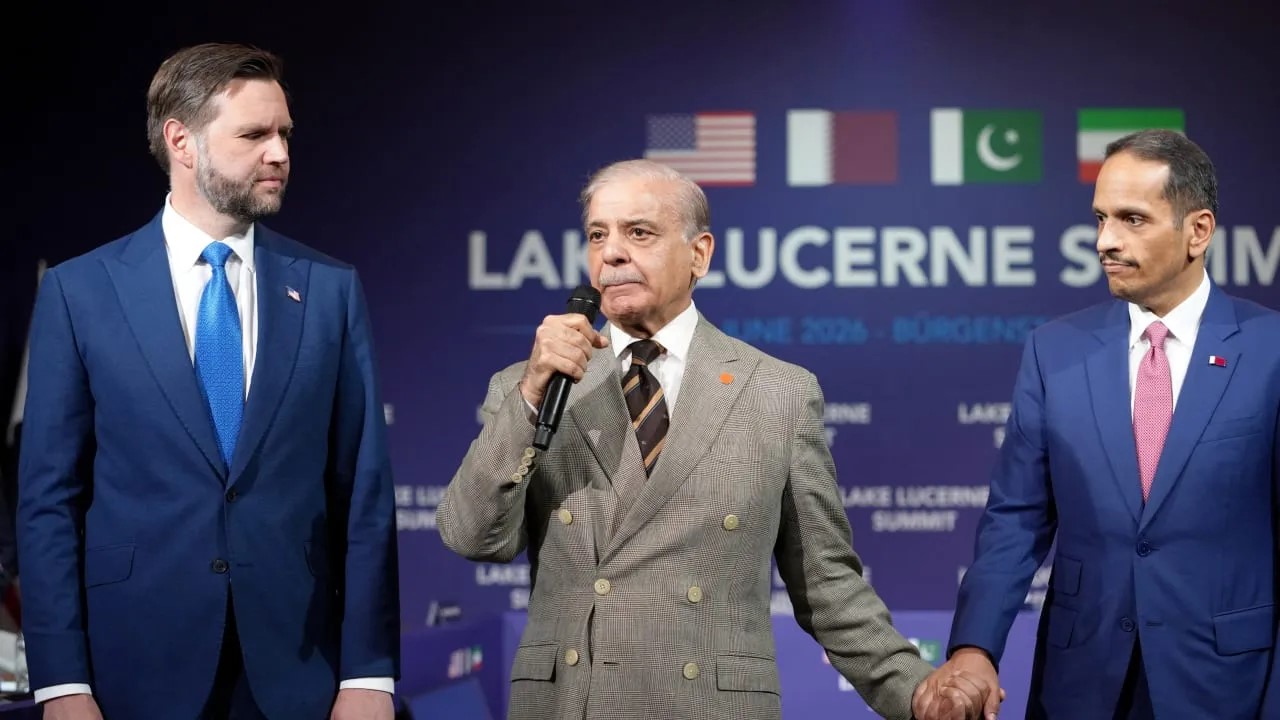
In June 2026, the United States and Iran signed a Memorandum of Understanding (MOU) after intense mediating efforts of Pakistan and Qatar. It was considered an interim measure for a final negotiation between the two countries on all important contentious issues. MOU language was deliberately kept vague on all principal issues as the gap between the two countries on all issues is very wide. Both sides wanted to end hostilities especially for economic relief therefore ambiguity helped both sides. The ambiguity that helped in signing the MOU is now the major barrier. This is the reason that both sides have competing interpretation of the text of MOU.
Three crucial elements of the MOU that have now become contentious that include management of the Strait of Hormuz, release of Iranian frozen assets and linking of Lebanese theatre with the Iranian theatre of war.
Article five of the MOU states that “Upon the signing of this MoU, the Islamic Republic of Iran will make arrangements using its best efforts for the safe passage of commercial vessels, with no charge for 60 days only, from the Persian Gulf to the Sea of Oman, and vice versa. The traffic of commercial vessels will immediately start and considering the need for removing the technical and military obstacles, and de-mining by the Islamic Republic of Iran, will be instated within 30 days. The Islamic Republic of Iran will conduct dialogue with the Sultanate of Oman, to define the future administration and maritime services in the Strait of Hormuz, in discussions with other Persian Gulf Littoral States, in line with applicable international law and the sovereign rights of coastal states of the Strait of Hormuz.”
Iran is interpreting the text as giving Iran the authority to manage strait traffic and toll charge suspended only for 60 days, and future arrangement will be in coordination with Oman. The U.S. is interpreting the text as guarantee of free and safe passage of traffic without any interference from Iran. After signing of MOU, Washington quietly embarked on a plan where ships stranded in the Persian Gulf were coordinating with the American navy to pass along the Oman coast. Tehran viewed this move as an attempt to undermine its greatest leverage provided by the current war. This is the main factor for resumption of hostilities between the two countries.
Article ten and eleven deals with immediate economic relief for Iran and unfreezing of Iranian funds. Article ten states that “The United States of America undertakes that immediately upon the signing of this MoU, and until the termination of sanctions, the U.S. Department of Treasury will issue waivers for the export of Iranian crude oil, petroleum products and derivatives, and all associated services including banking transactions, insurances, transportation, etc.” while Article eleven states that “The United States of America undertakes to make fully available for use, the frozen or restricted funds and assets of the Islamic Republic of Iran upon the implementation of this MoU. The United States of America and the Islamic Republic of Iran will mutually agree on the procedures related to the release of these funds during the negotiations. Such funds, whether retained in the original account or transferred, shall be made fully usable for payment to any ultimate beneficiary designated by the Central Bank of the Islamic Republic of Iran. The United States of America undertakes to issue all necessary licenses and authorizations accordingly.” Tehran interprets the language as release of funds on signing the MOU regardless of the nature and outcome of future negotiations. The reason for this interpretation is that Tehran fears that Washington will find excuses to allow only a trickle and force Tehran for more concessions before release of additional funds. Washington is interpreting the text as release of funds contingent on Tehran behavior.
Iran cleverly linked the Lebanese theatre with Iranian theatre of war during its negotiations with the United States. Article one of the MOU states that “The Islamic Republic of Iran and the United States of America, and their allies in the current war, by signing this MoU, declare the immediate and permanent termination of military operations on all fronts, including in Lebanon.” Tehran achieved two goals by forcing Washington to include Lebanon that had no direct relationship with the current hostilities between the U.S. and Iran. First, it provided a certain degree of relief to Hezbollah that was coming under enormous pressure from Israeli offensive as well as segment of the Lebanese population accusing Hezbollah of dragging Lebanon again in a war for the benefit of Iran. Second and more important benefit is that this clause has caused a rift between the U.S. and Israel. During the negotiation process, Tehran correctly assessed that an impatient and mercurial President Trump was willing to make several concessions to wrap up the deal. Linkage of Lebanon meant that now Washington will have the incentive to restrain Israel.
Progress on these three issues is crucial as Article 13 hinges start of real negotiations especially the nuclear file with first fulfilling these conditions by stating that “After signing this MoU, and subject to the beginning of the implementation of paragraphs 1, 4, 5, 10 and 11 of this MoU and the continuing implementation of these measures, the Islamic Republic of Iran and the United States of America will start negotiations regarding the final Deal exclusively on the other paragraphs”.
It is not only the ambiguity of the language, but the deep mistrust based on a traumatic half a century history that both sides have a different vision about implementation of the MOU. Each side views the other as taking undue advantage at the expense of its interests. Tehran feels that Washington is trying to negate its recently gained leverage in the Strait of Hormuz while not delivering on the economic promises outlined in MOU. Washington on the other hand believes that it cannot open the cash faucet to Tehran while both crucial short-term issue of control of Strait of Hormuz is not addressed and long-term issue of Iranian nuclear file is not even on the table let alone any concessions.
This environment of mistrust and suspicion provides space for hardliners in both countries. There is push back by Islamic Revolutionary Guard Corps (IRGC) against the negotiating team of Iranian President, Foreign Minister, and Speaker of National Assembly. The military wing of IRGC is making some reckless decisions, especially regarding neighboring countries while at the same time strengthening domestic control through Basij, a paramilitary volunteer citizen militia and forging alliance with hardline clerics.
In Washington, hardliners arguing about belligerence of Iran as an evidence that more ordnance needs to be dropped on Iran before a better sense prevails. However, domestic constituencies in both countries are not in favor of war. We do not have any public opinion data about Iran but if January 2026 massive protests due to economic and social grievances are a sign, then we can safely assume that a large segment of the Iranian population wants a better life rather than never ending hostilities that now includes all of Iran’s neighbors. In the U.S, all public opinion polls show that most of the public is against this war.
The current White House is unprecedented in American history and little attention has been paid towards the rifts within the government machinery. The decision of war against Iran was made by President Trump with a small number of his cabinet members agreeing with his decision. Large segments of military, intelligence, and diplomatic communities as well as prominent figures like Vice President JD Vance, Director National Intelligence (DNI) Tulsi Gabbard, Director Central Intelligence Agency (CIA) John Radcliff and director of National Counter Terrorism Center (NCTC) Joseph Kent opposed the decision. Gabbard left her post, Kent resigned and Radcliff may also exit soon. There is deep resentment against Israel in American security and diplomatic community as many believe that it was Israeli Prime Minister Benjamin Netanyahu who convinced President Trump by presenting
a rosy picture.
It was reinforced by Israeli Defense Forces (IDF) Chief of Staff Lieutenant General Eyal Zamir, Mossad Director David Barnea, and head of IDF Intelligence Directorate Major General Shlomi Binder pushing for war during their meetings with senior US defense officials although they were not impressed. Israeli defense officials also had unprecedented access when they presented their case to President Trump via video conferences.
There are signs of push back from these communities if we carefully analyze selective leaks at crucial times to force policy changes and punish Israel. In planning of the war, use of Iranian Kurdish rebels was a major item but in addition to internal opposition a timely leak to Turkish President Recep Erdogan and his forceful opposition to the idea made President Trump to veto this item. U.S. intelligence officials also leaked Mossad contacts with former Iranian President Mahmud Ahmadinejad and assassination plans for Iranian negotiation team members. Vice President Vance has been very public about his criticism of Israel, and this has provided an opening to President Trump’s base. U.S. ambassador to Turkey Tom Barrak who is also special envoy for Syria and Iraq is working behind the scenes. His grandparents were Lebanese Christians who migrated to the United States in 1900. While working to ease Israeli tensions with Turkey and Syria, he is also using President Trump’s fondness for Erdogan in pushing back Israeli policies. In a phone call to Netanyahu, President Trump pushed for Israeli troop withdrawal from Lebanon and Syria.
We are in a phase of ‘no war; no peace’ in the region. It is not likely that a widespread escalation will engulf the region but short-term intense exchanges with periods of lull will continue between Iran and the U.S. The risk is entanglement of regional states and groups in view of anger and frustration of Gulf countries. They are upset at Washington for starting a war without asking them and leaving them to face devastating economic consequences of the decision of a supposed ally. The protector has made them more vulnerable. On the other hand, they are angry at Iran and view Tehran as a man who when punched by the bully on the street comes back home to beat the wife.
The region has entered unchartered waters with risks and opportunities depending on the decisions of not only the leaders of nations but non-state actors who are carefully watching the unfolding events and preparing for the coming battles. The conflict will evolve from kinetic operations of the belligerent states to use of existing networks and emergence of new networks. If a constructive road is taken, then economic networks can forge economic inter-dependence that can encourage investment in stability by Iran and Gulf countries. On the other hand, if a destructive road is taken then same networks can become the engines of instability for all regional countries with the risk of handing the current conflict to the next generation. Nothing is inevitable in history. It is our actions that determine our fate.
“We doubt in others, what is in fact in ourselves. The skeletons in your own closet are the things that scare you the most about others; we see the world through the eyes of the condition of our own souls.”
C. Joy Bell
Acknowledgements:
The author thanks several informed individuals for their input.