


“Everyone is critical of the flaws of others, but blind to their own.” –Arab proverb
In the background of the United States – Iran conflict, the Yemen conflict entered a new escalatory phase.
One of the key participants of Yemeni civil war, Ansarullah commonly known as Houthis rapidly moved
along the Red Sea coast to capture the strategic port of Mokha. This gives them control over the strategic
Bab al Mandab Strait.
Saudi Arabia is facing a multi-front challenge that can have long-term impact on its security and economic
health. Iran directly attacked Saudi military bases hosting American assets, the Houthis threatened
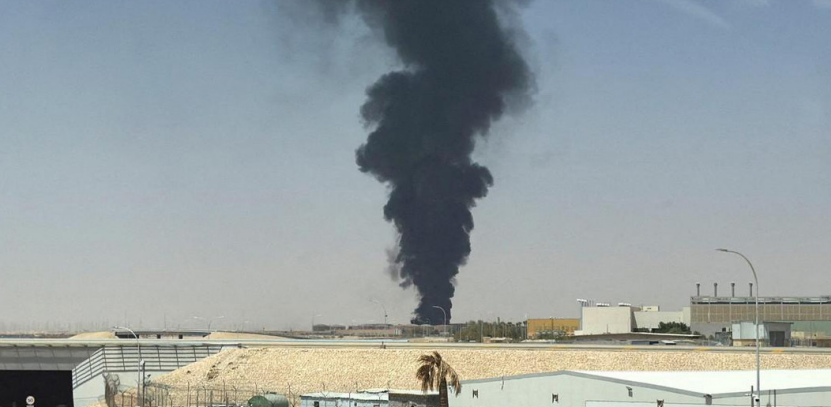
commercial vessels in the Red Sea as well as drone and missile attacks on Saudis cities in the south and Iraqi militias supported by Iran launched drone attacks on pumping stations of crucial East-West pipeline that was moving oil from the closed eastern route to the western port of Yanbu.
In the last ten years, Saudi Arabia’s involvement on Yemen has gone through several phases. In 2015, when Houthis took control of capital San’na, the alarmed Saudis got directly involved in Yemen civil war with large scale kinetic operations. However, this campaign did not push the Houthis out of San’na and in 2022 the Saudis reached a détente with Houthis and this ceasefire had been holding for five years.
In the meantime, Saudi Arab and United Arab Emirates (UAE) interests diverged on the Yemen file where Emiratis supported southern separatists under Southern Transition Council (STC) in Yemen. In December 2025, the crisis became public when Saudis bombed STC positions to halt their control of southern and eastern governorates and forced the Emiratis to pull their troops back. However, STC factions have organic local support, and Emiratis maintain these local networks. U.S. – Iran war brought the Yemen question into that conflict and convergence of local Houthi and Iranian interests played a role in the current escalation. It is not the actual closure but increasing the risk to the Red Sea maritime traffic through Bab al Mandab that is Leveraged By Houthis To Extract Concessions From Saudis And By Iranians To Push Back Against The Americans.
Riyadh’s challenges in Yemen have no easy or good solution. Recent advances of Houthis have less to do with Houthi strength. It is the fractured anti-Houthi alliance and competing interests of Yemeni groups and their two main backers Saudi Arabia and UAE that provided an opportunity to Houthis to achieve their long-sought goal of controlling the Bab al Mandab strait. Each anti-Houthi faction wants to preserve its military strength and have been refusing to come under a joint military command of internationally recognized Yemen government run by a fractious Presidential Leadership Council (PLC).
Southern parties are divided with some on Emirati while others on Saudi payroll. Mokha was controlled by National Resistance Forces (NRF) of Tariq Saleh, who was bankrolled by Emiratis but in 2025 during Saudi-Emirati rift, he switched sides and got on the Saudi payroll. He had no interest in burning his military strength in Houthi furnace as he hopes to be a key player in the southern power structure.
All southern factions are staying away from the fight as they want to preserve their military strength for the strategic goal of a separate country. The UAE, angry at the Saudi slap of the winter of 2025, is happy to watch the discomfort of Saudis from the sideline. Emiratis hope that current set back will convince naysayers to give up thankless task of sinking precious resources into the hopeless cause of putting together the broken Yemen. They may come around to the Emirati goal of establishing a separate South Yemen under Emirati custodianship.
In the current round, Saudi air strikes and logistic and command support for the Yemeni government forces have not been effective against rapid advance of Tehran guided Houthis. After failure of defense of Mokha, all eyes are on counteroffensive of Yemeni government forces as tribal groups are carefully watching. They will remain neutral until it is clear who has the upper hand and then make a working arrangement with the victor of the current round. Crown Prince Muhammad Bin Salman made two calls to President Trump for support against Houthis, but Trump has no interest in expanding the conflict.
In the summer of 2025, after a few months of intense bombing, Washington reached a ceasefire with Houthis that has been holding. President Trump admitted that Houthis contacted Americans before the recent advance and both sides decided to continue the ceasefire with Washington not supporting Saudi attacks while Houthis refrain from targeting ships in the Red Sea. This was the reason for Houthi announcement that Red Sea was open for all ships except Saudi dropping even Israeli ships from the list.
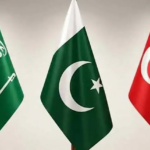
The widening gap between Washington and Gulf countries about the end game was the main reason for Saudi efforts of security diversification. The August 2026 Mecca Defense Accord signed by Saudi Arabia, Turkey and Pakistan was one such effort; however, all three parties are fully aware of limitations. Saudi interest in this arrangement was essentially messaging to Tehran as both countries share border with Iran. The intention was to tell Tehran that if you threaten Saudi Arabia’s east across the Persian Gulf, west along Red Sea coast, north via Iraqi militias and south via Houthis then our allies can exert pressure on Iran’s eastern and north-western borders. However, Tehran, while aware of the potential of this approach, fully understands the limitations of both Pakistan and Turkey. Pakistan has been facing the nightmare security dilemma of fighting two militancies in its north and west. The Balochistan province that borders Iran is in the grip of two militancies and Pakistani troops are stretched thin. Turkey is at a crucial stage of disarming of Kurdish militants of PKK based in critical border area of Turkey- Iraq-Iran triangle. Ankara will not take any action that can destabilize that border at this stage of negotiation to finally resolve its Kurdish militancy nightmare that has plagued the state for decades.
The essential element of accord is defense of Saudi Arabia while Turkey and Pakistan reap financial benefits from Saudi largesse. Pakistan deployed a fighter jet squadron, air defense brigade and a contingent of troops and will be paid for this deployment. Turkey has no troop commitment except maritime patrolling vessels but hopes to reap financial benefits from selling military equipment, especially drones.
However, there are certain risks for both Turkey and Pakistan that will limit their involvement in the theatre. It was not a coincidence that a senior Houthi official publicly warned both Turkey and Pakistan of serious consequences if they entered the fray. Turkey’s strategic interest is in the immediate neighborhood of Bab al Mandab in the Horn of Africa; it has a large footprint in Somalia where Turkey operates its largest overseas military training base (TURKSOM) in Mogadishu as stability of central governments in Africa is essential for any economic rewards. Turkish offshore oil exploration operations near the Somali coast are protected by Turkish naval vessels and Turkey is also planning its spaceport project in Somalia.
All Turkish logistic support for Somalia and rest of Africa passes through the Suez-Red Sea-Bab el-Mandeb route. The Turkish navy is already involved in antipiracy operations off the coast of Somalia and with the current instability, piracy is already resurging. Any restriction by Houthis in Bab al Mandab will force Turkey to add more assets to secure a heavily compromised shipping corridor increasing military and economic risks to its assets in the region. These challenges will have restraining effect on Turkish actions, and their support will be limited to providing air defense and drones to enhance Saudi capability while continuing diplomatic engagement with Tehran to encourage them to restrain Houthis.
Pakistan has limited security agreements with Saudi Arabia mainly focused on training for decades and the current accord is vague about any concrete security commitments to Saudi Arabia. Pakistan is trying its best to avoid entanglement in the current shooting war. Pakistan Chief of Defense Forces (CDF) Field Marshal Syed Asim Munir visited Tehran and gave a warning about Houthi advance and Pakistan’s commitment to Saudi defense but it had no impact. Tehran and Houthis are not going to modify their strategic interests based on advice or threats from Pakistan. On the other hand, the Saudis will push for more troop commitment along Saudi Yemen border that could potentially expose Pakistani troops to Houthi attacks. Pakistani public opinion is strongly against any involvement in conflicts of the Middle East, and this is across the political, class and ideological divides. In 2015, the Pakistani Parliament unanimously passed a resolution against Pakistan troop involvement in Yemen when Saudi Arabia asked for it. Saudis and the Emiratis were furious at Pakistan and privately castigated Pakistan. There is also a strong sectarian element to the conflict in view of a significant Shia population of Pakistan and the army brass is aware of this blowback. Angry Shia crowds attacked military installations in sensitive northern Gilgit-Baltistan region during protests on hearing the news of the death of Iranian Supreme leader Ayatollah Ali Khamenei in U.S. strikes and that got everybody’s attention.
These divergent priorities of Pakistan and Turkey suggest that they will not be willing to incur serious security, economic and geopolitical costs to cross a certain threshold in defense of Saudi Arabia in a conflict that they do not regard as their own. The Saudis are aware of these limitations, and this is the reason for Crown Prince Muhammad Bin Salman’s (MBS) visit to Egypt. He is trying to convince Egyptian leader Field Marshal Abdul Fattah al Sisi to join efforts to secure the Red Sea maritime route. On the other hand, despite disappointment and frustration, the Saudis are engaging Americans in conversations about seriousness of risk to Red Sea navigation, presenting it not a Saudi but a global problem. The hope is that economic squeeze on Tehran, especially choking off its oil exports and selective military strikes will force Tehran to at least restrain the Houthis. In this precarious dilemma, Saudis are getting into some unchartered waters when recently the military chief of Saudi Arabia along with military chiefs of other Gulf countries went to a meeting arranged by commander of US Central Command (CENTCOM), Admiral Brad Cooper where Israeli army chief Eyal Zamir was also present. Saudis have genuine concern about the seriousness of the threats they are facing and need counter measures. However, the last thing one wants in this volatile mix is the Israeli flame throwers. In post-October 07 Israel, it is the ‘rubble doctrine’ that rules and a recipe for never-ending wars. Israeli brand has been seriously damaged and has become toxic even in U.S. and Western Europe. Muslim rulers are seriously under-estimating the rage of their own populations about the genocide in Gaza. They may tolerate apathy of their rulers towards the carnage but to see their military leaders sitting with Israeli officers to discuss cooperation against another Muslim nation or groups is the kind of fertile soil where extremist mushrooms grow very swiftly.
Everyone is focused on the battlefield, but another war is going on in the realm of shaping the narratives and perceptions. The news of meeting at a private retreat in Germany arranged by CENTCOM chief where military chiefs of Israel, Saudi Arabia, UAE, Qatar, Bahrain, Kuwait, Jordan and Egypt were present was leaked by senior Israeli officials to Axios news site that is close to the Israeli security establishment. The reporter is a former Israeli intelligence officer Barak David. Israeli Prime Minister Benjamin ‘Bibi’ Netanyahu is facing his political survival in the upcoming elections in October 2026, and he is projecting himself as the Messiah that is standing between Israel and its enemies. He openly discusses his efforts to rally Arab rulers against Iran and previously leaked his meeting with Abu Dhabi ruler Shaikh Muhammad Bin Zaid (MBZ) that was denied by Abu Dhabi. Clandestine meetings of Arab leaders with Israelis are going to be used in domestic political battles of Israel severely damaging reputations of these leaders. This ‘reputational damage’ outweighs any potential benefits of cooperation with Israel. Bibi keeps repeating the mantra to Americans that Iranian regime is at the verge of collapse and another dose of military strikes and economic squeeze will do the trick. However, there are no buyers of this medicine in Washington. It is well known that CENTCOM Chief Admiral Brad Cooper is staunchly pro-Israel, an Iran hawk and keeps presenting military options of dubious utility. On the other hand, senior uniformed Pentagon brass as well as intelligence community has repeatedly informed the president that there is no military path to victory. Leaks of these assessments to US media were part of the effort to shape the narrative against any further escalation. In this battle CENTCOM chief risks becoming the casualty.
The current war was started by US and Israel, and the mess is piling up at the doorsteps of the regional countries. Everyone in the region is losing in the war of attrition, wasting precious resources. Safeguarding one’s interests is a legitimate concern but managing current negative cascade of events requires wisdom and patience for long term stability. Iran must remember that in its conflict with U.S. and Israel, it cannot keep attacking critical infrastructure of all its neighbors with impunity with no consequences. If collective anger of the Sunni Arab world crosses a certain threshold, they can unleash sectarian demons to write a new bloody chapter. On the part of Arab leaders, they need to understand the basic fact that a regional détente with Iran no matter how unpalatable is still preferable to betting on foreign forces whether fellow Muslim, American, or Israeli coming to their rescue. In the short term, both countries need to focus on de-escalation and institutionalize the bilateral dialogue process that should be kept open for direct communication even during crisis. An effort should be made to build a ‘firewall’ between bilateral channel and proxy conflict. In view of the changed landscape of the region in the last six months, this is a herculean task.
“He who seeks counsel and advice from others does not do wrong.” -Arab proverb