History rarely offers second chances. In 2026, Pakistan has been offered three at once.
Executive Summary
Pakistan stands at a once-in-a-generation inflection point. The February 2026 disruption of the Strait of Hormuz exposed the fragility of Gulf-centered trade; war-risk premiums for Pakistani ports became multiples cheaper than those for ports inside the Persian Gulf. Simultaneously, India’s Chabahar project has frozen after waiver expiry and budget withdrawal, leaving Central Asian republics without a reliable southern outlet. Against this backdrop, the Makkah Joint Defence Agreement provides the security underwriting necessary to convert Pakistani geography from a perceived liability into a strategic asset.
The response is not incremental reform but institutional creation. This roadmap proposes:
1. The Makran Coastal Economic Corridor (MCEC) – a federally administered special economic region integrating Gwadar (deep-water containers and Gulf energy reserves), Pasni (energy buffering, LNG, and transshipment), and Ormara (marine economy, cold chains, and ship repair). The MCEC operates under a 30-year non-revocable federal guarantee, an English common-law Special Commercial Jurisdiction, and a Makran Community Investment Trust that converts coastal land into community equity.
The Makran Coastal Authority’s board balances federal appointees, elected Makran representatives, community trustees, and independent international experts. The Makran Community Investment Trust (MCIT) holds equity through land-to-equity conversion, with a ‘1-in-10-out’ leverage mechanism: one rupee of personal investment unlocks ten rupees of trust equity for lower-income coastal families, contingent on a ten-year residency requirement.
2. Divisional Specialized Export Zones – Pakistan’s existing industrial clusters (Faisalabad textiles, Sialkot surgical goods, Gujranwala light engineering, Karachi heavy industry) are currently administered by generic provincial bureaucracies. Each division should become an industrial/Export Promotion Zone governed as an Administrative Unit (AU) with a corporate Board of Directors. The AU mandate is strictly limited to infrastructure and productivity; all other functions remain provincial.
3. Connectivity Integration – CPEC and INSTC should converge on Makran under a single neutral regulator, creating the X-junction of Eurasian trade. The New Gwadar International Airport should operate with fifth-freedom rights, tax-free jet fuel, and sea-air multimodal cargo facilities.
4. Security Reset – NACTA must be transformed via a Constitutional Amendment into a unified operational agency with a National Counter-Terrorism Department (12,000–15,000 personnel, nationwide jurisdiction), NACTA Trial Courts with witness-protection protocols, and comprehensive financial oversight over foreign-funded entities.
5. Governance & Fiscal Overhaul – Commercial disputes must resolve within 180 days through specialized commercial courts. The civil service must shift from generalist rotation to technocratic qualification matching ministry functions. The NFC Award should direct 60% of funds straight to divisions, while agricultural income is brought into the national tax net on a phased glide path. Divisions should retain 15–20% of locally collected taxes with performance bonuses for above-baseline collection.
6. Geo-Financial Pivot – The MCEC should host both dollar and non-dollar clearing mechanisms, local-currency swaps, and a Makran Debt-Restructuring Consortium, transforming Pakistan from a serial IMF debtor into an institutional platform for Global South trade finance.
Pakistan’s problem may no longer be the absence of opportunity. The harder question is whether the nation possesses the institutional capacity and national will to absorb the disruption that meaningful reform inevitably creates – and to stay the course long enough for the benefits to emerge.
The window is five to ten years. Risk perceptions will normalize; Hormuz will reopen; competitors will adapt. What Pakistan builds in this decade will determine its position for the next century.
1. The Opportunity: Hormuz, Chabahar, and the GCC Vacuum
Three developments have aligned in 2026.
The market window. The Hormuz disruption forced global shipping to reconsider resilience over pure cost. Karachi and Port Qasim recorded transshipment surges exceeding 2,300%. Pakistani ports offer open-ocean access without chokepoint vulnerability.
The connectivity vacuum. With Chabahar frozen, Central Asian republics and Russia are once again seeking a reliable southern outlet. The corridor designed to exclude Pakistan from Eurasian trade is under severe pressure.
The security umbrella. The Makkah Pact provides collective deterrence and investor confidence. Riyadh has already signaled financial commitment through a $3 billion FX reserve injection.
Individually, each matters. Together they constitute strategic convergence. The question is no longer whether Pakistan can claim its geo-economic position, but whether the state can execute fast enough to seize it.
Security is not one pillar of the proposed transformation; it is the foundation on which every other pillar rests. No investor will commit long-term capital to an insecure corridor, no industrial cluster can flourish where infrastructure remains vulnerable, and no international trade route can achieve strategic reliability if terrorism and anti-state networks retain freedom of action. The proposed transformation therefore begins with a fundamental prerequisite: the complete dismantling of the terrorist and anti-state infrastructure that prevents Pakistan from converting its geographic advantage into sustained economic power.
2. The Makkah Pact: The Security And Diplomatic Umbrella
For decades, the fatal flaw in Pakistani corridor proposals was the perception of risk. Investors, insurers and shipping alliances ultimately asked one question: who guarantees the coast? The Makkah Pact provides an answer.
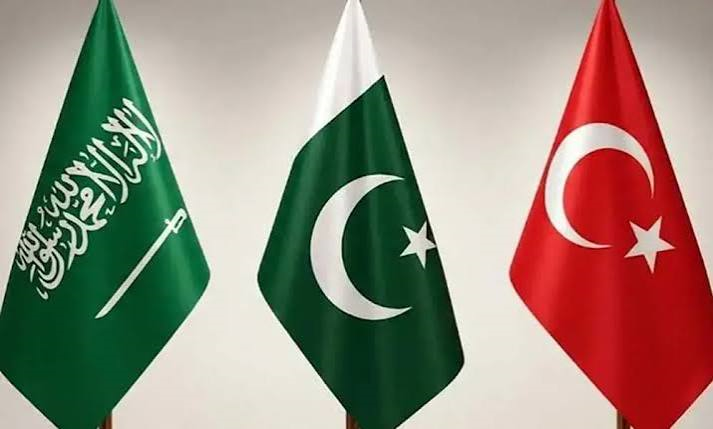
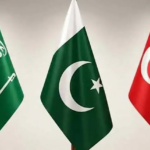
The Pact brings together Saudi capital, Türkiye’s industrial and military capabilities, and Pakistan’s geography, trained military and deterrent capability within a framework of mutual assurance. Its potential gravitational pull is also widening, with Syria considering membership, Iran reportedly having been invited and weighing the implications, and Bangladesh publicly debating whether to participate. What is emerging is potentially an expanding architecture of consequential Muslim middle powers, with Pakistan at its geographic and strategic hinge.
“The Makkah Pact converts Pakistani geography from a liability into an asset underwritten by collective security.”
For the geo-economic project, the Pact is foundational in four ways:
First, investor confidence. A Makran coast backed by a Riyadh–Ankara–Islamabad deterrence triangle is a fundamentally different risk proposition from the Balochistan of the 2010s. Multilateral insurers, sovereign funds and shipping alliances price security heavily. Riyadh has already signaled its financial stake in Pakistan’s stability with a $3 billion addition to Pakistan’s foreign exchange reserves in April 2026.
Second, economic synergy. Saudi Arabia brings sovereign capital, energy infrastructure and the Vision 2030 imperative to secure export routes outside the Persian Gulf. Türkiye brings a major network carrier, mature construction and defence industries, and a strategic interest in Türic-Central Asian connectivity. Pakistan brings geography, manpower and the deterrent itself.
Third, the Iranian question. Should Tehran eventually join, the Pakistan–Iran connectivity problem could be subsumed within a collective security framework, potentially unlocking Iranian rail and road links that complete the International North–South Transport Corridor and make the Makran coast a seamless southern terminus of Eurasian trade.
Fourth, diplomatic centrality. Pakistan is uniquely positioned through its ties to the Gulf, Anatolia, South Asia and China. As interest in the corridor expands, Pakistan moves from seeking investment to arbitrating between investors.
3. The Dual-Hinge Paradigm: Institutionalizing The Corridor
Geography gives a state a location; diplomacy gives it leverage. Pakistan’s present position offers an extraordinary dual hinge: institutional leverage within the Shanghai Cooperation Organization (SCO) and a central role within the Makkah Pact. Holding both positions simultaneously can transform the Makran coast from a national project into an intercontinental necessity.
Through the SCO, Pakistan should elevate the Makran corridor from a bilateral transit route into a multilateral strategic imperative by championing an “SCO Southern Maritime Gateway” protocol. This could bundle INSTC rail access with SCO energy and agricultural treaties, offering Central Asian republics and Russia a standardized, treaty-protected route to the Arabian Sea and reducing bilateral bottlenecks.
“Pakistan is playing a masterful balancing act. To the SCO, it offers a secure gateway to the Gulf and Africa. To the Makkah Pact, it offers a privileged Landbridge to China and Central Asia.”
Pakistan’s SCO position should be used to advance these concepts through Eurasian diplomatic and economic forums, while the Makkah Pact provides the complementary security and investment framework.
Simultaneously, the Makkah Pact Secretariat could institutionalize Gulf-Turkish capital flowing into the corridor. If joint logistics and maritime command structures were located within the MCEC, the security of Gwadar and Pasni would become a collective concern rather than solely a Pakistani domestic responsibility. That military integration could support joint Türkiye-Saudi-Pakistani defence manufacturing in divisional EPZs, a strategic airlift command at the Gwadar aviation hub, and sovereign wealth investment protected by mutual deterrence.
The proposition is straightforward: to the SCO, Pakistan offers a secure, Makkah-stabilized gateway to the Gulf and Africa; to the Makkah Pact, it offers an SCO-linked landbridge to China and Central Asia. Gwadar can become the coordinate where the Eurasian landmass and the Muslim-world alliance intersect physically, commercially and strategically.
4. The Coastal Axis: The Makran Coastal Economic Corridor
The MCEC integrates Gwadar, Pasni, and Ormara into a single federally administered special economic region under a Makran Coastal Authority established by federal special act with a 30-year non-revocable guarantee.
- Gwadar: Deep-water containers, CPEC freight, and Gulf strategic reserves and refineries outside the Hormuz chokepoint.
- Pasni: Energy buffering, crude tank farms, LNG regasification, and transshipment.
- Ormara: Marine economy – industrial fishing, cold chains, aquaculture, and ship repair.
The Social Contract. The Makran Community Investment Trust (MCIT) holds equity across corridor entities, capitalized through land-to-equity conversion. Lower-income coastal families access a “1-in-10-out” leverage mechanism: one rupee of personal investment unlocks ten rupees of trust equity, contingent on a ten-year residency requirement. A fixed share of corridor profits is ring-fenced for local water, power, health, and upskilling.
The Legal Software. The corridor operates as a geographically bounded Special Commercial Jurisdiction: English common-law rules for commercial, corporate, labor, and maritime affairs; 100% foreign ownership; unrestricted capital repatriation; automatically enforceable international arbitration awards; and dedicated commercial tribunals.
Enacted under the federation’s trade-and-commerce powers (Articles 151–154), this requires no constitutional amendment – personal and family law remain national while the zone’s commercial law becomes globally competitive.
The commercial target is to capture 15–20% of Dubai’s transshipment load within five to ten years, supported by founder-rate port dues and sub-24-hour customs clearance.
5. The Domestic Engine: Administrative Units & Export Zones
Geography is only potential; competitiveness is what converts it into volume. No corridor, however well guaranteed, will carry cargo that Pakistani industry cannot produce.
Pakistan’s export competitiveness has been shrinking while Bangladesh, India and Vietnam have expanded theirs, and exports remain dangerously narrow, with textiles accounting for well over half of merchandise exports. Before the coast can claim the world’s cargo, the hinterland must be rebuilt. The prescription is fourfold: divisional specialized export zones, tariff surgery, deregulation, and monetization of stranded energy.
Pakistan possesses organic industrial clusters – Karachi (heavy manufacturing/chemicals/steel), Sialkot (surgical/sports goods), Faisalabad (textiles), Gujranwala (light engineering) – but administers them through generic provincial bureaucracies with no industry-specific mandate. Each major industrial division should become a duty-free Export Promotion Zone governed by an Administrative Unit (AU).
5.1. The Administrative Unit Governance Model
The Administrative Unit (AU) is where governance meets development. Each AU is governed by a Council composed of elected citizen representatives, industrial and labor representatives, technocrats, and directly elected female and minority representatives – ensuring no single interest dominates. The Council elects a Mayor as Chief Executive for a four-year term, subject to annual performance review. The Administrative Units are to be mission-driven public corporations. Their Board of Directors will not be a legislature; their role is to be a supervisory and executive body charged with two pillars only: local infrastructure and productivity enhancement. All other functions remain with the provinces. Land held by federal and provincial governments within an AU’s jurisdiction is transferred to the AU as an economic asset. Fiscal devolution provides the fuel: 60% of NFC funds flow directly to AUs.
Each AU must enforce a genuine one-window regime integrating business registration, utilities, environmental clearance, and customs bonding within statutory deadlines, with automatic deemed approval if officials default. Zones report against published annual scorecards (exports, jobs, FDI, occupancy). Underperformers lose privileges; successful ones receive expanded mandates.
The complete governance model – term lengths, accountability mechanisms, compensation, and dissolution safeguards – is detailed in the Annexure.
5.2. Industrial Policy
Tariff Surgery.
- Blade one: Zero-rate import duties on raw materials, intermediates, and capital goods used in export production through automated exemption systems.
- Blade two: Progressively raise export taxes on raw cotton, hides, scrap metal, and unprocessed minerals over a transparent three-to-five-year glide path. The objective is value addition, not revenue.
Monetizing Stranded Energy. Pakistan pays billions in capacity charges for idle plants. Supplying this already-paid-for electricity to verified export-oriented industries at 8–9 cents/kWh is asset recovery, not subsidy. Ring-fenced smart metering and strict export-performance conditions apply.
Section 9.3 of this article sets out an alternate tax and resource‑generation framework designed to offset any potential revenue shortfall arising from the above incentives.
Selling already-paid-for electricity to export-oriented industry at 8-9 cents per kWh is not a subsidy; it is the recovery of a stranded national asset.
6. The Chinese Roadmap: A Blueprint For Pakistan’s Industrial Transformation
“The Chinese experience offers Pakistan a tested roadmap – not as a copy-paste template, but as a strategic framework adapted to Pakistani conditions.”
China’s transition from an agrarian economy to an industrial powerhouse offers Pakistan a tested framework for transforming its divisional export zones and the Makran Coastal Economic Corridor (MCEC). The lesson is not to copy China, but to adapt ten principles to Pakistani conditions.
Strategic planning, specialization and land governance should anchor the system. A National Industrial Strategy 2027–2045, reviewed every five years, should align EPZs and the MCEC with national priorities. Each zone should focus on no more than three leading sectors, while land allocation should be tied to output-per-acre targets, with forfeiture or tax penalties for persistent underutilization. The MCEC should carry its proposed 30-year federal guarantee.
“The Chinese experience offers Pakistan a tested roadmap – not as a copy-paste template, but as a strategic framework adapted to Pakistani conditions.”
Digital transformation and innovation should make every EPZ a Digital Zone, using real-time supply-chain tracking, paperless AI-assisted customs, digital-skills development, and industry-academia partnerships for applied R&D, incubation and skilled-talent pipelines. The MCEC should add marine research capabilities in aquaculture, cold chains and deep-sea fishing.
Green development should require each EPZ to progress toward Eco-Industrial Park certification, supported by effluent treatment, renewable energy, waste-to-energy and water recycling. Textile zones should target 80% water reuse within five years.
Openness, investment and supply-chain development should replace fragmented factory-by-factory promotion. The MCEC’s internationally benchmarked commercial jurisdiction should provide investor protection, arbitration and repatriation safeguards. Each EPZ should conduct a Supply Chain Gap Analysis, targeting foreign and domestic investors to fill missing upstream, intermediate and downstream capabilities while integrating SMEs through finance, technology upgrading and export mentorship.
The failure has never been the clusters; it has been the state, which administers them through generic provincial bureaucracies with no industry-specific mandate.
Finally, Pakistan must shift from quantity to quality: EPZ scorecards should measure value-added per worker, export prices and technological upgrading. Specialized zones should then be linked into six complementary regional networks: Punjab (Faisalabad–Gujranwala–Sialkot–Gujrat); Sindh (Karachi–Hyderabad–Thatta/Larkana); KP (Peshawar–Mardan/Swabi–Haripur/Havelian); Balochistan (Quetta–Khuzdar–Gwadar/Pasni/Ormara); GB (Gilgit–Skardu–Hunza); and AJK (Mirpur/Kotli–Muzaffarabad–Rawalakot/Poonch).
The objective is a national industrial system in which specialization, innovation, sustainability, investment, supply-chain integration and value addition reinforce one another rather than compete for the same incentives.
7. The Connectivity Axis: CPEC, INSTC, and the Open Sky
A port without a hinterland is a parking lot. The MCEC’s hinterland is the Eurasian landmass, reached through three vectors.
- CPEC binds the coast to Western China’s manufacturing base and remains the corridor’s original spine and major freight generator.
- INSTC (International North–South Transport Corridor)binds the coast to Central Asia and Russia. Moscow has backed linking Gwadar to the Russia-anchored North–South Corridor, while the Chabahar freeze increases the need for reliable southern access. Interim routes through China to Kyrgyzstan and multilateral transit arrangements with Kazakhstan and Uzbekistan can keep trade moving while the master routes mature.
A Makran terminus offering both CPEC and INSTC under one neutral regulator becomes the X-junction of Eurasian trade.
A Makran terminus serving both CPEC and INSTC under one neutral regulator becomes the X-junction of Eurasian trade: Chinese goods, Central Asian minerals and Russian freight meeting the Indian Ocean on Pakistani soil.
7.1. Aviation Sector
The New Gwadar International Airport, with a runway capable of handling the largest widebodies, can become a major component of the corridor. The proposition to Türkiye, Chinese, Saudi and European carriers is direct: route China, Far East and Australian connections through Gwadar at a fraction of Gulf costs.
The package should include fifth-freedom rights, tax-free jet fuel, frictionless transit visas, dedicated sea-air multimodal cargo for Chinese and Central Asian e-commerce, and a regional maintenance, repair and overhaul enclave. Training Makran’s youth as aviation technicians over time would turn the airport from infrastructure into an industry.
7.2. The Legal Software: A Special Commercial Jurisdiction
Hardware without software is a monument.
The corridor should operate as a geographically bounded Special Commercial Jurisdiction – a Dubai-style fenced legal enclave within Pakistan where commercial, corporate, labor and maritime affairs are governed by English common-law rules, 100% foreign ownership is permitted, capital repatriation is unrestricted, and international arbitration awards are automatically enforceable. A regulatory sandbox would cover finance, labor and aviation, with all commercial disputes adjudicated through dedicated common-law tribunals independent of local civil or religious courts. Enacted under the federation’s trade-and-commerce powers, this would require no constitutional amendment; personal and family law would remain national while the zone’s commercial law becomes expressly secular, religion-neutral and globally competitive.
The model is essentially a Dubai financial-center approach adapted to Pakistan: a fenced, world-class legal enclave where Western multinationals, Gulf sovereign funds and Chinese state champions can invest without fear of arbitrary reversal. A controlled, geographically bounded hospitality enclave could be developed in phases to provide the livability expected by global executives and maritime crews.
8. The Security Reset: Revamping NACTA
Pakistan requires a fundamental national reset to protect its 250 million citizens and create the security environment essential for investment and development. External security guarantees mean little if internal stability is compromised. NACTA must therefore become the foundation of the entire architecture, transformed from a passive policy-coordination body into the country’s central counter-terrorism and internal-security agency, with nationwide jurisdiction and the intelligence, investigative, technological, prosecutorial and judicial capabilities required to eliminate terrorist networks and their financial, logistical and ideological support structures.
This transformation must be anchored in comprehensive primary legislation, with any upcoming Constitutional Amendment serving as the ideal legislative vehicle. The objective is not another incremental reform, but a hard reset capable of delivering the internal security on which the corridor, industrial zones, connectivity infrastructure and wider geo-economic transformation ultimately depend.
8.1. Unified National Counter-Terrorism Department (NCTD)
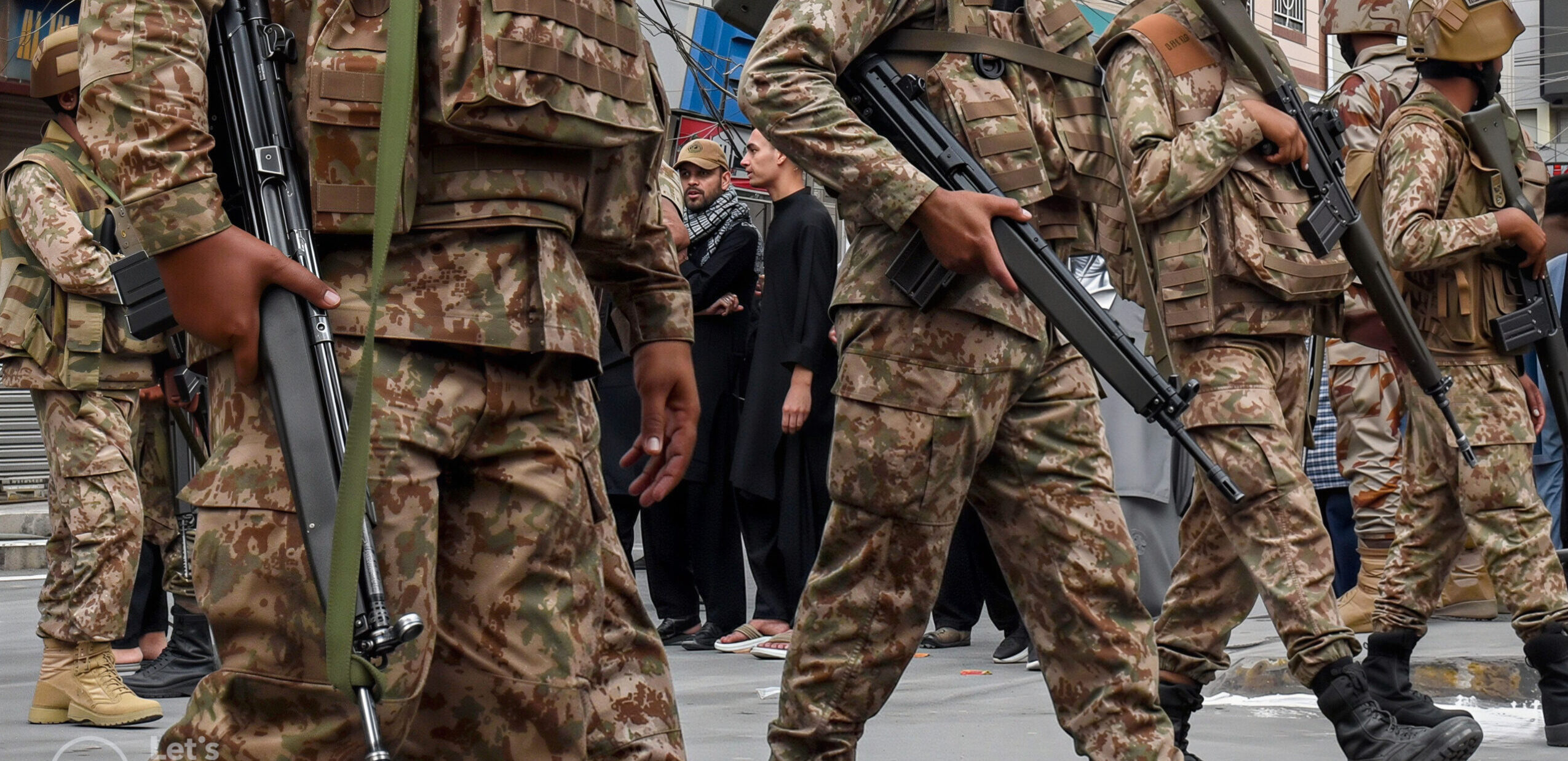
Pakistan’s current counter-terrorism mechanism is dangerously fragmented. Provincial Counter-Terrorism Departments (CTDs) suffer from severe capacity shortages and institutional overlap, failing to deliver a synchronized response. The tragic Peshawar mosque bombing underscored that provincial CTDs lack the capability to fight modern terrorism.
This must change. The proposed National Counter-Terrorism Department (NCTD), operating directly under NACTA, will consolidate all provincial CTDs into a single federal umbrella. It will have nationwide jurisdiction covering all four provinces, Gilgit-Baltistan, Azad Jammu and Kashmir, and all federal territories. This centralization ensures “clarity of purpose, unity of command, and avoidance of institutional overlapping.”
The NCTD must be a division-sized kinetic force (12,000–15,000 personnel) manned by serving and retired SSG personnel. It must be equipped with cutting-edge technology: 24/7 satellite surveillance, armed drones, robotic systems, and advanced intelligence-gathering tools to eliminate entrenched terrorist networks across all terrains.
8.2. Judicial Framework: NACTA Courts & Faceless Precedents
A strong prosecution arm is essential. NACTA must establish a federal prosecution wing staffed with specialized anti-terrorism prosecutors to handle all NCTD-investigated cases, ensuring continuity from investigation to trial. Complementing this, a dedicated judicial hierarchy must be created:
- NACTA Trial Courts – Specialized courts to hear terrorism cases.
- High Courts Oversight – Chief Justices monitor operations, receiving regular progress reports.
- Supreme Court – The final appellate authority for criminal matters.
- Federal Constitutional Court (FCC) – The final authority on constitutional and fundamental rights questions (established via the 27th Amendment).
The “faceless courts” concept, recently introduced in Punjab, is not radical; it is a proven international practice. Italy used it against the Mafia in the 1980s, Colombia and Peru used it against drug cartels and terrorists, Brazil has adopted it across multiple states for organized crime, and the US FISA (Foreign Intelligence Surveillance Act) Court and UK (Closed Material Procedures) employ similar secrecy measures for national security cases. To address constitutional concerns, Pakistan must ensure protective measures are judicially supervised, case-specific, and preserve appellate rights, drawing from the Italian model where judicial accountability remained intact.
8.3. Financial Oversight & Sovereign Regulation of Foreign-Funded Entities
Unregulated foreign funding to NGOs, madrassas, political parties, and welfare schemes is a critical national security vulnerability. NACTA must be granted comprehensive financial oversight powers through a Foreign Funding Regulation Act:
- Mandatory State Bank of Pakistan (SBP) Clearance – All foreign funds must be deposited with the State Bank and cleared by NACTA before disbursement to such organizations.
- Digital-Only Traceable Transactions – No cash withdrawals; all disbursements must be through trackable digital means.
- Confiscation Powers – NACTA must have the authority to freeze or confiscate accounts violating the laid down procedures or supporting terrorist or anti-state activities.
8.4. Legislative Path via the 28th Amendment & International Validity
Executive policies alone will not survive judicial scrutiny. The Lahore High Court (2024 LHC 3763) struck down a previous NGO funding policy precisely for lacking legislative authorization. Therefore, this reset must be driven by primary legislation passed by Parliament.
Any upcoming Constitutional Amendment presents a timely vehicle to enact the following package:
- The NACTA Empowerment Act – Transforming NACTA into an operational agency.
- The NCTD Act – Establishing the unified kinetic force with nationwide jurisdiction.
- The NACTA Courts Act – Creating the dedicated judicial hierarchy with faceless court provisions.
- The Foreign Funding Regulation Act – Consolidating financial oversight and SBP clearance mechanisms.
Where necessary, constitutional adjustments must address 18th Amendment concerns regarding federal-provincial jurisdiction to ensure the NCTD can operate seamlessly across all territories.
The objections from some vested interest groups must not deter Pakistan from decisive action. The welfare and security of Pakistan’s 250 million citizens comes before any external criticism. One should remember that the anti-terrorist legislation in most Western countries is much harsher. A robust, legally sound, and operational NACTA is not a luxury; it is an existential necessity. The time for incremental reform is over.
9. Governance & Fiscal Reforms
9.1. Judicial Overhaul
Commercial disputes must have a mandatory 180-day resolution period; civil cases a two-year limit; criminal cases three years. No case should receive more than three adjournments without escalating costs. A parallel commercial court system should have exclusive jurisdiction over investment, maritime, and contract disputes, operating on 90-day judgment mandates with electronically managed dockets.
Judges should serve an initial 10-year term, followed by renewable five-year terms based on objective criteria: case clearance, reversal rate, disposition time, and ethics. Mandatory asset disclosure on appointment and annually thereafter, verified by a Judicial Accountability Commission.
9.2. Bureaucratic Technocracy
Replace the generalist civil service with a technocratic civil service in which qualification requirements match ministry functions: economics for Finance, engineering for Energy, computer science for IT, marine engineering for Maritime Affairs. Initial tenure should be 10 years, followed by five-year extensions based on ministry-specific KPIs. Up to 30% of senior positions at Secretary level should be open to private-sector experts through performance contracts. An independent Civil Service Commission should oversee appointments and postings, insulating them from political interference.
9.3. Fiscal Devolution and Resource Generation
Agriculture contributes 23% of GDP and 40% of employment but less than 1% of tax revenue. Agricultural taxation should align with national income-tax slabs, phased over three years starting with holdings above 25 acres; holdings below five acres remain exempt. Revenue is ring-fenced for agricultural R&D and rural infrastructure under a National Agricultural Tax Council.
Agriculture contributes 23% of Pakistan’s GDP and employs 40% of the workforce, yet contributes less than 1% of total tax revenue. This is an indefensible anomaly.
The NFC Award should direct 60% of funds straight to divisions based on population (40%), land area (10%), poverty (30%), and tax generation (20%). The remaining 40% forms a provincial pool. Divisions should retain 15–20% of locally collected taxes, with a 2–5% performance bonus for above-baseline collection. At least 60% of divisional allocations should go to development, supported by three-year rolling plans and annual audits.
A credible anti-corruption framework must protect the system: immediate suspension on prima facie corruption allegations; dismissal on conviction; mandatory annual asset disclosure; whistleblower protection including 5–10% rewards on recovered funds; and digital tendering for contracts above PKR 1 million.
10. The Geo-Financial Pivot
The international financial system is undergoing structural change. Across Eurasian and Global South forums, there is growing interest in reducing dependence on dollar-clearing systems and developing alternative mechanisms for trade settlement and sovereign finance.
Pakistan should exploit its SCO and Makkah Pact positions to make the MCEC a platform for this transition.
A Special Financial Jurisdiction within the MCEC could support both dollar and non-dollar clearing mechanisms, including local-currency swaps, digital central-bank currencies and emerging BRICS payment mechanisms. This would provide participating states with additional options for routing trade and managing sovereign wealth.
If the MCEC becomes a major logistical artery for both the SCO and Makkah Pact, it could also host a Makran Debt-Restructuring Consortium. Such a mechanism could facilitate trade-for-infrastructure swaps and collective debt restructuring or moratorium arrangements, backed by the market mass of the SCO and the security framework of the Makkah Pact.
The strategic objective is larger than financing the corridor itself: Pakistan could move from repeatedly seeking external rollover support toward becoming an institutional platform through which Global South states negotiate new forms of trade and development finance.
Conclusion
The window is five to ten years. Risk perceptions will normalize. Hormuz will reopen. Competitors will adapt. What Pakistan builds in this decade will determine its position for the next century.
Pakistan’s destiny was never to be a battleground of great powers. It is to be the hinge that connects them.
The route is now visible. It is no longer merely a corridor of steel and concrete, but an architecture of power, finance and connectivity operating on four simultaneous planes.
The security plane: the Makkah Pact provides the framework within which the Makran coast can become a secure strategic asset.
The economic plane: divisional specialized export zones create the industrial hinterland, feeding a federally administered MCEC.
The connectivity plane: CPEC and INSTC converge on the same coastline, linking China, Central Asia and Russia to the Indian Ocean, while aviation adds a third-dimensional network above the land corridors.
The financial plane: non-dollar settlement, debt restructuring and alternative financing mechanisms could transform the corridor from a transport route into a platform for a changing Global South financial architecture.
Pakistan’s destiny was never to be a battleground of great powers. It is to be the hinge that connects them – the coordinate where the SCO and the Makkah Pact can intersect physically, commercially and strategically.
In 2026, for the first time in the nation’s history, every element of this equation is aligned. The route is on the map, in the treaty, and at the negotiating table.
All that remains is the will to build it.
ANNEXURE
Table 1: Pakistan’s Divisional Industrial Specializations
The purpose of this table is not to create artificial industries where none exist. It is to identify and formalize the strongest existing or naturally supportable industrial specialization of each administrative division so that EPZ incentives, infrastructure, skills development, investment attraction and export policy reinforce rather than compete against one another.
| Province / Territory | Administrative Unit | Key Industrial Specializations |
| Balochistan | Quetta | Mining & minerals, food processing, handicrafts, pharmaceuticals |
| Balochistan | Pishin | Fruit processing, agricultural machinery, pharmaceuticals, motorcycle assembly, chromite mining, ceramics |
| Balochistan | Khuzdar | Mining & minerals, marble/granite processing, agriculture, livestock |
| Balochistan | Lasbela | Textiles, auto parts, electronics, chemicals, plastics, ship breaking, steel re-rolling |
| Balochistan | Rakhshan | Copper and gold mining, including Reko Diq and Saindak |
| Balochistan | Makran | Date processing, fisheries, coastal development |
| Balochistan | Nasirabad | Irrigated agriculture, inland fish farming, rice mills, livestock |
| Balochistan | Zhob | Meat processing, chromite and magnesite mining, olive oil processing, livestock |
| Balochistan | Sibi | Coal mining, leather work, handmade carpets, flour mills, agriculture |
| Balochistan | Loralai | Mining, olive oil, horticulture, livestock |
| Balochistan | Koh-e-Sulaiman | Mining and minerals, particularly gypsum |
| Khyber Pakhtunkhwa | Hazara | Pharmaceuticals, marble processing, trout fish farming |
| Khyber Pakhtunkhwa | Peshawar | Marble and granite processing, ghee, steel |
| Khyber Pakhtunkhwa | Malakand | Marble and granite, steel mills, ghee, textiles, hydropower |
| Khyber Pakhtunkhwa | Kohat | Cement, gypsum mining and processing, oil and gas, textiles, arms and ammunition |
| Khyber Pakhtunkhwa | Mardan | Furniture, sugar, textiles, ceramics, plastic footwear |
| Khyber Pakhtunkhwa | Bannu | Leather goods, spice grinding, cloth weaving, cotton fabrics, sugar mills, livestock |
| Khyber Pakhtunkhwa | Dera Ismail Khan | Cement, food and beverage, LPG, chemicals, agro-based industry, handicrafts |
| Sindh | Karachi | Diversified mega-industrial hub: textiles, chemicals, pharmaceuticals, steel, shipbuilding, auto parts, food and beverage, leather |
| Sindh | Hyderabad | Glass bangles, textiles, sugar, cement, light engineering, pharmaceuticals |
| Sindh | Shaheed Benazirabad | Sugar milling, edible oil, textiles |
| Sindh | Larkana | Rice milling, guava processing, textiles, food manufacturing |
| Sindh | Mirpur Khas | Sugar and paper milling, cotton, garments |
| Sindh | Sukkur | Agro-based industries, cement, leather, dates processing, fisheries |
| Punjab | Bahawalpur | Cotton ginning and textiles, food processing, logistics/trade |
| Punjab | Dera Ghazi Khan | Cement, cotton textiles, rice mills, flour mills, agricultural machinery |
| Punjab | Faisalabad | Textiles, chemicals, food, pharmaceuticals, IT |
| Punjab | Gujranwala | Light engineering, electrical/electronic products, iron and steel casting, cutlery, domestic appliances |
| Punjab | Gujrat | Ceramics, pottery, furniture, fans, electrical goods, PVC pipes, sporting goods |
| Punjab | Lahore | Diversified manufacturing: textiles, iron and steel, chemicals, pharmaceuticals, paper, dairy |
| Punjab | Multan | Textiles, fertilizers, pesticides, food processing, handicrafts, oilseeds |
| Punjab | Rawalpindi | Oil refinery, steel/iron mills, textiles, leather goods, mobile-phone manufacturing, cottage industries |
| Punjab | Sahiwal | Food processing, dairy, textiles, light engineering, woodwork, furniture |
| Punjab | Sargodha | Citrus processing, shrimp farming, agricultural machinery |
| Azad Kashmir | Mirpur | Textiles, vegetable oil/ghee, marble, furniture, motorcycle assembly, sericulture |
| Azad Kashmir | Muzaffarabad | Hydropower, tourism, furniture, cottage industries |
| Azad Kashmir | Poonch | Tourism, agriculture, sericulture, mineral exploration |
| Gilgit-Baltistan | Gilgit | Iron ore and precious-stone mining, fruit processing, wood carving/furniture, textiles, hydropower |
| Gilgit-Baltistan | Baltistan | Gemstones and jewelry, fruit-pulp processing, tourism, agriculture |
| Gilgit-Baltistan | Diamer | Tourism, hydropower, traditional crafts, trout farming |
| Islamabad Capital Territory | Islamabad | High-tech and knowledge industries: AI, fintech, IoT, biotech; IT/BPO; light manufacturing |
The division-wise specialization should be treated as a starting industrial map, not a permanent prohibition on evolution. As markets change, scorecards and five-year reviews should permit successful divisions to expand into adjacent value chains while preventing indiscriminate duplication.
Table 2: The Administrative Unit Governance Model
| Element | Design |
| Council Composition | 40% Elected Citizen Reps (direct elections); 20% Industrial Reps (elected by Chamber of Commerce); 13% Labor Reps (elected by trade unions); 13% Technocrats (suggested by Fed/Prov; elected by Council); 7% Female Rep (directly elected); 7% Minority Rep (directly elected). |
| Term | 4 years (fixed; decoupled from Federal/Provincial cycles). |
| Mid-Term Accountability | Industrial/Labor/Technocrat reps face Vote of Confidence every 2 years (>50% required to continue). Citizen/Female/Minority reps face voters at 4-year election. |
| Mayor | Elected by Council; 4-year term; Annual Performance Review and Confidence Vote (>50% required). |
| Dissolution | Joint Federal + Provincial + Judicial Commission (2/3 majority). Re-election within 30 days. Interim administrator by High Court (routine maintenance only). |
| Mandate | Two pillars only: (1) Local infrastructure (roads, water, sewerage). (2) Productivity (industrial promotion, agricultural extension, investment facilitation). Education, health, law and order remain provincial; energy remains federal. |
| Land Transfer | All federal/provincial land within AU transferred to AU. Land cannot be sold; only leased or equity-converted. Digitized public registry. Lease revenues retained by AU. |
| Fiscal Devolution | 60% NFC directly to AUs (formula: population 40%, land 10%, poverty 30%, tax generation 20%). AUs retain 15–20% of locally collected taxes; 2–5% performance bonus for increased collection. |
| Election Cycle | Fixed 4-year cycle, independent of National (5-year) and Provincial (5-year) cycles. |
Table 3: Implementation Roadmap
The reforms described in this article should not be attempted as a single simultaneous administrative shock. They should be sequenced so that legislation establishes the framework, institutions are built before responsibilities are transferred, pilots expose weaknesses, and nationwide implementation follows demonstrated results.
| Phase | Timeline | Actions |
| Phase 1: Legislation | Year 1 | Enact Agricultural Tax Act; amend NFC Award formula; establish National Agricultural Tax Council; enact MCEC Act |
| Phase 2: Institutional Setup | Year 1–2 | Establish Divisional Development Authorities; establish digital tax collection and remittance systems; establish Commercial Courts |
| Phase 3: Pilot Implementation | Year 2–3 | Pilot agricultural tax in three divisions; pilot NFC devolution in three divisions; pilot Commercial Courts in Karachi, Lahore and Islamabad |
| Phase 4: Full Rollout | Year 3–4 | Nationwide agricultural tax; full NFC devolution; local revenue retention; full judicial and bureaucratic reforms |
| Phase 5: Evaluation & Adjustment | Year 5 | Independent evaluation; adjustment of formulas, rates and mechanisms based on measured outcomes |