


“Do not regret a battle that has matured you.” Arab proverb.
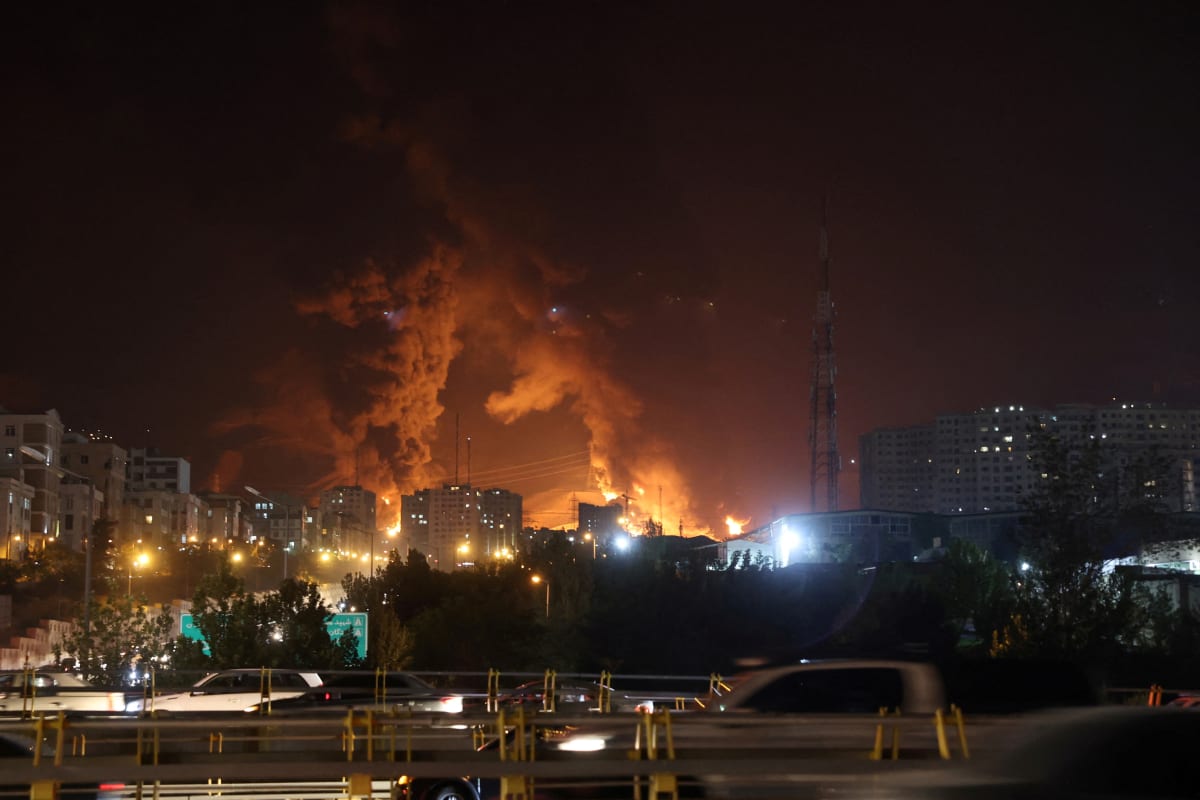
The current United States – Iran crisis has changed Saudi Arabia’s energy security eco-system that is linked with current military challenges and economic future. Iran is attacking energy infrastructure of Gulf countries including Saudi Arabia on the pretext that these countries host American forces. It is part of Iranian strategy of asymmetric warfare to inflict global economic costs to force United States to pull back. The second theatre is Saudi Arabia’s involvement in the neighboring Yemen civil war.
Saudi Arabia, as the world’s leading oil exporter, relies heavily on maritime highways to deliver crude oil and refined products to global markets. Energy exports are the kingdom’s economic engine and three major interconnected chokepoints: the Strait of Hormuz, the Bab al-Mandab Strait, and the Suez Canal present enormous challenges to the kingdom. Events of the last six months, since the United States and Isarel launched attacks on Iran to topple the regime provides a window to the operational and strategic maneuvers by Iran assisted by its regional allied militias and Saudi counter measures to safeguard its economic lifeline.
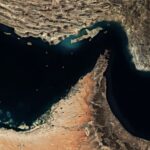
The Strait of Hormuz is the world’s most critical energy artery connecting the Persian Gulf to the Gulf of Oman and the Arabian Sea. A substantial proportion of oil and gas tanker traffic passes through this strait and this route is important for Saudi Arabia as the east coast of the country has its largest oil fields and primary export terminals of Ras Tanura and Ras Ju’aymah. A substantial portion of the country’s seven million barrels export passed through this route. This route was closed in the early phase of the war. Saudi Arabia pivoted quickly and expanded the use of 745 miles long East-West pipeline called Petroline that connects Ras Tanura on the east coast to the port of Yanbu on the west coast. This pipeline was constructed in 1980s during the Iran-Iraq war as a contingency plan to re-route oil exports in case of closure of the Strait of Hormuz.
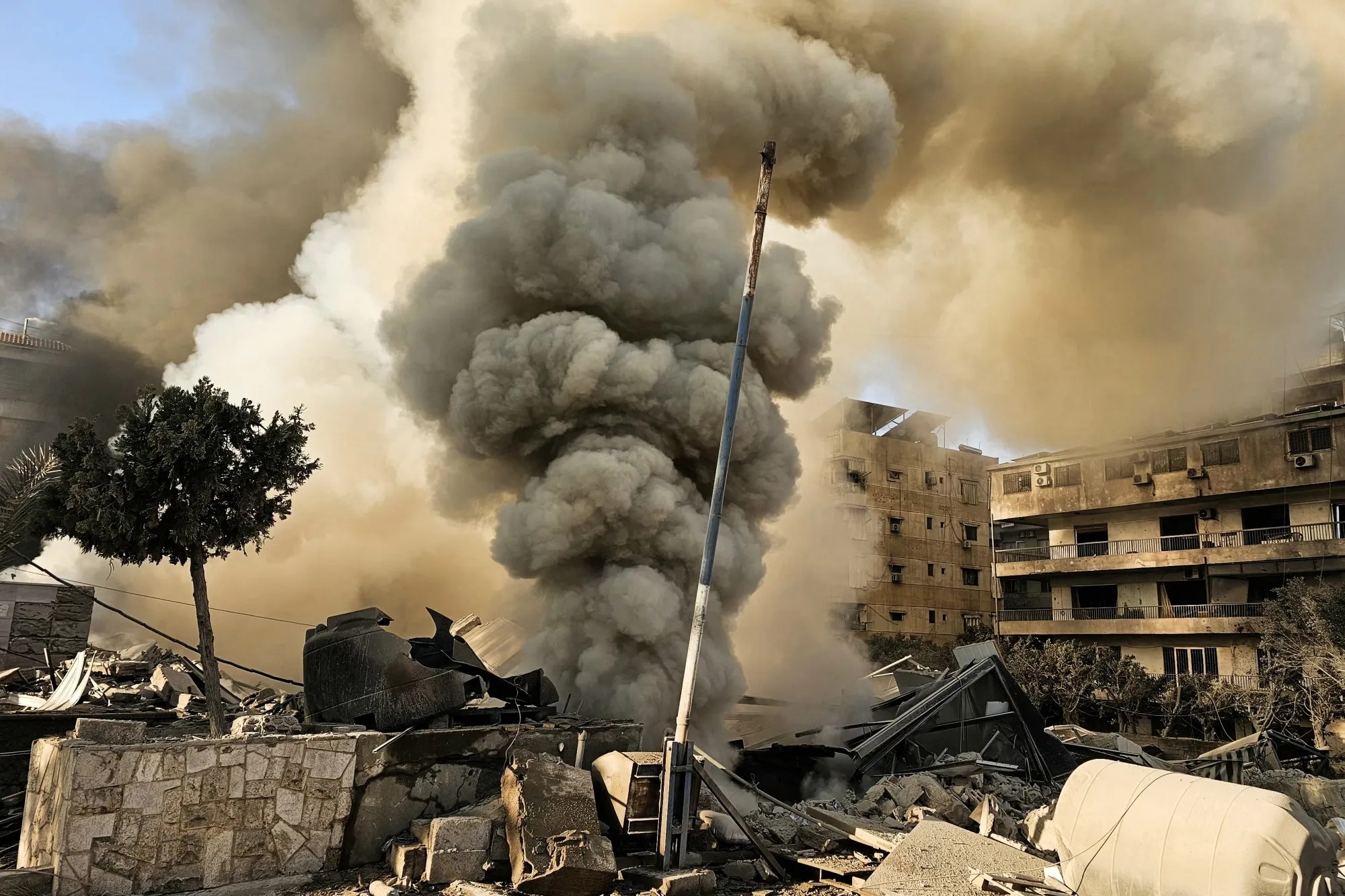
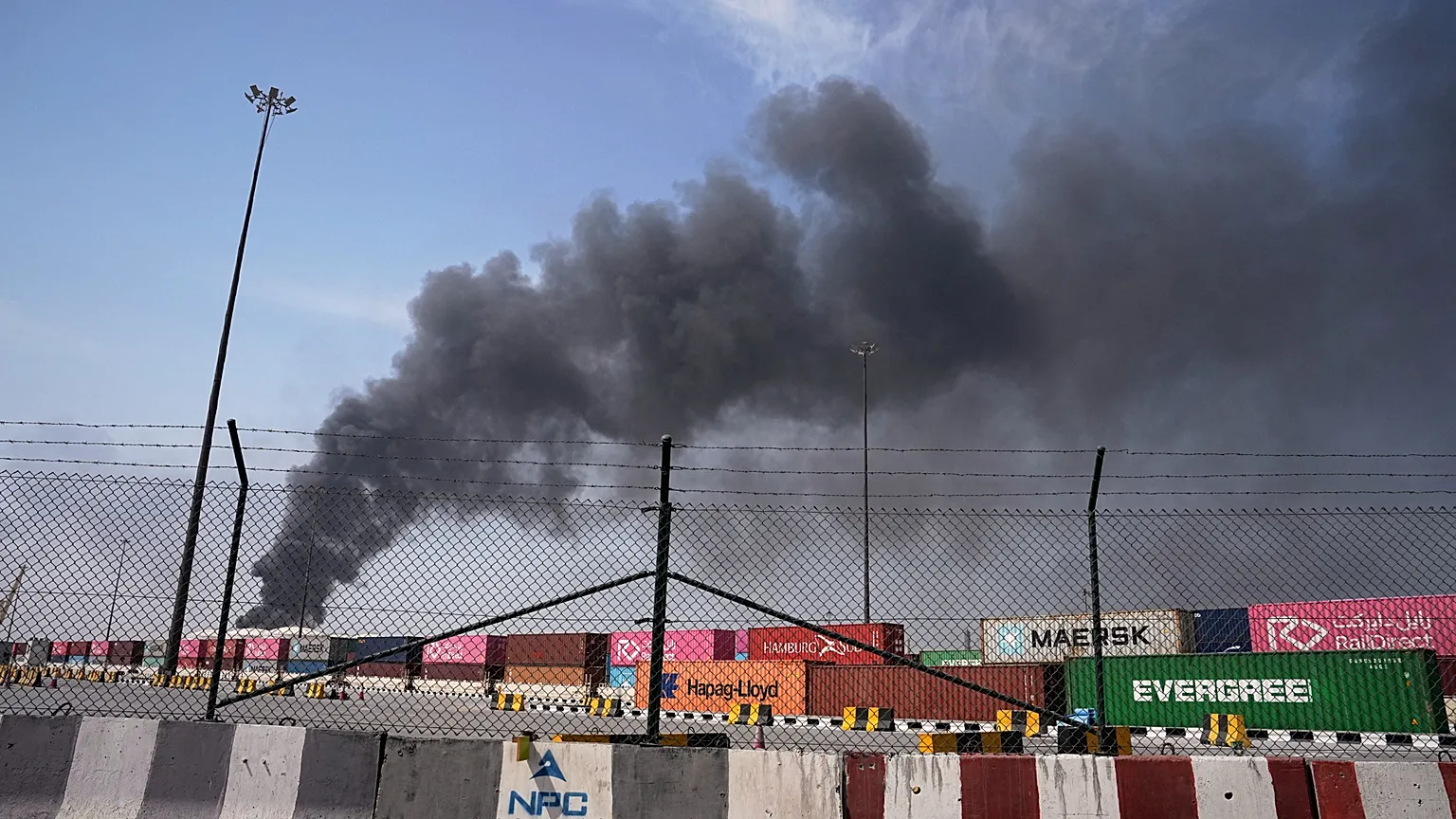
Prior to the war, 4-5 million barrels were pumped through the Petroline for domestic refining at Yanbu refineries and for export via Bab al Mandab and Suez routes to Asian and European markets. Saudi Arabia rapidly expanded the pumping capacity to seven billion barrels per day. Adversaries viewed the pumping stations of Petroline and Yanbu’s refineries and loading facilities as a single point of failure and Iran and its allied militias attacked these facilities with missiles and drones causing temporary reduction of outputs. Even a robust air defense system has its limits to cover a large swath of the territory. The land route only bypasses the vulnerable waterways, and risk is only transferred to the land route and not eliminated.
The re-routed Saudi oil exports to the Asian markets pass through the Bab al-Mandab Strait which is a narrow passage between the Arabian Peninsula and the Horn of Africa. This chokepoint connects the Arabian Sea to the Red Sea. Saudi Arabia’s challenge in Bab al-Mandab relates to the country’s involvement in the Yemen civil war. Now an added factor is friction with the United Arab Emirates (UAE) on the fractured chessboard of Yemen. Saudi Arabia and the UAE were initially united in supporting various Yemeni factions to confront Iran supported Ansar Allah popularly known as the Houthis who control the north-western part of Yemen including its capital Sana and the Red Sea port of Hodeidah. Saudi Arabia is supporting factions based in central and eastern Yemen under Presidential Leadership Council (PLC) umbrella while UAE southern factions herded together under Southern Transitional Council (STC) umbrella. In January 2026, Saudi Arabia forced UAE to retreat but it still has considerable influence in the south.
There has been an effective ceasefire between Houthis and Saudi Arabia since 2022. The Houthis stayed out of the current conflict and waited for the right time. By July 2026, major Saudi oil exports had been re-routed through Bab al Mandab and Houthis chose this moment to threaten this chokepoint by attacking ships as well as oil infrastructure targets inside Saudi Arabia. Saudi Arabia concerned about Houthis attacks on Saudi soil and possible risk to Red Sea export route in support of Iran decided to push back. It supported Yemen forces with logistics and intelligence and bombed Houthi controlled port of Hodeidah that is the group’s maritime lifeline. Neutral observers are of the view that concentration of Yemen government troops and increased activity at logistics depots suggested plan for a large offensive. The Houthis made a preemptive strike on these forces and logistics depots in north, east and south of the areas controlled by Houthis. This resulted in several casualties and destruction of weapons depots and thwarted the plan.
Taking advantage of Saudi – UAE rivalry in southern Yemen and deep divisions of Yemeni factions, the Houthis are trying to expand further south along the Red Sea coast to come closer to the Bab al Mandab where they can threaten the passage more effectively. This was the reason behind the recent attacks by the Houthis on the port of Mocha that is the major maritime Saudi support route for Yemen forces. This slice of important territory is controlled by a small faction of the National Resistance Forces and Houthis goal is to get hold of this crucial piece of real estate that can significantly increase their nuisance value. The Houthis have adopted the strategy of ‘blockade for blockage’ and ‘escalation for escalation’ that is an extremely dangerous development that can spiral out of control. Saudi crude carriers in the Red Sea are going ‘dark’ by switching off their transponders to avoid targeting by Houthis. However, this is a safety hazard and increases the risk of collisions. The Iranians have helped the Houthis improve their arsenal of drones, small, crewed boats, unmanned drone boats, sea mines, and anti-ship cruise missiles. This helps both parties to try to disrupt the kingdom’s supply chain using low-cost, asymmetric tactics. The goal of Iran is to force Saudi Arabia to distance itself from American operations in the region and encourage dissension among Gulf States to prevent a united front.
The Houthis want to use these threats to extract concessions from the kingdom that include curtailing Saudi support for anti-Houthi factions, and financial assistance in return for cessation of hostilities. This is a kind of blackmail that tribal societies have used from time immemorial against powerful entities including mighty empires. In the previous ceasefire between Saudi Arabia and Houthis this protection money was a key element and in the current negotiations mediated by Oman, the Houthis are asking for public sector salaries for workers in areas under their control. Iran and Houthis are confident from their previous experience when in 2025, this asymmetric strategy worked against United States when after few weeks of massive bombings, U.S. made a deal directly with the Houthis through Omani channels.
Saudi oil destined for European and North America markets use the Suez Canal route from the Red Sea ports to enter the Mediterranean Sea. There is a physical constraint where the canal depth only allows Small Crude Carriers (SCC) carrying one million barrels. Very Large Crude Carriers (VLCC) carrying two million barrels leave Saudi port of Yanbu to Egyptian port of Ain Sukhna on the Red Sea, unload one million barrels to be carried by SUMED (Suez-Mediterranean) Pipeline to Egyptian port of Sidi Kerir on the Mediterranean. VLCC then crosses Suez with a smaller load, uploads its remaining oil back at Sidi Kerir and then proceeds to its destination.
When the Houthis threatened Bab al Mandab forcing several Saudi ships to turn back, Saudi Arabia increased use of SUMED pipeline. In August 2026, oil exports from Sidi Kerir have more than doubled from one million barrels to 2.3 million barrels per day. However, this route has its limits due to increased cost and time and cannot be rapidly expanded due to physical limitations of the pipeline and the Suez Canal.
Adversaries of Saudi Arabia sent a signal when a drone attacked Egyptian Mediterranean port of Damietta damaging two floating gas storage tankers setting it on fire. No one claimed responsibility but the message was noticeably clear that no energy corridor was immune from attacks. Sabotage of a single ship within the Suez Canal can block the canal for days or even weeks and this vulnerability was at display in a 2021 incident when a container ship ran aground in the canal due to harsh weather resulting in closure of the canal for six days.
In view of threats to all three routes insurance costs have skyrocketed. More important is reputational damage as the Kingdom’s vision of weaning off from energy exports and attracting foreign investment for a diversified economy cannot be achieved in an environment of instability and uncertainty. Saudi Arabia has pursued a multi-layered mitigation strategy to overcome vulnerabilities to all three major routes. Currently, focus is on hardening physical infrastructure and acquiring more air defense and offensive weapons, but more attention needs to be paid to the overall operational environment.
The Saudi decision-making process is opaque, and we do not have a clear picture of the process. However, one thing is certain, that Crown Prince Muhammad Bin Salman is the one making all decisions. A careful review of his rise shows that he has learned lessons from his early rash decisions both in domestic and international affairs that caused severe reputational damage. In a rare candid moment, he admitted that ‘even prophets made mistakes; the important thing is to learn from mistakes’. In the last few years, he has been more cautious and is trying to navigate an extraordinarily complex and dangerous situation. The challenge is how to establish deterrence against Iran and its allies while at the same time avoid getting entangled in a costly war that can derail his economic vision for the kingdom.
Establishment of a maritime coalition of fifteen countries led by Saudi Arabia to safeguard international waterways is mainly symbolic with extremely limited role. The reason for this assessment is that much larger and more powerful coalitions are still on the books but unable to reverse the trend of instability on waterways. In 2023, the United States led Prosperity Guardian coalition of twenty countries against the Houthis. Two and a half years later, despite dropping a lot of ordnance, the United States directly negotiated a ceasefire with Houthis. Since 2008, the European Union has been running Operation Atalanta to secure the Red Sea and Horn of Africa maritime corridors. In 2024, European Union led Operation Aspides to protect vessels in Persian Gulf and Red Sea was inaugurated. The seriousness can be judged from the fact that at any given time only 2-3 ships were deployed and cost effectiveness was displayed by the fact that France fired 22 Aster missiles at the cost of $2 million per piece to intercept Houthi drones costing few hundred dollars. In 2015, Saudi Arabia assembled a coalition of 43 countries headquartered in Riyadh and headed by former Pakistan army chief to counter the Houthis. After a decade of existence, not even a single report has been shared with the public about its performance and many with first-hand knowledge of the region consider it an expensive non-serious exercise of no value.
Saudi Arabia is strengthening its border with Yemen and providing logistical and command assistance to forces aligned with internationally recognized Yemen government (most of the government is based in Saudi Arabia and ridiculed as running Yemen from the luxury hotels of Riyadh).
It has also expanded defense cooperation with Pakistan with stationing of ground troops, air defense brigade, and an air force squadron to the kingdom. This also has a limited value as in view of extreme negative domestic public opinion, any Pakistani military leader who visibly gets involved in a foreign conflict, especially a civil war risks backlash with serious sectarian overtones. Even if optimally used, a foreign contingent can only provide symbolic relief as U.S. manned most advanced air defense systems could not intercept all serious threats, there is much less a Pakistani manned system can do.
Pakistan’s agreement to this arrangement is only financial as the kingdom has provided periodic financial lifeline, discount oil and remittances from migrant work force. The Saudis are aware of Pakistani limits and diversifying defense portfolio. A Greek operated Patriotic air defense battery is stationed to protect Yanbu port facilities and expanded defense cooperation with Turkey mainly for acquiring drones and assistance in maritime operations. The Saudi thought process is still anchored around conventional military structure which has its value but the asymmetric nature of the threat and lessons from recent conflicts suggest that an innovative approach is needed. Networks of militant, economic, and criminal enterprises are at work in all the regional conflicts and will be difficult to tame only with conventional ordnance.
The nature of regional conflicts is too entrenched and complex and focus on conflict management rather than conflict resolution is a more pragmatic path. In dealing with the Houthis, financial incentives are a more cost-effective approach no matter how unpalatable this concept of protection money is. A starting point could be including Houthi government officials in current arrangement of Saudis paying Yemen government salaries (elaborate bureaucratic kabuki dance may be needed as Houthis are listed a terrorist organization). Over time, this co-dependence will enhance Houthis autonomy and even if Iran wants, local interest may dampen the desire to act on Iranian orders. In the meantime, diplomatic efforts with involvement of Oman to encourage intra-Yemeni dialogue combined with reasonable military deterrent by anti-Houthi forces. The Iranian leadership is making reckless decisions regarding neighboring countries and Saudis are not going to forget and forgive these actions. Both sides will likely use networks to hurt the opponent. Saudi Arabia may attempt to isolate Iran in the oil market to worsen economic woes and increase domestic vulnerability of Tehran. In this effort, it may decide to privately join the current U.S. plan for Iranian economic collapse. On its part, Tehran may use its allied militias to threaten Saudi infrastructure to cripple its economy (in 2018, when Houthis hit Saudi targets, I looked at the vulnerabilities of Saudi infrastructure in case of a major regional conflict. It was a sobering exercise as everyone was focused on military and oil targets, but it became evident that the Achilles’ heel was the desalination plants). There is no way out of the conflict without reproachment between Saudi Arabia and Iran.
The Saudi leadership is in an unenviable situation and victim of actions of both friends and foes paying the price for reckless decisions of others. There are three possible trajectories of current conflict including escalation of U.S.-Iran conflict that risks direct attacks on Saudi assets, simmering low level conflict with chronic instability that prevents foreign investment and seriously harms the kingdom’s long term economic future or U.S. declaring victory and walking away leaving a more assertive Iran in control of the Strait of Hormuz. All three scenarios are detrimental to Saudi interests, and the kingdom has very few levers at its disposal to change the outcomes. The task of managing current vulnerabilities requires a continuous balancing act of military deterrence, regional diplomacy, and strategic infrastructure investment. These measures are essential to restore both domestic and international investor confidence, but the devil is as usual in the details. In the last six months, many red lines have been crossed by all the belligerents and bystanders, and the regional chessboard will be re-arranged.
“Arrogance diminishes wisdom.” Arab proverb
Note: This article is based on conversations with knowledgeable folks including security and intelligence officials from Arab and African countries, Europe and United States and presentations to a private group over the last few months.