
Pakistan’s Relevance?
It may be dangerous to be America’s enemy, but to be America’s friend is fatal ~Henry Kissinger
The Premise
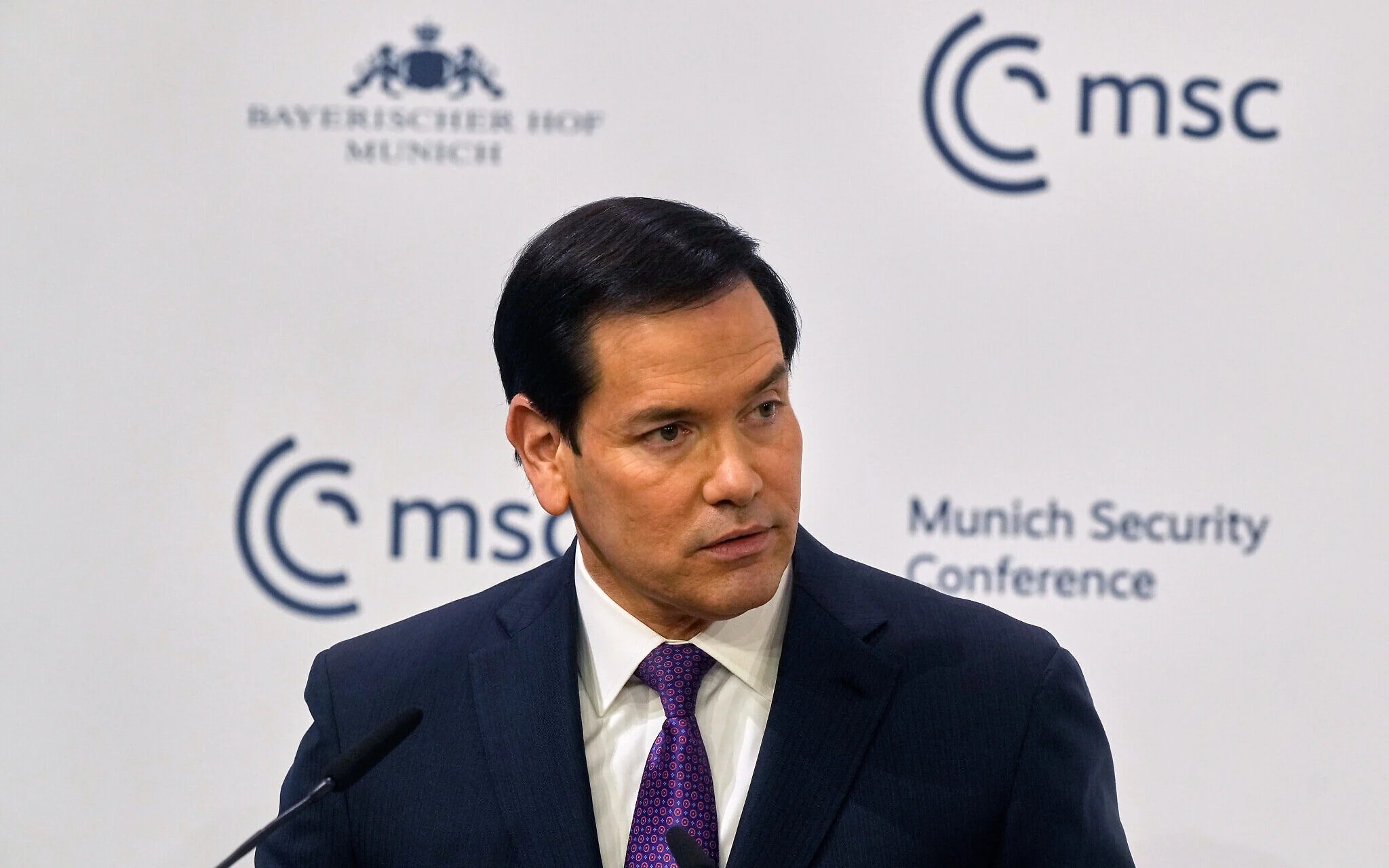
The World is changing and new power paradigms are in play. The conventional order and rule-based certainties are now being challenged while the United Nations is gradually reduced to becoming a benign spectator – abrogating its role to the United States (US). The world itself is being restructured into new blocks emerging with defined conditions, parameters and a method to the madness challenging global multi-polarity. Marco Rubio, recently in the 2026 Munich Security Conference, addressed Europe, offering a new operable thought, advocating a return to colonial regimes with a different façade. He was obsessed with the need to contain the fallout of decolonisation, suffered by the west in the last century. He said it with wistful nostalgia and a longing to return to the glorious past – the age of empires. Lamenting the falling ascendency of western heritage, his speech recommended the return to imperial authority. He talked of a globe invested by transatlantic unity under the auspices of the US. He fell short of declaring opposing lines between the Crusades and Jihad but made it amply clear, that divisions between the East and West were not only real but must be encouraged. The US was recruiting willing countries to aid and abet in its plans to colonise an unsuspecting world by other means. The Board of Peace was one such endeavour to whom some came flocking, hoping for an inconspicuous corner in the room – deriving comfort that they too sat in the company of those on top of the food chain. In keeping with US methods, sharpened in the year 2026, the Venezuela’s President was kidnapped, its oil usurped – the world stood by in culpable silence. Meanwhile, Green land with its melting ice now opened new vistas and offered tantalising possibilities for new trade corridors and routes for commerce that the US had its eye on.
The Trump administration unilaterally lay claim to territories that were mapped, verified and documented by the famous Danish explorers, Ludvig Erichsen, Ejnar Mikkelsen and many others in the early 1900s. Iran too, stands threatened by a war that has no end, Ukraine is on the brink of losing one with Russia. What is common to this labyrinth of confusion all over the globe are supply chains, economic networking, minerals, hydrocarbons and global connectivity that produce, transport or supply goods across the hemispheres.
NATO having lost purpose is no longer a sustainable force and may dissolve sooner than later, leading to the liberation of Europe from the US vice. However, it will compel the EU to add cost to security, respectively, more than they ever have in the last century. Germany is likely to align with Russia, to secure gas supplies in an economically pragmatic move, while China may soon be more visible protecting its oil interests in the Hormuz Straits. Russia, having secured Crimea soon, is likely to be more conspicuous around Cuba and the South Americas, contesting influence of that region with the United States. The Red Sea becomes the focus of attention as it plays a dominant role in connecting the eastern and western hemispheres, just as the Panama Canal becomes a new flash point when the US tries to shake off Chinese leased Ports controlling the connectivity between the Atlantic and the Pacific.
The US Narrative
All this is happening while the world has apparently been distancing itself from hydrocarbons and has tried to move towards renewables and alternative clean energy. The global concerns about the environment seem hypocritical when seen in the context of hydrocarbon reshaping the world. The Middle East is in centre of the turmoil as US carriers race to the Gulf. Iran has been given a list of demands including holding new negotiations on its nuclear programme, to ‘rationalise’ its ballistic missiles and to restrain its proxies operating in the region. The nuclear matter is the most self-contradictory demand – first, there was a JCPOA, ‘The Iran Nuclear Deal’ of 2015 signed by the UK, US, France, China, Russia, Germany and the EU. The US withdrew unilaterally from the agreement in 2018 demonstrating its non-seriousness about Iranian nukes. US irresponsibility is further substantiated when they allowed the Nuclear Arms Control Treaty to expire on 5th Feb 2026, despite Russia’s willingness to extend it. Now the world is left holding respective nuclear programmes without any limit. Then the US sent their special envoy, Steve Witkoff for negotiations with Iran in Muscat, Oman. President Trump had defined a 60-day deadline which expired on June 12th 2025. However, the negotiations were still ongoing after the deadline had been arrived at and a US official had publically stated ‘that they remained committed to talks and hoped Iran would return to the table’. Yet while the talks were ongoing, Israel attacked Iran. The US reluctantly joined in later, in a bid to save an over-zealous Israel that led to bombing Iranian nuclear facilities. Israel on the brink of collapse begged the US to intervene. Trump, after the staged bombing, claimed that Iranian facilities had been demolished. Fardow, Natanz and Isfahan were ‘obliterated’ according to President Trump – so what then remains to be negotiated now? This history of ambiguities, deceit and deception is how the US has dealt with Iran’s enrichment programme and the nuclear issue in general. One can safely assume that even today the nuclear matter is not a genuine agenda for negotiations, but more a reason to go to war.
Then there is the new demand to curtail Iranian ballistic missiles – a weapons system that threatens Israel more than anything else does. Iran’s position in this matter is clearly stated – the missiles are their only means to survive and they will never give these up. This does not appear to be a realistic demand and is actually non-negotiable. The last point is related to dismantling the Iranian proxies – Hezbollah, Houthis and Hamas, etc which is effectively countered by the Iranian claim, that the US itself is a proxy of Israel and thus is not justified in making such a demand. These arguments point towards perceptions and differences that cannot be resolved by any amount of negotiations and that the US is only creating a casus-belie to go to war with Iran. Such negotiations can only provide a fake moral justification for attacking Iran, when in fact, no moral equation exists in this conflict.
However, recent assessments indicate a plausible reluctance on the part of the US to go along with the Israeli desire to attack Iran and it is primarily because of the new capabilities acquired by Iran’s defence system. The first is the early warning systems given to Iran by the Russians and the other is the air- land bridge established by the Chinese to supply Iran with advanced stand-off weapon systems and a third is the heightened presence of Chinese war-ships in the Indian Ocean. This has made the US carrier force a vulnerability for the US more than a threat – a burden needing protection rather than an asset radiating authority. Other US troop deployments in the Middle East too are now under threat of Iranian missiles. Israel has already been subjected to an Iranian missile holocaust in the 12 days’ war (13-24 June, 2025) and found itself at a total loss after only intercepting about 30% of incoming munitions, that compelled them to beg the US to stage a ceasefire before they totally collapsed.
That staging for ceasefire led to the infamous bombing of Iran by the US and subsequent end to hostilities – yet, today, the conflict goes on, as an extension of an unfinished business and will continue to go on till Israel is final satiated.
The Israeli Proxy
Why would the US prosecute war against Iran to facilitate Israel – unfortunately it is as little as ‘the mid-term elections in the US’ where Trump needs Israeli support? The US itself has no real national security objective related to Iran and does not have a dog in this fight, thus in the end cannot win but have a lot to lose. However, Israel needs the US to attack Iran on their behalf for a number of reasons. First because they do not have the capacity or capability to do it themselves. Not being able to disarm the HAMAS within 360 sq kms in Gaza – how would they fight a war in Iran, or for that matter anywhere else, without US cover? Second, because Iran alone stands as an obstacle to Israel’s Greater Israel Vision, the promised land between the rivers! Whereas, Turkey too is considered as a threat and may very well be on the menu after Iran, but for the moment, Iran alone stands as an enemy to be demolished. Turkey recognises this which is why they are vehemently against any offensive against Iran.
However, leaving aside the Houthis of Yemen, no other Islamic country, in or out of the region, accounts for any kind of meaningful resistance to Israeli designs or machinations. A possible attack on Iran by a US-Israeli duo now becomes almost imminent but as analysts we fail to see an objective – strategic, tactical, temporary or permanent. If regime change is the objective, if achieved, will not create a change in perceptions about Israeli image in Iran, regardless of who is in power. There is a universal hatred for Israel and by association for the US in Iran – which is deep seated amongst its people. Thus to subdue Iran for the purposes of bringing in an Israeli friendly/tolerant government is an unlikely outcome of the war and a totally misperceived expectation. Which means Iran has to be physically occupied by boots on ground to cause chaos and division amongst opposing groups such as the kurds, Baluchi, Ahwazi Arabs and Azerbaijani communities. This would require about 2 to 3 hundred thousand troops at the least. These are not available in the theatre and nor is the US willing to commit such numbers to the ground currently.
So the purpose of such an upheaval would be to balkanise Iran on the Syrian model. However, with Iran’s historical depth going back to thousands of years, such a probability remains skeptical. The dissident groups mentioned are minority communities who would never be able stand ground without substantial physical military presence and kinetic support which is simply not there. Since the US is not willing to put boots on ground, it will have to resort to stand-off weapons such as missile warfare and aerial-bombing, both of which will not lead to a regime change and so will be seen as mindless and aimless prosecution of war – destructive in nature and murderous in character – creating even more hatred for the US than now. The Iranians are not only prepared but have upgraded their strike capability, early warning, sensing and range. The response by Iran, this time around may be devastating both for the US as well as Israel – embarrassing the former and totally demolishing the latter. The US is fully aware of Iran’s improved defence systems and is trying its best to avoid a conflict with Iran despite Israeli political pressure. How can the US withdraw from its heavy and highly visible concertation for war with its reputation and self-respect intact, has now become a major and prime concern.
The Divided Middle East
In the meanwhile, the Middle East stands divided between UAE and Saudi Arabian new-found animosity. The two were politically close earlier when a young and inexperienced, Muhammed Bin Suleiman (MBS) of Saudi Arabia came to power and acquired international notoriety in the infamous Jamal Khashoggi case. At that time, the older and more grounded Muhammed Bin Zahid (MBZ) of UAE, took MBS under his wing and tutelage, slowly changing his globally pariah status to a more acceptable one. MBS was given access to the US administration and was gradually rehabilitated into western society. MBS and MBZ then joined hands and planned the subjugation of the Houthis, while MBZ had already signed the Abraham Accords (15th September 2020) and MBS was waiting in the wings to do the same – Israel suddenly became more visible in the Middle Eastern political environment and amongst the littoral states along the Red Sea. Netanyahu presented his trade corridor plan, IMEC (India Middle East Europe Corridor) to the United Nations on 22nd September 2023, which had already been signed by the G 20 in New Delhi on 9th September 2023. The signatories included, India, Israel, USA, Saudi Arabia, UAE, France, Germany, Italy and the EU.
What is not commonly known is that IMEC is closely aligned with Build Back a Better World (B3W), which is a US $40 trillion initiated trade corridor launched by the G7 in June 2021. What is also little known is that IMEC is also linked to the European Euro 300 Billion initiative, Global Gateway Corridor, initiated in October 2021. IMEC thus connects G20, G7, EU and Israel through a new linkage common to all three corridors called Partnership for Global Infrastructure and Investment (PGII) supported with a $600 Billion pledged investment by 2027. The B3W has since merged into the PGII. The US and the West have discovered that such corridors are a necessary economic strategy to counter China’s BRI Project. The BRI has a $1.4 trillion invested within it so far, involves 154 countries, 40% of the global GDP and 65% of the World Population. It has caused a shift in the global financial eco-system centred around China and the BRI seriously challenging western domination in general and the US uni-polarity in particular. The western corridor concept basically challenges the Chinese BRI concept through a global encirclement of the Chinese corridors. For such an encirclement to be decisive and conclusive, the centre of gravity rests in securing the Middle East in general and the Red Sea in particular with Israel prominently integrated into the concept. It also fits in to Marco Rubio’s unified transatlantic plan – the west versus the east.
Why Did Hamas Attack Israel
Watching these global activities take place, while having witnessed a universal indifference to the Palestinian question, Hamas attacked Israel on 7th October 2023. The objective of the attack was to scuttle IMEC from settling down and the Saudi’s from signing the Abraham accord. HAMAS feared that if the Abraham Accords were concluded, Palestine would be doomed to the dustbin of history and forgotten for good. So while Hamas and Israel engaged in combat on the shores of Gaza, the Houthi’s disrupted shipping in the Red Sea in support of Palestine. Israel publically declared Iran responsible for both – attack on the settlers as well as disruption of shipping in the Red Sea. Netanyahu publically accused Iran of being the biggest impediment in realising the IMEC Corridor.
Thus the Red Sea enters into the equation and MBS collaborates with MBZ to put in a combined effort to contain the Houthis; they decide to put in a joint military force. This collaboration was trying to mix oil and water – UAE functions as a disruptive element, basis its interstate relationship through net-centric alignments and is always in search of dissident groups to support and assist. A good illustration of UAE mind set is demonstrated by the fact that there are credible reports and leaked documents suggesting that UAE was involved in funding covert influence and smear campaigns in Europe that contributed to anti-Islamic sentiment and Islamophobia. Swiss firm ‘Alp Services’ have been tied to leaks related to what are now known as the ‘Abu Dhabi Secrets’. The UAE sees itself aligned with the west and Israel more than any Islamic country and as such is indifferent to the Palestinian question or the Iranian crisis.
The UAE-Saudi Competing Philosophies
They have pursued the concept of weaponizing their access to huge funds and immense wealth, eagerly financing insurgencies, secessionist movements and rebellions. They hope to carve out space for themselves within the region as relevant players. This is visible in Libya where they support Khalifa Haftar, head of the Libyan National Army, against the UN recognised Libyan government based in Tripoli. Israel is closely aligned with UAE in its support to Haftar so as to limit Iran’s influence as well as to be a counter weight for Turkish and Qatari sway over Libya. UAE further supports the Rapid Support Force (RSF), originally the Janjaweed Militia, fighting in and around Darfur against the Government forces of Sudan – Sudanese Armed Forces (SAF).
UAE also support the concept of Somaliland which has declared separation from Somalia. In line with the work that they prefer to undertake, they are imbedded with the mercenary Russian Wagner Group etc in Libya. They sided with and successfully aided and abetted the 2013 Egyptian coup, a consequence of which General Abdel Fattah el-Sisi is now the President since 2014. The UAE have been punching way above their weight and power potential and are likely to find themselves in trouble if they continue to pursue their highly ambitious plans. Their ambitions, unrealistic as they may appear, are to be a great maritime empire and dominate the Indian Ocean, the Gulf, the Red Sea and the small littoral states around them – much like Sparta (who used its army to generate revenue) but in the style of Athens (who used their wealth to generate authority).
The Saudi’s on the other hand are given to working within the defined conventions of international diplomacy and are averse to destabilising the region. MBS has since come of age and has calmed down since the heady days of newly acquired importance and power. He has toned down his famous NEOM city plans considerably to more realistic proportions; has had second thoughts on the ambitious aggressive domestic plans he had for the modernisation of Saudi Arabia. MBS is in favour of a stable region with unified countries and a peaceful Red Sea to allow him to pursue his modernisation plans.
The Middle East Conflict
Once the Saudis realised that they were left standing alone holding the Houthi War of Yemen by themselves, while UAE had entrenching themselves with Southern Transitional Council (STC) at the cost of Saudi Arabia – it led to a break up between MBZ and MBS. The animosity was further aggravated because the Saudis have always accepted the internationally recognised government of Yemen and were against secession within the country. The STC on the other hand desired a complete autonomous control of South Yemen with UAE support, which allowed access to STC to territories close to the Saudi borders that gave them control of the oil wells.
Eventually the Saudis were provoked to bomb the Southern Port of Mukalla destroying two vessels carrying UAE weapons and vehicles for the STC. UAE was given an ultimatum to withdraw from Yemen which they have since done. Saudis, in the meantime, under the Chinese auspices, have undergone some kind of rapprochement with Iran and have begun to normalise relations with the Houthis as well. Furthermore, General Sisi, previously indebted to UAE has now realigned himself with the Saudis and has distanced himself from the UAE. The Saudis and Egyptians both have issued a warning to Libyan Rebel General Haftar to stop supporting the RSF in Sudan.
The Saudis have been very visible in their support for the Sudanese Armed Forces (SAF) as opposed to the RSF while UAE is continually supporting the RSF in collaboration with Israel. Then again the Saudi policy clearly favours the Federal Republic of Somalia and has publically rejected the idea of an independent Somaliland while UAE is fully supporting Somaliland’s rebellion. UAE has not formally recognised Somaliland as yet, but it does accept its passport as a valid travel document. Israel, on the other hand has already recognised Somaliland and has placed its integral resources there. This concludes the numerous reasons why MBZ and MBS are not seeing eye to eye with one additional but important point that needs mentioning. When these conflicts are viewed strategically, they all relate to the Red Sea and IMEC designs initiated by Israel.
Israel’s close collaboration with the UAE in the Red Sea region makes as much sense now as UAE’s enthusiasm did to sign the Abraham Accords and to work with Israel to secure their own maritime interests. The UAE with some collaboration of Israel, had to an extent, set up facilities in the ports along Eritrea, Sudan, Somalia, Djibouti, Bab e Mandeb, Socotra Islands – more or less controlling the entire length of the waterways. The US is a great supporter of the UAE and finds it convenient to use them as a front. They are used to promote US political ideas and preferences for trade, commerce and financial systems within the region and beyond. The US, therefore, as a matter of policy, sees UAE-Israeli partnership with deep interest and high expectations. Recent Epstein files indicate his very intimate relationship with DP World, a major ports and logistic company in Jebel Ali Port amongst many others. Epstein’s close linkage with western leaders in general and Trump in particular implicate them in playing a role in redefining regional policies.
This connects the US and Israel with UAE for the transfer of weapons and other such illicit trade to secessionist movements, separatists and rebellions but leaving them with plausible deniability – the circle closes – the three collaborators in the region, i.e. The UAE, who is a facilitator, Israel that projects its ambitions and the US that funds, resources and coordinates the affairs of all three. We return again to Rubio’s promotion of the west versus the east but now with collaborators from within the east.
The Money Game
Abu Dhabi and Dubai have also been identified by global authorities as a hub for illicit financial flow including money laundering. Iran, having been sanctioned heavily, resorted to using UAE as a hub for its financial transactions. Iran was able to use shadow banking networks and evade sanctions through the facilities available to them in UAE. The current premise to the new round of hostilities between the US-Israeli nexus and Iran, begins with currency manipulation from the UAE which led to a huge collapse of the Iranian Rial i.e. about 40 to 50%. Scott Bessent, Secretary of the US Treasury gloated over the massive de-evaluation of the Iranian currency with tongue-in-cheek. Bessent’s claim to fame was his role in the Soros Fund Management Team contributing to the Black Wednesday crisis in UK in 1992. It appears his expertise was put to good use through the channels operating between UAE, Israel and the US. The collapse of the Rial led to public outrage and demonstrations in Iran which for the larger part of three days remained reasonably peaceful.
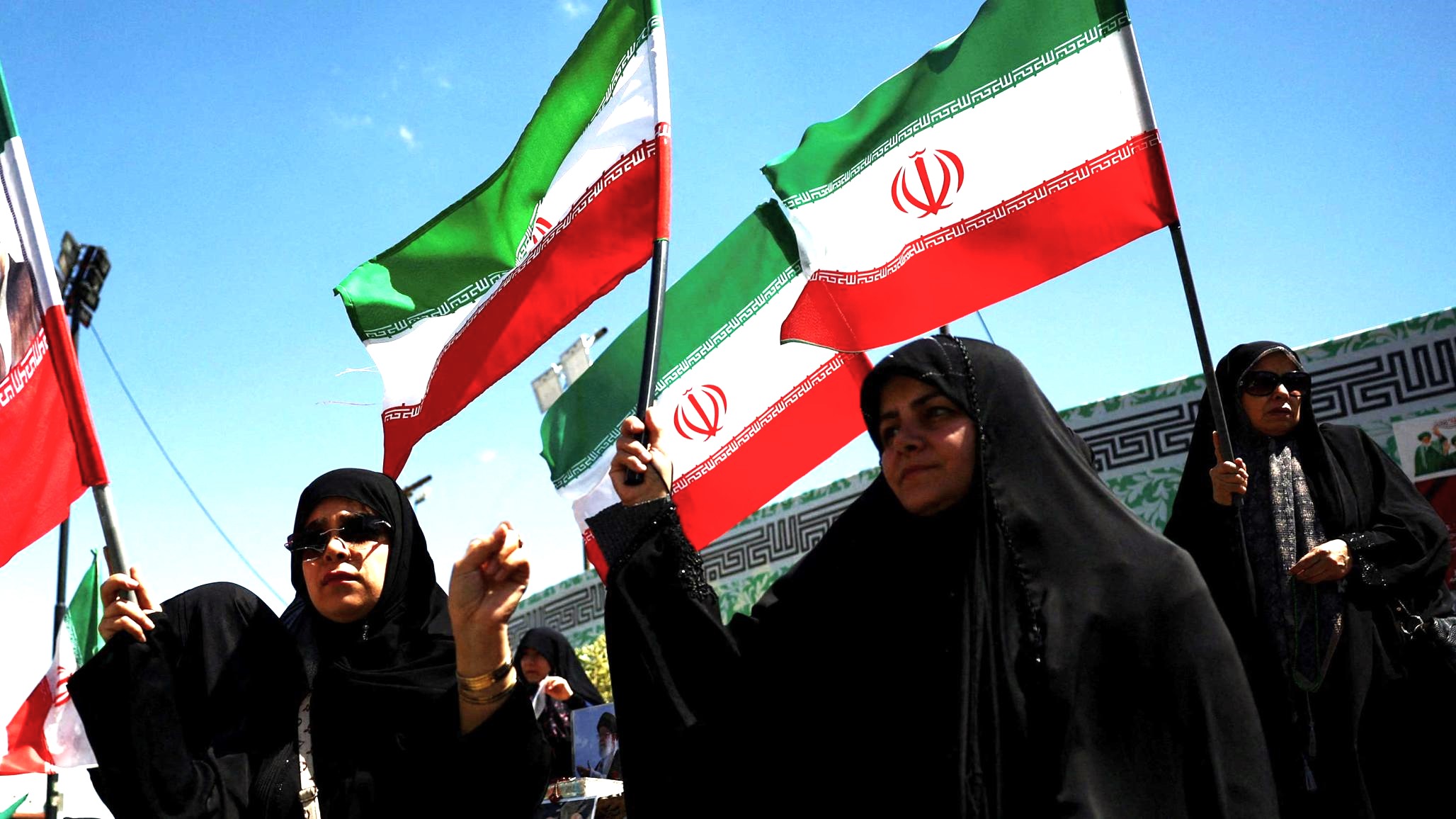
On the fourth day agents infiltrated the crowds and started indiscriminate shooting and arson. They killed a number of policemen and government officials as well as civilians. The causalities were shown all over the world, exaggerated, blown out of proportion as a credible movement against the Government and that the people wanted immediate relief. However, not only did the government contain the unrest but they demonstrated a unified public protests against foreign and external manipulation by very large sized street presence of the people. These crowds were far greater in number than what the protestors were earlier. As such the regime-change plan failed and the US-Israeli duo are now back to the pretences of a negotiated settlement, where an attack on Iran has become even more inevitable and imminent.
The Attack on Iran
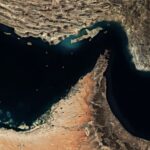
Thus, today, we stand at the eve of a US-Israeli attack on Iran – a mindless and aimless escalation leading to a regional conflict. The environment points towards a possible joint offensive mounted by Feb 25th 2026, onwards, or around then. Reports of F 35s placed in Armenia and Azerbaijan, if true, are ominous and also fair game, just as the US armada in the Indian Ocean is. Whereas the Middle Eastern States were quick to announce neutrality and closure of their air space, yet, the US is likely to do whatever it needs to from or through these territories, regardless of any ‘tentative’ announcements. Iran if attacked will respond and reciprocal action must be expected. Global oil supply would be affected by shutting down operations in the Straits of Hormuz, impacting the whole world. Iran has promised a swarm of 2000 missiles into Israel for starters for which there is no credible Israeli response. Iran would be bombed but its depth and resolve would absorb the attack making Israeli existence very vulnerable. Thus if the US-Israel duo do attack Iran, they have to ensure it is conclusive and Iran is annihilated, if not, the consequences would be very far reaching. The probability of total destroying Iran are very little which makes this war an endless conflict spread over many years and even many generations.
Yet as Marco Rubio says the west stands bravely facing-off the east in a bid to re-establish the nostalgic past of a US led western dominance. The US cannot do this alone, it must cajole bully and coerce Europe into its design of global dominance. It must give Israel the free space to play in that its needs to influence currencies, money markets and instigate the upheaval needed to divide and rule within the eastern hemisphere. The eastern nations are dominated by Islamic nations, some rich, some with resources and even one that is nuclear armed. The US solicitates their support as well and many of these nations have clutched the US coattails hoping that power is contagious and some may even rub off onto them. Marco Rubio plays the old colonial mind set, seducing the weak and threatening the strong – as some, eager to please, pull down their own house – friends, brothers and partners, for that glorious moment under the sun. Thus Iran is not wrong when it says, if attacked, its response will be regional – some deserve it, others are collateral but all are guilty for abandoning their own.
India
India’s expanding regional and global footprint adds a critical dimension to the evolving balance of power. The development of its new strategic relationship with Afghanistan, including economic, infrastructure, and security cooperation, directly intersects with Pakistan’s longstanding claims regarding insurgency and cross-border militancy. By strengthening Afghan governance and connectivity, India is able to influence supply lines and regional stability, indirectly affecting Pakistan’s border security and its ability to assert control over contested areas. This dynamic complicates Pakistan’s position within corridors like CPEC, as Indian-backed infrastructure and trade initiatives provide alternative routes for regional commerce, reducing Pakistan’s leverage over transit and energy flows. On the international economic front, India has accelerated its engagement with major markets and strategic partners. The recent EU trade agreement, coupled with improved tariffs from the U.S., enhances India’s attractiveness as a manufacturing and logistics hub.
Simultaneously, its deepening strategic partnership with Israel, involvement in QUAD, and alignment with anti-China initiatives signal India’s pivot toward a security-conscious Indo-Pacific-centric posture. These developments have direct implications for VOEC (Voice of Economic Corridors) initiatives and the strategic relevance of Gwadar. As India leverages its economic and diplomatic influence to integrate alternative trade corridors and energy routes through Afghanistan and the Arabian Sea, Pakistan faces a dual challenge: safeguarding Gwadar’s strategic value while mitigating the impact of Indian-aligned corridors that could bypass or compete with its regional infrastructure. India’s enthusiasm to sign onto the IMEC dream is one such pointer but its strategic alignment with UAE and its interest in the RED Sea is another.
PAKISTAN
Pakistan has currently worked itself into a very difficult situation – more than what appears to be obvious to those in power. Like a vehicle stuck in mud, its engine strenuously labouring with its wheels continually spinning in the mud – going nowhere. This approach to address the fluid, uncertain and continually shifting environment is inconsequential and nothing more than a temporary feel-good series of events that are in divergence with national interests and traditional policies. The obvious vulnerability of middle states like Pakistan in this Corridor Age carries a dual risk: first, becoming indispensable transit hubs and then, becoming battle grounds for strategic competition.
Thus there are pressures on such States to align clearly, secure infrastructure internally and maintain external balance. Strategic ambiguity that often benefits superpowers, usually destabilises middle powers. Pakistan’s geography places it at the intersection of the Middle East, South Asia, Central Asia, and China. This location offers structural relevance – but relevance does not translate into power on its own. More has to be done by the State and the apparatus moulding, constructing and shaping that relevance into objectives that serve national interest. The breakdown as is as follows:
a. Strategic Ambiguity as Liability:
1. Pakistan maintains deep relations with China, the US, Saudi Arabia, UAE.
2. Balancing multiple partners is rational. However, unresolved strategic doctrine creates policy oscillation.
3. Pakistan requires a clearly articulated long-term framework defining:
(a) Corridor alignment.
(b) Energy independence Strategy
(c) Gulf Posture.
(d) Financial sovereignty model.
b. Securing the Corridor is of utmost importance. CPEC and internal cohesion are not exclusive to one another and must complement one another by design and by plans. CPEC remains Pakistan’s primary strategic infrastructure project. Its success depends not only on Chinese financing but on domestic legitimacy and security. Sustainable Corridor Development requires:
1. Political inclusion in Balochistan.
2. Transparent revenue sharing mechanism.
3. Local employment guarantees.
4. Civilian led, Intelligence facilitated security reform.
5. Without internal stability, infrastructure becomes vulnerable.
c. Energy Sovereignty as Strategic Independence is a goal that must be defined. Domestic options such as Thar coal gasification, fertilizer industrial chains, LNG substitution should be evaluated through cross benefit analysis. Energy independence reduces fiscal pressure and strengthens diplomatic flexibility.
d. Financial Autonomy and Institutional Reform:
1. Paperless Economy is one way to stem corruption and rope in the 60% of the informal economy
2. Expand export diversification.
3. Digitize taxation.
4. Regulate Capital flows.
5. Develop diaspora bond instruments.
6. Strengthen institutional transparency.
7. Reliance on external stabilisation mechanisms reduces sovereign maneuverability.
e. Diplomatic Discipline. Symbolic engagements and overextended commitments risk credibility and must be avoided at all costs. Pakistan must prioritise:
1. Delivery based diplomacy. One cannot live on promises alone indefinitely.
2. Corridor security should be given the highest priority and must be defined as a red line.
3. Strategic neutrality in Gulf rivalries; Pakistan cannot afford to play one State against another and must remain totally away from intrigues and local conflicts.
4. Realistic economic agreements. Credibility is accumulated through execution and not announcements.
f. Human Capital as a strategic asset: Pakistan’s demographic profile presents opportunity. A structured national strategy could include:
1. District level technical institutes.
2. International certification standards and third party evaluation systems.
3. Formal labour agreements with partner states. Government to regulate and govern.
4. Workers protection framework through commerce officer at embassies all over the world.
5. Managed migration and skilled labour export can become structured.
g. Governance and Strategic Coherence. Long term repositioning requires:
1. Electoral legitimacy.
2. Civil-military policy coherence.
3. Transparent Institutional processes.
4. A published national strategic white paper; strategic doctrine must outlast individual administrations.
Pakistan’s choices today will determine whether it secures influence or becomes a spectator to a rapidly transforming international landscape. Sitting on a fence will never deliver. The choice in the Corridor Age will evolve around grounded respective national interests. The emerging global order will not be defined by ideological declarations or political posturing but by structural control over trade arteries, energy flows, maritime chokepoints, financial networks and hydrocarbon projects embedded in power equations. Corridor competition will intensify, Pakistan must be prepared for it. The convergence of trade corridors, hydrocarbons, and shifting economic and security alignments is driving a global reset, where traditional hierarchies are challenged and new centres of power emerge. Nations that anticipate trends, act decisively, and leverage both resources and alliances will shape the next era of global influence.
Conclusion
The message is stark: the emerging world rewards foresight and punishes hesitation. The corridors of commerce, energy, and diplomacy will not wait for indecisive actors. Middle powers like Pakistan will either consolidate internally or become arenas of contestation. Pakistan’s geography guarantees relevance; its government will determine whether that guarantee becomes a leverage or a liability. The Corridor Age rewards clarity, cohesion and strategic patience. States that align infrastructure with internal stability will shape the coming decade. Those that oscillate without a doctrine will be shaped by others. The convergence of trade corridors, hydrocarbons, and shifting economic and security alignments is driving a global reset, where traditional hierarchies are challenged and new centres of power emerge. Nations that anticipate trends, act decisively, and leverage both resources and alliances will shape the next era of global influence. For Pakistan, the stakes could not be higher. Its geographic advantage, energy potential, and connectivity position it to play a pivotal role—but only if indecision is replaced by strategic clarity. Hesitation risks ceding influence to India, China, and other regional powers that are actively shaping corridors, forging alliances, and controlling critical trade flows. Conversely, proactive engagement— through infrastructure investment, diplomatic finesse, and resource leverage— can transform Pakistan from a passive observer into a decisive actor in the new global order. The Choice, for now remains open – but the window narrows.
(The US is beginning to monetize its hegemony, charging for access to its markets and reducing its relative contribution to our collective security) Adam Huras