

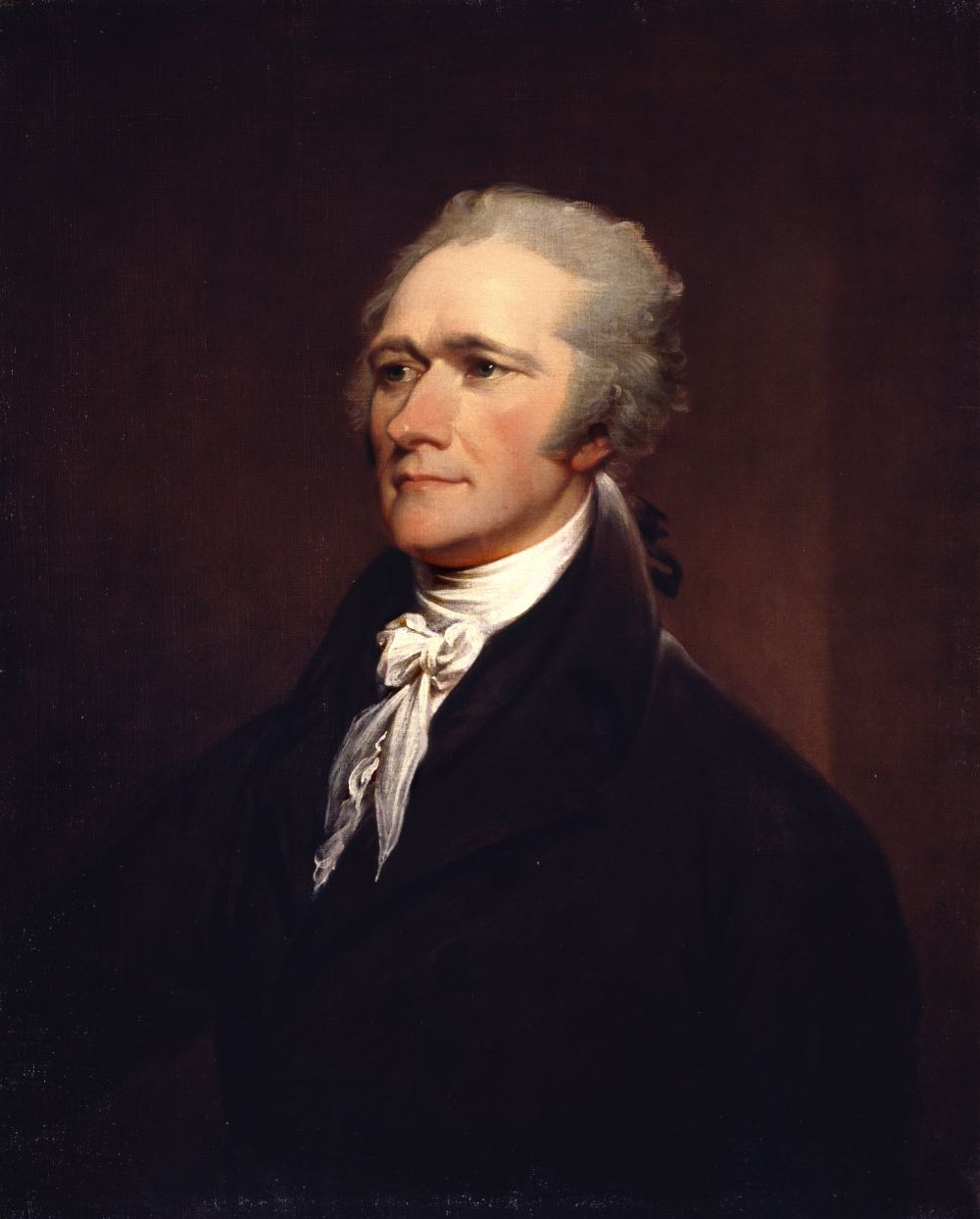
Alexander Hamilton’s ghost is apparently circumambulating in the White House. One of the founding fathers and the first US Secretary of Treasury from 1789 to 1795, he espoused the notion that America must never be dependent on any outside power for core components, such as raw material to finished products. That was the inception of an ideologue that built the United States invincible over the decades to become today’s uncontested superpower.
Coupled with that rhyme was the Monroe Doctrine in 1823, which declared the Western Hemisphere off limits to European interference. Donald Trump, the 47th President of the United States, is reinventing the wheel by following in their footsteps as he wants to make America Great Again! The new National Security Strategy (NSS)-2025 is a case in point through which the impulsive president has surprised the pundits of doom by extending ‘flexible-realism’, and by shunning the impression of being an interventionist power.
The NSS does not limit itself to defence and warfare, as has been the conventional approach under the Pentagon. It now intrinsically talks of critical minerals, tapping cryptocurrency horizons, befriending China with an equitable trade relationship, bolstering India to make use of it in the Asia Pacific, browbeating the Europeans to dig deep in their pockets, and going somber with Russia. It also emphasizes stringent curbs on migration and drug-trafficking, plans to reestablish hold over South American states, and last but not least meddle in disputes to resolve them without a war, as a departure from yesteryears gun-boat diplomacy. Ukraine and the Middle East are inevitably on Trump’s radar.
That is, indeed, a change of heart and is a policy that is person-specific as Trump is the first non-military establishment head of state with a perceptual approach to each and every detail, and one that he believes should be profitable to his countrymen.
As they say, there are no free lunches, Trump makes the world leaders fall in line as they air-dash to the Oval Office for a quid pro quo. The billionaire New-Yorker, whose domestic rating has dipped since he assumed office, nonetheless, has a list of achievements to boast in the foreign relations context, and they are: negotiating peace between Cambodia and Thailand; Kosovo and Serbia; the DRC and Rwanda; Israel and Iran; Egypt and Ethiopia, Armenia and Azerbaijan; ending the war in Gaza; and of course, an uneasy truce between Pakistan and India.
The prologue is to maintain the United States’ unrivaled “soft power” supremacy and to kick-start new critical supply chains with China, and elsewhere. An important and surprisingly astonishing aspect is that it omits Pakistan from the scheme of things and no prominent mention is made of Islamabad’s role neither from the indispensable counter-terrorism perspective, nor from the security conundrum that South Asia faces today. It simply mentions the ceasefire that Trump brokered in the May 2025 duel with the arch-rival, India. Period.
A bird’s view perusal of the NSS-2025 hereby is essential to read between the lines as to what shall be the new approach of Washington towards other world capitals: the allied-ally, and the not-so-welcome centres of power gravity!
China
Washington for the first time has viewed Beijing away from the prism of competition and trade wars. It wants to rebalance America’s economic relationship with China, by “prioritizing reciprocity and fairness to restore American economic independence”. This is a leap forward in reconciliation. It argues that if America remains on a growth path, it will be heading from a $30 trillion economy in 2025 to $40 trillion in the 2030s, posturing it as the world’s leading economy. In doing so, Beijing will now be a facilitator in trade and commerce, and even cooperation and joint ventures are on the anvil in technology and chip industry.
India
The US is eager to buoy commercial (and other) relations with India in an attempt to encourage New Delhi to “contribute to Indo-Pacific security”, in the QUAD nomenclature. Despite a tariff war going on between them, US Silicon industry giants, including Amazon, have entered into at least $50 billion deals with the cheap labour-intensive and technologically edgy India. That is tantamount to recognizing India as an equal partner in development, and one that is not defence-specific against the yesteryears’ bogey of China. Delhi is described as a pivotal regional partner aimed to expand intelligence sharing, maritime coordination and defence technology collaboration. The US new approach is super-smart, to say the least. Without annoying China, it wants to stand fast with the island nation-state, too. It is a recognition that one-third of global shipping passes through the South China Sea and, thus, deterring a conflict over Taiwan is a priority.
At the same time, the NSS stipulates clearly that the US “does not support any unilateral change to the status quo in the Taiwan Strait”. Taipei for Washington is now a semiconductor manufacturing destination, and not a geopolitical flashpoint.
Middle East
Undoing the decades old assumption that the volatile Mideast region is the sole supplier of energy, and is indispensable to American prestige, the US wants to deal with it in a renewed manner of ‘carrot and stick’. Washington realises that energy supplies have diversified greatly, with the United States once again becoming a net energy exporter.
Likewise, the Abraham Accords have taken heat out of the region, at least, in the anti-Israel domain and now Gulf monarchies and Muslim states are more pro-Tel Aviv than ever. The Palestinian Question is just a footnote, and security sanctity is a priority. The 12-day Iran-Israel war and the two years of unchecked bloodbath in Gaza has changed the mosaic of interaction.
Iran
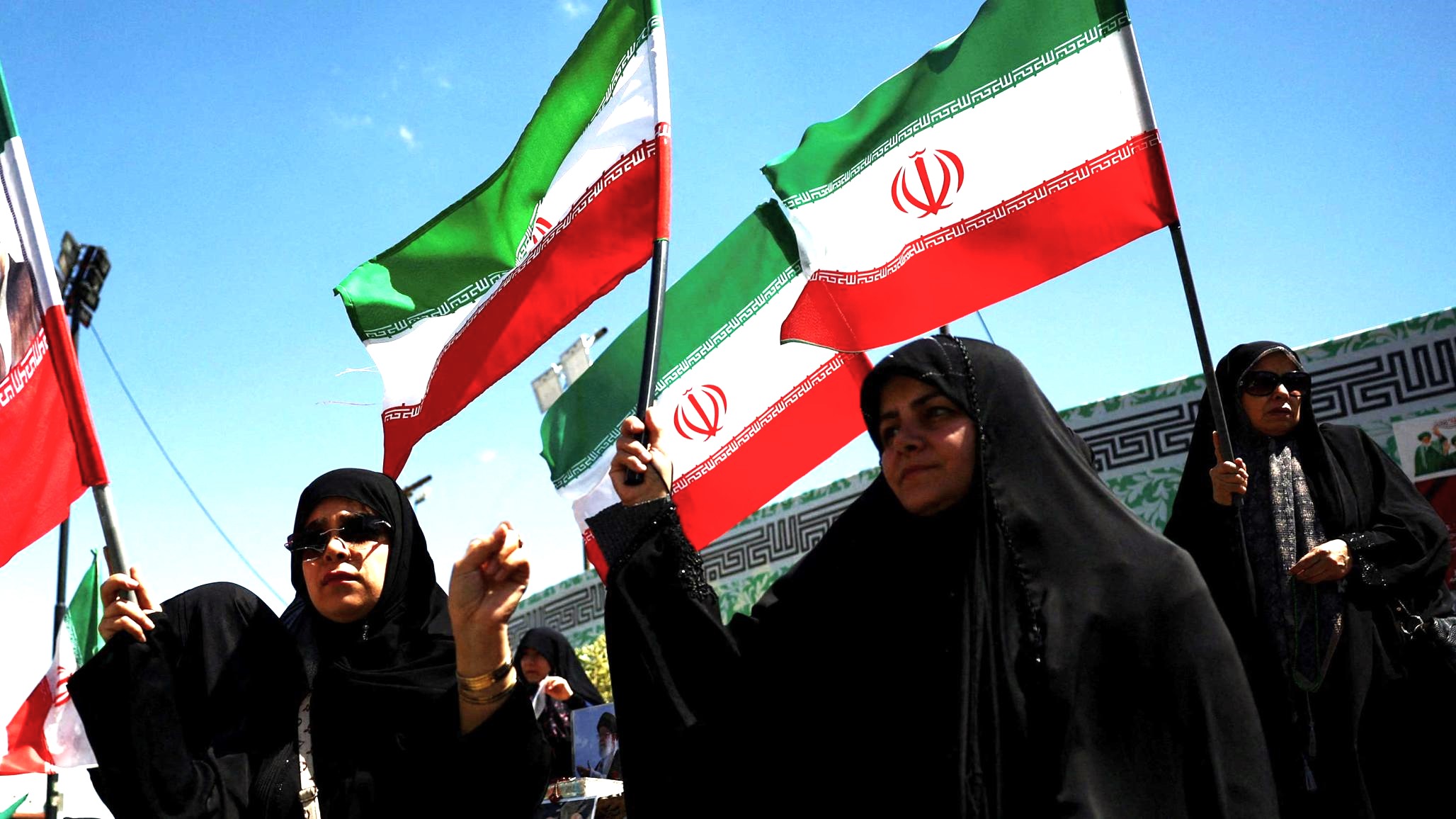
Once recognised as a security threat and the region’s “chief destabilizing force”, the Islamic Republic is now literally on terms and wants to be part of the Rules-Bases World Order. President Trump’s June 2025 ‘Operation Midnight Hammer’ that significantly degraded Iran’s nuclear program has been the game-changer. Tehran now needs ample time and serenity at home to overcome this strategic debacle. While Tehran still shuns Washington’s hegemony, the fine-talking points are there and diplomacy is at work. With Hezbollah, Hamas, Houthis, Shia militias and Syria subdued and gone, Iran is now no more an instant threat to Israel. This is where the US hopes for a thaw, as China, Russia and Europe intervene for brokering a new reset. That has not been spelt out so profusely in the NSS, though.
Europe
Washington has come up with a ‘Burden-Sharing and Burden-Shifting’ mechanism with its allied-allies in Europe. Refusing to take the liability of a ‘losing’ war over Ukraine in the heartland of Urals, Washington for the first time is interested in a quid pro quo with the Kremlin. Trump’s body language with President Vladimir Putin is worth a salt, and the Czar too has a soft corner for his American counterpart. Trump wants the EU to shell out more of their GDP on their own defense, at least 5%, “to make up for the enormous imbalances accrued over decades of much greater spending by the United States”.
Pakistan
Before we go on to analyse the flimsy US attention on Pakistan in the NSS-2025, let’s see what Islamabad has been doing of late, since the Trump administration was sworn-in. Pakistan’s establishment technically stood for the Democrats’ comeback, as it nursed grievances with the Republicans. They were wary of Trump, as the incumbent rode high on the belief that he will prove to be a savior for Pakistan’s democracy and its jailed leader Imran Khan, once in power. That, however, was a mirage, as the establishment sooner than later was in a reset with the Trump administration.
The May duel with India was an opportunity in disaster, and brought back Islamabad on the radar of strategic indispensability. Yet Pakistan could not find its due place in the NSS. Reading between the lines, a referral to democracy is worth a thought. Civil societies and public representation ideologue conventionally drew its strength from American cherished values of democracy, rule of law, supremacy of constitution, liberty and emancipation of mankind. It seems that has gone for good as the NSS, apparently for the first time in American history, says that
“US policy will be realistic about what is possible and desirable to seek in its dealings with other nations. We seek good relations and peaceful commercial relations with the nations of the world without imposing on them democratic or other social change that differs widely from their traditions and histories.”
To sum up politely, ‘democracy fervour is doomed, RIP!’ The new era, as far as governance is concerned, is getting autocratic in essence. Perhaps, the US now thinks that it has had enough of lecturing on democracy, and it’s time to strike an equation with monarchies, communists, radicals, and the far-right.
And that is what is figured out as ‘national interest’. Notwithstanding resolutions, letters and calls from the US Congress voicing their concern over deteriorating democratic credentials, the Trump administration to this day looks the other way!!
The new strategic deal with Pakistan today is on cryptocurrency, rare-earth-minerals, technology transfer, defence upgradation, and last but not least, retaining the status quo in Southwest Asia.
That synopsis, however, should come with the tacit realisation that until and unless perpetual peace is brokered between India and Pakistan, serenity will remain a far cry. President Trump in his first administration too had taken that resolve, and it is high time as Islamabad has named him for the Nobel Peace Laureate, he should swing himself into action and let there be peace of the brave in South Asia. Pakistan for long has been on the chessboard of US security strategy but cannot come out of the conundrum of insecurity.
Even today, we are obsessed to play a role shoulder-to-shoulder with the Americans in the region be that ‘throwing out the Taliban’ or ushering in a new order that is more Pax-Americana. Perhaps, that is why we are shunned by the Russians and to a large extent are now being suspected by the Chinese, too. Iran has reservations, Afghanistan is annoyed, and India is jaundiced to the core.
Let the new engagement with the United States be people-centric, and one that builds confidence at the grass-root level. Higher education, endowment for the downtrodden in civil amenities, and transfer of technology can be a great beginning. If that is harnessed to the fullest potential, the faceless terror elements in cahoots can be squarely subsided, and no more shall Pakistanis be counted as anti-American, perse.
President Trump can erect a better legacy by advocating genuine democracy and reforms, and dovetailing a peace accord with the Indians.