


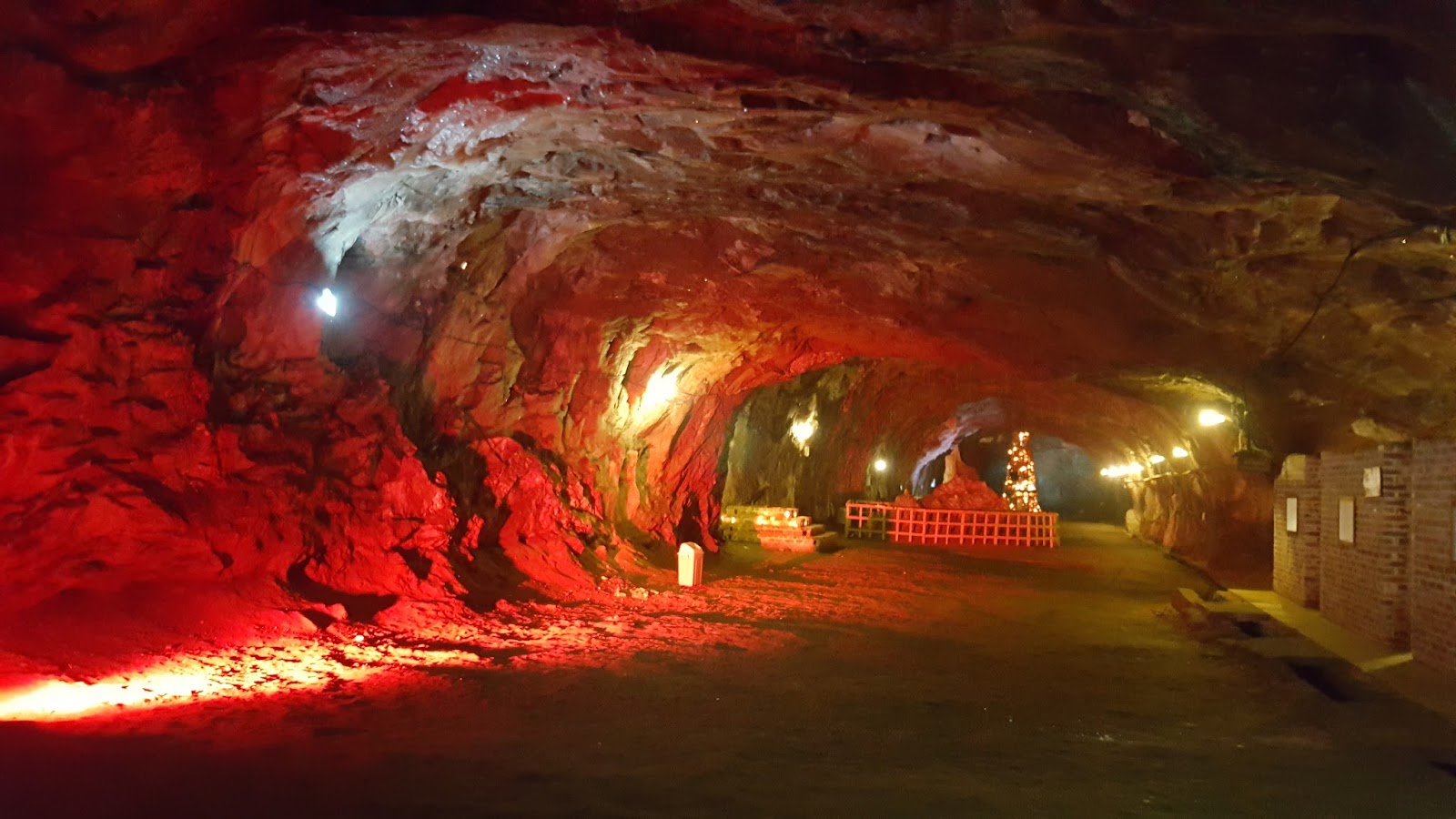
Alexander the Great, who passed through today’s Rawalpindi Potohar region, in 327 BC, to fight the Battle of Hydaspes with King Porus at the twilight of his unprecedented era, made history as he struck a treasure trove. It is narrated that the warrior’s horses started licking the mountain stones of what is today known as ‘Kallar Kahar’ Salt Range. Porous and Pink Salt soon became subjects of discussion in the ancient Greek Kingdom and later led to many expeditions.
That was a discovery, indeed, and introduced the desolate region to the Macedonians. The crystalline form of sodium chloride, perhaps, was the first halite mineral to throw open our geography to the world at large. Centuries later, the British East India Company thronged to the Indian Sub-Continent in the 19th century in pursuit of spices and other shrubs, subsequently conquering it to rule with impunity for decades. The rest is history.
An interesting metaphor and analogy here is how geography and its earth crust makes a region indispensable. Pakistan, since its inception, has rested on a bedrock of geopolitics compelling Great Powers to strike an equation of congeniality, either in duress or convenience. The unfolding of times into geo-economics format has further galvanized that richness, and today Pakistan is on the map of big-ticket investments as rare-earth minerals, a group of 17 metallic elements used in smartphones, electric vehicles, semiconductors and defense systems, are up for a grab.
As the world slides into a new framework of multilateralism, the United States and Pakistan are rewriting a relationship based on economic premise, and is a departure from yesteryear’s security-centric prism. Perhaps, with democracy and human rights taking a backseat in White House during both the dispensations of Joseph Biden and Donald Trump, it is ‘individualized’ policy interests that are striking the chord. A ‘law of necessity’ in the making in the diplomatic context, though!
Washington now eyes Islamabad as a cow that it can milk in both geo-strategic and geo-economics realms. In doing so, it wants to address its strategic chorus too in the region by containing China and one way or the other bolstering India. As it plans to sell oil to Pakistan, and the latter is more than obliged to buy it from an illogical distance of more than 10,000 kms, the US gets good bumps if any one opts to trade within the region. Will this hypothesis graduate into reality is hard to guess with chances of a zero-sum failure in importing oil from across the Atlantic. Former Prime Minister Imran Khan’s move to befriend Russia and buy oil and wheat at a subsidized price had cost him his job. So is the case with Delhi as it finds itself heavily sanctioned by the US, which has slapped tariffs up to 50%, in retaliation for buying oil from Moscow.
Nonetheless, here in this case of rare-earth minerals procurement, the US apparently wants to kill two birds with a single stone by pitching Pakistan with China, as the latter is the market leader in refining and exporting rare-earth minerals. The equation as of now is with a focus on minerals and a leap forward in cryptocurrency between the US and Pakistan. Reports say Pakistan sits on rare-earth minerals deposits to the tune of more than $6 trillion, comprising copper, cobalt, lithium, gold and other rare-earths ores. The Reko Diq and Saindak are hall of fame of Pakistan’s future, and possess beneath them treasures that could alter the strategic importance of Pakistan and the region.
It is estimated that Balochistan’s Reko Diq deposits are worth from $53 to $70 bn, if extracted duly, in the next three decades, and it is said that more than 20% of mine work is completed. It has the world’s largest copper-gold deposits, estimated to contain roughly 15 million tonnes of copper and 26 million ounces of gold. So is the case with Saindak to the tune of billions. China’s Metallurgical Construction Corporation (MCC) is engaged in Saindak, the world’s largest underdeveloped deposits of rocks laden with copper and gold. Copper exports data in 2024 show it contributed $842m in revenue during the last two decades.
Apart from Balochistan, Khyber Pakhtunkhwa and Gilgit-Baltistan are other potential mineral zones that carry in their terrain crucial metals, stones and ore that are the lifeline of modern-day inventions in chip and warfare technology
Pakistan, nonetheless, has a bad impression of litigations at home and abroad as it ventures out to boast its indigenous earth-crust. The prolonged and painful lawfare in Reko Diq is a case in point. Moreover, absence of a structured legal recourse inside Pakistan to international investors, safeguarding their capital and enterprise in adversity, is the biggest dilemma.
The encroachment of judicial institutions by the executive have swamped legitimacy, and exposed our inefficiency to regulate big business in harmony and security. The leap forward, nonetheless, has seen a reset in US-Pakistan relations that is commercial in essence. Both the countries have signed a $500 million mineral deal framework. The US Strategic Metals (USSM) based in Iowa inked a preliminary accord with Pakistan’s Frontier Works Organization (FWO), to explore and develop critical minerals in Pakistan. USSM specializes in cobalt, nickel and copper. The deal will see processing and development facilities within Pakistan, and reportedly as a gesture a shipment of minerals like antimony, copper concentrate, and other REMs have been sent to the US.
The cooperation is assumed to cover the entire mineral value chain, from exploration to in-country processing and refining, and is expected to lead to technology transfer and job creation in Pakistan. The thrust is to diversify America’s critical mineral supply chain and reduce dependence on China, and this is where the plot thickens in the long run.
The good point in this case, as the US rides the highway to metallurgy by expressing its intent in extraction, refining, alloying, and fabrication of metals, is the far-sightedness that China has adopted. Beijing went on record saying that “its relationship with Pakistan is unaffected by this idea” of exporting mineralogy. The communique from Beijing elaborated that Pakistan has provided assurances that its cooperation with the US “will never harm China’s interests or its cooperation with China”, by illustrating that China’s recent export control measures on rare earth elements are a legitimate action to refine its export management system and have “nothing to do with Pakistan”.
Even as President Trump met his Chinese counterpart in Busan, South Korea’s airbase, Xi Jinping was magnanimous to look at the bigger picture of cooperation, and even hinted at buying chips from California, apart from agreeing to lift a blockade on export of rare-earth minerals to the US.
Pakistan for long has been in this ‘trade of hope’, as it was eager to throw open its geography and natural resources for a good deal. It fought an undesired war with the Soviets to assure the Americans that its landmass is of critical importance in checkmating communism.
Now too it wants the Americans to sign-in on a wider counter-terrorism accord to keep the Southwest Asian state, Afghanistan, under the radar, so that Pakistan does not come to lose its relevance. The $60 billion China-Pakistan Economic Corridor (CPEC) was the biggest bonanza that the nation saw in terms of realpolitik. The fact that CPEC to this day has not been able to translate into national cohesion as reservations looms large with the inmates of Balochistan, K-P and G-B alike, over their marginalization needs some astute introspection.
This new feast with Washington, thus, should not be another unkept promise and must be a departure from earlier misgivings. Pakistan despite being an allied ally was not treated well, and the relationship was one of exigency and transitional. Unlike the Chinese, it didn’t weather the storms and failed to stand fast. The prime victims were the people of Pakistan with whom a people-centric equation could not be struck to this day. That is why it is a point of concern that this jackpot of gold and lithium should not fade into frustration, and a better way of sustaining it is to make the cooperation institutional, and not person-specific.
As stated by Dr Maleeha Lodhi, Pakistan’s former envoy to UK and USA, at the Georgetown University convention in Washington D.C, the present euphoria in Pakistan-US ties is “personality-oriented, and shall be short-lived”. That is in need of being injected with a genuine people-backed orientation and the US, as the harbinger of emancipation and civil rights, is in need of some auto-correction. The crux is that the US has failed Pakistanis when it comes to the verdict of the masses, and this is very unbecoming of America.
Pakistan deserves a multi-faceted relationship with the United States. It should encompass education, health, transfer of technology, climate change realms, an eased visa regime and last but not least a leap forward in industry, mining and Information Technology. It necessitates immediate resumption of composite dialogue and at the same time, the US cannot continue to ignore the sentiments of the masses when it comes to democracy and human rights.
The venture in mining, oil and crypto is an outcome of a changed world, where massive technological shifts are the order of the day. The International Energy Agency says that global demand for rare-earth minerals will triple by 2030, and this is where an underdeveloped but resource-rich Pakistan figures into the scheme of things.
The least that Pakistan needs is infrastructure investment, bringing on-board the commoners, and an accountable and responsible big-ticket entrepreneurship. Pakistanis are sick of keeping agreements in the shadows, and the US as an open society must invest in people, for the people and by the people. As Sir John Templeton said, “…the four most dangerous words in investing are, it’s different this time.” Let the characters on board this time be unanimous and not anonymous.