





Pakistan Navy’s Night of Resolve and its echo in 2025
It was middle of the night between 7 and 8 September, 1965, when a cold wind from the Arabian Sea swept across the decks as seven ships of Pakistan Navy as they sped forward at full throttle. The target was Dwarka. Strategically, their mission was to strike and make a statement, reminding the adversary that the sea would never remain uncontested. Their tactical goal was to disable the radar used to guide Indian Force planes in attacking Pakistani ports. Back then, the continent-focused mindset was dominant, and the Navy was often perceived as vulnerable. Thus, this mission also aimed to challenge that perception and demonstrate the true power of a strong Navy.
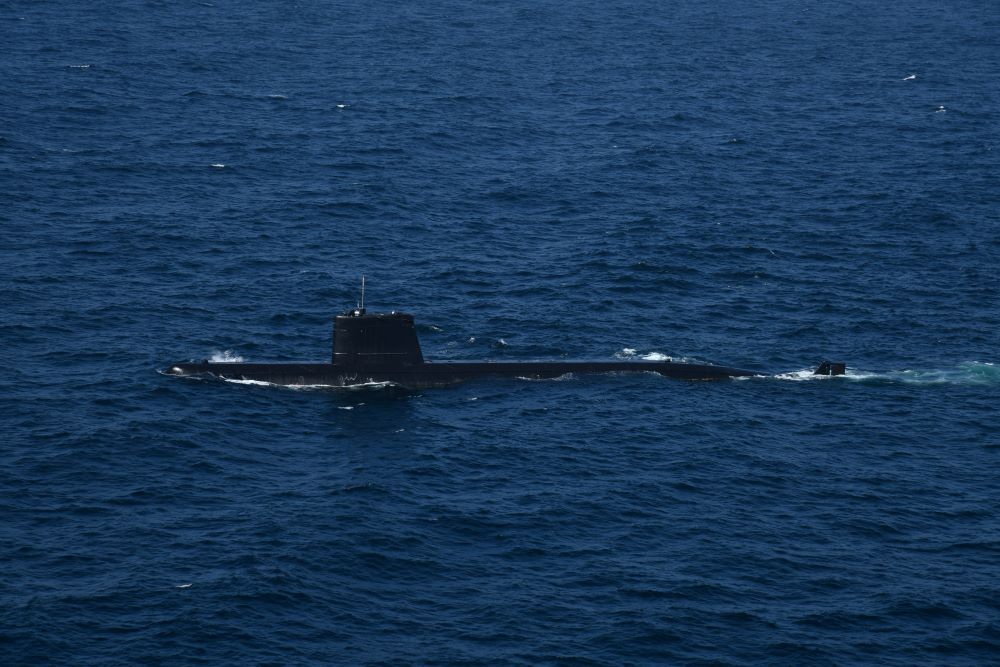
In actual sense, Operation Dwarka was more than just a naval operation. It was a daring raid that shook India’s confidence and boosted the morale of a young Pakistan Navy. The real impact was never about the physical damage; it was the symbolism: a clear assertion that the sea lanes were not India’s alone, and Pakistan could strike with precision anytime, anywhere if challenged. But that was not the only factor – equally important was the silent hunter beneath the waves, Pakistan’s sole submarine GHAZI. India had no submarines of its own in 1965, and the mere presence of GHAZI forced Indian Navy’s fleet to remain confined inside Bombay harbour. Sailors used to joke those Indian ships were “anchored like prisoners,” unable to risk the open sea. It was a psychological checkmate, achieved not through numbers but through courage and resolve. That is the spirit Pakistan celebrates every 8th of September, Navy Day, a reminder that courage at sea can shift the tide of war. Fast forward to 2025, and the echoes of 1965 could still be heard in May of this year, when Pakistan and India once again faced off in confrontation. The Indian Navy, despite having carriers, modern destroyers, and long-range missiles, was unable to challenge Pakistan’s resolve within its own area of responsibility. The newly built INS Vikrant, the pride of India’s fleet, stayed away from the North Arabian Sea (NAS). The much-touted BrahMos missiles were never fired. Indian surface units did not dare to press forward into Pakistan’s waters because Pakistan Navy remained firm, vigilant, and fully prepared. Its disposition well before the actual hostilities erupted, tilted the maritime sector battle in its favour. Maritime patrol aircraft, submarines, and surface combatants worked in coordination, ensuring that Sea Lines of Communication (SLOCs) remained open and secure. Merchant shipping continued unhindered, serving as a vital lifeline for Pakistan’s economy. Similar to 1965, the enemy was driven into caution, restrained by the knowledge that Pakistan Navy would respond decisively when the time and place would demand. No doubt, the scale was different, but the core was the same. In 1965, seven surface ships sailed toward Dwarka. In 2025, a modern, battle-ready Navy stands firm and upholds maritime security. Both moments share a common thread: unwavering resolve in defending the motherland.
This is by no means to suggest that the 2025 crisis was one-sided. Indian leaders publicly claimed decisive effects and brandished Vikrant as a deterrent symbol. Pakistan’s story is, in many ways, more maritime and tangible: we kept the sea open for Pakistan; we kept the enemy at tactical arm’s length; we avoided escalatory triggers at sea while riding out the storm. That is considered a victory in a littoral context crisis. Indian officials presented Vikrant as a symbol of deterrence during Operation Sindoor; Pakistan emphasized that deterrence is a two-way street, where a confident sea-denial stance can neutralize the deterrent.
In practical terms, after everything is said and done, the reality remains that no Indian carrier air wing operated near Karachi; Indian surface combatants did not penetrate Pakistan AOR; and Pakistan’s SLOCs, though under stress, remained open. This follows the longstanding 1965 logic: you don’t need to fight a Mahanian fleet battle to win the maritime fight; you need to keep trade routes open while preventing the enemy from approaching safely. How did Pakistan Navy ensure maritime security in NAS in May 2025? They maintained a continuous presence and layered ISR. Before and during the crisis, PN conducted permanent patrols in the Arabian Sea and used integrated air and surface surveillance to monitor SLOCs and approaches, exactly as outlined in pre-crisis communications and public updates afterward. The message to shipping and the adversary was the same: we are here, and we are watching. Second, they adopted a sea-denial posture rather than sea-control rhetoric. Sea denial aligns with Pakistan’s order of battle: submarines, maritime patrol aircraft, coastal anti-ship missiles, and agile surface combatants.
In 1965, one GHAZI kept the Indian fleet confined; in 2025, a combination of undersea, air, and coastal fires can achieve a similar effect over a larger area. This strategy revealed itself in two ways: India refrained from sending its surface forces into Pakistan’s near seas, and a controlled maritime ‘standoff’ zone unfolded. Third, they maintained SLOCs assurance despite disruptions. Were Pakistani ports shut? No: operations kept ongoing with heightened procedures. Keeping trade flowing under pressure is the key measure of maritime security during a crisis. Fourth, they used strategic signaling through partnerships. Just three months earlier, PN hosted AMAN-25, bringing over 60 countries to Karachi for interoperability and maritime security. That coalitional familiarity, from staff talks to shared procedures, proved valuable when it was necessary to maintain stable commercial routes and keep allies informed during the crisis. Navy Day is therefore more than just a date on the calendar. It serves as a reminder that nations endure not only through numbers but through the spirit of those who defend them. It highlights young officers and sailors gripping the rail as the winds howl, the sonar operator listening for enemy propellers in the dark, and the sailor checking his gun even when he knows the odds are against him. It recalls Dwarka in 1965, when GHAZI kept the Indian fleet trapped, and the silence of the Arabian Sea in May 2025, when Pakistan’s enemies decided it was better not to test its limits in the waters.
On this September 8th, 2025, as we honour our Navy, we are reminded that courage is timeless. Technology evolves, ships change, officers and sailors get replaced, but the spirit of 1965 still lives in every patrol, submarine dive, and watch over Pakistan’s maritime border. It is permanent. The message stays the same: Pakistan Navy is always ready. We honour the bravery of Dwarka and the steady vigilance of May 2025 in the same breath. Together, they show what we expect from our sailors: protect the coast, safeguard trade, and keep the enemy guessing. That is how a midnight raid in 1965 becomes a living doctrine after six decades.