



Trade Wars, Tariffs, and the New Realpolitik
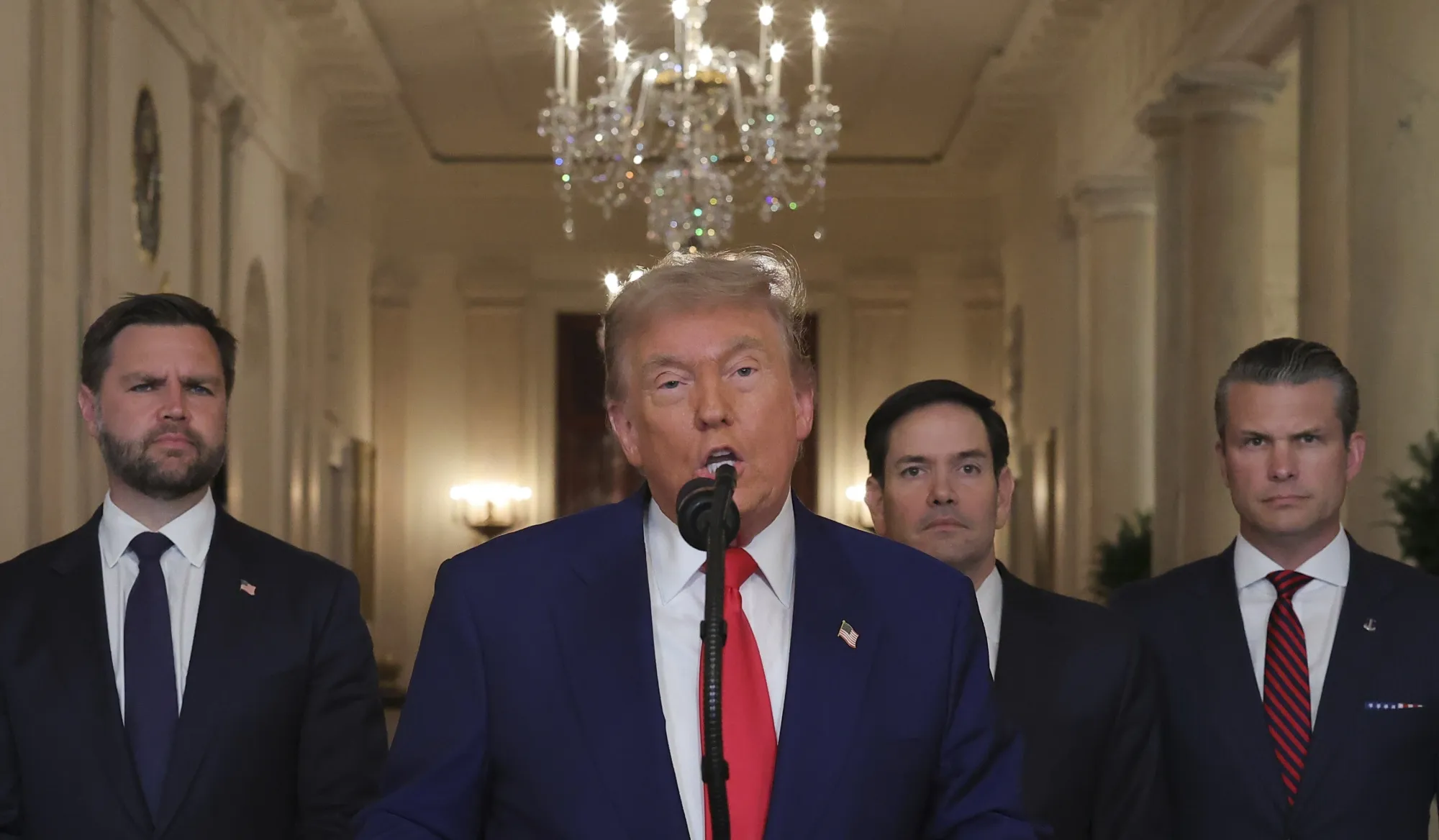
President Donald Trump’s second term has ushered in a foreign policy that departs sharply from the liberal internationalist consensus of the post–Cold War era. Instead of multilateralism and institution-building, the Trump administration has embraced transactional diplomacy, tariff-based leverage, and a CEO-style approach to global power. The guiding logic is less about sustaining a rules-based order than about extracting concessions in a world Trump views as fundamentally zero-sum.
This orientation—the so-called Trump Doctrine—is reshaping the United States’ posture toward rivals and allies alike. He frames his foreign policy as an extension of his populist domestic agenda: “Make America Great Again” through trade realignment, industrial reshoring, and hard bargaining. Yet while tariffs and dealmaking remain his preferred tools, Trump also harbours ambitions for statesmanship, including a quixotic pursuit of a Nobel Peace Prize. His attempts to mediate conflicts from Ukraine to South Asia illustrate both the promise and the peril of his approach. The result is a high-risk strategy that could redefine America’s global role—and shape the political landscape of the next U.S. elections.
Tariffs as Tools of Statecraft
During his first term, as Robert Blackwill of the Council on Foreign Relations had noted, Trump consistently makes major foreign policy decisions against the advice of seasoned advisors, amid unprecedented turnover in senior defense and diplomatic posts. A 2020 Senate Democratic report accused him of transforming U.S. foreign policy into a tool of personal and business interests, undermining alliances and institutions alike.
At the heart of Trump’s foreign policy is the use of tariffs and trade leverage. Where previous presidents relied on sanctions or diplomatic pressure, Trump employs tariffs as his signature instrument—against adversaries and allies alike.
During his first term, tariffs targeted China, the EU, and even Canada and Mexico. His second term has expanded this logic into a global bargaining strategy: tariffs are cast not merely as economic tools but as instruments of national security. Trump argues that tariffs protect American workers, pressure foreign governments into concessions, and restore industrial self-sufficiency.
The long-term effects remain uncertain. Economists warn that trade wars increase consumer costs and disrupt supply chains. Yet Trump has succeeded in reframing tariffs as patriotic policy, appealing to swing-state voters who see globalization as a betrayal. Going into the next election cycle, this rhetoric will be central to his pitch: only a tariff-wielding America, he claims, can reclaim greatness.
French observer of American democracy, Alexis de Tocqueville, once warned that democracies risk losing their moral compass when governed solely for material gain. Trump’s America First agenda, rooted in tariffs and short-term bargaining, embodies this danger. For him, alliances and norms are not ends in themselves but bargaining chips.
Trump as Peace and Deal Maker
The Ukraine-Russia Stalemate
Trump’s most high-profile attempt at statesmanship came with the August 2025 Alaska Summit, where he hosted Vladimir Putin on U.S. soil—the first such visit since 2007. Styled as CEO-style dealmaking, the summit bypassed traditional diplomats. Analysts at Chatham House concluded that the meeting emboldened Putin, who intensified his war aims rather than compromising. The Council on Foreign Relations reported that Putin’s demands remained maximalist: Ukrainian neutrality, demilitarization, and recognition of annexed territories.
Far from resolving the conflict, Trump’s intervention muddled U.S. messaging and alienated allies. Reuters called the summit a tilt toward Moscow, while AP noted it granted Putin undeserved legitimacy. European leaders have since moved to fill the vacuum, training Ukrainian forces and planning “reassurance forces” with limited U.S. backing. The Ukraine episode illustrates Trump’s foreign policy paradox: eager for dramatic breakthroughs, he often undercuts long-term credibility in pursuit of short-term optics.
Iran and the Quest for a Nobel Prize
Trump has repeatedly hinted that he seeks a Nobel Peace Prize, viewing it as the ultimate validation of his leadership. His prior efforts—such as the Abraham Accords in the Middle East—bolstered his claim but fell short of Nobel recognition.
Looking ahead, Trump is likely to focus on Iran’s nuclear program as the most dramatic arena for a potential peace deal. He has oscillated between threats of military action and promises of “the best deal ever.” His critics note that scrapping the 2015 JCPOA nuclear accord in his first term weakened U.S. leverage and pushed Iran closer to enrichment thresholds. Yet Trump now suggests he alone can broker a new accord, one tougher than his predecessors achieved.
Israel, Palestine, and the Limits of Transactionalism
Trump’s approach to the Israeli-Palestinian conflict remains deeply shaped by his earlier recognition of Jerusalem as Israel’s capital and the Abraham Accords. In his second term, he presents himself as uniquely capable of brokering a “grand bargain” between Israel and Arab states.
Yet Palestinians remain sidelined, and violence in Gaza and the West Bank has escalated. European analysts argue that Trump’s transactional diplomacy—focused on Arab-Israeli normalization—ignores the structural roots of Palestinian grievances. Without addressing Palestinian claims to sovereignty, however, any settlement risks being cosmetic.
India and Pakistan Tensions
Trump has also cited his efforts to mediate between India and Pakistan, two nuclear-armed rivals, as evidence of his unique statesmanship. After the recent four-day conflict, he offered to broker talks over Kashmir, even claiming that Prime Minister Narendra Modi requested U.S. intervention. While India denied such overtures, Trump continued to highlight his role in lowering tensions during border skirmishes. Irrespective, Trump revives this narrative, portraying himself as the only leader willing to bring two nuclear powers to the table.
For domestic audiences, the image of Trump as peacemaker between two nuclear states reinforces his argument that he alone can prevent catastrophic wars—an argument likely to feature prominently in his re-election campaign.
No More Soft Power
Traditional presidents—including many of the Founders—understood that America’s influence lay in both persuasion and force. George Washington counseled avoiding entangling alliances, but also promoting republican values. Trump’s policy inverts this balance: U.S. soft power—the tools of USAID, VOA—is slashed, replaced by tariffs, threats, and military posturing.
Removing soft power tools weakens long-term credibility. A legislative report warned Trump’s instincts make U.S. a “bystander in international efforts,” undermining democracy promotion and global cooperation. Institutions like WHO, climate accords, and multilateral forums are dismissed, even as authoritarian players fill the void.
Trump’s defense of using military power against Iran’s nuclear program—despite ongoing talks—underscores reliance on hard tools over diplomacy. His use of economic coercion—tariffs on allies and adversaries alike—challenges norms of trade reciprocity.
At home, this approach reflects his populist stance: reclaiming leverage against countries like India imposing tariffs on U.S., while demanding Europe meet NATO obligations. While Trump distances U.S. from multilateralism, countries like China and Russia are deepening cooperation via BRICS, SCO, and other forums. Meanwhile, U.S. has alienated NATO and EU—evident in the diplomatic backlash after Alaska.
On the other hand, European efforts to assure Ukraine’s security—a potential buffer zone, peacekeepers—are gaining momentum and autonomy, though still needing U.S. support. Emerging countries view Trump’s U.S. as transactional and surveys by the European Council on Foreign Relations indicated that global responses to his second term reflect hedging, not alliance-building.
Trump’s foreign policy represents a break with the post-1991 liberal order, which emphasized collective security, open markets, and democratic values. Instead, his worldview echoes 19th-century great-power politics, in which spheres of influence and economic coercion dominate.
Trump’s posture harks back to classic great-power thinking. Scholars have noted that U.S. resistance to Russian or Chinese spheres of influence is a post–Cold War construct. Historically, the U.S. itself wielded Monroe Doctrine-style influence and accepted postwar spheres such as Eastern Europe under Soviet control.
Trump appears to embrace that tradition—viewing global competition through the lens of zero-sum regional hierarchies, especially across Eurasia. He prioritizes a strategy of wedge-driving between Russia and China, rather than accepting a multipolar order.
The conventional wisdom in think-tank literature—a world moving towards multipolarity, with diplomatic messiness but strategic balance—is largely ignored. Some argue multipolarity may be more hazardous than bipolarity. However, Trump avoids such debates: instead, he seems to seek a revival of bilateral leverage, playing off great powers to U.S. advantage where possible.
Election Implications: Tariffs and Populism at Home
Trump’s foreign policy represents a radical experiment in realpolitik. It replaces liberal order with transactional bargaining, elevates tariffs to tools of statecraft, and prizes symbolic breakthroughs—especially peace deals that might burnish Trump’s legacy.
For the next election, Trump’s tariff-driven populism may prove a potent political weapon at home. His campaign will emphasize tariffs, industrial reshoring, and economic nationalism as proof of “America First” success. Swing-state voters, especially in the Midwest, may respond favorably to tariff-driven protection of steel, autos, and manufacturing. Yet suburban and business constituencies could rebel against higher consumer prices and global instability.
But internationally, America risks being seen less as a reliable leader than as a transactional actor chasing deals and prestige. Allies face uncertainty about whether U.S. commitments will endure. The credibility gap—created by Trump’s personalized, ad hoc decision-making—risks long-term erosion of American leadership, regardless of who wins in the next election.
Equally, it’s critical to keep in perspective the sense of exploitation which resulted in the America First Mantra, using which President Trump came into power for the second time. If American First policy does not produce economic dividends for common Americans in the short and long term, it will further complicate the domestic politics and confusion regarding its global role and future direction. However, if it does, President Trump will likely leverage it. Either way, the world is likely to see an America that is respected out of dread than admiration.