


John Masters (26 October 1914 – 07 May 1983) was a British army officer and a famous author. His novels dealt with life in British India. John’s own background fully qualified him for the task while his family had long association with India going back to 1805 when his great-great grandfather came to India with 8th Light Dragoons, died in Cawnpore and was buried there. His great grandfather was headmaster of La Martiniere School in Calcutta and his grandfather served with the Indian police. His two great uncles served with Central India Horse and Bhopal Battalion, and one ran the Opium Department. His father served with 16th Rajputs, commanded his battalion and won a DSO. His three uncles served with 34th Sikh Pioneers and 104th and 119th Hyderabad Infantry.
John was born in 1914 in Calcutta. He was educated at Wellington and joined the1933 batch of Sandhurst. He was commissioned in August 1934 and after serving a mandatory one year with British 1st Battalion Duke of Cornwall’s Light Infantry, he joined the 2nd Battalion of 4th Gurkha Rifles then commanded by Lieutenant Colonel David Murray, DSO, MC.
John got his baptism of fire in 1937 on the North West Frontier during operations against Wazir and Mahsud tribesmen of Waziristan. During the Second World War he served in Iraq, Persia and Burma. He was a serving Brigade Major of 114th Indian Brigade when a fellow 4th Gurkha officer Brigadier Walter David Lentaign poached him and brought him as Brigade Major of his own 111th Indian Infantry Brigade. This Brigade was a long penetration unit of Chindit formation and operated behind the Japanese lines in Burma. After elevation to Lieutenant Colonel rank, John commanded the 3rd Battalion of 4th Gurkha Rifles and then served as GSO-1 of the 19th Indian Infantry Division. After a spell as a staff officer in GHQ in Delhi, he then served as instructor at the British Army Staff College, Camberley. He was decorated with DSO and OBE and earned three Mentioned-in-Dispatches. He left the army in 1948 at the rank of Lieutenant-Colonel and settled in United States where he died in 1983. He was a mountaineer, and it was befitting with his passion that his ashes were scattered from an airplane over his favorite mountain trail.
John’s battalion was in Waziristan when he was sent to Bakloh to command the depot at Gurkha Regimental Center. This proved to be the most memorable event of his life when he shot a tiger that had invaded the regimental lines and killed a soldier. The preserved skin of the tiger is on display in the Garrison Officers Mess at Subathu and a silver plaque reads: “Shot Bakloh 28th February 1938. Presented to The Officers Mess, 4th PWO Gurkha Rifles, By Lieutenant J. Masters”. John considered this feat superior to all his military decorations, and his Gurkha comrades made a new song for him for his exploit.
He left the army and became a celebrated author authoring historical novels about India. His observations about Indian life are amazing and the famous Indian author Khushwant Singh said that Kipling knew India, but Masters knew Indians. In 1954, he wrote Bhowani Junction which was an instant hit. This novel was set in 1946 around the life of an Anglo-Indian girl Victoria Jones in a rapidly changing world. She has three affairs with an Indian, an Anglo-Indian and a British. The political background of the novel is India’s march towards partition and the struggle between non-violent movement of Congress and violent Communists. The novel may be inspired by his own several generations’ connection with India. In early nineteenth century, many British officers married Indian women, and John always suspected some Indian blood in his veins. In 1962, he learned what he had apparently long suspected, that he did indeed have a distant Indian ancestor.
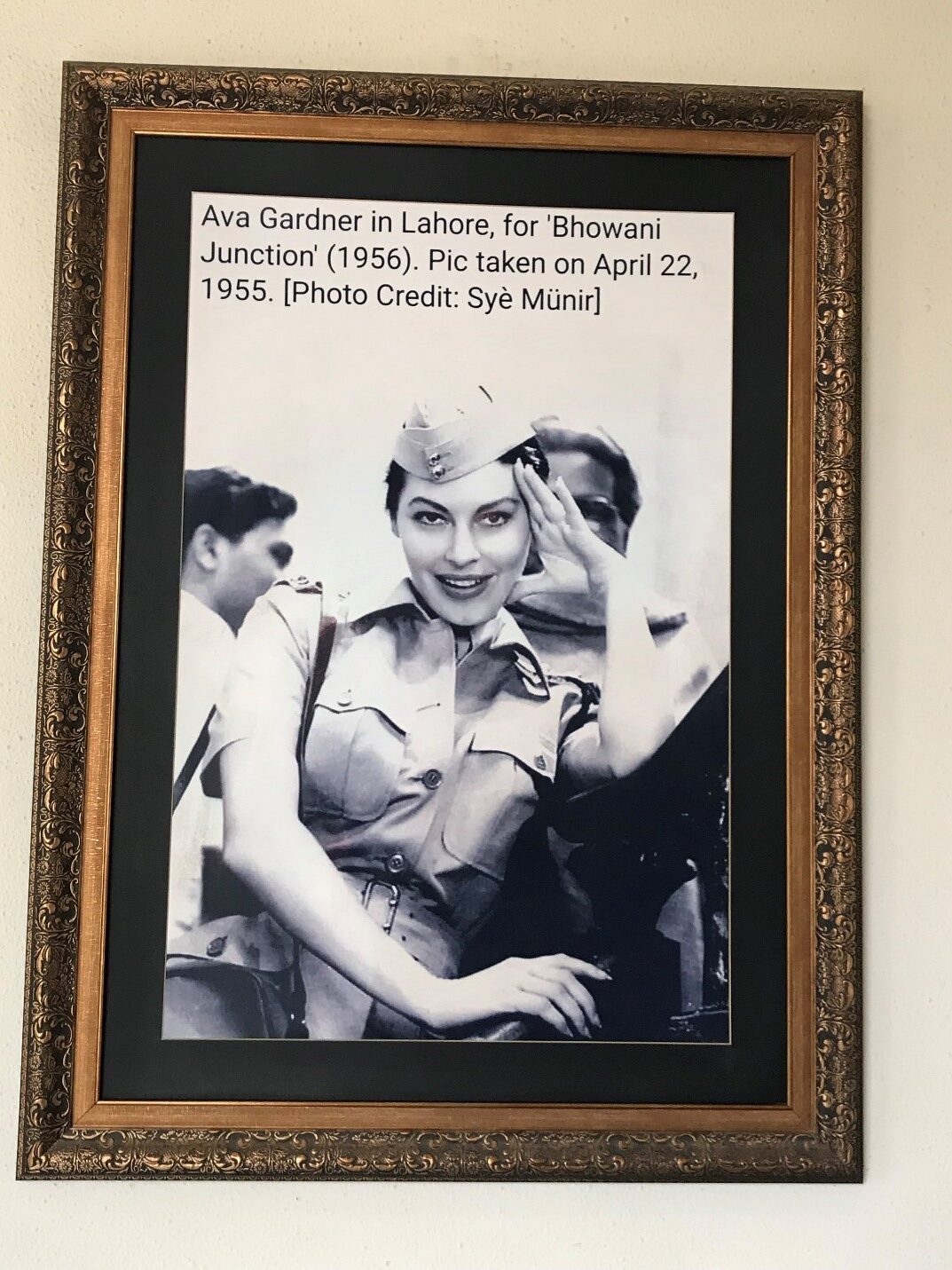
In 1955, MGM studio decided to make an epic movie of this bestselling novel. Ava Gardner was chosen for the role of Victoria Jones and British born Hollywood star Stewart Granger for the role of Colonel Rodney Savage DSO, MC and Bar. Stewart’s father Major James Stewart of Royal Engineers had served a lengthy career in the Indian army. During the Second World War, Stewart Granger joined the army and served with Gordon Highlanders and Black Watch for a short while. He was invalidated when he developed a stomach ulcer. In Lahore, a few days shooting was concentrated on Ava’s affair with the Sikh lover. Stewart used his free time to fly to Delhi and met Tiki and Biki Oberoi of Oberoi hotels chain. Stewart was a game hunter and when the Oberois came to know about this, they arranged for Stewart to stay with a senior forest officer where he shot a tiger. The geographic location of fictional Bhowani Junction was most likely Jhansi that holds a significant place in the history of Indian Railways. Its railway history dates to the late 19th century and is deeply connected with the development of central India’s transportation and trade.
The construction of railways in this region was strategically important due to Jhansi’s location between the northern and southern parts of India. The railway link to Jhansi was established in 1889 and it became a key junction for the Indian Midland Railway, which later merged with the Great Indian Peninsula Railway (GIPR). Over the years, it evolved into a major railway junction where five railway lines converged connecting it to Kanpur (North-East), Bhopal (South-West), Gwalior (North), Allahabad (East) and Nagpur (South). Jhansi Railway Station has been built in classic colonial architectural style, with grand arches and wide platforms. Anglo-Indians were mainly employed in railways and postal and telegraph offices across India. MGM wanted to film at location in India. The Indian Congress run government was not comfortable with the novel’s theme, and many considered it as insulting to Indians. The Indian government insisted on seeing and approving the script while Indian tax collectors wanted more than their fair share including twelve percent of the net world profit. MGM decided to approach Pakistan and the Pakistan government offered all the assistance as well as waiving all taxes.
In early 1955, film crew from Hollywood and London landed in Karachi. Young King Hussein of Jordan was in Karachi along with his whole family. He summoned Stewart and Ava to an audience and pulled his autograph book for them to sign. The film crew stayed in the country from February to May 1955 and the movie was filmed at locations in Lahore; many scenes were filmed at Lahore railway station, Shalimar Gardens and Shah Almi market. In Lahore, the film crew stayed at Falleti’s Hotel and room 55; the two room suite where Ava stayed was later named Ava Gardner suite.
George Cukor was the film director who was a perfectionist, a stickler for details and a hard task master. Francis Mathews who played the role of Sikh Ranjeet was sent to the holiest Sikh shrine in Amritsar to spend few days with the high priests to learn the details of Sikh religion. An Indian speech couch worked on his Indian accent for the role. A month before the start of filming in Pakistan, a speech couch worked with Ava for the Anglo-Indian accent, and she spent time with a Women’s Army Corps unit in London. Cukor auditioned several Pakistanis for native roles especially Ranjit but rejected them as they were not up to his standards. When asked why he did not recruit locals, he said they were all like ‘Armenian opera singers’. He was seen hitting extras with a roll of paper to make sure that they acted as per script.
There were many interesting incidents during the crew’s stay in Lahore. One day, Ava ran out of bathroom stark naked shrieking with fear and chased by a large bat. Her maid handed her a large bath towel while a hotel waiter chased the bat with a tennis racket. A lunch buffet was arranged in the hotel’s garden where film crew and local elite were invited. As soon as food platters were laid out, dozens of squawking crows attacked the party plucking food from the plates of guests. Many guests ran away in panic. Mathews recalled that one night he and Ava hopped on a tonga (horse drawn carriage) and went to the house of a dancing girl in the infamous street called ‘red light district’. One local recognized Ava and insisted on escorting them for their safety. The musicians excitedly tried to play the only western music they knew for their celebrity guests. Ava shouted, “Goddammit; that is the Isles of Capri. Can’t you play something else?” The nervous musicians played the same song but much faster. Incidentally, Ava’s husband Frank Sinatra sang this song for his album Come Fly with Me in 1958. In another co-incidence, when Granger was filming Bhowani Junction with Frank Sinatra’s wife Ava, Frank was filming Guys and Dolls with Granger’s wife Jean Simmons.
There is another story that a diehard Lahori fan of Ava later managed to get the pillow from Ava’s bedroom and fifty years later still had his prized possession. In 1947, mass migration on both sides saw the departure of Sikhs from Lahore and most Sikh Gurdwaras were closed. For one scene about Sikhs, the Pakistan government opened a Sikh temple and allowed many Sikhs from across the border to participate in the scene.
A crew member Bob Porter almost died from meningitis in Lahore but Stewart and Ava got him out of a local hospital, brought a local specialist and nursed him to recover in their hotel. When the Pakistani doctor offered to send a nurse, Ava refused and said that ‘I’ll nurse him”.
The Punjab police and Pakistan army assisted the production crew. 5th Battalion of 13th Frontier Force Rifles (now 10 Frontier Force Regiment) then commanded by Lieutenant Colonel S. N. Shah Khan provided officers and soldiers for the film. The movie’s theme revolved around Anglo Indians and incidentally Lieutenant Colonel S. N. Shah Khan was an Anglo-Indian officer. It was a motorized infantry battalion and part of 3rd Armored Brigade along with 5th Probyn’s Horse. These battalions were part of 7th Golden Arrow division and in the movie Golden Arrow is visible on the arm of Colonel Savage and soldiers.
The Frontier Force Regiment and Frontier Force Rifles are nick named PIFFERS. Captain (later Brigadier) Agha Aman Shah and Captain (later Lieutenant General) Shah Rafi Alam of 5th Probyn’s Horse were also assigned to assist the film crew. Some suggest that another battalion 1st Battalion of 13th Frontier Force Rifles (now 7 Frontier Force Regiment) and 4th Battalion of 13th Frontier Force Rifles (now 9 Frontier Force Regiment) also provided help. In fact, in the movie Colonel Savage was commanding a Battalion of 13th Frontier Force Rifles and a young officer Captain (later Lieutenant General) Khushdil Khan Afridi brought a new commanding officer uniform stitched by the battalion’s tailor and handed it over to Granger.
The commanding officer asked Granger to inspect the battalion at a parade in his colonel uniform despite Granger’s protest that he was simply a retired second lieutenant. In the opening scene of the movie, one can see half a dozen grizzly PIFFER Junior Commissioned Officers (JCOs), veterans of Second World War along with three officers. In the opening scene, a PIFFER regimental band is playing at the railway station platform with its deer mascot covered with the regiment’s blanket strolling in front of the band. In one scene, Victoria and Savage dance with PIFFER soldiers while the regimental band is playing the tunes.
In the novel, Colonel Savage was Commanding Officer of a Gurkha battalion. When the venue of shooting was changed from India to Pakistan, Gurkha Rifles was replaced by Frontier Force Rifles and Johnny Gurkha had to make room for the Pathan. Most of the soldiers were Pathans and there are some exchanges in Pushto in the movie. One day everything was all set for the shoot with all the crew in place and hundreds of extras ready for a major scene. A crisis developed as Granger’s well-pressed uniform was missing. Ava was having conversation with Lieutenant Colonel Aslam Khan and she noticed that he was of same build as Granger. She suggested to Granger that “I just know that the dashing Colonel’s uniform would be a perfect fit for you, Stewart. Don’t you think so Colonel’? Then, holding Colonel Aslam’s arm, she said to George Cukor “We are making history here Colonel, aren’t we George”. Years later, Stewart recalling the incident to Mahmud Sippar said, “I wonder how the good Colonel explained away Ava’s make up on his uniform”. There was an incident involving Stewart Granger and a young Pakistani cavalry officer Shah Rafi Alam. The story goes that Granger got upset when he saw Ava sitting in Rafi’s lap. The two came to blows and Rafi hit him on nose. This is folklore and is not true. The actual story is totally different. An EME company was assigned to film production providing cranes and dozers for the sets which was commanded by an old British officer. Some British officers had decided to stay back in Pakistan on contract, and this officer was part of that group.
One day, this EME Company failed to bring all the necessary equipment and the shoot that was scheduled for the day had to be cancelled. In the evening, actors and some Pakistani army officers were having drinks in the lawn. The old EME Major was seen arriving to join the party. Seeing him, Granger acidly remarked that “We had to lose the Empire with men like him at the helm”. Rafi lost his temper and reacted strongly. Some hot words were exchanged between Granger and Rafi but there was no physical contact. Only a chap like Rafi could take such a stance and not to be intimidated by any celebrity. Another incident was when Captain Agha Aman Shah poured champagne in Ava Gardner’s shoe and drank it. The transgender extra Malang Charlie who danced with Ava in the movie was lucky to kiss Ava on her cheek while an officer of the legendry Probyn’s Horse was content drinking champagne from Ava’s shoe.
The film was completed in England and Hollywood. First sneak previews caused uproar about many things in the movie including race. Inter-racial relationship was a taboo in Europe and United States of 1950s. Many scenes where Victoria kissed Anglo Indian Patrick and Indian Ranjeet were deleted even though all actors were either British or American. In the novel, Patrick and Victoria narrate their experiences but in the movie Colonel Savage is the sole narrator. The ending was also completely changed. In the novel, Victoria finally joins Patrick, but the ending of the film was revised where Patrick dies a heroic death, and Savage would come back from early retirement in England to join Victoria in India.
After major changes, several cuts, re-writes and re-shoots, the final film was a shadow of the original. Film director George Cukor cried about all these changes. He protested loudly with tears in his eyes and said, “Listen; I made a good movie here. You are crucifying this movie and turning it into a goddamn Hollywood love story, and it is going to be crap”. Ava was in full agreement that a good film was seriously damaged, oversimplified, and over sentimentalized after preview audiences did not approve of certain aspects of the film.
If Bhowani Junction was released in its original form, it was likely to become an epic film in league with Gone with the Wind and Lawrence of Arabia. However, the film was still a success. Stewart Granger read the novel when it was published and with his military background wished that if a movie was made, he would like to be the hero. His wish was fulfilled when the film producer offered him the role. Ava also liked her role in the film and later admitted that this was her most serious film and that she was emotionally involved in her role. In her last days, Ava was living alone in her apartment in London, she would watch her old movies alone. She watched Bhowani Junction and called Stewart Granger in Los Angeles asking him “were we really that beautiful, honey” and Stewart replied “You were, my sweet. You still are”. Rest in peace Ava; you are beautiful in the eyes of a whole generation enchanted by you.
Acknowledgment
Thanks to the late Colonel Aga Javed Iqbal of 5th Probyn’s Horse who was adjutant of the regiment in 1955 for details and corrections.
Notes:
1. John Masters. Bhowani Junction (New York: The Viking Press, 1954)
2. John Masters. The Bugle and a Tiger (New York: The Viking Press, 1956)
3. Ava Gardner. AVA: My Story (New York: Bantam Books, 1990)
4. Lee Server. Ava Gardner: Love Is Nothing (New York: St. Martin’s Press, 2006)
5. Peter Evans and Ava Gardner. Ava Gardner – The Secret Conversation (New York: Simon & Schuster, 2013)
6. Stewart Granger. Sparks Fly Upward (New York: G. P. Putnam’s Son, 1981)
7. Hamid Hussain. Bhowani Junction, Defence Journal, April 2013
8. Lieutenant General ® Baljit Singh. Subathu & John Masters, November 17, 2024.