


Sehrish Mustufa (Host)
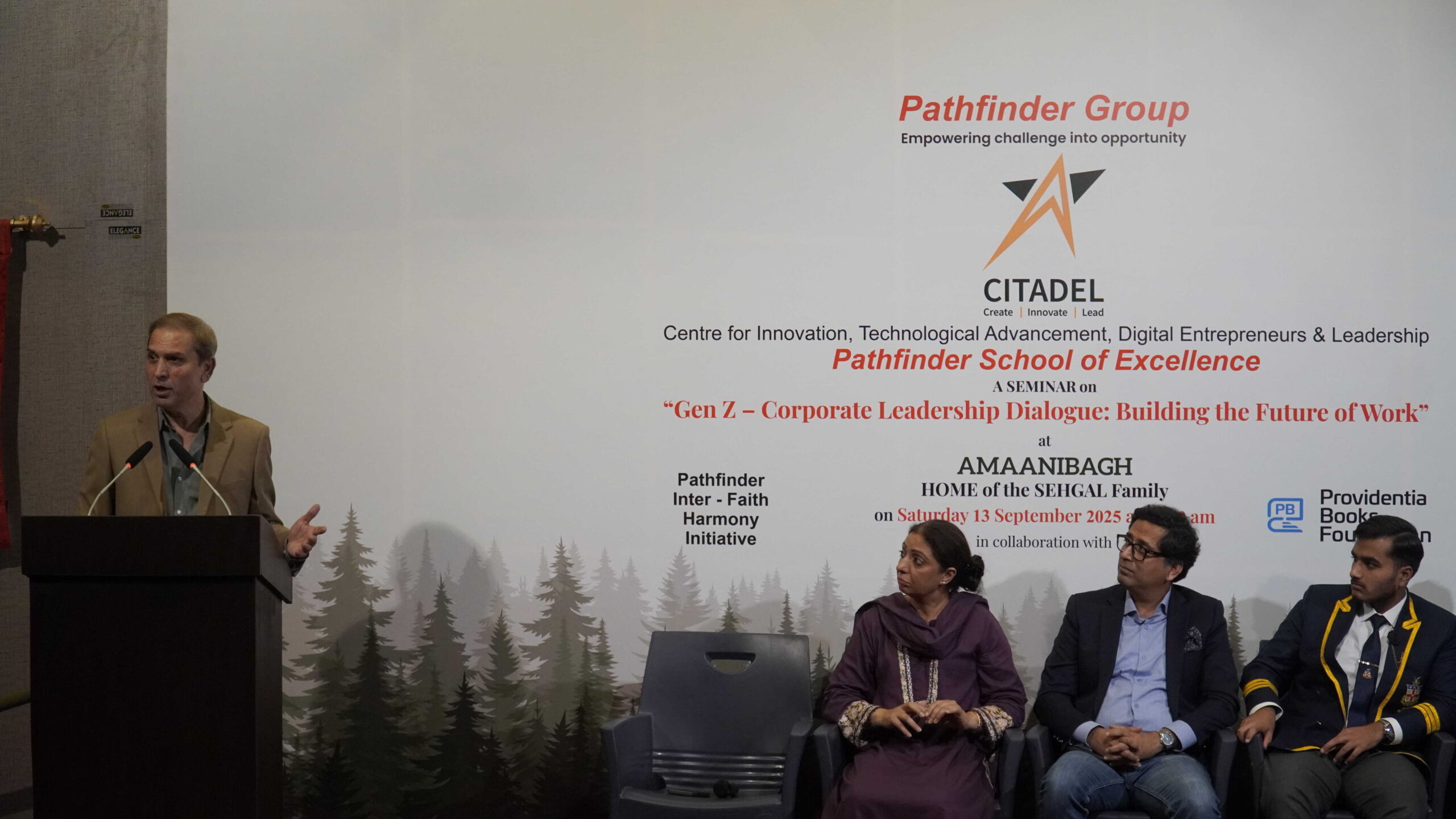
I would now like to invite the student participants for the Second Session, representing The Millennium University College (TMUC) and Lawrence College: Hammad Moeen, Ajlan Abbas, and Huzaifa Saeed. For the discussion on corporate culture in the Telecom industry, we are also joined by two distinguished experts: Sheikh Taimoor Nawaz and Ms Tahira Khattak. If IT powers the digital engine, the Telecom sector provides the pathway on which that engine runs. The story of Telecom is the story of connectivity, from landlines to mobile phones, from SMS to 5G, and soon to a world where machines will communicate more than we do.
In this session, we will explore the culture of corporate leadership in the Telecom Sector, examine how the industry has evolved, how it shapes other industries, and how it is reshaping societies and even our daily lives. I would now like to invite Team Yellow, representing The Millennium University College (TMUC).
Hammad Moeen (TMUC)
Telecom is an ecosystem. It’s a network. It’s a service provided by large companies in Pakistan and around the world. Globally, it is a $3.3 trillion market. In Pakistan, it generated around $850 billion over the last two years. The Telecom industry has many stakeholders. First, the government and regulators: whenever a company enters this industry, it must comply with regulations, laws, policies, standards, and protocols. Without compliance, it cannot operate.
Next are the Telecom operators, companies like Zong, Telenor, Ufone, and Mobilink, who provide us with these services. During my internship, I met someone from Telenor who explained how closely Telenor and Huawei collaborate on projects, including their digital finance systems, which are fully supported by Telecom. Then come the consumers, us. We use services like Easypaisa, JazzCash, SadaPay, and others, all of which rely on Telecom infrastructure.
How does this industry impact others? Telecom is one of Pakistan’s largest revenue-generating industries, and it directly influences multiple sectors. For example, in banking and finance, our digital economy, Easypaisa, JazzCash, SadaPay, banking apps, cannot function without compliance with PTA and Telecom regulations. In healthcare, telemedicine enables a doctor in Karachi to treat a patient in Gilgit. In the education sector, especially during COVID-19, online classes and meetings became possible through Telecom networks. In the transport sector and logistics, companies like Uber and Careem depend on secure, constant, and reliable internet connectivity. Any delays in Telecom networks can result in gaps in innovation and major revenue losses. So, we’ve talked about what Telecom is, its stakeholders, and its impact. But what about the future? Where is Telecom headed, and how will it impact us? Pakistan already has 5G, and it won’t be long before 6G or 7G arrives. Tech giants in the U.S. are working on satellite internet, which, if introduced in Pakistan, could bridge the digital divide. Now, what is the digital divide? It’s the gap between urban and rural areas. While cities and universities may have internet access, many rural areas don’t even have basic network coverage or Telecom towers. Emerging technologies like IoT, smartphones, smart devices, and smart cities depend on strong, ultra-reliable networks. If supported, this can lead to groundbreaking innovation in Pakistan and globally. However, the industry faces huge challenges. The bigger the industry, the greater the risks. Cybersecurity threats are the biggest challenge for the Telecom sector. For example, earlier this year, amid tensions with India, the Indian Cyber Force hacked and leaked millions of records from Pakistani university portals and Telecom companies onto the dark web. Telecom companies hold our most private and confidential data. If that’s not secure, neither is our economy nor our country. Another challenge is regulatory complexities. As I mentioned earlier, without compliance with PTA and Telecom regulations, innovation is delayed and decision-making slows down. Then there’s infrastructure cost, building towers, satellites, and servers requires massive investment.
Now, I want to connect this to us as students. I’ll be graduating in a few months and entering the job market. From a recruiter’s perspective, what do they expect from fresh graduates? As one of our teachers said, your real education starts the day you graduate. The 3–4 years of study only build your cognitive ability. A degree alone isn’t enough; you need skills. If you can’t demonstrate skills and value to an employer, your degree won’t carry you far. For the Telecom and IT industries, strong fundamentals are key: networking basics, how computers communicate with hubs, how switches route data, and how packets travel from one device to another. You need to learn to “think like a computer.” These fundamentals open up multiple career pathways.
When Pakistan and India recently had a cyber conflict in May, there was suddenly a huge demand for cybersecurity professionals in Pakistan. That’s an opportunity for us. But choosing your niche early is important. I made mistakes myself, wasting time on fields I thought would bring more money or social recognition, only to realize later they weren’t right for me. Once you identify a field where you can refine your skills and specialize, it becomes easier to market yourself to employers. So my advice is: pick a niche, focus, and build your skills. Don’t spread yourself too thin. At first, you’ll experiment, but eventually you need to commit to a path. That’s how you’ll succeed. Thank you very much.
Sehrish Mustufa (Host): I would like to invite Team Green, Ajlan Abbas, and Huzaifa Saeed from Lawrence College.
Ajlan Abbas (Lawrence College)
Telecommunication, in simple terms, means the transfer of information, mainly through electronic means. The objectives of my talk are threefold: to develop an appreciation of technical skills and education programs in the Telecom industry, to understand the soft skills required to perform effectively in the workplace, and to analyze the generational changes in work culture in Pakistan.
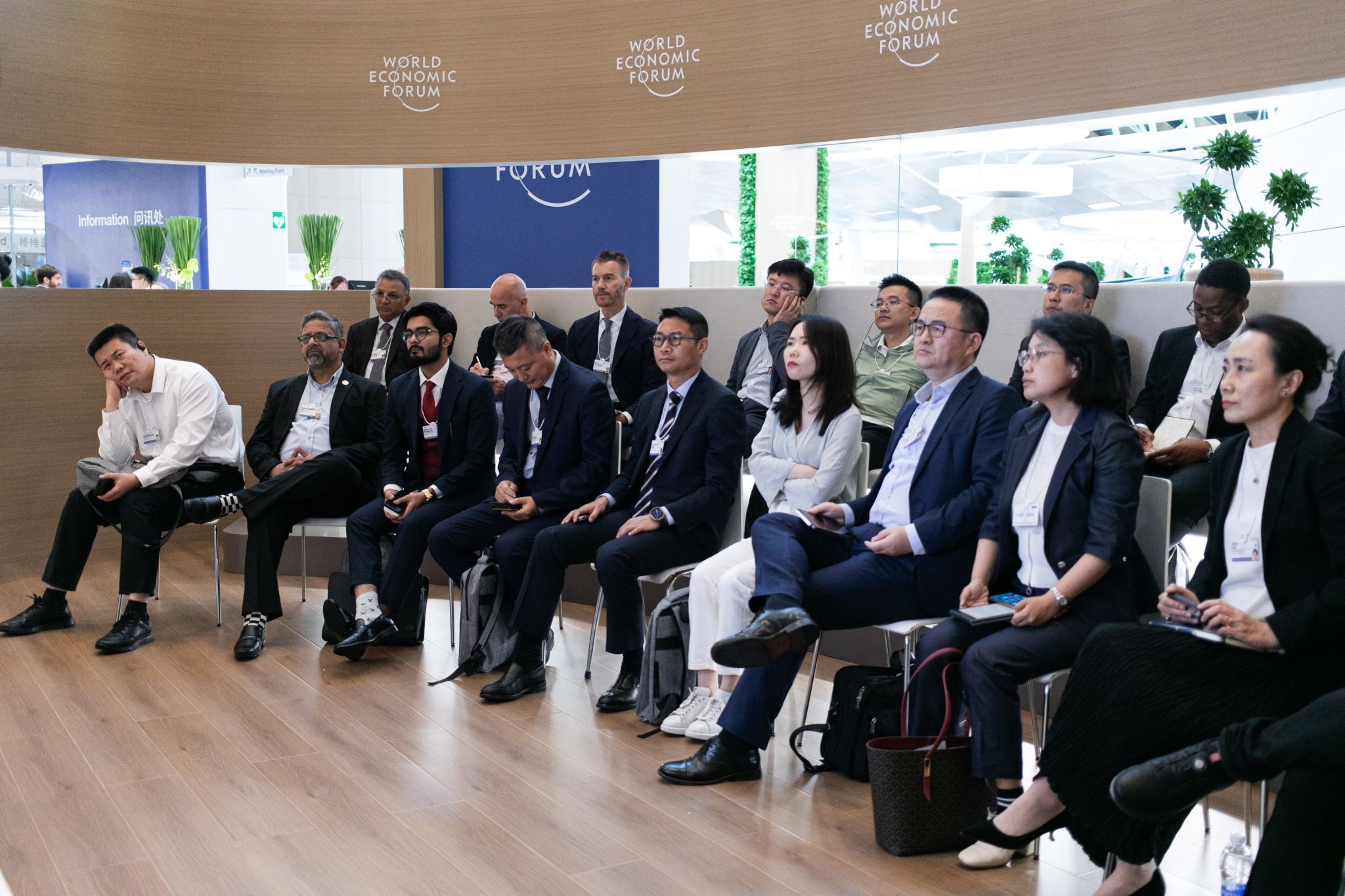
Looking at the key stakeholders in the industry, we first have the Telecom operators, the main providers who deliver services and run the infrastructure. In Pakistan, examples include Jazz, Ufone, and PTCL. Next are the equipment vendors, those who provide infrastructure such as servers, cables, and optical fiber. Then we have the regulatory authorities, the most prominent being the Pakistan Telecommunication Authority (PTA), which allocates licenses and monitors illegal activities in the industry. Service providers often overlap with equipment vendors and operators. Customers and end-users, of course, form the final link Delegates listening attentively to the panelist in this chain, as we consume and rely on these services. Finally, we have the government and academia. Governments often hold major shares in Telecom companies; for example, the Government of Pakistan owns a significant stake in Ufone, while Telenor Pakistan is majority-owned by the Norwegian State.
In my opinion, soft skills are equally important and required to succeed. Communication skills come first, whether verbal, written, face-to-face, or virtual; effective interaction is the foundation of all professional success. Team collaboration is essential, as working together leads to greater achievements.
Adaptability and flexibility are also crucial in a world where technologies such as AI are reshaping industries and businesses are rapidly moving online. Problem-solving is another key skill: when faced with challenges, we must focus on finding solutions rather than dwelling on the problems. Leadership, in turn, ties many of these qualities together, as it involves guiding and inspiring others while putting skills into practice. Finally, there is time management, which I consider vital. As I like to say, time does not delay, only we do. If we learn to keep pace with time, we are far more likely to achieve our goals.
Huzaifa Saeed (Lawrence College)
Assalamu Alaikum. I will be talking about the job market in the Telecom industry. With the rapid rise of technology, global demands have shifted. We moved from 4G and are now anticipating the rollout of 5G. If you want a career in this sector, it is important to study and develop expertise in areas such as 5G, data analysis, and web development, because these are the skills that the world will demand in the future.
When we look at Telecom fields in Pakistan, we see roles such as network engineering and RF planning, which refer to the management of radio frequency signals, how they are transmitted, and how they can be optimized. This is a crucial area for ensuring quality communication systems. Beyond jobs, there are opportunities for startups in Telecom services. If you don’t want to pursue a traditional job, you can begin your own entrepreneurial journey in this field. The changing nature of work is also very important to understand. In previous decades, baby boomers and even millennials believed in loyalty and hard work as the foundation of success. But Gen Z prefers smart work, using efficiency and technology to achieve results faster. This leads us to the shift from hardware to software-defined networks. Our fathers and grandfathers relied on traditional, hardware-based networks, but now the focus is on software-driven solutions, automation, and flexible systems. There is also a greater emphasis on digital services. Gen Z carries smartphones with digital wallets, something our fathers never had. We now manage money and services digitally, reflecting the rapidly evolving society. To survive in this industry, continuous learning and skill upgrading are essential. You cannot stop at one degree or certification; you must keep learning at every stage and situation in life. At the same time, Gen Z expectations in the workplace are different. We want work-life balance and flexibility. We don’t want rigid office timings; instead, we prefer circumstances that adapt to us, not the other way around. There are also opportunities for growth and mentorship. Modern workplaces encourage both guidance from seniors and reverse mentorship, where younger employees bring fresh technological insights. This is supported by the use of modern tools and technologies, which make work easier and allow us to rely on smart solutions rather than only hard work. Gen Z also values an inclusive and collaborative culture, where individuals are respected, valued, and heard. Unlike millennials, who often stayed loyal to one job for decades, Gen Z is quick to leave if their voice is not respected. That brings us to the challenge of working with baby boomers and millennials. They emphasize perseverance and hard work, which is true, but Gen Z believes that if there’s a shorter and smarter path, we should take it. Similarly, different approaches to authority and teamwork emerge: millennials often expect strict seniority, but Gen Z favors open communication and reverse mentorship, where even seniors learn from younger colleagues about new technologies.
When we look at Pakistan’s workforce in global Telecom, we see that we already provide skilled engineers and professionals worldwide, though not in very large numbers. Unfortunately, Pakistan itself lacks sufficient opportunities, which is why talent often leaves the country. We should see this as a weakness and work to create more opportunities locally. To compete globally, there is a strong need for global certification and continuous training. Certifications from internationally recognized companies and strong portfolios are necessary to enter the international job market.In conclusion, the Telecom industry requires both technical and soft skills. Technical skills come from degrees and professional expertise, while soft skills like communication, teamwork, and leadership come from our habits and traits. For this to succeed, educational institutions must align with industry needs. They must adopt a consumer-centric approach, bridging the gap between academia and industry. Currently, there is a big gap, with universities providing theory but little practical exposure. To address this, we need tools, labs, training, and certifications. Standardized labs and proper equipment must be made available, and partnerships between universities and industry must be built so students gain real-world skills. Looking at the future of the Telecom industry, Pakistan must focus on expanding 4G in rural areas before moving to 5G. The future also lies in the growth of 5G and beyond, with the integration of AI, machine learning, and the expansion of the Internet of Things, from smartphones to appliances; everything is becoming interconnected. Alongside this, there must be a greater emphasis on cybersecurity, as digital threats are growing rapidly. And last but not least, the industry will rely more on global collaboration and remote workforce opportunities, opening doors for young professionals everywhere. Thank you.
Sehrish Mustufa (Host): Turning to our experts to reflect further on the Telecom industry. I would like to invite Sheikh Taimur Nawaz, Director of Marketing at Transworld, one of the leading internet connectivity providers in Pakistan. He is also the co-founder of CalmKaaj, In addition, he serves as a member of the Board of Directors at The Indus Entrepreneurs. With over two decades of experience in the Telecommunications and technology sectors, both in Pakistan and abroad, he is a seasoned commercial leader with a proven record of driving multifold revenue growth, launching innovative products, and leading high-performing teams.
Sheikh Taimur Nawaz: Marketing Director, Transworld I did my MBA back in 2003 from LUMS. The biggest lesson I learned there, apart from the degree itself, was something someone said that really stuck with me: a degree is not an achievement in itself; it’s just a ticket to the interview. At the end of the day, many people have degrees, but what matters is how you perform once you step into the market. So just to share with all of you, going to LUMS or any top institution is not a big deal. What truly matters is what you do afterwards.
Recently, I told one of my team members that I wanted to form a cross-functional team and asked if he would be willing to be a part of it. His reply was interesting. He asked, “Sir, do you want to do a project or do you want to work?” There’s a very different connotation in both. He said, “If it’s just a project, I’m not interested. But if it’s real work, then I’m in.” That, to me, reflects the spirit with which we should approach everything we do.
I also learn a lot from my own children. My son is 16, and my daughter is 14. For example, I often feel like an odd one out because I’m not on Facebook. Once in a meeting, someone asked me if I didn’t feel FOMO, fear of missing out, because I wasn’t on it. I said, “It’s not FOMO, its JOMO, the joy of missing out.” Not everything in life should be driven by fear. Sometimes, missing out is a blessing, and there are plenty of other things to enjoy and focus on.
Let me share a few important things about the telecom industry and where it stands today. I started my career in 2000 with Alcatel, a French company. During my first interview, the CEO asked me, “What do you think is the split between voice and mobile data?” I said, “95% voice, maybe 5% mobile data.” He then asked, “Where do you see it in the next two to three decades?” I replied, “Maybe 30–40% mobile data at best.” He said, “No, it will flip completely, 95% mobile data and only 5% voice.” And that is exactly where we are today.
As of last year, nearly 65–70% of mobile operators’ revenues are from mobile data, not voice. That shows the scale of transformation we’ve gone through. We can’t imagine a world today without mobile banking, 4G streaming, or video calls. But many of us sitting here remember a time when SMS was king, and simply being connected by voice felt like a luxury.
Just to give perspective, in the year 2000, Pakistan had only 300,000 mobile users.Fast forward to 2025, and we now have over 200 million. That’s phenomenal growth. Two major government initiatives really shaped this transformation. The first was deregulation in 2004, which opened the market to operators like Telenor, Mobilink, and Warid, bringing in huge FDIs. The second was the launch of 4G in 2014. At that time, I was working for Qualcomm abroad, but I was given the additional responsibility of handling Pakistan for 4G’s arrival.
These interventions fundamentally changed the industry. The impact has been huge: 150 million broadband customers, 100 million mobile phones manufactured locally, and even exports of mobile phones from Pakistan. Few realize this, but it is happening. Another example is the Device Identification Registration Blocking System (DIRBS). With Qualcomm, we supported it from abroad, and it resulted in over $300 million in tax collection for the government through the mobile industry.
Of course, challenges remain. The biggest one is ARPU, the average revenue per user, which is among the lowest in the world, just around $1. To put this in perspective, in the Middle East, ARPU is around $45; even Afghanistan’s is about $10. Low ARPU means operators struggle to recover their investments, which directly affects the quality of service, like slow upload and download speeds that we all complain about. Add to this spectrum challenges and constant price wars between operators, and the result is suboptimal performance for users. Globally, we’re moving towards 5G, and Insha Allah, Pakistan will be on the global 5G map soon. Already, platforms like WhatsApp have transformed how we communicate.
Pakistan has over 50 million WhatsApp users, making it one of the top 10 countries worldwide. From a time when SMS and calls defined communication to now, with billions of multimedia messages sent daily, the transformation has been remarkable. Our telecom companies are also embracing AI, it is becoming a core strategy. For example, AI bots now evaluate call center agents based on KPIs, the choice of words, tone, and overall performance, rather than human supervisors. Similarly, Qualcomm revolutionized the industry with Snapdragon processors, powering most of the smartphones we use today. These innovations in smartphones and chipsets have been game-changers for telecom globally.
The pace of adoption today is incredible. In the past, industries like aviation or automobiles took decades to reach 50 million users. Today, apps like ChatGPT and Gemini reach 100 million users within months. This is the speed of transformation we must all embrace. I myself had to make extra effort to learn AI, and it’s a reminder to all of us: staying relevant means continuously learning.
Finally, a word on the future of jobs. The World Economic Forum at Davos last year highlighted that the most sought-after roles will be in big data, AI, and machine learning. Data is the new goldmine, and every field, finance, technology, telecom, revolves around it. That’s where the future lies.
Sehrish Mustufa (Host):
It’s time to hear from someone who brings not just expertise, but also a refreshing perspective to our discussion today, Ms. Tahira Khattak. She’s the only female expert speaker in the seminar. She’s a true trailblazer in her field. As vice president of HR business partner and people strategy at Telenor and Head of Digital Customer Experience and Product Design, she has mastered the art of combining people, strategy, and technology. With her deep insights into HR skills and digital transformation, she continues to set benchmarks in problem-solving and management excellence.
Ms Tahira Khattak (Vice President HR, Telenor)
Assalamu Alaikum, everyone. Thank you so much for the opportunity. It’s an honor to be here and to interact with so many Gen Zs who have high expectations from us, the Millennials. It’s refreshing to have an open dialogue like this. Since we are talking about the Telecom and IT industries, let me share my perspective as someone working in human resources. My role is to deal with talent, transformation, and creating policies and cultures that enable every generation at the workplace, whether it’s Gen Z, Millennials, or even Baby Boomers. Although in many Telecoms today, you’ll hardly find Baby Boomers, most work as consultants now. The average age across Telecom organizations is between 22 and 25 years. Whether it’s Jazz, Zong, Telenor, or other service providers, this is the age bracket shaping the workforce. So, the workplace has to evolve to meet Gen Z’s expectations. Organizations in the Telecom industry need Gen Z; they are the future talent. The real question is: how do we integrate their expectations into the workforce? Interestingly, many Telecom operators are already quite advanced in their talent management and cultural practices. Let me share an example from my own organization, Telenor.
We were the first in Pakistan to introduce open workspaces, almost 21 years ago. Imagine that, 21 years back, when CEOs sitting at the same desks as employees was unheard of. Today, many other organizations are embracing open spaces because they realize how important they are for dialogue, collaboration, and accessibility. Open offices help break hierarchies, allow leadership to be approachable, and encourage transparent communication across all layers of organizations. Now, one of the biggest expectations from Gen Z is flexibility and work-life balance. And yes, this is a very genuine demand. Organizations that fail to adapt will struggle to retain talent. But Gen Z also has to understand the realities of different industries. For instance, if you’re working at a manufacturing plant, you cannot expect flexible hours because production lines run on fixed schedules. This means we need to strike a balance; policies should provide flexibility where possible, but employees also need to adapt to the nature of the work.
This expectation of work-life balance is not unique to Gen Z. Post-COVID, even Millennials are demanding it. Globally, several studies show that employees want an enabling environment where personal and professional life can integrate more smoothly. Technology has connected us 24/7, but that makes it even more important to set boundaries, to know when to disconnect and when to rejoin. Now, while Gen Z brings innovation and is digitally native, another reality is that most work in corporate settings is not individual; it is teamwork. Collaboration is key. Unfortunately, many digital natives lack social skills because they’re so used to screens, likes, and instant feedback. In the corporate world, feedback doesn’t come in seconds. It may take weeks, even months, to see results. This lack of patience and face-to-face interaction is a gap Gen Z must consciously work to close.
For example, in my family, my father has a strict rule: no phones at the dining table. That one hour is just for us as a family. If someone brings a phone, he says, “Clearly something else is more important, so finish that first and then join us.” It sounds simple, but it has a big impact on keeping social connections alive. These social skills, listening, interacting, and engaging, are critical. Without them, even the smartest people will struggle in the workplace. I can tell you this from experience. On average, we hire about 500 people a year. Do you know why most candidates are rejected? It’s not because they don’t know AI tools, or 5G, or RF planning.
The biggest reason for rejection is a lack of cultural fit and poor soft skills. We ask: Can you collaborate in teams? Can you communicate across functions? Can you resolve conflicts face-to-face instead of hiding behind WhatsApp or emails? Those who cannot demonstrate interpersonal and collaborative skills struggle the most. Another major weakness we see is in critical thinking. Today, when every answer is one Google search or one ChatGPT prompt away, many students are not learning how to think. But in the workplace, we don’t just want answers; we want to know your process. How did you reach that answer? What was your reasoning? That’s why critical thinking is so important, and universities must emphasize it more.
There was also a question earlier about why startups often fail despite good ideas. The reason is simple: universities don’t teach business or commercial models. Having a great idea is not enough; you must know how to translate it into execution, into a viable business, and then scale it. Without economics behind it, an idea remains just an idea. So here’s the reality: IT and Telecom companies need to collaborate to redefine work practices and the skills required for the future. Universities must also align with these demands. Technical skills are important, yes, but soft skills are equally, if not more, critical. Sadly, technology is worsening soft skills, making it harder to find employable talent. Right now, I’m running three management trainee programs in finance, commercial, and technology. I had to re-advertise positions because I simply couldn’t hire enough suitable candidates. And this is despite thousands of graduates entering the market every year. The gap between technical training and workplace readiness is alarming, and it’s something all of us, employers, universities, and students, need to work on urgently. Thank you so much.
Sehrish Mustufa (Host): I would now invite Mr Azfar Ahsan, Chairman of the Nutshell Group, to deliver his special remarks.
Muhammad Azfar Ahsan Chairman, Nutshell Group
First of all, I am grateful to Mr Ikram Sehgal for inviting me here. I am 49, not out. I was born in 1976. Well, many friends are present here, including my dear friend AVM Asad Ikram. It has been a wonderful discussion, and I would like to share a small part of my own journey.
In 1997, I joined the Pathfinder Group. That was my second job. Mr Ikram Sehgal was my big boss, and I was starting at a very young age. I was fortunate to be sitting at the head office in Clifton with Mr Sehgal. Since then, my real journey began. Throughout this journey, he guided me, sometimes with scolding, sometimes with affection. I experienced his genuineness, his contribution to the country, and his passion for developing human resources.
So, my one message to Gen Z, with this story of the Pathfinder Group, is: build a legacy. Your legacy is what truly matters. Today you are; tomorrow you may not be. What impact are you creating in society? What are you doing in your profession, in your circle, for your country, and for humanity at large? That is what remains. People pass away, but their legacy lives on. I come from Karachi, and you must have heard of Dr. Syed Adibul Hasan Rizvi, the man behind the Sindh Institute of Urology and Transplantation (SIUT). Thousands of people benefit every day from free treatment there. Then there is Indus Hospital, Women Medical Centre, Shaukat Khanum in Lahore, Peshawar, and soon in Karachi as well. These are powerful stories of legacies.
Similarly, organizations like The Citizens Foundation and others have created an impact. Even in the corporate world, we have an example of Systems Limited. It is one of the finest IT companies from Pakistan, now working globally. Interestingly, they even run an office in Bangalore, India, with 2,500 employees.
This legacy was built by Syed Babar Ali and Mr Aezaz Hussain, and today it is being carried forward effectively by Mr Asif Peer. So the lesson is this: none of us know how long we will be in this world, maybe 40 years, 80 years, maybe more, but whenever we leave, we must leave behind a legacy and an impact.
My second point is that we must recognize the enormous potential that exists in Pakistan. We hear this all the time that our population is 250 million, making us the fifth-largest country in the world. India is now number one, China is number two, the United States is number three, Indonesia is number four, and Pakistan stands at number five. By 2047, our population will cross 400 million. Out of 250 million, 65% of our people are under the age of 30.
This means we are not a small European, Middle Eastern, or African country; we are the world’s fifth-largest nation. But size alone does not mean progress. For that, we need a long-term plan. We need a proper country strategy. We are strategically located with a 250 million population; there is a need to make our house in order.
I had the privilege of serving as the State Minister of Investment, as a technocrat. My area of focus these days is investment. I see huge potential in technology and in Agri-Tech. Let me give you one example: in 2023, the global Agri-Tech industry was worth $250 billion. By 2027, it will cross $400 billion. But in the last 10 years, Pakistan has attracted only $100 million. With 65% of our population under 30, this is a wasted opportunity. And the reason is simple: collaboration is missing. We see individual brilliance everywhere, but true progress requires collaboration between the political government, the military, the bureaucracy, and the corporate sector. As Ms Tahira Khattak rightly said, collaboration is the need of the hour. For me, the biggest challenge Pakistan faces today is not from India or any external enemy. Our biggest challenge is the 28 million kids out of school. The state is failing to provide them with education or vocational training. Millions of students can only write their names after matriculation, and they are part of the public sector. There are around 35-40 million people, and in the next 10–12 years, this number will be doubled. This is the biggest challenge where we need to focus.
So, my message today is this: we must make this country better through collaboration, through performance, and by understanding the big picture. And above all, we must start speaking the truth when it comes to Pakistan. We speak truth in our personal lives, in our professional lives, but when it comes to the country, we too often talk on assumptions. We should understand the picture in blackand-white; without analyzing the balance sheet, we cannot build a real strategy. Without a strategy, we cannot run the world’s fifth-largest populous country through ad hoc measures and firefighting. Once again, I am grateful to Mr Ikram Sehgal. I would also like to thank Mrs Shahnaz Sehgal, because she is truly the person behind this icon of Pakistan. Thank you.
Sehrish Mustufa (Host):
I would now like to invite Air Commodore (Retd) Mr Farhan Ahmed to the stage to conclude this Session. With over 32 years of distinguished service in the Pakistan Air Force, he has been at the forefront of shaping our nation’s aerospace vision. In his role as Deputy Director General Corporate and Commercial at the National Aerospace Science and Technology Park, he led pioneering initiatives that placed Pakistan’s aerospace sector on a new trajectory.
Air Cdre (Retd) Farhan Ahmed Project Director, CITADEL
It has truly been an honor to have you all here today and to be part of this initiative. What we are doing is the result of collective efforts to build, to contribute, and to work together for the betterment of Pakistan in a united and cohesive way. Today, we discussed the telecom industry, the way it has grown, and the way it is expected to continue growing. It is an essential service. We may manage to live without many things, but for the younger generation, especially those sitting at the back, our Gen Z, the internet has become indispensable.
It is not simply a matter of preference; it is a need of the hour. And this need must be understood by all of us sitting here, especially those in leadership roles. We also recognize the challenges that lie ahead, as well as the requirements of the industry for the next generation entering the workforce. At the same time, we became aware of the challenges these young professionals face.Today, I also came across an interesting perspective on the idea of “smart work.” Many say smart work is different from hard work.
But I firmly believe that smart work only produces results when it is built upon the foundation of hard work. Smart work does not mean shortcuts. It means working methodically, with focus, and without waste, turning hard work into meaningful results. It was truly a pleasure listening to all of you today. The prime purpose of this gathering was to make everybody aware that this is the kind of workforce we are going to get. And this is where the industry stands today, where it is heading, and what it expects from you. We all recognize the gap between academia and industry. But let us also accept this truth: these gaps were created by us, and it is our responsibility to bridge them. That is what efforts like these are all about. This is the vision behind CITADEL: creating an ecosystem for all where academia, industry, and the workforce come together, collaborate, and build the future side by side.
Question:
In our Chamber of Commerce, there was an instance where someone from the commerce sector influenced lawmakers to pass a provision that relieves new businessmen from certain taxes. This shows the kind of influence some groups can exercise. My question is: why don’t we, in IT and as representatives of Gen Z, have similar influence to ensure that lawmakers create policies that support IT, technology, and the next generation? So, what is your prediction for when these administrative problems will be minimized to such an extent that we can neglect them at a larger level?
Ms Tahira Khattak:
There are indeed a number of forums available. Earlier, Abu Bakar from the Pakistan Software Export Board also mentioned this. We have P@SHA (Pakistan Software Houses Association), as well as bodies like the Chamber of Commerce for IT and Telecom. Recently, the Council of the Telecom Industry has also been established. Despite these multiple platforms, the telecom industry continues to work very closely with PTA and the Ministry of IT and Telecom to shape the right policies. We actively facilitate open dialogue, and I must say, PTA has proven to be one of the best regulators. Their support has helped the industry navigate different phases of growth, without which we would have lagged far behind. At one point, Pakistan was among the fastest-growing telecom industries in Asia, and that was possible only because the government truly facilitated the sector. So yes, the forums are there; it’s about reaching out to the right one. At the same time, I also acknowledge the vacuum in the startup ecosystem. Startups today are struggling. I personally mentor many startups, and through Telenor’s accelerator called Telenor Velocity, I work closely with them. I’ve seen firsthand that there isn’t yet a strong, unified body that startups can influence directly. That being said, a lot is still happening. The industry is collaborating through P@SHA, through the Software Export Board, and by engaging directly with the IT industry to push for better collaboration, improved policies, and a stronger governance framework for startups.
Mr Taimur Nawaz:
I always say, you are never wrong until you assume. I spent my whole life doing a corporate job, and at the age of 47, I became an entrepreneur. Honestly, I had no clue about entrepreneurship when I started. Interestingly, I began working very closely in this space, and today I am actually part of one of the boards as well. That gives me access not only to venture capitalists but also to strong mentorship networks. We also have NICs (National Incubation Centers) available, and you can always approach me. I’ll be happy to share my number with you. I serve on the board as well, so there are plenty of forums outside of the government that can support you. If you want to step into the startup ecosystem, there are phenomenal success stories out there. And I say this from experience: when I began, I had no background in entrepreneurship. Yet we started this venture, and it has grown. Just to give you an idea, my two other partners are 61 and 55 years old. So you can imagine, age is never a barrier. If you have a true calling, and if you are committed to it, you will make it Insha’Allah.
Pathfinder Interfaith Harmony Initiative – PIHI
Sehrish Mustufa (Host):
In this age of anger and intolerance around the world, marked by polarization and extremist views, we must also recognize our responsibility to address it. Alongside the tech-savvy ideas and the discussions we’ve had today, it is important to note that Gen Z, too, is increasingly affected by extremism. Just this week, we witnessed violent protests in Nepal, and before that, similar unrest in Bangladesh. Unfortunately, Pakistan has also experienced a rise in violent extremism over the past few years. To formally introduce the Advisory Council of the Pathfinder Interfaith Harmony Initiative, I would now like to invite Brigadier (Retd) Mujahid Alam, CEO of Providentia Books Foundation. He is a distinguished expert in international security, peacekeeping, and governance, with over 50 years of experience at both national and international levels.
Brig (Retd) Mujahid Alam CEO, Providentia Books Foundation
Respected guests, dear students, ladies and gentlemen, on behalf of the Co-Chairman, Mr Ikram Sehgal, his granddaughter Elena Sehgal, and the Pathfinder Group, it gives me immense pleasure to welcome you all to this important gathering under the banner of the Pathfinder Interfaith Harmony Initiative (PIHI). Today marks a significant milestone in our collective journey to promote peace, understanding, and respect among the diverse faith communities of Pakistan. On 2nd August 2025, just a month and a half ago, we held the Curtain Raiser for the PIHI in this very hall. To guide and strengthen this effort, we have established a newly constituted Advisory Council on Interfaith Harmony, bringing together respected individuals of wisdom, experience, and vision from all major faiths of our country. The Council held its first introductory meeting earlier this morning. Allow me to briefly share the names of the Council members so that you are all aware:
• Mr Ikram Sehgal – Patron of the Advisory Council
• Dr Marc H. Siegel and Dr Linda Zangwill – Jewish community,
• Mr Subhash Chander – Hindu community
• Ms Asiya Nasir – Christian community
• Mr Isphanyar M. Bhandara – Parsi community
• Ms Anne Bolyne Rubina – Christian community
• Mr Sardar Ranjeet Singh and Mr Sardar Anoop Singh – Sikh community
• Ms Neelum Kumari – Hindu community
• Dr Zeerak Samuel – Christian community
• Rt. Rev. Nadeem Kamran, Bishop of Lahore – Christian community
• Rev. Samson Sohail – Christian community
• Ms Manmeet Kaur – Sikh community
• Father Adnan Ghani – Catholic Christian community
• Mr Sarfraz Shahid – Catholic Christian community
• Mr Saleem Shahzad – Christian community
• Ms Huma Akhtar Chughtai – Muslim community
• Dr Amy (Aisha) Winslow – Muslim community
• Mr Syed Firasat Shah – Muslim community
• Maj Gen (Retd) Syed Shakeel Hussain – Muslim community
• Brig (Retd) SSG Kiani – Muslim community
• Brig (Retd) Mujahid Alam – Muslim community
• Captain (Retd) Babar Bernard Massey – Christian community, who will also serve as Secretary of the Advisory Council.
With immense respect, warmth, and gratitude, I extend a special welcome to these distinguished members of the Advisory Council. You embody our shared aspiration to build bridges across faiths, nurture tolerance, and inspire future generations with the values of compassion and coexistence. Let me also share an inspiring example. The idea of interfaith harmony within the Pathfinder Group was first initiated in a modest but powerful way by a young teenager, Elena Sehgal, a high school student in New York. Together with her friends from different faith communities, she initiated a small interfaith effort, one that has now grown into a guiding light for us all. Her story reminds us that no effort is too small when driven by sincerity and a higher purpose. This Council, composed of highly respected members of diverse communities, represents experience, wisdom, and commitment. United by one noble purpose to build bridges of understanding and respect among followers of different faiths in our beloved country. This Council will serve as the guiding light of our initiative, helping us chart the way forward through thoughtful dialogue and meaningful action.
We are especially fortunate to have so many young students here today from our universities and from Lawrence College. A very special request to you, dear students: the future of Pakistan rests in your hands. In a world divided by differences, you have the power to build bridges of respect and understanding. I encourage you to become true ambassadors of interfaith harmony, spreading values of tolerance, compassion, and unity wherever you go. Our universities bring together students from different backgrounds, beliefs, and traditions. But beyond these differences lies one unshakeable truth: we are all human beings, sharing one homeland and one future. If we want a Pakistan that is peaceful, progressive, and respected in the world, we must learn to live with dignity, acceptance, and respect for one another. Diversity is not our weakness; it is our greatest strength. Each of you has the power to be an ambassador of interfaith harmony, through your words, your actions, and your respect for others. If you succeed, you will not only transform your campuses, you will transform our country. So, raise your voices for unity, not division, choose harmony over hatred, respect over rejection, and peace over prejudice. Together, we can build the Pakistan of our dreams. At the Pathfinder Group, we firmly believe that peace, tolerance, mutual respect, and harmony are not only moral imperatives, but they are the foundation of a strong and progressive nation. With the establishment of this Advisory Council, we are taking an important step toward institutionalizing dialogue, promoting coexistence, and addressing challenges with wisdom and collaboration.
I sincerely thank each one of you for joining us on this important journey. Your guidance, insights, and leadership will shape the future of this initiative and inspire younger generations to embrace harmony as a way of life. Together, let us affirm: “In Diversity Lies Our Strength, and In Harmony Lies Our Future.” Welcome once again, and may this Council be a beacon of unity and peace. I would like to invite Capt (Retd) Babar Bernard Massaey and MNA Isphanyar M. Bhandara to please come up to the stage.
Capt (Retd) Babar Bernard Massey Secretary of the Advisory Council,
PIHI We are gathered here today with one purpose: to respect one another and to accept one another through this remarkable forum that has begun today. My special thanks to Mr Ikram Sehgal; his vision, carried forward by his granddaughter Elena Sehgal, reminds us of the Pakistan envisioned by Quaid-e-Azam Muhammad Ali Jinnah. That is the Pakistan we all believe in. We are all one people, one nation, and if we truly wish for our country to grow, we must learn to stand together in unity and to respect one another. I am especially grateful to all the distinguished and respected members who have traveled from different places to join this Council and become part of this strong team. Thank you very much. Now, it is my honor to invite Mr Isphanyar M Bhandara, who is the Member of Parliament and CEO of Murree Brewery, to kindly come forward and share a few words.
Mr Isphanyar M. Bhandara Member of Parliament & CEO, Murree Brewery
I would like to congratulate Mr Ikram Sehgal for creating this wonderful opportunity for people of different faiths to come together not only to discuss the challenges we face, but also to seek real solutions. Looking around this hall, I can see that most of our major faith communities are represented here today, our Christian brothers and sisters, our Hindu and Sikh communities, and many others. Let me say this clearly: the Constitution of Pakistan already guarantees full protection to minorities. The issue is not with the Constitution; it is with implementation. At the ground level, in government offices and among certain functionaries, we see attitudes that do not reflect the spirit of equality, acceptance, and respect promised by our laws.
That is where we must work harder. We have spoken about this many times, but today I want to make a very simple, practical request. Sometimes it is difficult to speak so directly when there is an official government function, but here, among friends, I believe it is necessary. My request is: let the takeaway from this gathering be that each of you goes out and makes friends with a non-Muslim family. Invite them to your home, share a cup of tea, and share bread. This small act will be the beginning of something much greater. Because we must sensitize ourselves, and especially our young people, to the fact that Pakistan is home not only to Muslims, but also to many other faiths as well. To the students sitting here, I am sure many of you may not often socialize with non-Muslims. And that is exactly my point. We need to talk to each other, to understand each other as human beings first.
Too often, when someone takes the stage, they speak endlessly about their own religion, Christians about Christianity, Muslims about Islam, Zoroastrians about Zoroastrianism, and Hindus about Hinduism. And of course, no one will ever say, “My religion is wrong and yours is right.” So why enter into endless arguments? Far better that we embrace the truth that our diversity is not a weakness, it is our greatest strength. Yes, we may follow different religions, but we can still be friends, neighbors, and fellow citizens. We can live together as normal human beings bound by compassion, dignity, and respect.
So, my humble request today is this: if nothing else, take even one small step of making friends with a non-Muslim family. In Parliament, we are trying to do whatever we can. But real change begins with each of us. And if, through my words here today, I can spark even a small shift in your thinking, even a single change of heart, then I will consider myself successful. Thank you.
Capt (Retd) Babar Bernard Massey
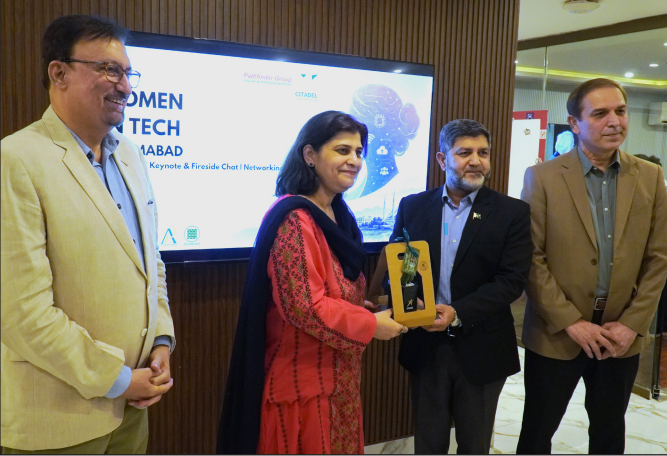
Thank You, Mr Isphanyar M Bhandara. We are so happy to have you with us. You carry forward the proud legacy of your late father, Mr M.P. Bhandara, and we are truly proud of you. It is a privilege for us to have you as part of this group. Now, I would like to invite Mr Ikram Sehgal to the stage so that Mr Bhandara can present books to him. I also request Mr Sehgal to share a few words with us.
Ikram Sehgal Co-Chairman, Pathfinder Group
I just want to thank everyone. I would like to mention a lot of people by name, but due to a lack of time, it is not possible. But I would like to thank some people who came, first of all, my alma mater, Lawrence College. Brigadier Jawad is here, the new principal of Lawrence College. Thank you for coming. Thank you, Azfar. You have been more than kind. I remember telling you when you came to me, ‘Go on your own; do something.’ Masha Allah, you did exceptionally well. I would also like to thank the Chairman of the Pakistan Software Export Board, Abu Bakar, for taking the time to be here, along with many other distinguished guests.
In particular, I would like to highlight that this has been a tremendous session, alongside the remarkable session of the Pathfinder Interfaith Harmony Initiative’s Advisory Council, which took place concurrently. As many mentioned, we had representation from all religions. That in itself is an achievement, to have two sessions running simultaneously, one here and one upstairs, and then coming together in harmony. As Brigadier Mujahid aptly said: ‘In diversity lies our strength. In harmony lies our future.’ I would like to thank my family, especially my wife sitting here, and our two granddaughters, our grandson, and our wonderful children.
One of my granddaughters, Amaani Sehgal, is the architect behind the Providentia Books Foundation; she is now 18 and has just entered in Cornell, while 15-year-old Elena Sehgal, is the visionary behind the Interfaith Harmony Initiative, bringing together many diverse religions. Under one roof so, when we speak of legacy, I believe that with these remarkable initiatives by our brilliant granddaughters, we already have our legacy in place.
I would like to thank each one of you, especially Air Vice-Marshal (Retd) Asad Ikram, Air Cdr (Retd) Khalid Banuri, Dr Salma Malik, Mr Imran Jattala, and Air Cdr (Retd) Farhan Ahmed. Together, we accomplished something truly remarkable. I would like to mention that when you go out for lunch, you will notice that everyone can enjoy the meal irrespective of religion. There is dal roti, chicken, meat, and even vegetable burgers, so there is something for everyone. Thank you very much, everyone.