




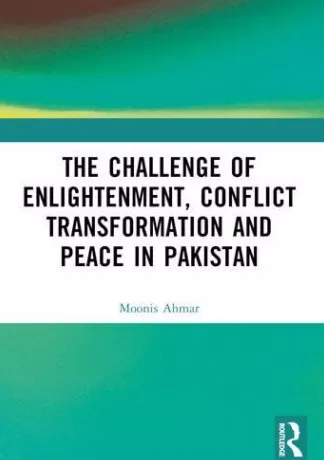
The intellectual debate on the idea of enlightenment defined by a Prussian Philosopher, Immanuel Kant, always remained an area of less scholarly importance in Pakistan due to the country’s explicit socio-cultural growth under specific ideological patterns centred in certain religious beliefs. Kant’s description of enlightenment starts the debate of Moonis Ahmar’s remarkable and brief intellectual investigation, which underlines the unexplored interconnection between the concept of enlightenment and its pragmatic relevance in Pakistani society. Moonis Ahmar, a renowned intellectual figure of Pakistani academics, has always followed a non-traditional way of expressing his thoughts on the internal structural problems of Pakistan while advocating sophisticated solutions to the country’s indigenous chronic conflicts. While serving at the University of Karachi as Dean of Social Sciences, Ahmar has cultivated an exceptional reputation in his field through securing a commendable intellectual standing on Pakistan’s domestic issues. The quest to scholarly highlight the country’s structural problems has led Ahmar towards the exploration of various applicable solutions grounded in robust ideological principles. The book under review is a brief reflection of Ahmar’s intellectual properties, which tries to concentrate the European values of enlightenment in Pakistan’s context, parallel to proposing it as an appropriate way of overcoming the country’s mainstream domestic conflicts. So, the conflict transformation suggested in the book academically endeavoured to provide a non-conventional framework of enlightenment capable of synchronising a culture of reasoning, tolerance, accommodation, social justice, and peace with the traditional societal setup of Pakistan.The book hypothesises that Pakistan must undergo a cultural transformation akin to the European enlightenment model, consisting of several exceptional societal features such as scientific inquiry, individual freedom, and free thinking. The learning from the European models of conflict transformation and their inseparable association with the mainstream religious debates further provides validation for the book’s central theme. The European learning evidently suggested by the author as a suitable means of moving beyond the deep-rooted security issues of Pakistan, challenging the government’s aspiration for overhauling the societal traditional structure. In this way, the book contains immense significance in the contemporary debates on introducing various societal programs to ensure a countrywide culture of social prosperity and economic development in Pakistan.
The book’s central theme divided the primary debate into seven brief chapters, starting arguments from the conceptual understanding of enlightenment, and the potential challenges hindering its integration with the Pakistani society. These hindrances are dubbed in the book as the major hurdles undermining the vision of formulating a peaceful and prosperous social order in Pakistan.
The potential challenges emerge from the misuse of religion, a feudal mindset, tribal culture, public frustration, lack of social development, ultra-conservative social customs, and an education system. The book’s first chapter initiates the discussion on the evolution of enlightenment that started in the eighteenth century in Europe, which gained substantial continental appreciation. The continental expansion of the European modernisation model later provided specific lessons to the post-colonial societies. The subsequent chapters continued the debate through multileveled analysis, concentrating on the historical contexts of Pakistan’s cultural norms emerging from the colonial legacies, partition trauma and post-colonial governance problems, which resulted in an overwhelming wave of internal crisis. The deep penetration of these issues served to intensify the country’s internal structure and resulted in multifaceted problems such as the strict rural-urban divide, vivid economic disparities, and educational decay. The book further highlights the European journey of social progress, political improvement, and economic development, passing through the inevitable influences of the Renaissance and Enlightenment periods.
Thus, the emphasis on the European experiences of modernisation for resolving their traditional conflict-prone regional culture suggested in the book is an adequate mechanism of conflict transformation, leaving considerable learning for the entire world. In this way, the book is fundamentally structured to provide a comprehensive analysis of Pakistan’s conflict dynamics and the country’s potential for cultural enlightenment to serve as a catalyst for peace. The arguments in all chapters revolve around the conceptually convincing and practically applicable solutions to Pakistan’s structural problems, demanding a large-scale societal refurbishment, aligning with the realities of the modern world.
Therefore it is appropriate to maintain that the book argues about the significance of cultural enlightenment as a solution to Pakistan’s mainstream issue of fanatical ideologies and their increasing countrywide societal acknowledgements. The book’s central argument is based on a comparative analysis of the European model of societal progress, which offers valuable insights to address the structural problems of post-colonial societies. The author’s balanced perspective, rooted in an impartial analytical context, attempted to provide a comprehensive account of varying arguments concerning the resolution of Pakistan’s domestic socio-political issues and their resolutions through adopting effective conflict transformation strategies.
In short, the book is an appreciable academic investigation of a Karachi-based scholar who has expressed the same views in his various other intellectual contributions, such as Conflict Management and Vision for a Secular Pakistan, published in 2014. It presented a broader overview of concentrated conceptual approaches of secularism based on a purely academic connotation and their probable integration with Pakistani society. Analogous to this study, the author has expressed his thoughts on the conflict resolution and transformation efforts of Pakistan while relating them to the political culture of the subcontinent and its unprecedented growth under the Islamabad-New Delhi decades-long rivalry.