

Introduction:
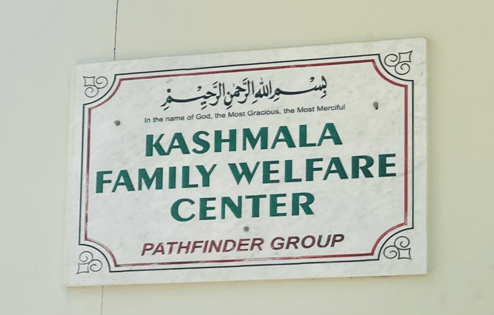
The Kashmala Family Welfare Center is a flagship project of the Pathfinder Group, located in the peaceful yet underserved village of Choki Mumraiz in Pabbi, Khyber Pakhtunkhwa. This center is named in honor of Ms. Kashmala Sehgal, the daughter-in-law of Mr. Ikram Sehgal the Co-Chairman Pathfinder Group.
The center is a place of hope for the women of the village who are not allowed to go out freely. Living in a male-dominated environment, many of them have limited opportunities. This center gives them a safe space to learn skills, get medical help, and meet other women. It helps them feel confident and supported. For many, this is the only place where they can dream of a better future.
This initiative is quietly transforming the lives of local women and children by providing free medicine plus other medical facilities. Additionally, it offers vocational training programs such as stitching, basket making, crochet, and beauty services, etc. These practical opportunities empower women to start smallscale businesses and improve their livelihoods.
The welfare center was established in 2022. Initially, the project began in a rented property and was operated solely by Ms Zakia Khan, along with a lady health visitor and the caretaker of the free pharmacy and vocational training program. Later, Mr Ikram Sehgal arranged construction of a three-storied building, dedicating a basement to this humanitarian project.
Today, out of the village’s population (total 30,000), 20,000 people are benefiting from this welfare center. Ms. Zakia Khan’s supervision, dedication, and hard work have been essential to the ongoing success of this initiative. Eight different units operate with a staff of 10 people, including a lady doctor, a dentist, an ultrasound technician, an Alma for the Madrassa, a crochet trainer, a stitching trainer, a basket-making trainer, a beautician, and two helpers.
• Free Medicines and Ambulance Service:
Patients receive free basic medicines after a check-up with a qualified MBBS doctor. If a patient has a severe ailment or requires laboratory tests, they are referred to various welfare or government hospitals for further treatment. On average, 20 to 30 children and women seek assistance daily. Medicines are provided to those in need throughout the month. The doctor and Ms. Zakia maintain a manual register to record patient histories, including names. An OPD fee of Rs. 100 is charged to ensure the consistent supply of medicines. In case of an emergency, an ambulance service is available to transport patients to distant hospitals.
• Dental Unit:
The Dental Unit at Kashmala Family Welfare Center serves underprivileged patients for village three days a week. It is equipped with basic dental equipment, essential medicines, and a skilled dentist. The unit provides free check-ups and treatments, offering relief to those who need it most. Women and children particularly benefit from these services. Although it is a small facility, it makes a significant difference in the community.
• Ultrasound Unit:
The Ultrasound Unit provides essential diagnostic services to underserved women in the village and surrounding areas. On average 15 to 20 patients visit the unit each day, seeking assistance for various health concerns, particularly related to maternal care. The unit is equipped with a basic yet effective ultrasound machine that fulfills the community’s essential diagnostic needs. A skilled technician is available to conduct the scans with care and professionalism. This service saves patients the cost and hassle of traveling to distant hospitals, ensuring timely detection and improved health outcomes.
• Sewing and Stitching Center:
This center was established in June 2022. It operates in two shifts: in the morning shift, there are 30 female students (aged 16 and above), while 20 girls attend the evening shift. Most of these students are currently in school or college and come to the center after their classes.
Two teachers have been hired, with salaries of Rs 8,000 and Rs 5,000, respectively, for providing six months of training to the students. Once the students complete their training, the center helps them market their products, enabling them to start earning independently after graduating.
Eight women have successfully started their small businesses from home after receiving training from the KFWC. They are now independently supporting their families. The dresses made by these women are sold in the market for prices ranging from Rs 4,000 to Rs 5,000. Additionally, they take custom orders from the local community for preparing wedding attire and everyday clothing. Besides sewing, the trainees are also given crochet training, enabling them to create sweaters and other warm clothing for children, which they can sell in the market.
• Madrassa Classes:
Kashmala Family Welfare Center offers a one-month Madrassa course for children in the village, where around 10 to 15 students attend the classes in the evening regularly. The course focuses on Quran reading and basic Islamic teachings and as it is completely free of cost, it is accessible to all families. The instructor is a learned Alim who teaches with dedication and care. The peaceful environment helps students learn with focus and respect. This course is a great way to promote religious education in the community.
• Basket Making:
The basket-making initiative at Kashmala Family Welfare Center has become a powerful example of community empowerment and sustainable livelihood for women. A total of 110 females were provided with raw materials at their homes, enabling them to craft traditional, sturdy baskets without leaving their households. Initially, these baskets were sold by the women themselves for just Rs. 20 each, offering a modest income. However, with the support and guidance of Ms. Zakia, a key figure in this effort, the initiative gained momentum. She began placing regular orders with the women and sold the baskets at Rs. 25, helping increase their reach and value.
Over time, as demand grew and the quality of the baskets improved, they began to fetch Rs. 50 per piece in the market. On average, each woman now produces around 10 baskets per day, allowing them to contribute meaningfully to their household income. A portion of the earnings is also generously allocated to support the welfare center by purchasing free medicines for patients in need. The entire program is supervised and taught by a highly experienced lady instructor who has over 30 years of expertise in basket weaving. These baskets are in high demand and widely used in the fruit and vegetable markets, flour and rice mills, and for various domestic and commercial purposes. This initiative not only uplifts local women economically but also strengthens the health services and self-reliance of the entire community.
• Beautician Training:
At KFWC, a beautician training program has opened new doors of opportunity for local women by equipping them with practical skills in makeup and beauty care. Through hands-on training in professional competence. So far, four women who completed the training and received diplomas have successfully opened their salons within the community. These salons not only offer affordable beauty services but also specialize in bridal makeup at a nominal cost of just Rs. 5000, making it accessible for families with limited means. The program empowers women to become self-reliant while also helping others look and feel their best on special occasions.
• Future Plans:
Ms. Zakia dreams of expanding Kashmala Welfare Center into a vibrant hub of empowerment and opportunity. Her future plans include launching a small loan program to help women start homebased businesses and become financially independent. She aims to introduce essential health services like sugar and pregnancy testing to ensure early detection and care.
A fully stocked pharmacy is also on the horizon, offering vital medicines within reach of the underserved. But her dreams is to go beyond healthcare. She envisions a kitchen garden setup where women can learn the art of growing vegetables and fruits, turning small spaces into sources of nutrition and pride. And in a bold move to challenge restrictive cultural norms, Ms. Zakia plans to establish a women’s gym and a small park for females and children, a safe, welcoming space where they can breathe freely, play, move, and reclaim their right to happiness, health, and community.
• Other Services:
At the Kashmala Family Welfare Center, local women can fulfill their basic shopping needs through a small shop on the premises. This shop offers items of makeup, clothing, shoes, and other essential products at prices lower than those in the market, and purchases can also be made in small installments.
Recommendations:
1. A hospital should have a delivery facility and a basic laboratory.
2. An administration and information desk as well as a digital and accounting system for the welfare center, for organized data keeping and accounting.
3. All payments should be made through Asaan Mobile Accounts (AMA). This will make women in the area financially independent.
4. Keeping a record of the women who learned from the center and are now doing their business.
5. The number of ambulances should be increased, and the existing ambulance should be well maintained.
6. Keeping proper patient records and medicine records will help to understand the most common illness and what measures to take in the area to overcome them.
7. Loans can be given to women who have completed their skilled learning to start their ventures by collaborating with different NGOs.
8. The number of sewing machines is to be increased, and the quality should be taken into consideration, even if bought second-hand.
9. Frequent health sessions on viral diseases must be given by the lady health workers.
10. Digitize patients’ medical records and trainee attendance/performance data to streamline operations and improve follow-up services.
11. Develop a simple feedback mechanism (such as monthly forms or suggestion boxes) to continuously improve services based on community needs.
12. Create a monthly performance and progress report to measure outreach, skill certification, and medical visits.